Every spring, a spectacular, slow-moving parade of deep history drifts past our rugged coastlines.
As someone fortunate enough to live in Newfoundland, I still pinch myself when the winter ice clears and I look out from the coastal trails to see a colossal, shimmering mountain of 10,000-year-old glacial ice floating serenely in the deep blue waters of the North Atlantic.
Newfoundland is widely recognized as one of the absolute best places on Earth to view icebergs.

Affectionately known as “Iceberg Alley,” the corridor of water stretching from the coast of Labrador down to the southeast shores of our island becomes a seasonal sanctuary for these floating monoliths.
Yet, because these giants are entirely at the mercy of ocean currents, winds, and rising temperatures, witnessing them demands the right timing, local knowledge, and preparation.
Whether you are a photographer looking to capture their striking turquoise contours or a traveler planning a bucket-list summer road trip, here is your definitive local guide to experiencing the icebergs of Newfoundland.
🧊 Iceberg Alley Visitor Blueprint
Peak Viewing Window:
The absolute best months to view icebergs are May and June. By July, they are melting rapidly and tapering off, though you can occasionally see them later in the north of the island.
The 90% Reality:
What you see from the shoreline is only the tip of the architectural masterpiece. Roughly 90% of an iceberg’s total mass is entirely submerged beneath the surface of the water.
The Safe Distance Rule:
If you are viewing icebergs from a boat, zodiac, or sea kayak, you must maintain a safety distance equal to three times the height of the iceberg, or twice its length (whichever is greater). They can roll, shatter, and create localized tidal waves without a single second of warning.
The Live Tracker:
Before you head out onto the coastal tracks, always check the official crowdsourced tracking tool at IcebergFinder.com to view real-time, verified local sightings across the province.
Where Do the Giants Come From?
The icebergs we marvel at today aren’t just frozen seawater; they are fragments of ancient history.
Roughly 90% of the icebergs floating down Iceberg Alley originate from the massive, calving glaciers of western Greenland, while the remaining 10% break away from glaciers in the Canadian Arctic.
These ice structures are composed of compressed snow that fell over 10,000 years ago, long before the dawn of modern human civilization.
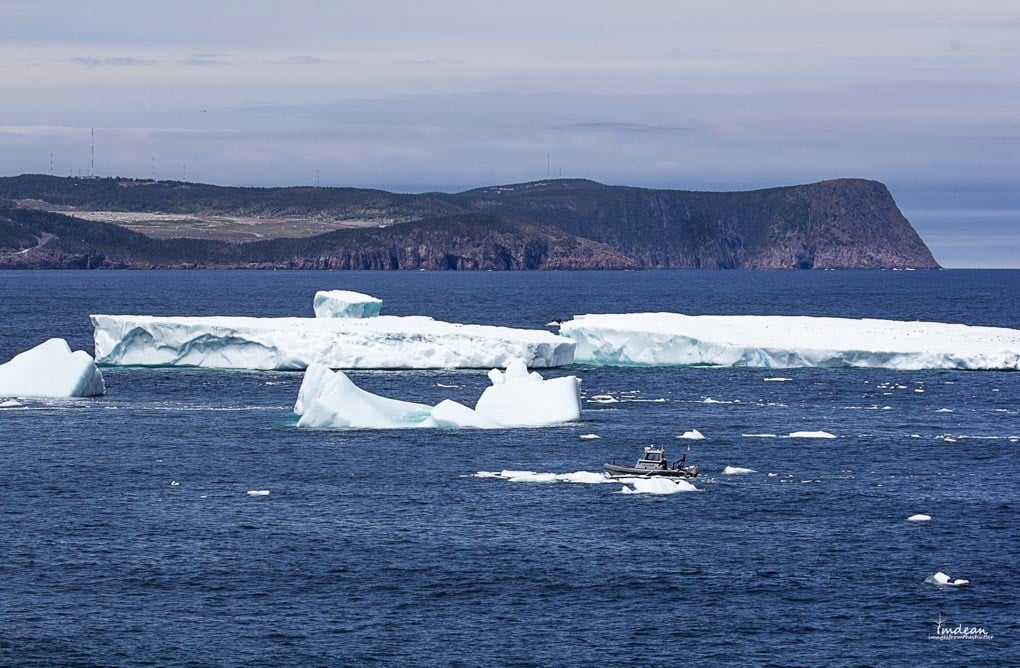
Because the snow was compressed under immense pressure over millennia, almost all the air bubbles were forced out.
This dense composition is what gives the icebergs their iconic, deep-blue streaks. When sunlight hits the dense, pure ice, it refracts a spectacular, luminous turquoise and sapphire glow that no camera lens can truly do justice.

Timing Your Visit: The May-June Trap
The single biggest mistake travelers make when booking an iceberg holiday to Newfoundland is showing up in late July or August expecting the bays to be completely full of ice.
April: The icebergs begin arriving, but they are often surrounded by dangerous, shifting packs of sea ice that make boat tours impossible and coastal trails highly treacherous.
May & June (The Sweet Spot): This is the prime window. The pack ice has melted, the local tour boats are operating, and the icebergs are typically abundant, large, and stable enough to view comfortably from both land and water.
July & August: While you can still catch magnificent giants floating along the northern tips of the island (such as Twillingate or St. Anthony), the southern and eastern bays around St. John’s are usually completely clear of ice by this point.

The Top Coastal Vantage Points in Newfoundland
If you want to view these ancient giants safely from dry land while exploring our world-class walking tracks, there are three premier regional hubs to target:
1. Twillingate (The Iceberg Capital of the World)
Nestled on the northern coast, Twillingate sits directly in the thick of the main ocean currents.
Its high, dramatic headlands and the walking paths around the Long Point Lighthouse give you an elevated, sweeping panoramic view of the floating giants as they drift into the shallow bays.

2. The Bonavista Peninsula
The rugged cliffs of Cape Bonavista offer a spectacular, front-row seat for iceberg spotting.
The area is famous for its shallow coastal shelves, which frequently cause massive icebergs to run aground right near the shoreline, allowing hikers to stand on the cliff edges and view them incredibly close up.
3. Signal Hill & Cape Spear (St. John’s Hub)
If you are staying near the capital city, you don’t have to travel far.
The coastal boardwalks of Cape Spear (the easternmost point of North America) and the exposed ledges of the North Head Trail on Signal Hill offer magnificent, dramatic vantage points where you can watch icebergs frame the historic entrance to St. John’s harbor.

Local Secrets for Iceberg Photographers
Capturing the sheer scale and character of an iceberg requires a few local adjustments to your camera gear:
Use a Circular Polarizer: Just like shooting landscapes with bright snow or water glare, a polarizing filter is essential. It cuts through the harsh sunlight bouncing off the white ice, dramatically rich-up the deep blue lines and hidden underwater ledges.

Look for Wildlife Interaction: The best photos tell a story. Keep your eyes peeled for bald eagles using flat iceberg plateaus as hunting perches, or pods of humpback whales breaching right beside the ice walls.
Shoot at Golden Hour: The stark white of the ice transitions into a jaw-dropping canvas of pinks, oranges, and deep purples during our long, dramatic summer sunsets.
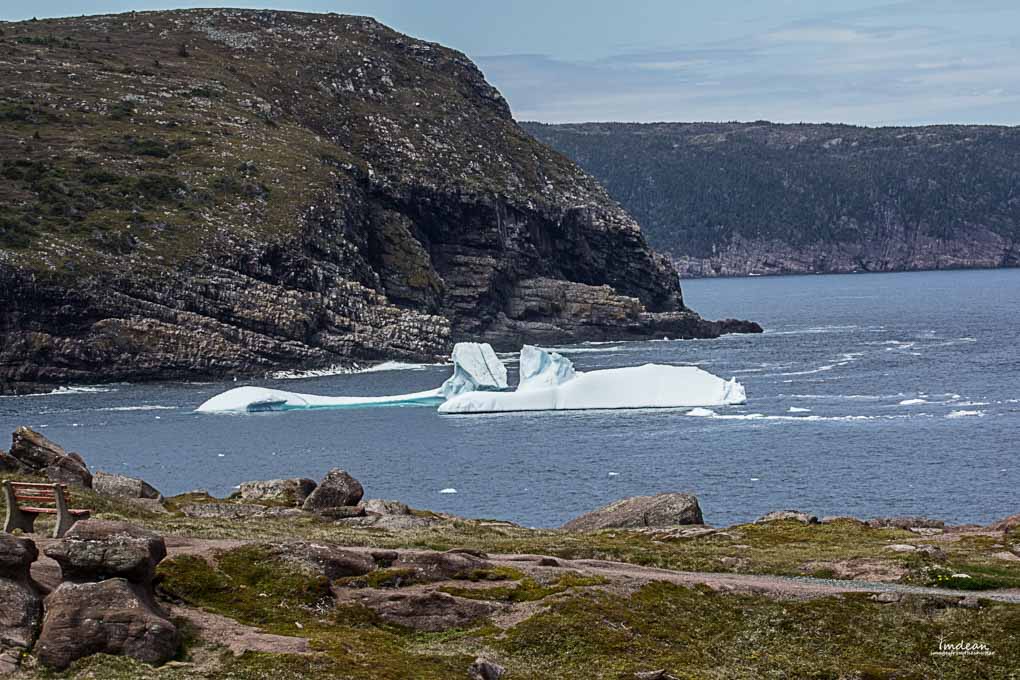
Standing on a windswept cliff edge, listening to the thunderous, echoing crack of a 10,000-year-old iceberg shifting in the ocean breeze is a profoundly humbling experience.

It is a powerful reminder of our planet’s scale and moving history. Pack your warmest windproof layers, fire up the live tracking maps, and come experience the raw majesty of Iceberg Alley for yourself.
Explore More Wild Coastal Adventures in Newfoundland
- The Premier Urban Cliff Walk: Hiking the North Head Trail: Signal Hill’s Most Dramatic Coastal Walk
- The Long Distance Wilderness: The Ultimate Guide to Exploring Newfoundland’s East Coast Trail