When it comes to rugged, raw, and atmospheric coastal hiking, few places on Earth can match the wild beauty of St. John’s, Newfoundland.
Perched high above the crashing waves of the Atlantic Ocean sits Signal Hill National Historic Site—a towering, windswept landmark that has guarded the narrow entrance to the city’s harbour for centuries.
While many visitors simply drive to the summit to take a photo of the iconic stone Cabot Tower, true outdoor enthusiasts know that the only way to experience the raw power of this landscape is on foot.
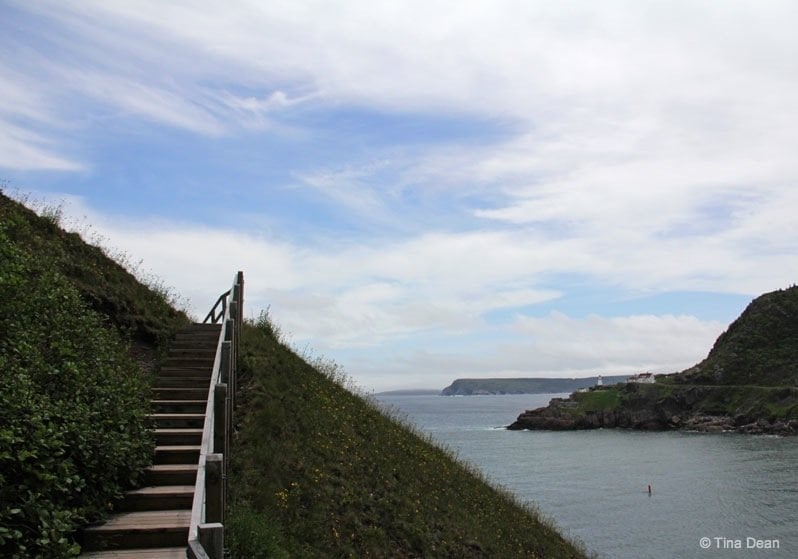
The North Head Trail is the crown jewel of St. John’s urban hiking network.
It is a thrilling, exposed coastal path that hugs the sheer face of the cliffs, carrying you from the historic ramparts at the summit down into the heart of one of Canada’s oldest, most colourful fishing neighbourhoods.
If you are ready for dramatic ocean vistas, historic battlements, and the chance to spot whales or icebergs, here is your definitive guide to tackling the North Head Trail.
🥾 North Head Trail Blueprint & Metrics
Trail Distance:
2.5 kilometers (1.5 miles) linear, which creates a fantastic 5-kilometer (3-mile) circular loop when combined with the Signal Hill road or the lower Battery path.
Elevation Change:
A demanding 500-foot (152-meter) vertical drop and climb.
Difficulty Rating:
Moderately difficult to strenuous. The route features hundreds of steep wooden stairs, uneven rock ledges, and narrow cliff paths without guardrails.
The Golden Direction Secret:
Most casual tourists start at the top car park and hike down. However, for an authentic, leg-burning hiking workout with the best unfolding ocean views, start at the bottom in the Lower Battery and hike your way up to Cabot Tower.
Trail Safety Warning:
This trail is highly exposed to the North Atlantic elements. It can feature intense, gusty winds and thick fog that rolls in within minutes. Wear technical hiking boots with excellent rubber grip, and leave the trail immediately if ice or freezing rain rolls in.
The True History: Marconi, Battles, and Broadside Cannons
Signal Hill commands an elite position in global history, acting for centuries as a vital strategic shield for North America’s easternmost edge.
Long before hikers trod these coastal paths, the hill was a theater of war.

In 1762, the keys to the continent were fought over right here during the Battle of Signal Hill, the final conflict of the Seven Years’ War, which saw British forces launch a surprise dawn assault to wrestle control of St. John’s back from the French military.
As you navigate the lower sections of the trail, you will pass historic stone foundations and the old Queen’s Battery, where heavy iron cannons still point defiantly out across the Narrows to protect the harbor from invading warships and privateers.
In 1901, the hill secured its place in the scientific Hall of Fame.

It was inside a historic barracks near Cabot Tower that Italian inventor Guglielmo Marconi made history by receiving the world’s very first transatlantic wireless signal—a simple Morse code transmission for the letter “S” sent all the way from Poldhu, Cornwall, over 2,000 miles away across the ocean.
Navigating the Trail: The Battery to the Chain Ledge
Whether you choose to ascend or descend, the trail delivers an incredibly dynamic mix of urban heritage and wild maritime exposure:

The Outer Battery
If you begin at the bottom, your hike winds through the narrow, cliff-hugging boardwalks of The Battery.
This is a legendary, historic neighborhood where brightly painted clapboard houses are built directly onto the rock faces, tethered to the cliffs to withstand the North Atlantic gales.
Walking through here feels like stepping straight into a classic maritime storybook.

The Chain Rock Narrows
Leaving the houses behind, the trail hugs the narrowest section of the harbor entrance.
At one point, the path narrows onto a sheer rock ledge where a heavy iron chain-link handrail is drilled directly into the stone cliff face.
Holding onto the chain as the ocean swells crash against the rocks just feet below you is an absolute adrenaline rush.
The 500-Foot Stair Climb
The final push to the summit of Signal Hill involves navigating a massive, winding staircase built directly into the steep gulch of the cliff.

As you gain elevation and catch your breath, look back out over the ocean—the panoramic view of the vast Atlantic opening up before you is unmatched.
Natural Magic: Icebergs, Whales, and Eagles
Because the North Head Trail projects right out into the ocean, it functions as a world-class, front-row seat for watching Canada’s most spectacular seasonal wildlife migrations:
Iceberg Alley (May to June): If you walk this trail in the late spring, you have a prime chance of spotting massive, majestic 10,000-year-old icebergs drifting down from Greenland, glowing bright turquoise against the deep blue water.
For a full breakdown of the absolute best coastal vantage points across the island and how to track them in real-time, see our dedicated guide to Majestic Giants: How to Spot Seasonal Icebergs Around Newfoundland.
Humpback Whales (July to August): During the height of summer, the waters below the trail teem with capelin, drawing in the world’s largest gathering of humpback whales.
It is not uncommon to hear a whale’s blowhole echo off the stone cliffs while you are walking.
Avian Hunters: Keep your eyes turned to the sky and the rocky crags. Massive bald eagles, nesting puffins, black-legged kittiwakes, and northern gannets regularly soar along the cliff currents right beside the trail.
The North Head Trail perfectly encapsulates the spirit of hiking in Newfoundland: it is historic, physically demanding, unpredictable, and undeniably beautiful.
Pack a windproof shell, check the local marine weather forecast, and step onto a path that has watched over the Atlantic for centuries.
Explore More Epic Canadian Wilderness & Coastline Walks
- The Iceberg Corridor: Majestic Giants: A Local’s Guide to Iceberg Alley, Newfoundland
- The Long Distance Coast: The Ultimate Guide to Exploring Newfoundland’s East Coast Trail
- The Western Woods: A Journey from City to Wilderness: An Expert Guide to Vancouver Island