
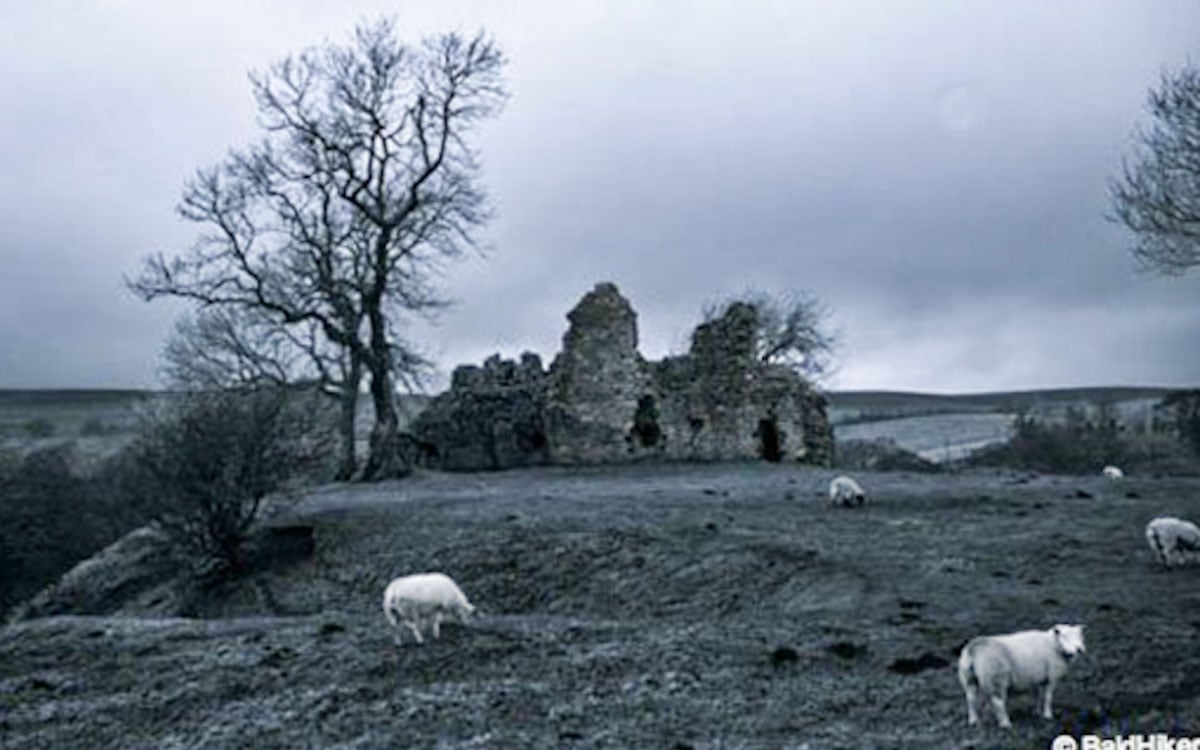
There is a distinct, arresting sense of ancient stillness that washes over you the moment you drop down into the deep trough of the Mallerstang Valley.
Tucked far away from the standard Lake District tourist corridors, this remote Cumbrian dale feels like a landscape operating on a completely different timeline.
Sitting on a quiet, low-lying knoll completely exposed to the elements, flanked by the massive, towering escarpments of Mallerstang Edge and Wild Boar Fell, rises the jagged stone silhouette of Pendragon Castle.
A gloriously romantic stop on the Lady Anne Clifford Castle Trail.

This atmospheric ruin is a place I know exceptionally well.
The winding lane that tracks past its broken stone walls is one of my absolute favorite drives in the North of England—especially when crossing over toward Hawes and the Yorkshire Dales.
It is a route defined by raw, quiet isolation. Pushing through this valley forces you to slow down, match the slow rhythm of the landscape, and tune into the rich layer of history beneath your boots.
For hikers, road-trippers, and heritage trackers, this wild tower house is a magnificent sanctuary. Here is my boots-on-the-ground field manual to navigating and exploring Pendragon Castle.
🏰 Pendragon Castle Expedition Blueprint & Logistics
Geographic Location:
Positioned in the deep Mallerstang Valley near the quiet hamlet of Outhgill, Cumbria.
The Transit Vector:
Located directly alongside the single-track B6259 road, roughly 4 miles south of the historic market town of Kirkby Stephen.
The Trail Network:
Functions as a critical, wild mountain anchor along the newly created Lady Anne Clifford Castle Trail Road Trip.
Access & Entry Metric:
The ruins sit on private agricultural farmland, but open foot access to the exterior perimeter is completely Free and permitted year-round during daylight hours.
Parking Constraints:
Extremely sparse. There is no formal car park; access relies on a small, free roadside layby directly opposite the entrance gate that fits three cars at most. Never block agricultural gates.
Dog-Friendly Parameters:
High utility. Dogs are entirely welcome to track the valley floor alongside you, but they must be kept on short leads due to the active livestock grazing right up to the castle walls.
Structural Warning:
This is an unmaintained, raw ruin in a potentially volatile condition. Watch your footing on the uneven, grassy paths, and steer clear of the interior walls during heavy rain or freezing conditions.
Tactical Isolation: The Wilderness of Mallerstang Dale
To appreciate why this specific castle footprint was established, you have to look closely at the surrounding terrain through an operational lens.
As a veteran of the British Army, I immediately look for choke points, high ground, and supply lanes when analysing historic fortifications.

The Mallerstang Valley functions as a natural, deep geographic corridor cut through the high limestone fells of the Pennines, forming a critical, narrow pass between Westmorland and Yorkshire.
By anchoring a stronghold right on this gentle bend of the infant River Eden, defenders could effectively police anyone entering or escaping the valley floor.
Long before the first stone castle was constructed, the Roman military recognized this exact same tactical choke point.
Roman coins discovered on-site confirm that legions utilised this ridge as a defensive outpost, guarding the mountain trail connecting the primary forts at Brough (Verterae) and Bainbridge.
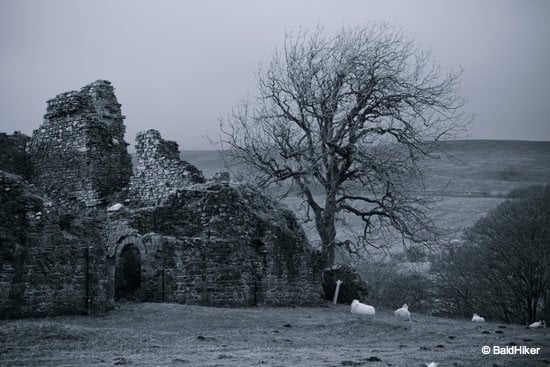
It is a place designed by nature for vigilance, yet today, that old military tension has completely dissolved into a profound, restorative peace.
The Volatile History & Legend Matrix
Pendragon’s timeline is completely saturated with a chaotic mix of Arthurian mythology, high-society scandal, brutal border raids, and ultimate abandonment.
Unlike massive coastal strongholds, this compact tower house was heavily exposed to the realities of northern frontier warfare.
To keep your historical bearings straight while mapping out the valley, here is a functional look at the core milestones that shaped these stones:
|
Historical Era / Year |
Milestone Event |
Long-Term Structural Impact |
|---|---|---|
|
c. 4th Century AD |
Roman Military Occupation |
Establishes the primary defensive baseline and tracking outpost along the trans-Pennine corridor. |
|
c. 5th Century |
The Legend of Uther Pendragon |
Local folklore attributes the first timber fortress to King Arthur’s father, immortalizing the site in northern myth. |
|
1170 |
Ownership by Hugh de Morville |
Converted into a Norman stone stronghold under the ownership of one of Thomas Becket’s infamous assassins. |
|
1341 |
The Devastating Scottish Border Raid |
Torched and heavily dismantled by marauding Scottish forces, leaving the tower an abandoned shell for over 300 years. |
|
1660 |
The Lady Anne Clifford Resurrection |
Completely rebuilt from ruin—introducing a new bakery, brewhouse, stables, and secure private chambers. |
|
1680s |
Stripping & Final Decay |
Abandoned by later heirs and stripped of its lead roof tiles, entering its final phase as a romantic ruin. |
Arthurian Myths vs. Real Frontier Border Warfare
The primary magic of Pendragon Castle sits right at the intersection of local folklore and documented history.
According to intense local legend, the original fortress was founded by Uther Pendragon, the mythical father of King Arthur.

The story goes that Uther attempted a massive, primitive engineering feat—trying to mechanically redirect the natural flow of the River Eden to fill his defensive moats.
The project failed completely, giving birth to a famous, cynical Cumbrian rhyme that has been passed down through generations of valley families:
“Let Uther Pendragon do what he can, > Eden will run where Eden ran.”
The myths turn even darker, claiming that Uther and a hundred of his men ultimately met their ends within these walls when Saxon invaders poisoned the castle’s primary water well.
When you strip back the Arthurian romance, the documented history is equally dramatic.
In the 12th century, the castle belonged to Hugh de Morville—one of the four infamous knights who rode to Canterbury Cathedral in 1170 and brutally murdered St. Thomas Becket before the altar.
Centuries later, as the wars between the English and Scottish crowns intensified, Pendragon paid a terrible price for its exposed valley position.
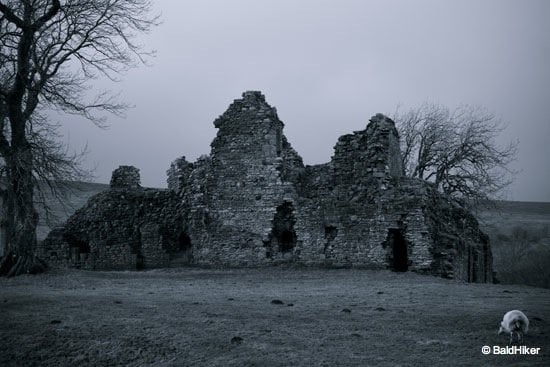
In 1341, a high-velocity Scottish raiding party pushed through the Mallerstang pass, breaching the outer walls and setting the interior ablaze.
The tower was completely gutted and left as a bleak, blackened skeleton for over three centuries, avoided by locals who assumed its story was permanently finished.
Lady Anne’s Private Sanctuary in the Wilds
The castle’s definitive savior was Lady Anne Clifford, the unstoppable 17th-century northern powerhouse.
After winning her 38-year legal battle to reclaim her ancestral birthright, she set about physically rebuilding her shattered properties across Yorkshire and Cumbria.
In 1660, she turned her immense focus and financial resources toward the forgotten ruins of Mallerstang.

While massive estates like Appleby Castle served as her primary administrative seats of power, Pendragon held a deeply personal, spiritual purpose for her.
She didn’t want a massive garrison here; she wanted a quiet, mindful sanctuary where she could escape the heavy burdens of her public life.
She cleared the centuries of wild overgrowth, repaired the main tower structure, and added highly functional outbuildings including an active bakery, a brewhouse, and a library.
She used it as a peaceful retreat to read, reflect, and connect directly with the raw beauty of the Cumbrian fells.
Tragically, following her death in 1676, the estate passed to the Earl of Thanet.
Lacking Lady Anne’s deep emotional connection to the valley, he viewed the remote outpost as a mere quarry—ruthlessly stripping away the valuable lead roof linings and fine stonework to fund properties elsewhere.
Deprived of its protective canopy, Pendragon slowly dissolved back into the romantic, roofless shell we see today.

Beyond the Walls: The Wild Mallerstang Itinerary
Because a walk around the immediate perimeter of Pendragon Castle can be completed relatively quickly, the true joy of visiting sits in using these stones as a launching pad to explore the grand, dramatic features of the wider Mallerstang Valley:
Conquering Wild Boar Fell: Towering directly behind the castle is the massive, table-top plateau of Wild Boar Fell (707m). For experienced hikers, ascending this fell from the nearby village of Nateby offers an incredible reward—allowing you to look straight down onto the tiny, toy-like footprint of Pendragon Castle resting in the valley trough below.
Tracking Lammerside Castle: Just a mile further down the valley floor lie the hidden, earth-covered ruins of Lammerside Castle. This 14th-century Pele tower was constructed specifically as a secondary line of defense, designed to smoke out and stall Scottish raiders before they could reach the main settlements.
The Settle-Carlisle Railway: As you stand in the quiet castle courtyard, you will almost certainly hear the distant, rhythmic echo of the famous Settle-Carlisle Railway line, which cuts directly across the high viaducts of the Mallerstang slopes. It is a stunning, nostalgic piece of Victorian engineering that looks beautiful against the wild hills.
Refueling in Kirkby Stephen: With zero facilities, cafes, or bins at the castle site, your best option for a hot cup of tea or a proper pub lunch is the wonderful historic market town of Kirkby Stephen. Take the time to stretch your legs across Frank’s Bridge and explore the Poetry Path, featuring twelve beautiful verses carved permanently into local stone.
Pendragon reminds us of the value of looking past the crowded, famous viewpoints and seeking out the quiet, standing history waiting in the isolated corners of our countryside.
It is a place that invites you to breathe deeply, step off the beaten track, and discover the enduring spirit of the old frontier.
Explore More Spectacular Historic Castles & Strongholds of England
- The Medieval Manor: Sizergh Castle and Garden: Tracing 760 Years of Cumbrian Border Heritage
- The Hidden Ruins: Codnor Castle: A Walk With 800 Years of History in the Derbyshire Hills
- The Tudor Coast Guard: A Family Trip to Deal Castle: Exploring Henry VIII’s Unusual Artillery Fort in Kent




I’m adore the ancient Norman period…you have captured the brooding beauty so well .always look fwd to returning to Scotland…i shall follow u
Wow, this place looks fascinating! Great photos and nice touch to put them in black and white!
Such chilling photography! Love how your images complement the history of the castle’s demise… great blog!
Thank you Katie
Well written post with excellent pics. All those pics looks awesome.
Thank you
Lovely black and white photos with some interesting history of the site 🙂
Hi Stephanie, so kind, thanks