

When outdoor explorers plot out their routes through Cumbria, their focus almost always leans heavily to the west, drawn by the high-elevation fells and crowded waters of the central Lake District.
Yet, if you steer clear of the tourist traffic and head into the sweeping, dramatic landscapes of the Eden Valley, you encounter a raw and strategically volatile frontier territory.
Positioned at the absolute crossroads where the North Pennines meet the rolling contours of the Howgill Fells sits Brough Castle.
Constructed directly within the earthworks of a first-century Roman fort, this imposing ruin stands as a battered monument to centuries of Anglo-Scottish border warfare, royal neglect, and spectacular aristocratic restoration.
It forms a vital, formidable stop along the historic Lady Anne Clifford Castle Trail.

As a veteran of the British Army, I find navigating the physical geography of this site absolutely fascinating—it is a masterclass in tactical route protection.
Whether you are driving the trans-Pennine A66 corridor or hiking local valley loops, here is my boots-on-the-ground manual to exploring Brough Castle.
🏰 Brough Castle Expedition Blueprint & Logistics
Strategic Location:
Situated in Upper Eden, just off the modern A66 and A685 junction near Kirkby Stephen, Cumbria. Postcode: CA17 4EJ.
Tactical Position:
Placed on a commanding, raised limestone ridge overlooking the Swindale Beck, designed to defend the vital Stainmore Pass over the Pennines.
Admission Metric:
Natively managed by English Heritage. Entry to the entire castle ruin and surrounding grounds is Absolutely Free.
Opening Times:
Open daily during daylight hours year-round.
Dog-Friendly Parameters:
High utility. Dogs on leads are completely welcome to track through the ruins and explore the surrounding ramparts with you.
The Recovery Bonus:
Sits directly adjacent to a local farm ice cream parlour—providing the ultimate sweet refuel after a cold day exploring the stone walls.
Tactical Geography: From Roman Verterae to Norman Stronghold
To truly understand why these massive stone walls rise precisely out of this specific Cumbrian ridge, you have to look back nearly two thousand years before the Normans ever laid a single brick.
The modern A66 road tracks almost perfectly along the original, highly critical Roman road that cut directly across the wild spine of the Pennines from Scotch Corner to Penrith.

To secure this vital supply and trade line against northern tribes, the Roman military erected a primary fort on this ridge, named Verterae.
When you stand on the castle ramparts today and look down the wide sweep of the Eden Valley, the military logic is total. The raised ground gives you commanding, 360-degree visibility over anyone moving across the lowlands.
Following the Norman Conquest, King William II (William Rufus) recognized this exact same tactical advantage.
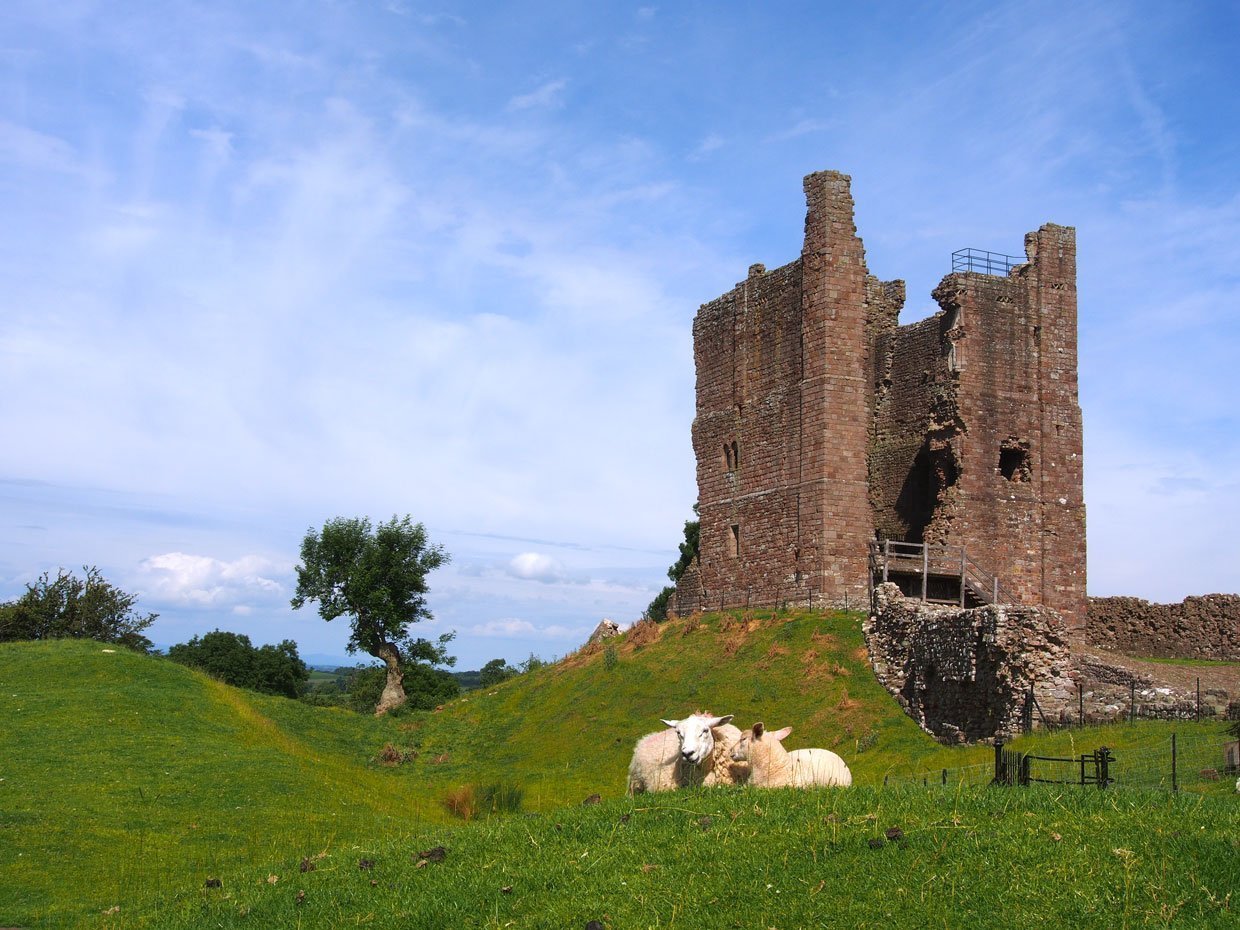
Around 1092, he ordered the construction of the first timber and stone castle directly within the northern ramparts of the old Roman fort, creating a permanent line of defense to lock down the Pennine pass against Scottish incursions.
The Volatile Timeline of Brough Castle
Brough’s history is a relentless cycle of violent destruction, structural decay, and stubborn, high-stakes resurrection.
Over the centuries, the castle was passed between warring kings, high-ranking lords, and legendary northern dynasties, changing its layout with every single conflict.

To help you get your historical bearings while wandering the modern ruins, here is a breakdown of the core milestones that shaped the fabric of the estate:
|
Era / Year |
Historical Milestone |
Structural Impact on the Site |
|---|---|---|
|
c. 78 AD |
Founding of Roman Fort Verterae |
Establishes the primary raised earthworks, ditches, and strategic defensive footprint still visible today. |
|
1092 |
King William Rufus builds the Norman Castle |
Erects a primitive timber and stone enclave to defend the strategic trans-Pennine trading routes. |
|
1173 |
The Great Revolt & Scottish Invasion |
William the Lion, King of Scotland, captures the fortress and completely dismantles the original Norman structure. |
|
c. 1200 |
Reconstruction by Henry II & Robert de Vieuxpont |
Rebuilds the castle in stone, constructing the massive, square stone keep (Clifford’s Tower) that stands today. |
|
1521 |
The Great Christmas Feast Fire |
A catastrophic accidental fire breaks out during a holiday festival, gutting the interior and leaving it a roofless ruin for 140 years. |
|
1659 |
The Lady Anne Clifford Restoration |
Restores the entire estate to its former glory—installing a new hall, courtyards, and a total of 24 working fireplaces. |
|
1666 |
The Final Fire & Stripping |
A second devastating fire guts the living quarters. The estate is permanently abandoned and slowly stripped of stone to build local mills. |
The Clifford Legacy and the Great Holiday Fire
By the start of the 14th century, the fortress had transitioned into the hands of the powerful Clifford family, one of the most formidable northern dynasties in British history.
They set about transforming the bleak military outpost into a grand, luxurious country palace capable of hosting the family’s massive retinue.
They engineered a towering new residential keep, expansive great halls, and plush private chambers. For nearly two centuries, Brough served as the primary, festive heart of the Clifford family estate.

However, the luxury was brought to an abrupt, violent halt in 1521.
During a massive, high-society Christmas feast, a catastrophic accidental fire broke out within the kitchens. The flames spread rapidly through the timber floorboards and tapestries, completely gutting the interior structure.
The castle was reduced to a blackened, roofless shell, completely abandoned to the elements for over a century.
The local population simply assumed that the story of Brough Castle had come to its definitive end.
Lady Anne Clifford: The Phoenix of the North
The most compelling personal story etched into these Cumbrian stones belongs to Lady Anne Clifford.
Inheriting the ruined family estates in 1643 after a lifelong legal battle, she established herself as one of the most remarkable, independent architectural forces of the 17th century.
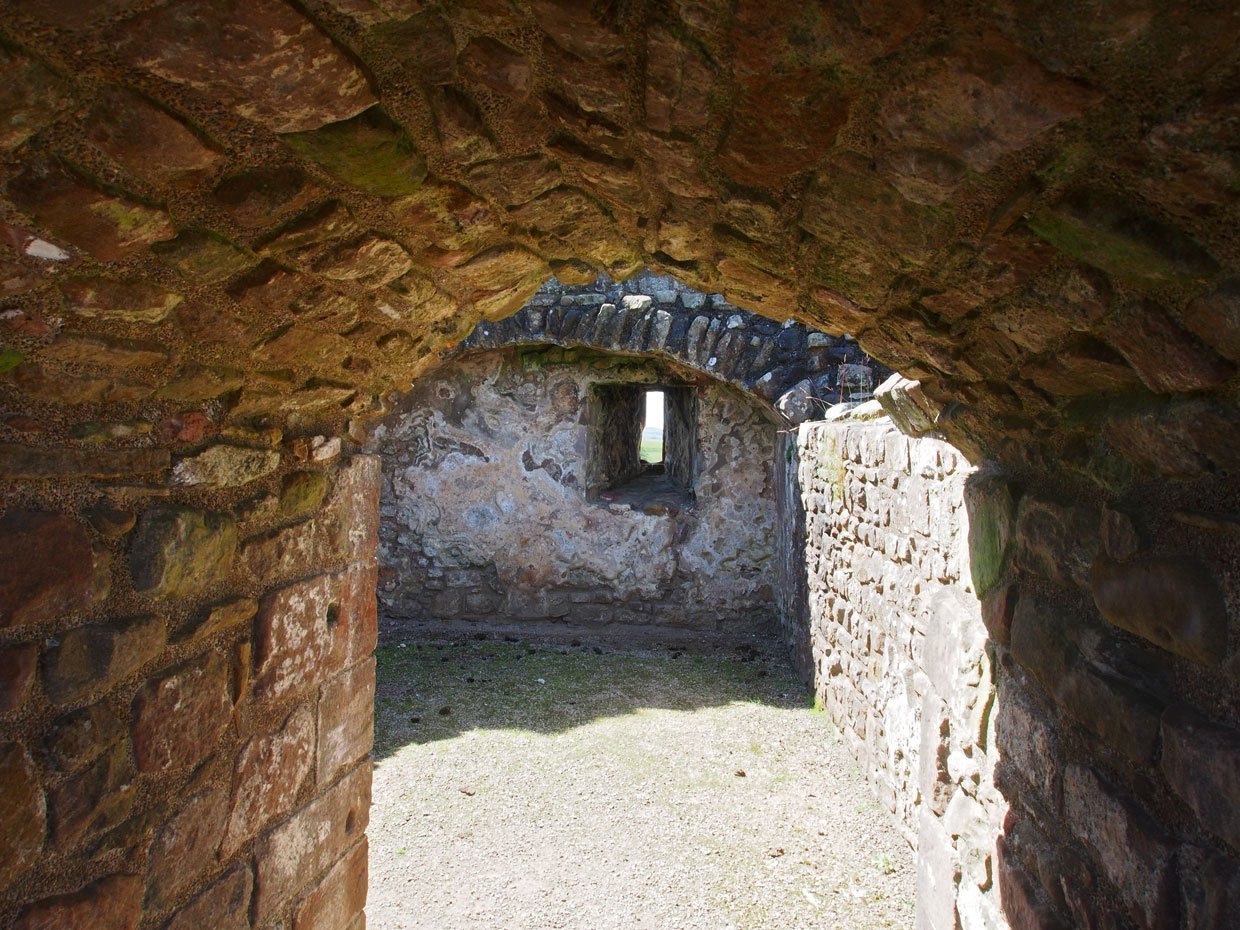
Refusing to let her ancestral heritages crumble, she launched a massive, multi-castle restoration sweep across the North of England.
In 1659, she turned her focus to Brough. She poured immense personal wealth into rebuilding the grand hall, clearing out the fire debris, and reinforcing the ancient Norman keep.

She transformed it back into a fully functioning, magnificent home, proudly engineering 24 individual fireplaces into the stone walls to combat the brutal Pennine winters.
Tragically, her hard work was short-lived. In 1666—just seven years after the restoration was finalized—yet another devastating fire swept through the residential quarters, making the palace permanently uninhabitable.

Following Lady Anne’s death, later descendants lacked her deep emotional connection to the land.
They viewed the castle as a mere financial asset, actively stripping away the lead roof structures and fine masonry to fund the reconstruction of Appleby Castle and the building of nearby Brough Mill.
Deprived of its structural bones, the castle entered its final phase of decay, leading to a massive collapse of the main keep walls in the early 1800s.

Next Stop on the Trail: Brough wasn’t an isolated project; it was part of a massive regional network. From here, Lady Anne would travel down the valley to her primary seat of power at Appleby Castle.
You can map out her entire 100-mile journey from her birthplace to her final sunset in my complete Lady Anne Clifford Castle Trail Guide.*
Walking the Ruins Today
Wandering through Brough Castle today is a profoundly peaceful experience that contrasts sharply with its violent past.
Because the site is free and entirely open to explore, you can take your time tracking through the deep defensive ditches, stepping inside the hollow, towering shells of the keep, and running your hands along masonry that has witnessed thousands of years of border history.

Once you have filled your boots with history and soaked in the exceptional, panoramic views across the Upper Eden valley floor, you can make the brief walk over to the farm ice cream parlour sitting right outside the castle perimeter.
Sitting on a wooden bench in the afternoon sunshine, enjoying a scoop of local dairy ice cream while looking up at the towering, battle-scarred walls of Clifford’s Tower, is the ultimate way to wrap up a valley exploration.
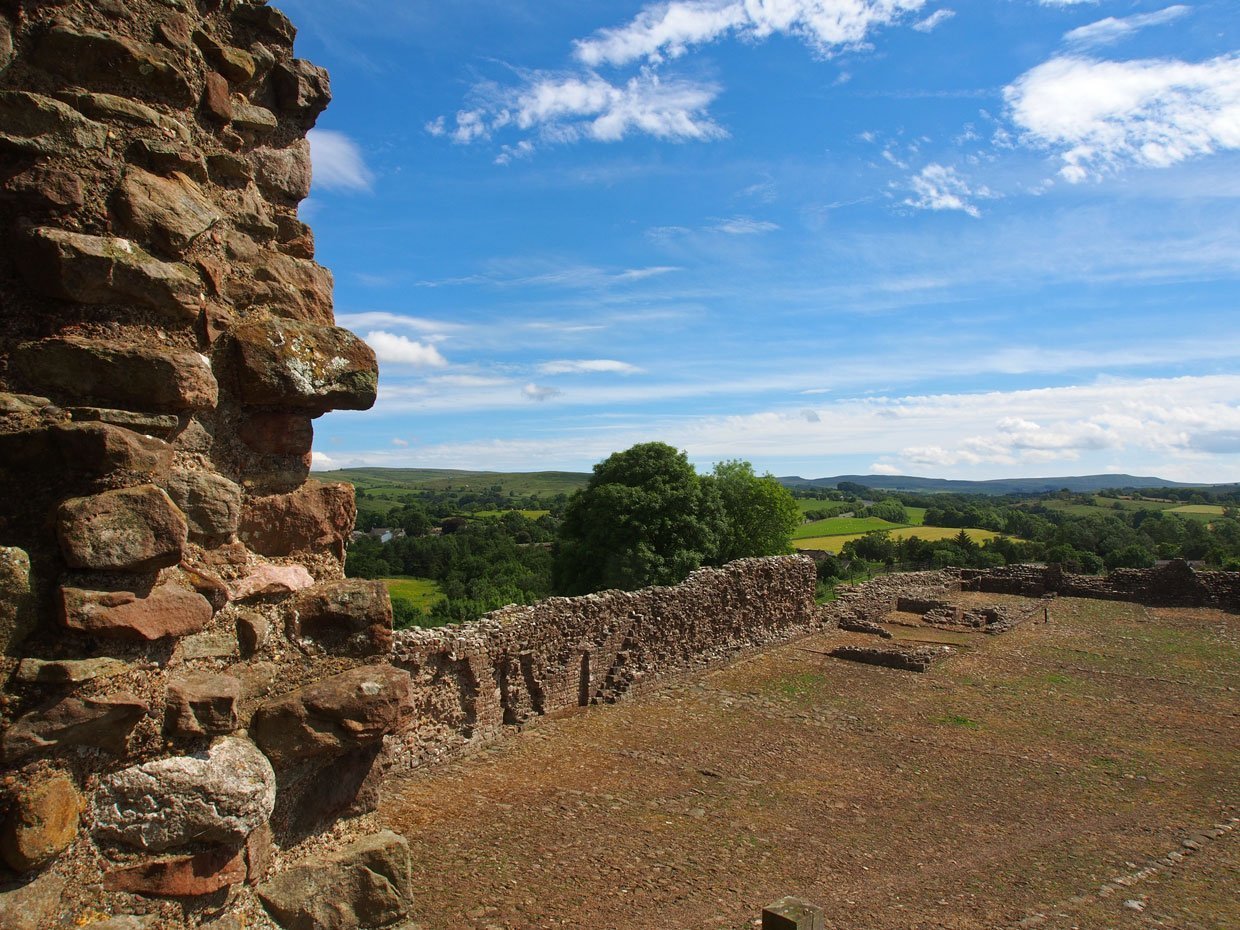
The Eden Valley reminds us that the best adventures often sit just outside the boundaries of our famous national parks.
Pack your dogs, check your maps, and take the time to discover the quiet, standing history of the Cumbrian frontier.
Explore More Spectacular Cumbrian Castles & Historic Eden Valley Guides
- The Grand Valley Ruin: Brougham Castle: Navigating the Historic Banks of the River Eamont
- The Border Stronghold: Penrith Castle: Exploring the Historic Gateway to the Lake District fells
- The Romantic Outpost: Pendragon Castle: The Romantic Ruin of Mallerstang Dale
- The Heritage Hub: A Walk Around Appleby-in-Westmorland: A Cumbrian Trail Manual




My last name is Brough. Do you think there’s a connection?
Brought back childhood memories of visits during the 1950s. In the 70s I delivered bread to villages off the A66 during University vacations. Scotch Corner Hotel was a favoured spot for afternoon tea, dinner dances and cocktails! Ford Prefects, Humber Super Snipes and Vauxhall Victors..
I loved your post. I was actually able to learn something about a place instead of just reading about how cool an adventure was. 🙂
Thank you Fabiana, yes I like the learning part and passing some on 😀