There are few historical figures whose indomitable spirit is so physically etched into the rugged topography of Northern England as Lady Anne Clifford.
Living through the reigns of Queen Elizabeth I, the execution of Charles I, the dark years of the English Civil War, and the Restoration, she was a true, unmatched 17th-century powerhouse.
When her father, the 3rd Earl of Cumberland, died in 1605, he illegally willed the vast family estates to his brother, launching Anne into a grueling, stubborn 38-year legal battle to reclaim her birthright.
When she finally won back her inheritance in 1643 at the age of 53, she didn’t sit quietly in London.
She rode north into a landscape shattered by the Civil War and spent the final three decades of her life conducting a massive, multi-castle architectural resurrection.
As an outdoor explorer and a guide who values resilience, tracking her trail across North Yorkshire and Cumbria is a profound journey.
Stretching over 100 miles from the limestone crags of the Yorkshire Dales to the sweeping contours of the Eden Valley, here is my complete field manual and driving itinerary to the Lady Anne Clifford Castle Trail.
A magnificent Road Trip.
🗺️ Lady Anne Trail Expedition Blueprint & Logistics
The Trail Vector:
Spans approximately 100 miles (160 km), tracing a magnificent geographical arc from Skipton in North Yorkshire, through the Yorkshire Dales, and descending into the Eden Valley of Cumbria.
Primary Active Use Cases:
Can be tackled as a spectacular multi-day historic driving itinerary, or broken down step-by-step alongside the long-distance Lady Anne’s Way walking trail.
The Network Node:
Encompasses five primary defensive castles, numerous ancient chapels, and historic almshouses all personally restored by Lady Anne between 1649 and 1676.
Dog-Friendly Parameters:
High utility. Four out of the five properties along the route explicitly welcome four-legged trail companions on leads within their grounds.
Base Camp Strategy:
To experience the route mindfully, split your trip into two distinct halves. Secure a staging post in Skipton for the Yorkshire segment, then move your base camp to Kirkby Stephen or Penrith for the Cumbrian valley loop.
The Heritage Trail: 5 Castles Matrix
Every stronghold along this historic route carries a completely distinct structural identity, microclimate, and tactical function.
Rather than repeating her entire biography on every page, use this master trail matrix to navigate the unique highlights and visitor parameters for each estate:
|
The Castle |
Geographic Region |
Core Historical Profile |
Hiker & Visitor Log |
|---|---|---|---|
|
Skipton Castle |
North Yorkshire (Craven District) |
The Birthplace & Principal Seat. A grand, fully intact medieval fortress that withstood a brutal 3-year Civil War siege. |
Paid entry. Features the magnificent Conduit Court and a historic yew tree personally planted by Lady Anne in 1659 to mark its repair. |
|
Pendragon Castle |
Cumbria (Mallerstang Dale) |
The Isolated Retreat. A wild, roofless Norman tower house deeply tied to Arthurian legend and burned by Scottish raiders. |
Free entry. Completely uncommercialized, standing in a windswept, high-elevation valley. Exceptionally dog-friendly. |
|
Brough Castle |
Cumbria (Upper Eden Valley) |
The Roman Pass Guardian. Constructed inside the earthworks of Roman Verterae to defend the vital Stainmore Pass road. |
Free entry. Famous for its 1521 Christmas feast fire and Lady Anne’s 24 fireplaces. Sits next to a local farm ice cream parlour. |
|
Appleby Castle |
Cumbria (Lower Eden Valley) |
The Master Seat. Lady Anne’s primary administrative home, featuring a completely intact 12th-century Norman keep. |
Guided tours & luxury stays. Functions today as a historic hotel estate wrapped by the River Eden. |
|
Brougham Castle |
Cumbria (Near Penrith) |
The Final Destination. A massive, formidable riverside ruin built next to a Roman naval base. This is where Lady Anne died in 1676. |
English Heritage (Paid). A multi-story labyrinth of passageways resting on the banks of the River Eamont. |
The Trail Itinerary: From Birthplace to Final Sunset
Stop 1: Skipton Castle — Where the Story Begins
Our historical trek launches precisely where Lady Anne’s life did: the formidable stone gates of Skipton Castle in North Yorkshire.
Born here on 30 January 1590, Anne spent her earliest childhood steps within these massive medieval walls, exploring the rich, wooded valleys of the Craven district.
Skipton holds a unique place on the trail because, unlike her other properties, it was never allowed to fall into complete ruin.
During the English Civil War, it stood as the very last Royalist bastion in the North, finally yielding to Cromwell’s forces in 1645 after a grueling three-year siege.
When Oliver Cromwell ordered the castle to be “slighted” (partially dismantled so it couldn’t be used defensively again), Lady Anne skillfully outmaneuvered the authorities.
She convinced them she was merely repairing a “habitable house” rather than rebuilding a military fort, subtly lowering the rooflines while restoring its grand interior rooms.
Wandering into the central Conduit Court, you can stand beside the massive, ancient yew tree that she personally planted in 1659 to signify the rebirth of her family seat—a beautiful, living monument to resilience that still thrives today.
Stop 2: Pendragon Castle — The Wild Arthurian Border House
Pushing north out of Yorkshire, the trail climbs dramatically through the wild, windswept high passes of the Pennines before dropping down into the moody isolation of Mallerstang Dale.
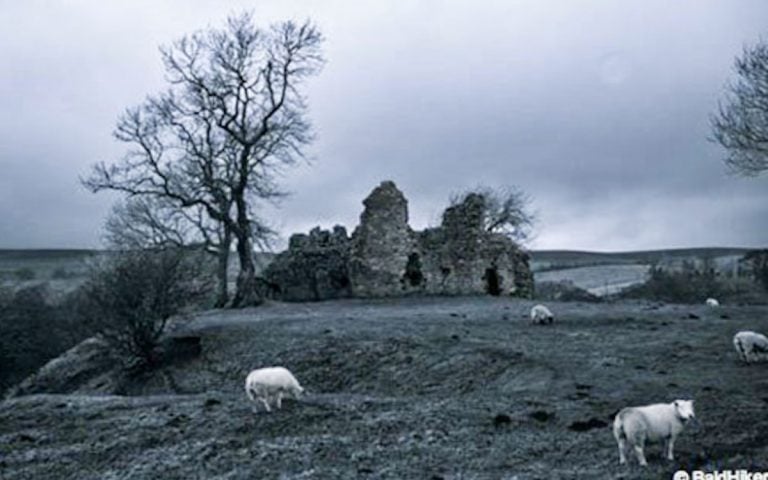
Here, sitting completely exposed to the elements on a quiet bend of the River Eden, rises the romantic silhouette of Pendragon Castle.
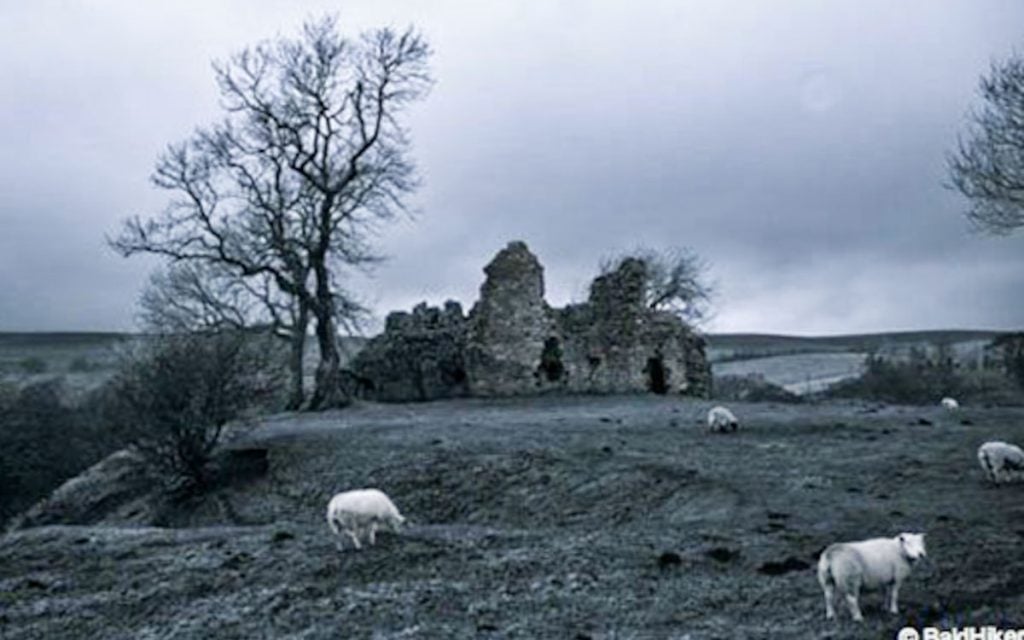
According to intense local folklore, this private tower house was originally founded by Uther Pendragon, the legendary father of King Arthur, who supposedly tried to mechanically redirect the course of the River Eden to fill his defensive moats.
By the time Lady Anne claimed it, the building had been completely torched by marauding Scottish raiders and left roofless for generations.
She saw it as a vital, quiet sanctuary. She restored the tower, built a surrounding courtyard, and used it as a peaceful retreat far away from the busy administrative demands of her larger castles.
Today, it stands as a wild, completely free ruin that captures the raw, rugged essence of the Cumbrian wilderness.
Stop 3: Brough Castle — The Roman Crossroads
Continuing down the valley floor where the Pennines meet the Howgills, the trail leads directly to the massive limestone ridge of Brough Castle.
This location is a masterclass in tactical route management, sitting directly on the trans-Pennine road network used by Roman legions centuries before the Normans arrived.

Brough is defined by a history of dramatic accidents, most notably the catastrophic fire during a massive Christmas feast in 1521 that left the castle a blackened shell for 140 years.
Lady Anne’s restoration here was monumental.
She cleared the centuries of debris, rebuilt the great hall, and engineered 14 new residential rooms anchored by a total of 24 working fireplaces to withstand the bitter mountain winds.
It is an exceptional, completely free English Heritage site that pairs perfectly with a mindful afternoon picnic and a stop at the farm ice cream parlour right outside the gates.
Stop 4: Appleby Castle — The Master Seat of Power
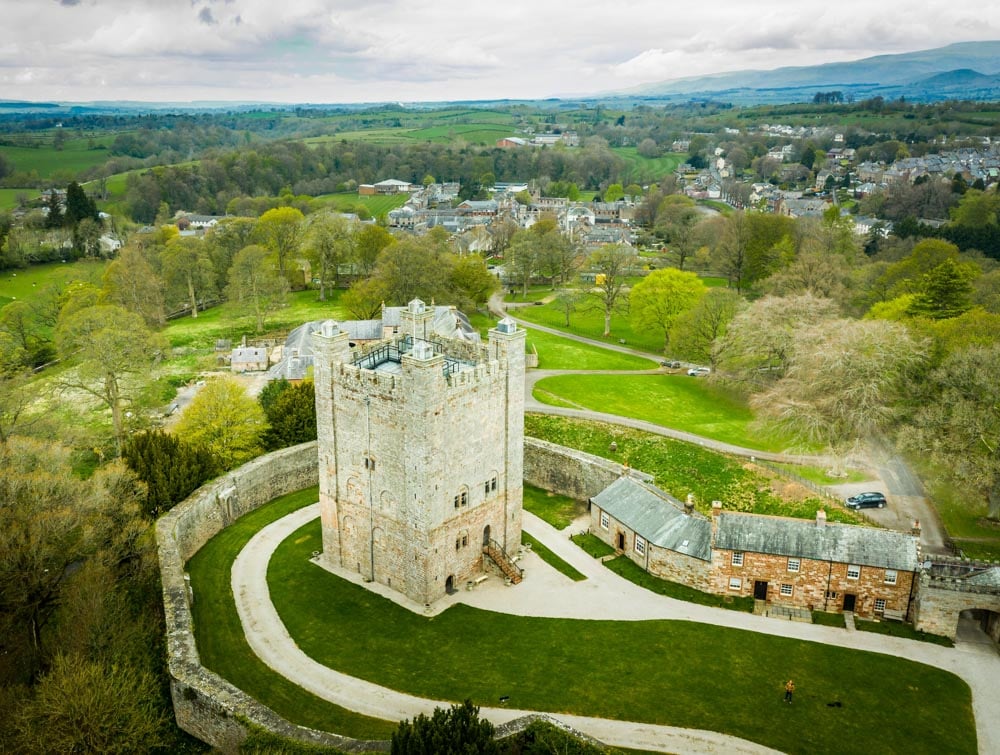
A brief drive further down the valley brings you into the immaculate, red-sandstone heritage town of Appleby-in-Westmorland. Sitting proudly at the highest point of the town, completely encircled by a tight loop of the River Eden, is Appleby Castle.
This grand estate was the absolute operational nerve center of Lady Anne’s entire northern empire.
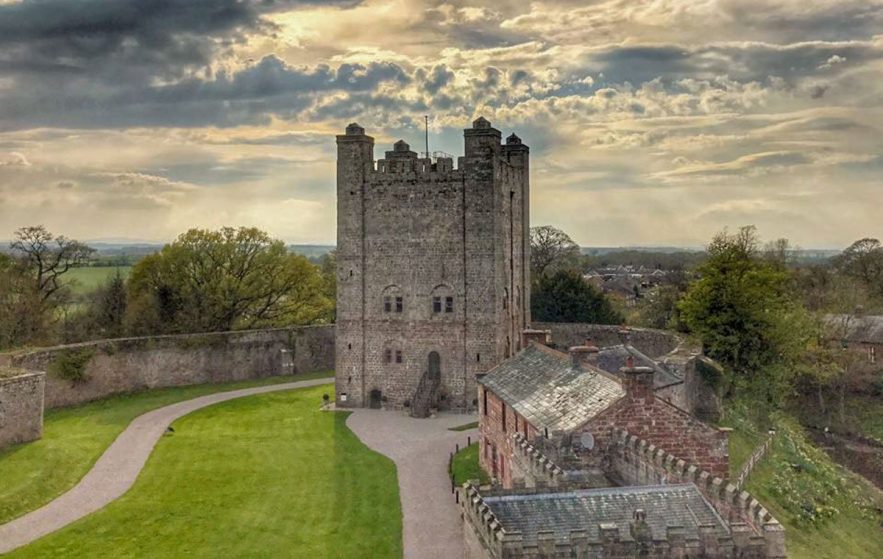
While her other castles function primarily as ruins today, Appleby remains a fully intact, stunning residential fortress.
It features the pristine, un-ruined 12th-century Norman Keep (Caesar’s Tower) where Lady Anne kept her meticulous daily diaries and business ledgers.
Because it operates today as a hotel and estate, visiting Appleby allows you to step directly into the high-society world she inhabited, walking the grounds where she held her regional courts.
Stop 5: Brougham Castle — Where the Journey Ends
The absolute grand finale of the trail sits just outside the bustling town of Penrith, resting on the quiet, low-valley banks where the River Eamont meets the River Lowther: Brougham Castle.
Brougham is arguably the most structurally complex and imposing ruin along the entire loop. Built next to the ancient Roman naval supply outpost of Brocavum, its multi-story passages and spiral staircases are a joy to map out on foot.
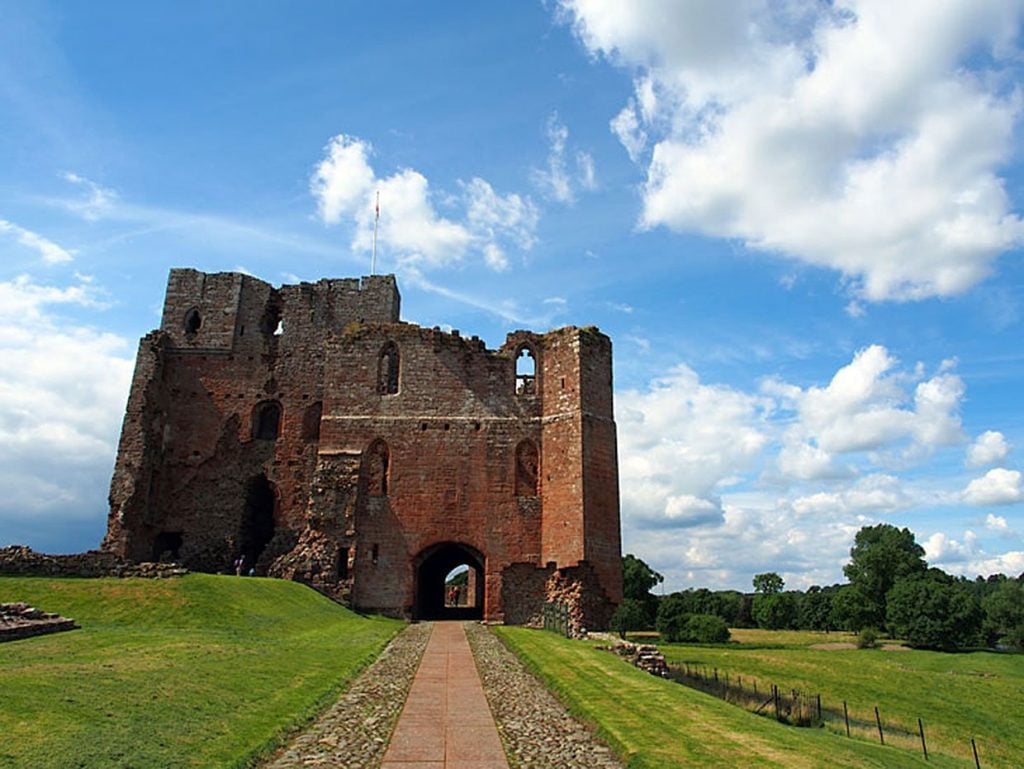
This fortress carries a deep, emotional finality for the Clifford family line.
In 1676, at the age of 86, Lady Anne Clifford passed away peacefully within the private chambers of Brougham’s great keep—fittingsly, in the exact same room where her father had been born 118 years prior. Also the room her mother passed away in.
Her death closed the loop on one of the most remarkable lives in British history.
She was laid to rest just a short distance away inside St. Lawrence’s Church in Appleby, leaving behind a restored landscape that still inspires outdoor explorers to this day.
The Ultimate Mindful Connection: The Countess Pillar
No journey along the Lady Anne Clifford Trail is complete without making a tactical roadside stop between Appleby and Brougham Castles to stand beside The Countess Pillar.
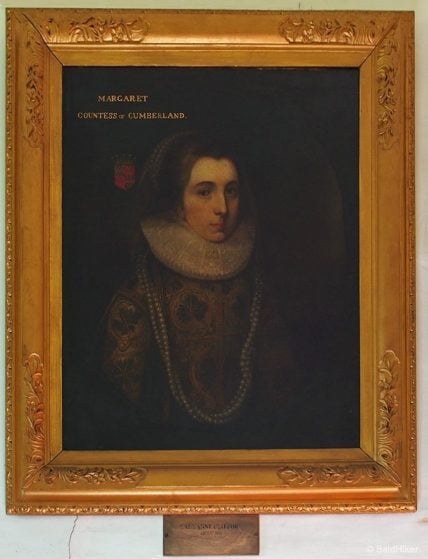
Erected personally by Lady Anne in 1656, this ornate stone monument marks the exact geographic location where she said her final, emotional physical goodbye to her beloved mother, Margaret, Countess of Cumberland, in April 1616.
It was Margaret who originally launched the legal battles to protect her daughter’s inheritance, and Anne never forgot her mother’s strength.
To this day, the monument stands as a beautiful, moving reminder of family bonds, gratitude, and the value of honouring those who walked the path before us.
When we step out onto these northern trails, we aren’t just logging miles or ticking tourist boxes; we are tracking through living history.
Following Lady Anne’s footsteps forces you to slow down, respect the structural power of the landscape, and find your own sense of enduring determination out on the open road.