
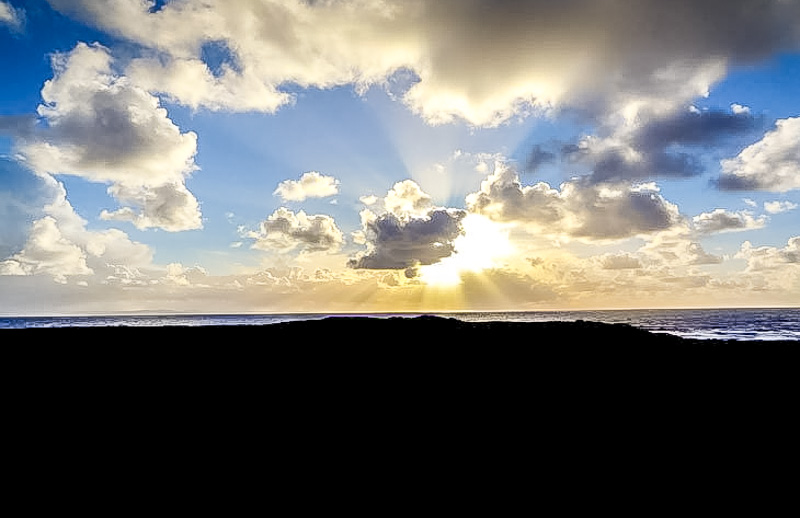
When hikers think of the South Wales coastline, their minds often jump straight to the famous cliffs of Pembrokeshire or the sandy bays of the Gower Peninsula.
But tucked away between Cardiff and Swansea lies the Bridgend section of the Wales Coast Path—a spectacular, rugged stretch that offers some of the most dynamic landscapes, unique conservation stories, and eerie historical legends in the country.
This specific linear trek takes you from the towering, desert-like expanses of the Merthyr Mawr Sand Dunes, traces the wide bays of Newton Beach and Rest Bay in Porthcawl, passes the windswept walls of the haunted Sker House, and finishes amidst the dunes of Kenfig National Nature Reserve.
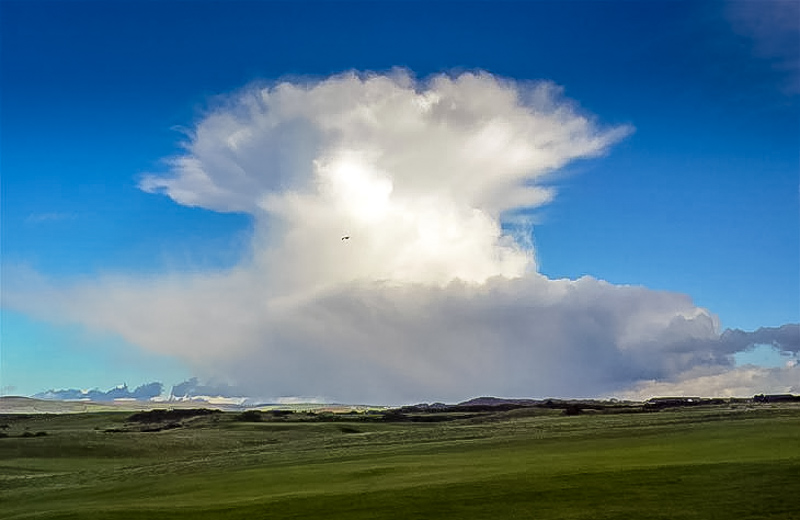
Accompanied by my good friend and fountain of local knowledge, Ian Skinner, I set out on a day where the Welsh weather threw absolutely everything at us—from howling sea winds to brilliant sunshine and sudden coast rainbows.
If you want a coastal walk that breaks away from the crowds and walks through literal film sets and medieval ghost stories, here is your definitive trail blueprint.
Bridgend Coast Path Trail Blueprint:
Distance:
Approximately 11.5 miles (18.5 km) linear walk.
Time Needed:
5 to 6 hours of steady walking, allowing for sandy terrain.
Difficulty:
Moderate. While the route is largely flat, walking over deep, shifting sand dunes requires significant leg strength and adds time to your pace.
Logistics & Public Transport:
Because this is a linear coastal walk, the easiest method is to park at the Kenfig Nature Reserve visitor center (the finish line), catch a short local taxi or bus link into Bridgend/Merthyr Mawr to start, and walk back to your car.
Dog-Friendly:
Yes, it is a fantastic open run for dogs, but be mindful of seasonal restrictions on certain central sections of Porthcawl’s main town beaches during summer months.
The Sahara of Wales: Merthyr Mawr Sand Dunes
The expedition begins in the picture-postcard village of Merthyr Mawr, a quiet haven defined by historic stone churches and beautiful, traditional thatched cottages.
But within minutes of leaving the village lanes, the landscape shifts dramatically as you enter the Merthyr Mawr Warren.
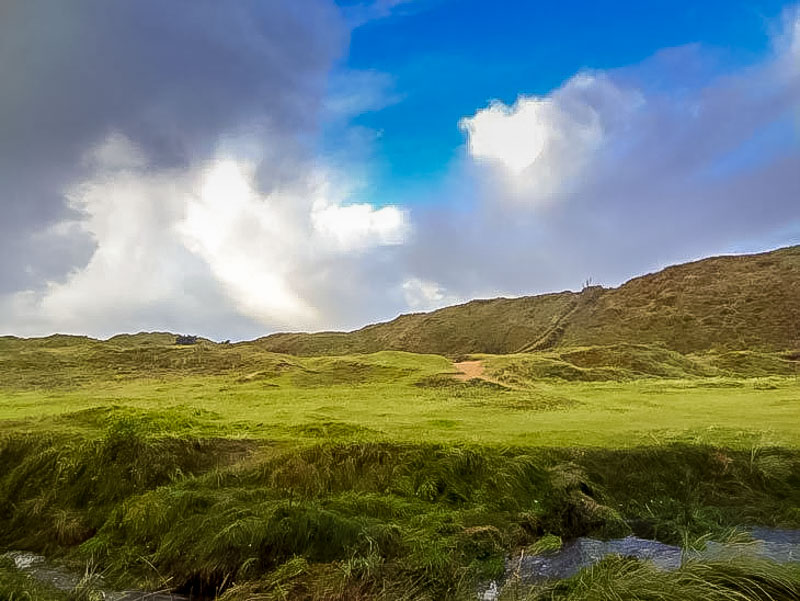
This is a massive, sprawling network of sand dunes that blankets the coast.
Sitting on top of an ancient limestone plateau, these are the highest sand dunes in the United Kingdom.
Standing on top of the highest ridges offers a spectacular view out over the Bristol Channel, but the real fascination here lies in the local ecology.
In the 1950s, conservationists became terrified that the shifting sands would roll too far inland and swallow local agricultural land.
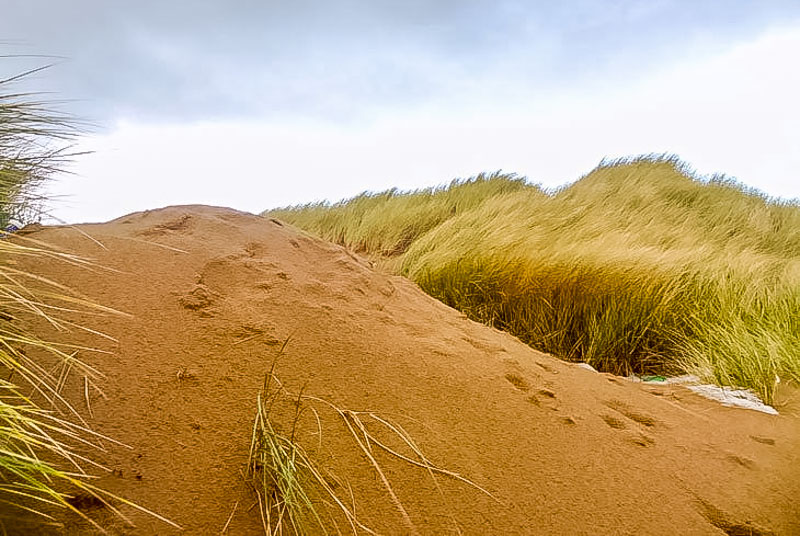
To stabilize the desert-like terrain, they introduced sea-buckthorn. The plant did its job far too well. Within decades, the aggressive, thorny shrub completely choked out the open dunes, transforming a unique bare-sand ecosystem into a dense thicket.
Today, massive ecological restoration projects are underway to systematically remove the sea-buckthorn and clear the scrub, allowing the natural, dynamic bare sand to breathe again.
Walking through this landscape today, it feels completely otherworldly—so much so that Hollywood directors used these exact dunes to film the iconic desert scenes for Lawrence of Arabia.
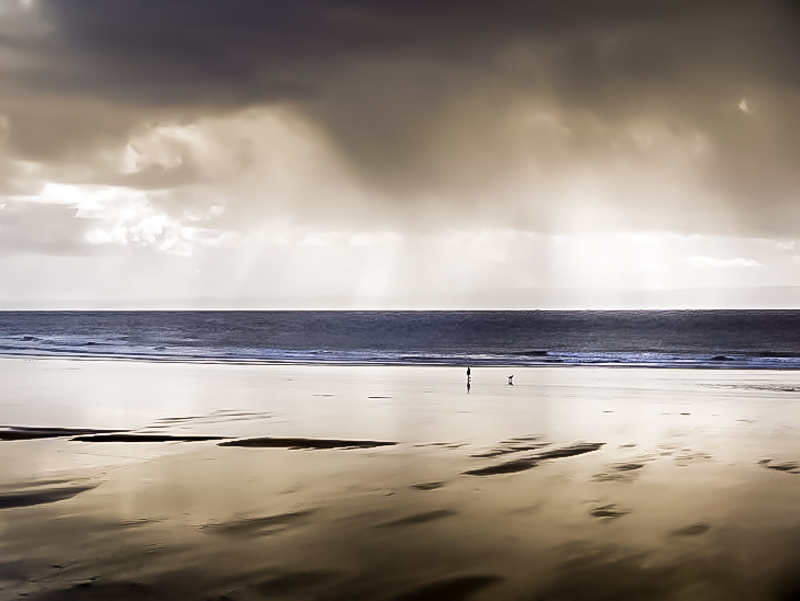
Tracing the Surf: Newton Beach to Porthcawl
Exiting the vast sandy labyrinth of the warren, you hit the shoreline at Newton Beach and begin your push westward.
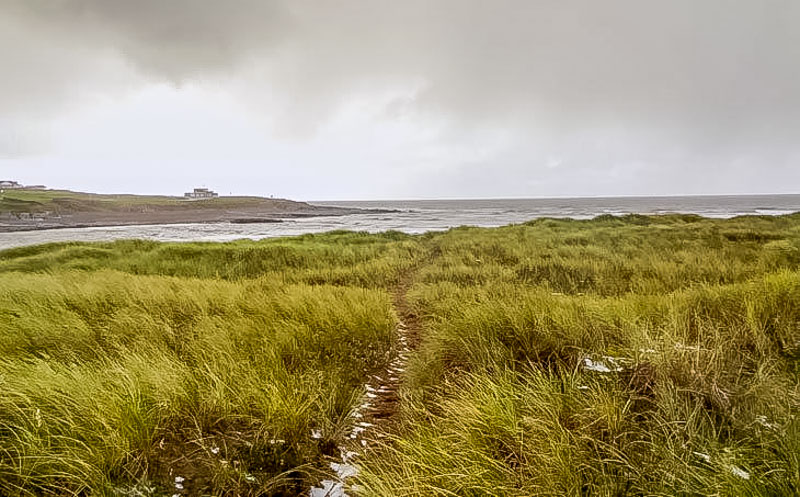
With the sea wind blowing full in your face and the vast expanse of the Bristol Channel to your left, the trail follows a wide, sandy arc.
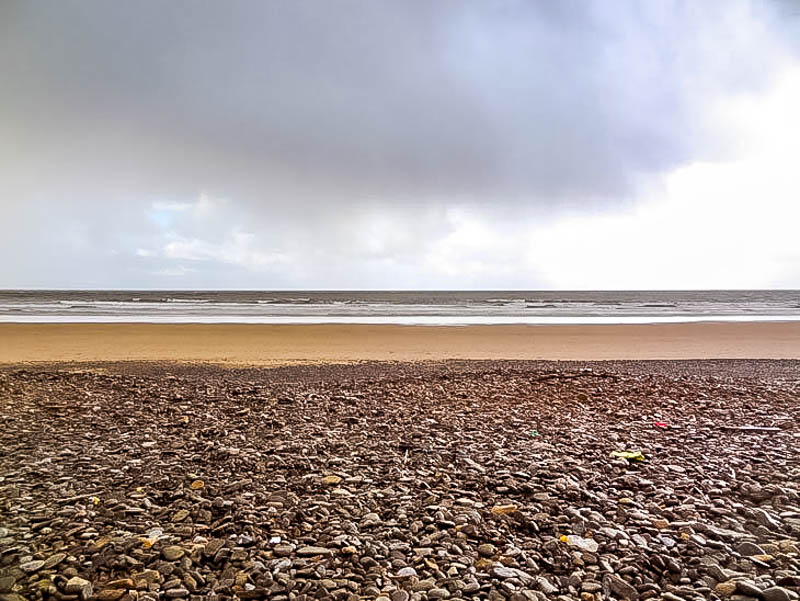
After a few miles of open coastline, the path brings you into the vibrant seaside town of Porthcawl.
Skirting past the local caravan parks and classic amusement arcades, the trail reveals the rugged beauty of Rest Bay.
Rest Bay is an absolute magnet for outdoor enthusiasts. Blessed with consistent, rolling Atlantic swells, it is a premier destination for local surfers and kite surfers.
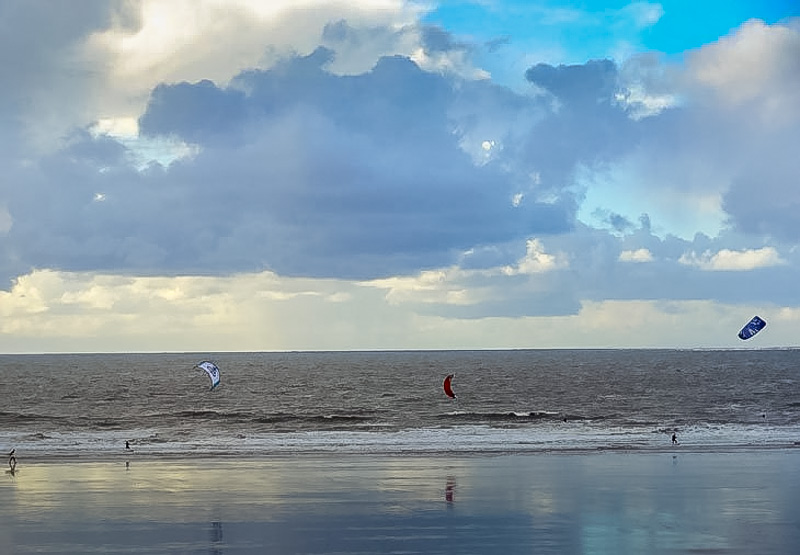
Even on a day with mixed, stormy weather, watching dozens of colourful kites riding the crests of the gray waves adds a fantastic, energetic atmosphere to the trek.
It’s a great spot to pause, pull up a bench, and watch the surfers tackle the breaks.
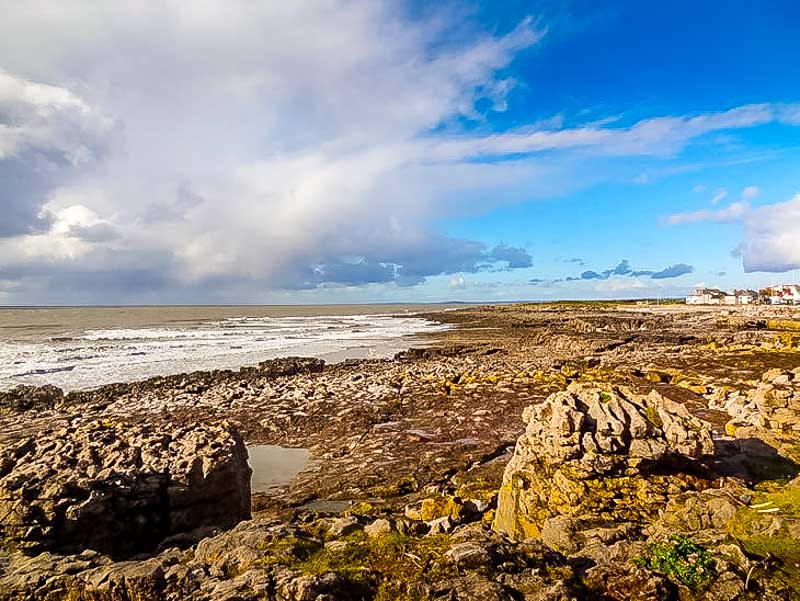
The Ghostly Legend of Sker House
Leaving the surf of Porthcawl behind, the Coast Path guides you past the manicured, windswept links of the Royal Porthcawl Golf Club.
As you push further into the lonely coastal fields, a striking, isolated building begins to rise from the green landscape—a monolithic house coated in a brilliant yellow lime wash. This is Sker House.
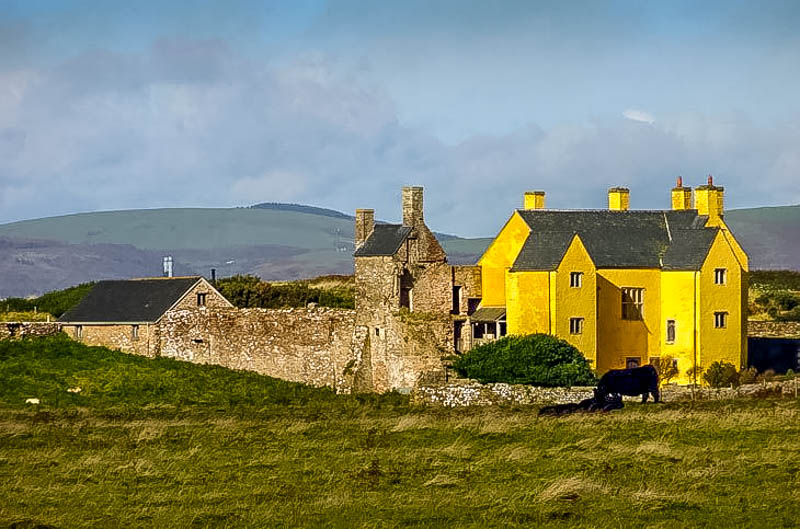
The origins of this windswept building date back to the 12th century, when it was constructed as a monastic grange by Cistercian monks from Neath Abbey.
Following the dissolution of the monasteries, it became a private manor house, but over the centuries, it fell into severe, haunting disrepair.
Sker House is legendary in Welsh folklore for its ghosts, most notably inspiring R.D. Blackmore’s famous 1872 Victorian novel, The Maid of Sker.
The book is based on the tragic, real-life story of Elizabeth Williams, a young girl who was locked in an upstairs room of the house by her controlling father after she refused to abandon her lover.
She ultimately died of a broken heart within the walls. Today, the vibrant yellow exterior stands as a beautiful sign of modern restoration, rescuing this deeply historic building from ruin.
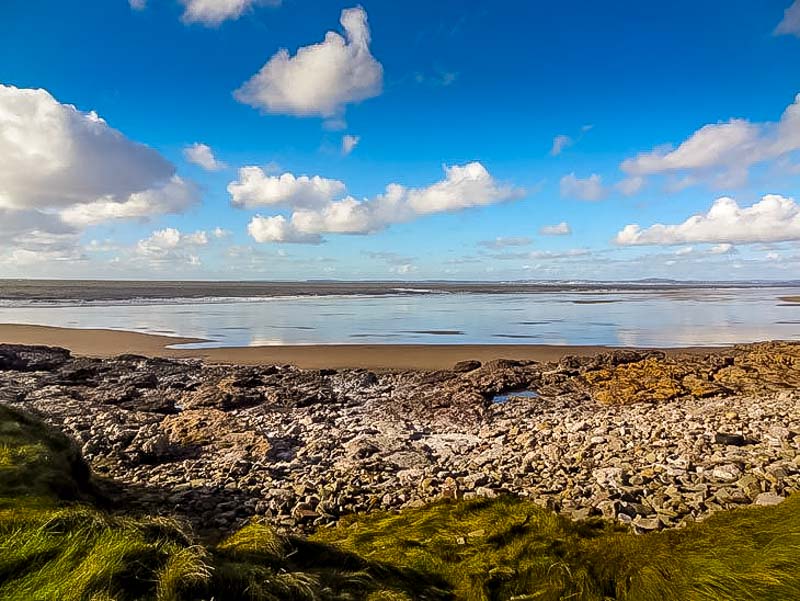
The Finish Line: Kenfig National Nature Reserve
Sker House serves as the ultimate marker that you have reached the final stage of the hike: Kenfig National Nature Reserve.
Kenfig is a spectacular wilderness of international ecological importance, home to rare orchids, thriving bird populations, and Kenfig Pool—Glamorgan’s largest natural lake. But beneath this tranquil landscape lies a dark, medieval secret.
During the 14th and 15th centuries, catastrophic climate shifts triggered severe, relentless sandstorms along this section of the coast.
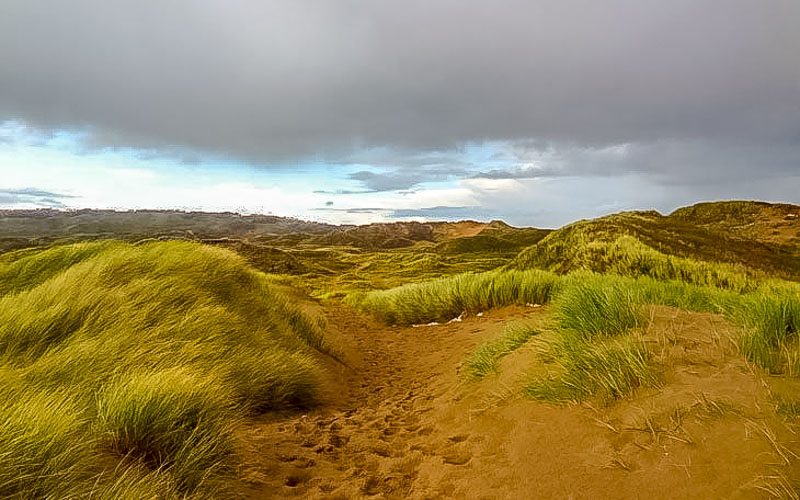
Over several decades, the shifting dunes slowly but relentlessly marched inland, completely overwhelming and burying the flourishing medieval town and castle of Kenfig.
Today, the ancient streets are entirely submerged beneath the sand, leaving a wild, windswept nature reserve that is a paradise for walkers and nature lovers alike.
Expanding Your Welsh Coastal Exploration
The Bridgend Coast Path is a masterclass in how closely industrial history, conservation, and ancient legends are intertwined along the British coastline.
If you are building a larger walking itinerary across South Wales, this route connects seamlessly into a network of spectacular trails:
Chasing Waterfalls: If you want to trade the salty sea air for deep gorges and roaring mountain rivers, head inland to experience the exceptional paths featured in our guide to the best waterfall walks in Wales.
High Mountain Epics: For those ready to transition from coastal sand dunes to dramatic mountains, make sure to read our boots-on-the-ground review of tackling the Pen y Fan Horseshoe.
Taking the time to slow down, explore the interior dunes, and learn the local stories of the Bridgend coast reveals a side of South Wales that most travelers completely bypass.
Throw on a windbreaker, pack a thermos, and head out onto the sands.


Looks like a fabulous stretch of coast and you have taken some breathtaking pictures of the clouds. Very inspiring!
Hi Paul, yes sometimes it can be unfortunately forgotten amongst Pembrokeshire etc but I can’t recommend the area enough 🙂
We just come back from North Wales – Hay-on-Way were we walked along the Offa’s Dyke Path. Beautiful land – Wales.
Haunting & beautiful…Family originally from Wales, The Mumbles…thank you for the walk.
Paul it was real nice to accompany you on the Bridgend part of your hike along the Wales Coastal Path.
All types of weather prevailed on the walk which was simply fab. I’ll be honest is was a blast!
GORGEOUS photos!
Inspiring, Paul. Thank you.