There is something truly magical about the Pembrokeshire coastline. The salty sea breeze, the dramatic limestone cliffs, and the endless horizon just beg you to lace up your walking boots and get out there.
But on my recent wander along the Pembrokeshire Coast Path, I wasn’t just looking for a good hike and a great view. I was on the hunt for one of Britain’s most spectacular hidden gems: St Govan’s Chapel.
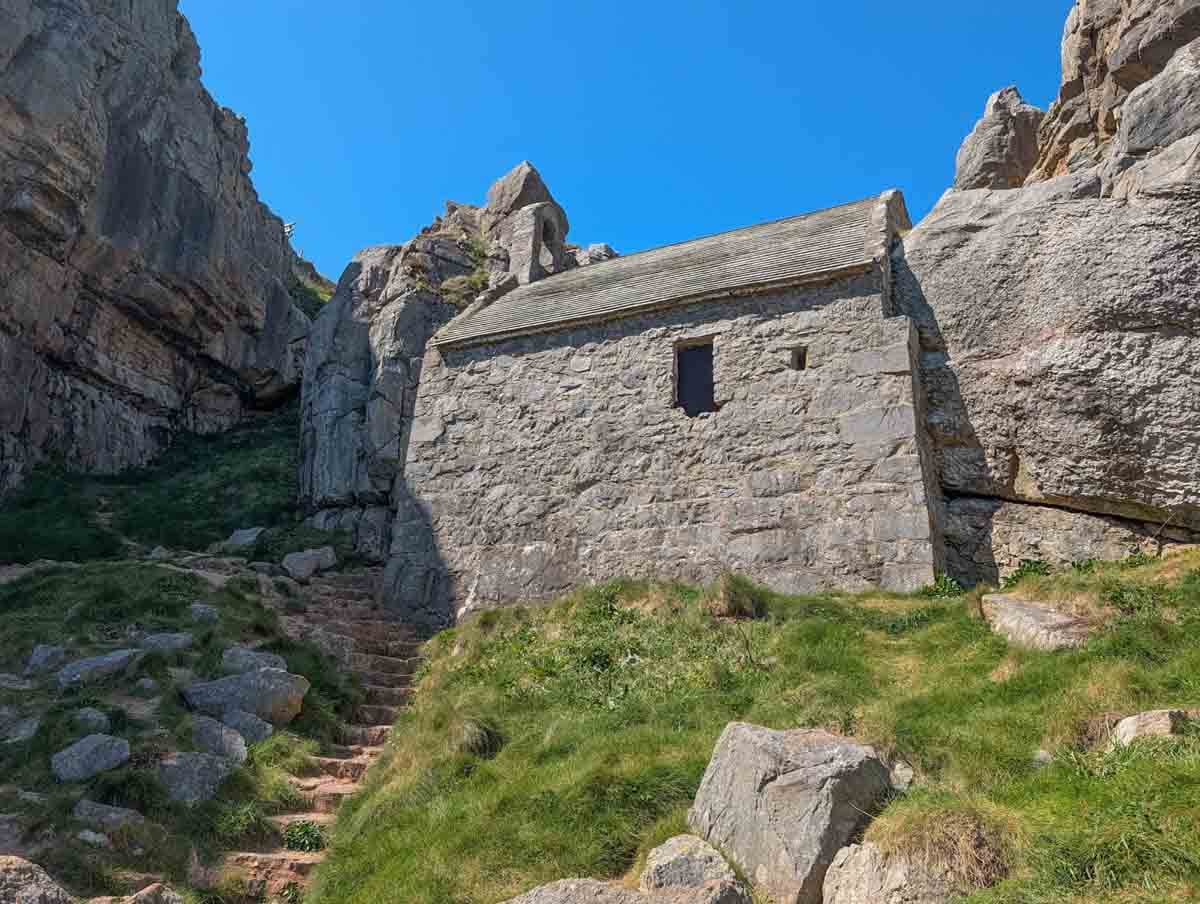
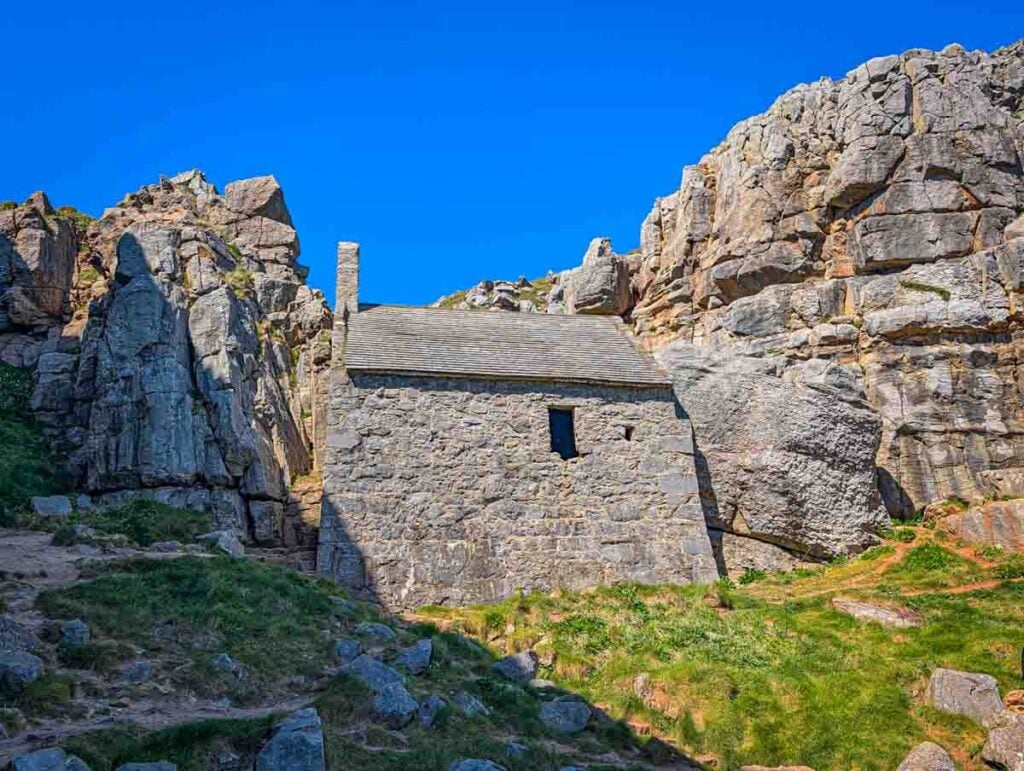
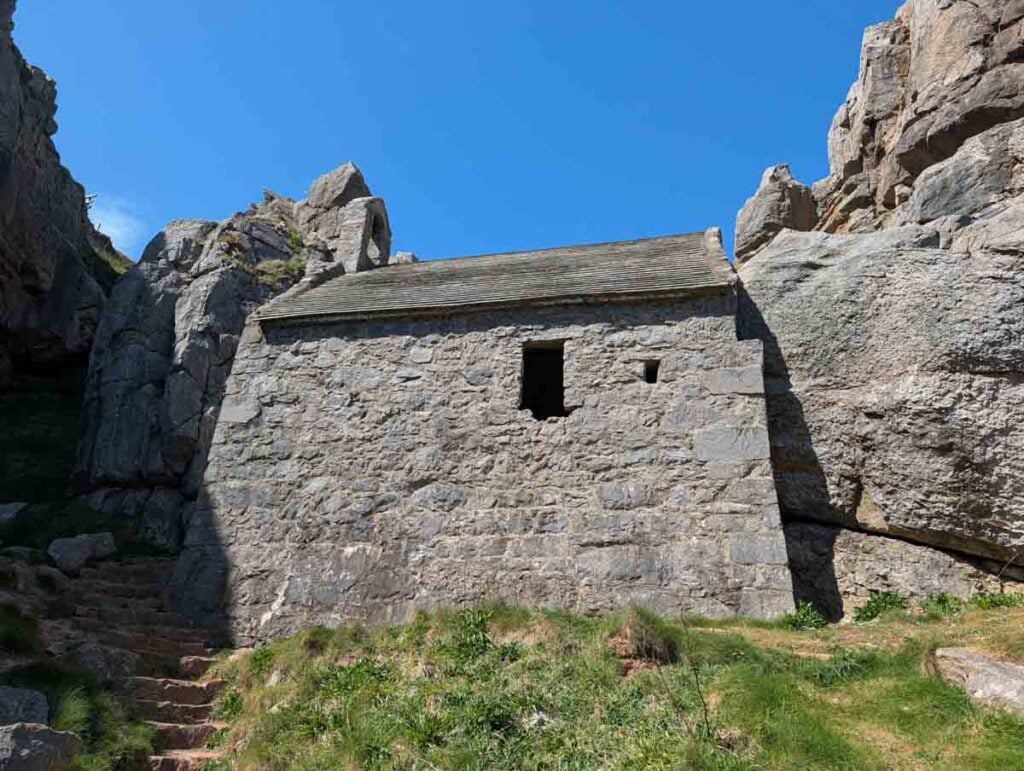
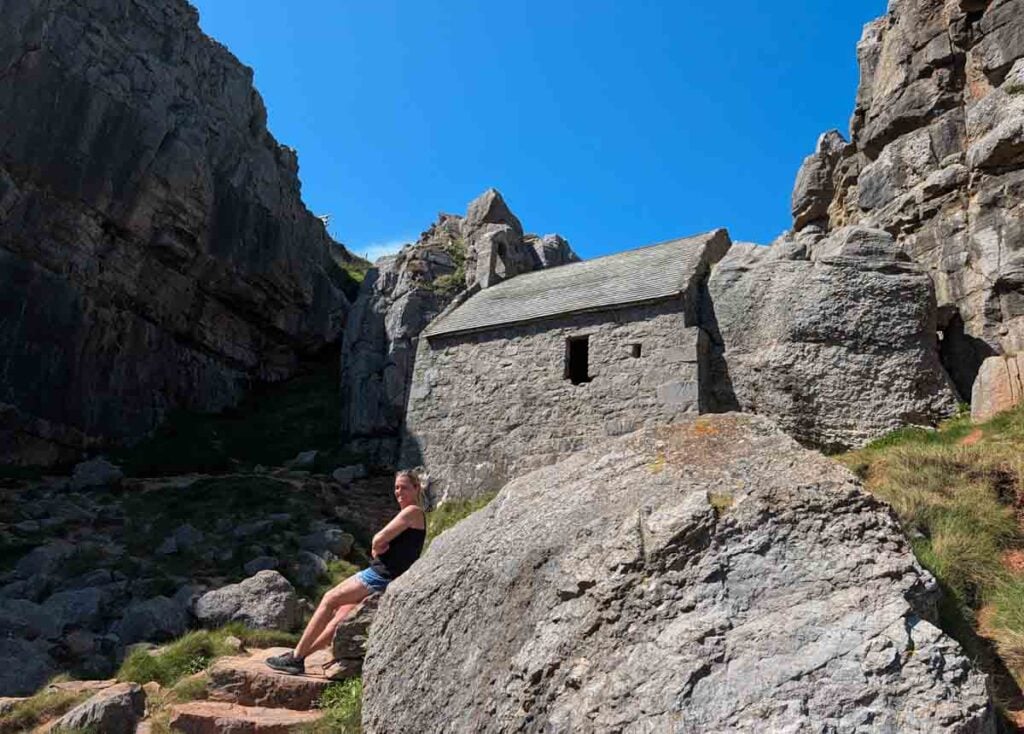
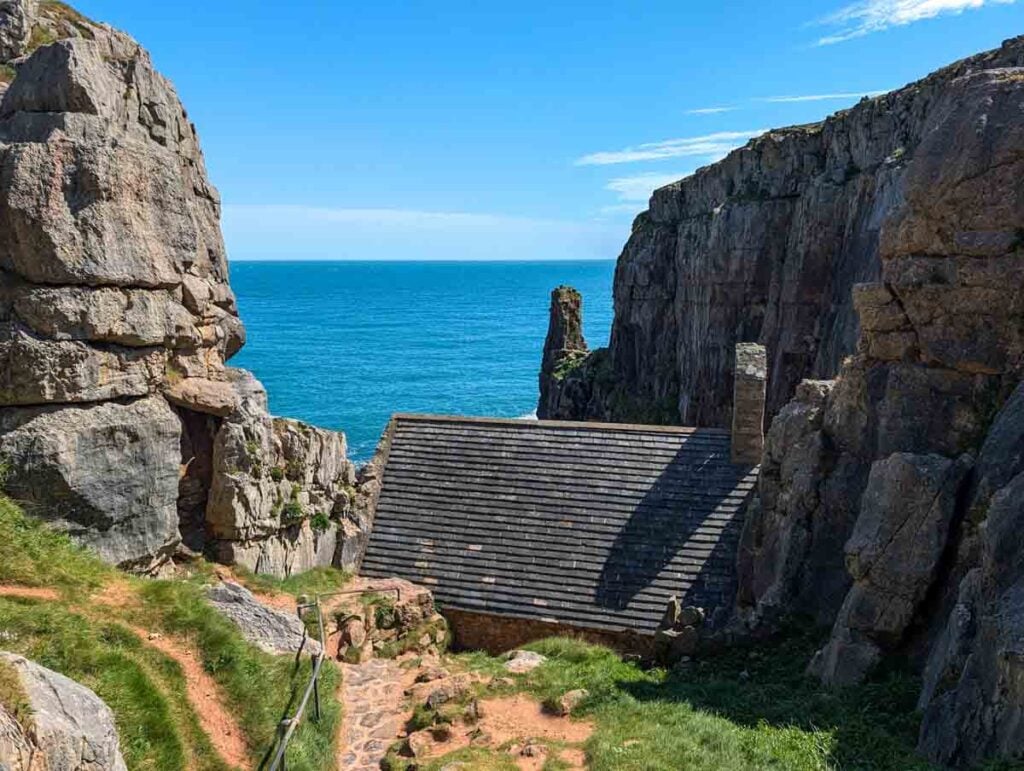
If you haven’t heard of it, let me paint a picture for you. Imagine a tiny, medieval stone building, completely wedged into a narrow fissure halfway down a plunging limestone cliff, battered by the wild Welsh sea.
It looks like it grew straight out of the rock itself. It’s a place where history, myth, and nature collide in the most breathtaking way possible.
The Walk and the Legend of the Steps
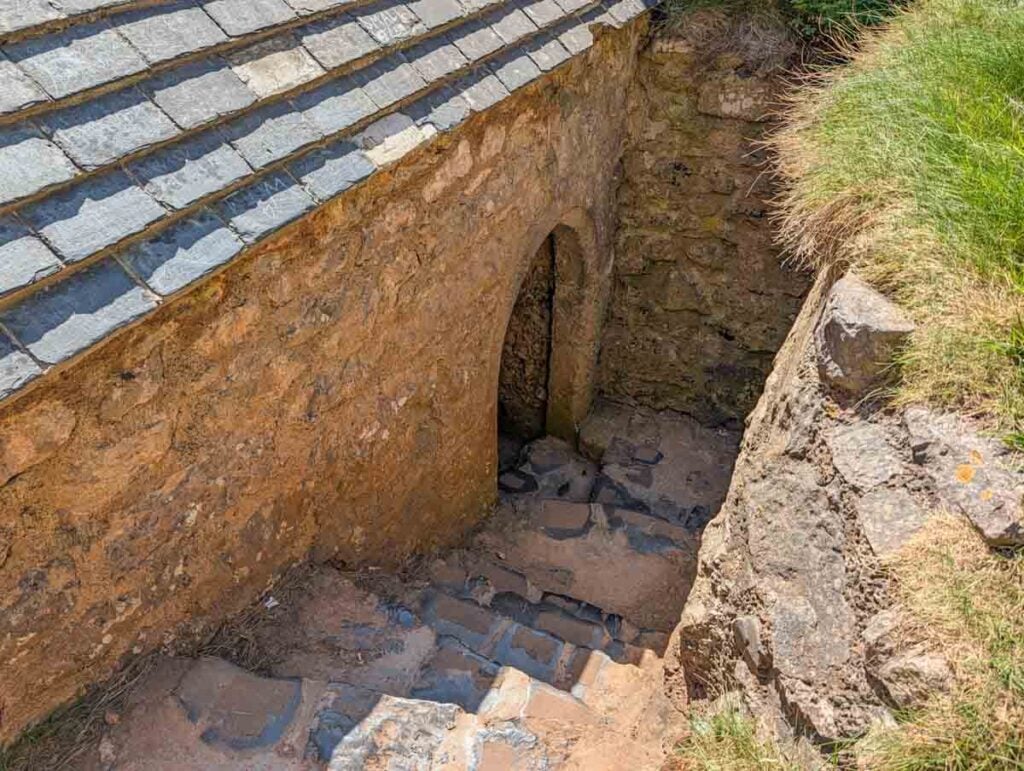
Getting to St Govan’s Head is a joy in itself, with sweeping views of the rugged coastline. But to actually reach the chapel, you have to descend a steep flight of stone steps carved right into the cliff face.
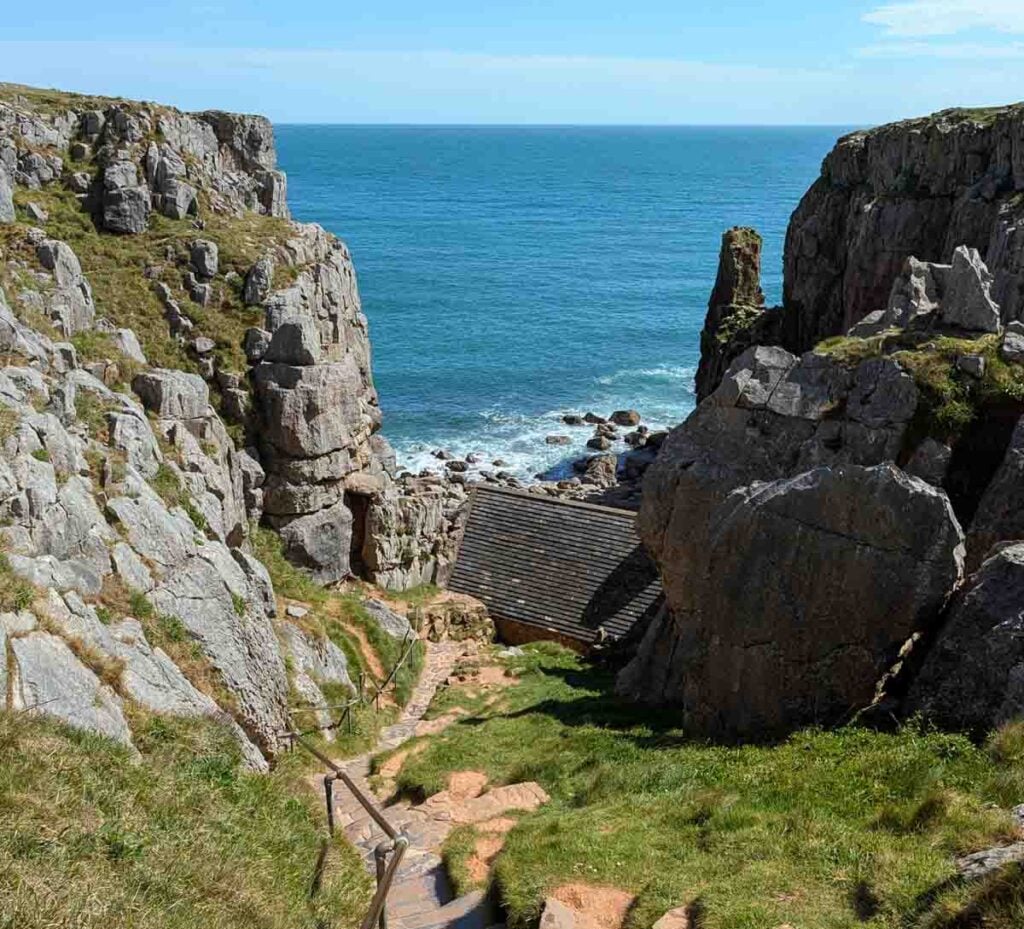
Now, before you start your descent, you have to know about the local legend. It’s said that the number of steps you count going down will never match the number of steps you count going back up.
Of course, I had to test this out! I won’t tell you my final tally—you’ll have to go and try it for yourself—but let’s just say the uneven, weather-worn stones certainly play tricks on the mind. (Officially, there are 52 steps, but where is the fun in taking the official line?)
Who Was St Govan?
Stepping inside the tiny chapel—which measures just 20 by 12 feet—you instantly feel the weight of centuries past.
The current stone structure dates back to the 13th and 14th centuries, but the site’s history goes back much further, to the 6th century.
But who exactly was St Govan? That’s where the history gets brilliantly murky.
The Irish Monk: The most common belief is that St Govan was an Irish monk (possibly an abbot named Gobhan) who travelled to Wales to live a life of solitary prayer.
A Knight of the Round Table? A favourite theory is that St Govan was actually Sir Gawain, the famous knight of King Arthur’s court. After Arthur’s death, legend says Gawain retired to this exact cliffside to live out his final days as a hermit.
The Thief: A slightly less romantic notion suggests he was a reformed thief who decided to hide away from the world.
Quirky Facts and Pirate Tales
You can’t have a medieval coastal chapel without a few swashbuckling pirate stories, and St Govan’s does not disappoint.
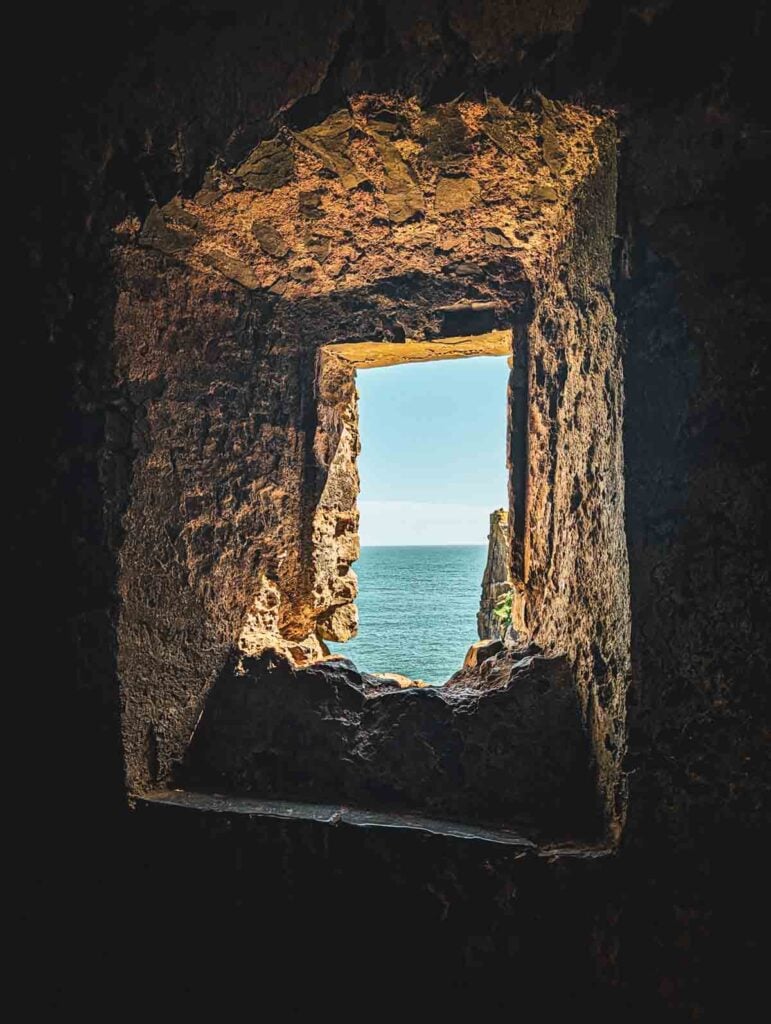
Legend has it that St Govan was praying in his tiny cell when pirates landed on the rocks below, intent on capturing him.
The rock face miraculously opened up, providing a cleft just big enough for him to hide inside.
Once the pirates gave up and left, the rock opened again to release him. If you look closely inside the chapel, you can still see a small, rib-shaped rock formation where the cliff allegedly moulded itself around him!
Then there is the story of the chapel bell. The pirates, annoyed that they couldn’t find the monk, stole the chapel’s silver bell instead.
In a moment of divine intervention, angels retrieved the bell and encased it inside a solid stone to keep it safe. To this day, locals say if you tap the “Bell Rock” located near the chapel, it rings with a hollow, metallic sound.
The Healing Well
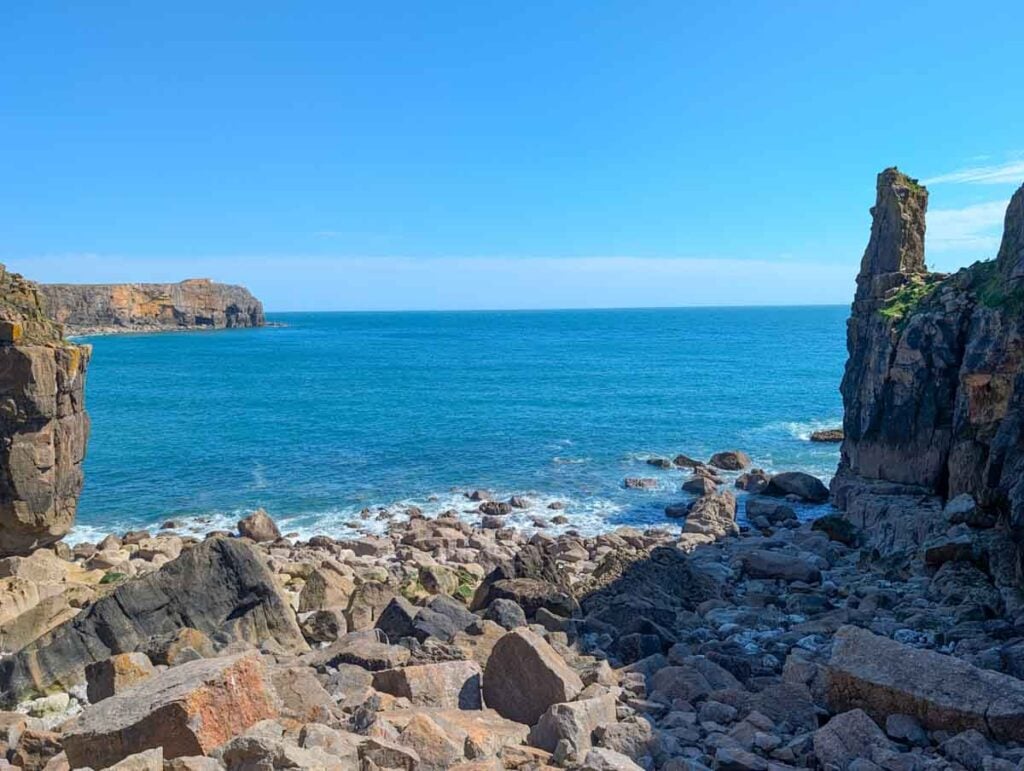
Just below the chapel, down near the crashing waves, are the remains of a holy well.
For centuries, pilgrims would travel from all over Britain to bathe in its waters, which were said to cure everything from eye complaints to skin conditions and rheumatism.
It’s mostly dried up today, but standing there, looking out over the jagged rocks where the pilgrims once stood, is a truly humbling experience.
A Quick Tip for Visiting
If I’ve inspired you to grab your backpack and head to Pembrokeshire, there is one very important practical quirk you need to know. St Govan’s Chapel is located on the Ministry of Defence’s Castlemartin firing range.
While it is usually open to the public, access can occasionally be restricted when military training is taking place.
Always check the online firing times before you make the trip so you don’t end up disappointed!
Where Exactly is St Govan’s Chapel?
If you are plotting this on your map, St Govan’s Chapel is perched on St Govan’s Head, the southernmost point of the spectacular Pembrokeshire Coast National Park in southwest Wales.
It is just a few miles south of the charming village of Bosherston, and roughly a 15-minute drive from the historic town of Pembroke.
How to Get There & Parking
If you’re anything like me, you want the logistics sorted before you set off. Driving is by far the easiest way to reach the chapel, as public transport down these winding coastal lanes is pretty sparse.
By Car: Head towards the village of Bosherston via the B4319. From there, just follow the brown tourist signs for St Govan’s. The country lanes get a bit narrow towards the end, so take it steady!
Parking: The great news is that there is a dedicated, free car park right on the cliff top at St Govan’s Head. From the car park, it is only a very short (and relatively flat) walk to the top of the cliff steps where the chapel reveals itself.
On Foot: If you are tackling the Pembrokeshire Coast Path, St Govan’s makes for a brilliant waypoint. The stretch walking from Broad Haven South beach, past the Bosherston Lily Ponds, and over the cliffs to the chapel is easily one of the best coastal walks in the UK.
Make a Full Day of It: Lily Ponds and Barafundle Bay
Since you are already down in this spectacular neck of the woods, it would be a crime not to explore a little further.
St Govan’s Chapel is just a stone’s throw away from some of the absolute best walking trails and coastal sights the Stackpole Estate has to offer.
If you really want to make a day of it, I highly recommend leaving your car parked at Bosherston and combining your chapel visit with my absolute favourite 6-mile coastal loop.
You can start your morning wandering through the tranquil, wildlife-rich waters of the Bosherston Lily Ponds (keep your eyes peeled for otters!), before heading out to the golden sands of Barafundle Bay—often voted one of the best beaches in the world.
From there, you can trace the dramatic limestone cliffs along the coast path, past the towering sea stack at Broad Haven South, before looping back.
You could easily tag the descent down to St Govan’s Chapel onto this route for the ultimate Pembrokeshire hiking experience.
If you want the full route details, parking info, and a GPX map, go and check out my complete guide to the Bosherston Lily Ponds and Barafundle Bay Walk here. Trust me, your hiking boots will thank you!
A Quick Heads-Up on Facilities
Because of its wild and remote location, there are no facilities at the chapel itself—no toilets, no cafes, and definitely no Wi-Fi! You are truly out in the elements here.
Make sure you bring a bottle of water and maybe a flask of tea. If you need facilities or fancy a hearty pub lunch after your climb back up those steps, head back into Bosherston village where you’ll find a great local pub and a lovely little cafe.
Final Thoughts
As I finally climbed back up those mysterious steps (and yes, my count was completely different on the way up), I couldn’t help but look back down at that little slate roof nestled in the gorge.
St Govan’s Chapel isn’t just a historical site; it’s a testament to the wild, enduring spirit of the Welsh coastline. It’s peaceful, it’s dramatic, and it is absolutely worth the journey.
Have you ever visited St Govan’s Chapel? What was your step count? Let me know in the comments below!
- If you are interested in historic features on the UK coast like this then read about my visit to Heysham Cliffs and the Iconic Rock Tombs.