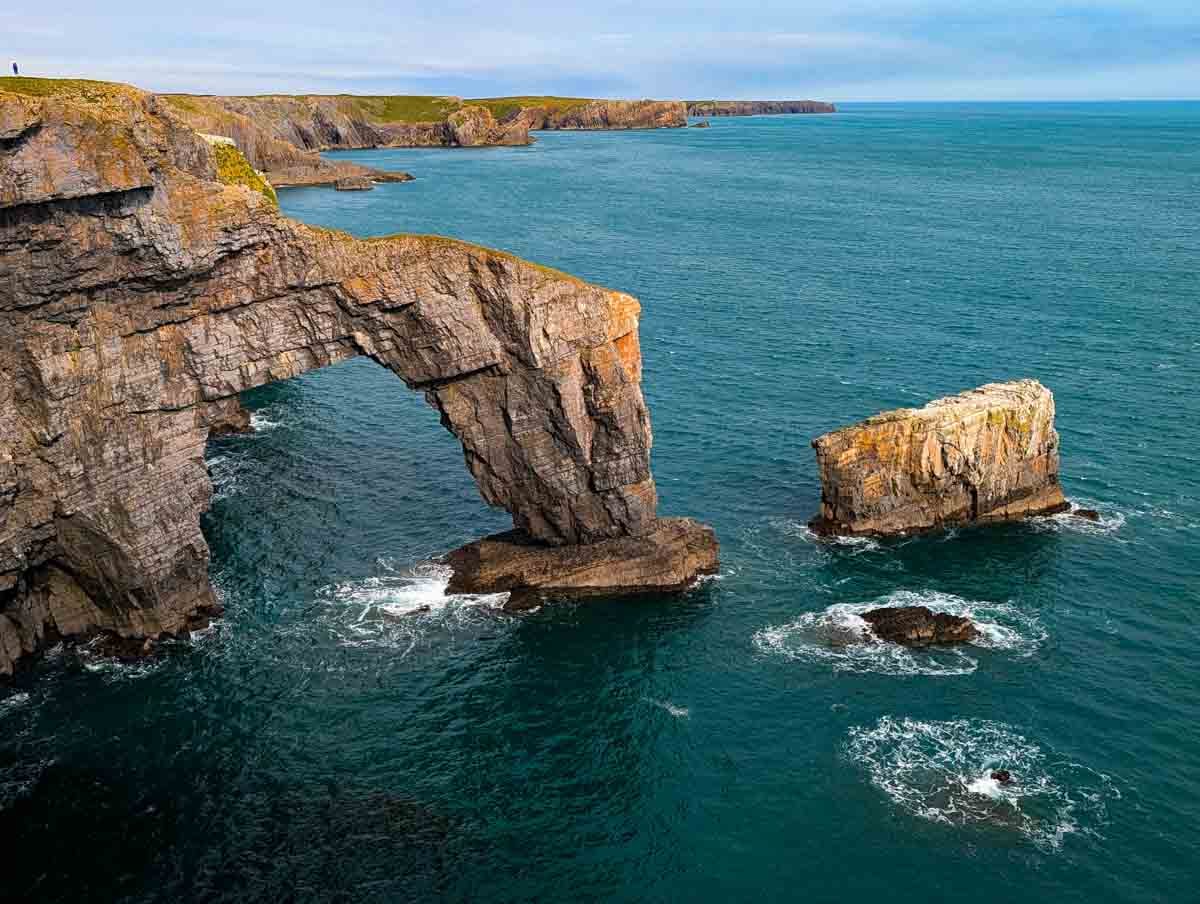
If you follow my wanderings, you know I am gaining an enduring love for the Pembrokeshire Coast. But every now and then, even a seasoned hiker steps onto a clifftop and is stopped dead in their tracks by the sheer, raw power of nature.
Just a few miles up the coast from the tiny, hidden sanctuary of St Govan’s Chapel lies a stretch of coastline that feels almost prehistoric.
We are talking about towering limestone arches, isolated sea pillars swarming with seabirds, and gaping, churning sinkholes.
If you are visiting Pembrokeshire, seeing the Green Bridge of Wales, the Elegug Stacks, and The Cauldron is non-negotiable.
And, all this can be seen within less than a mile’s walk from the car park.
Let’s take a walk along the edge!
The Green Bridge of Wales: A Geological Giant
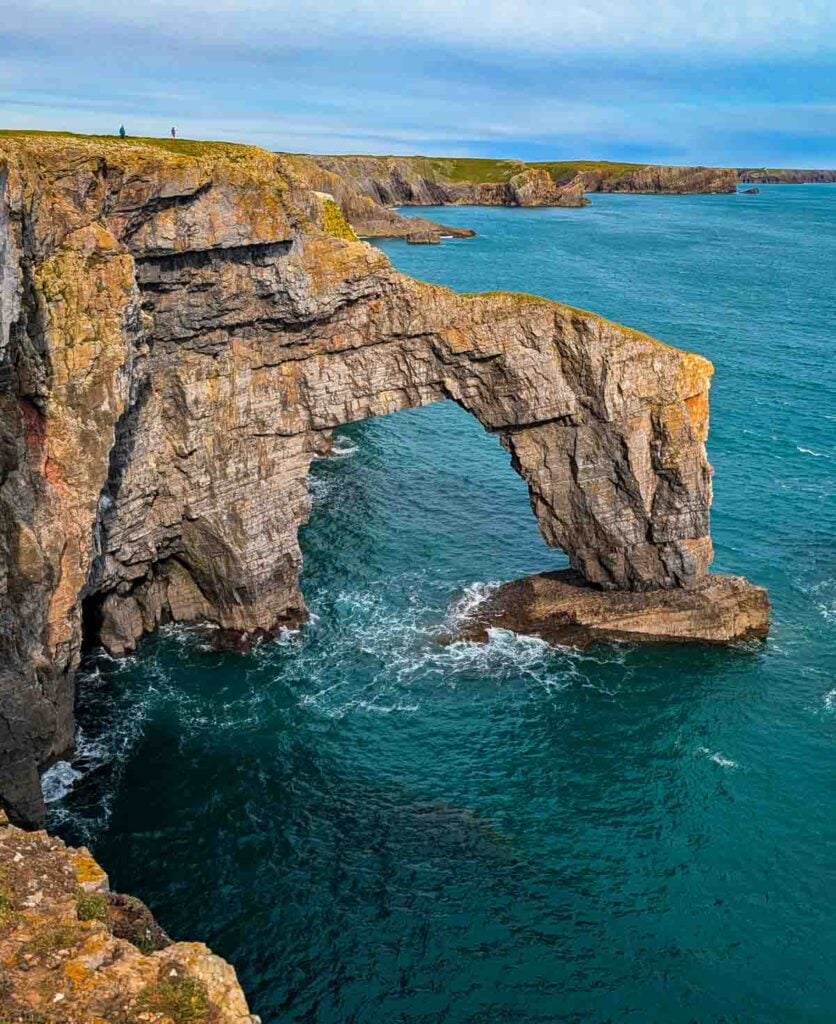
From the car park, it is only a short, flat stroll along the clifftop before the ground falls away to reveal the main event: The Green Bridge of Wales.
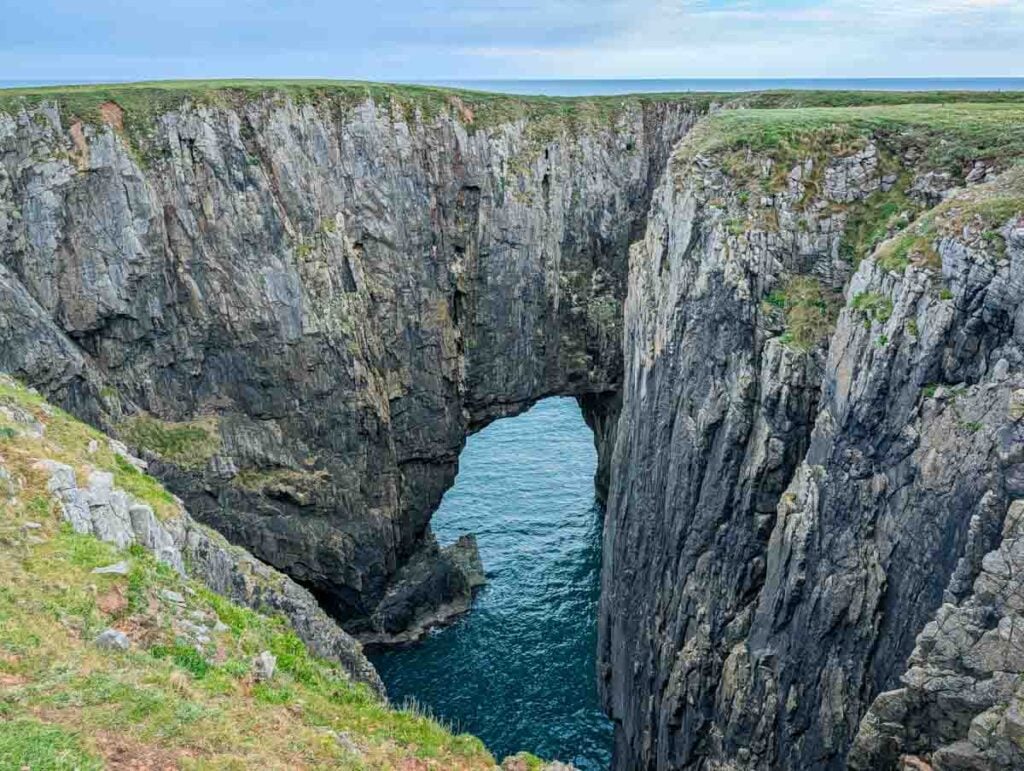
This spectacular natural arch spans an incredible 80 feet (24 metres) across the crashing waves of the Celtic Sea.
It is formed from carboniferous limestone, battered and hollowed out by wind, waves, and pebbles over millions of years.
It gets its “green” name from the lush layer of vegetation that clings to the top of the arch, creating a brilliant contrast against the stark grey rock and deep blue sea.
There is a dedicated viewing platform right on the edge of the cliff. Standing there with the wind in your face, listening to the ocean roar through the archway, you realise just how small we really are.
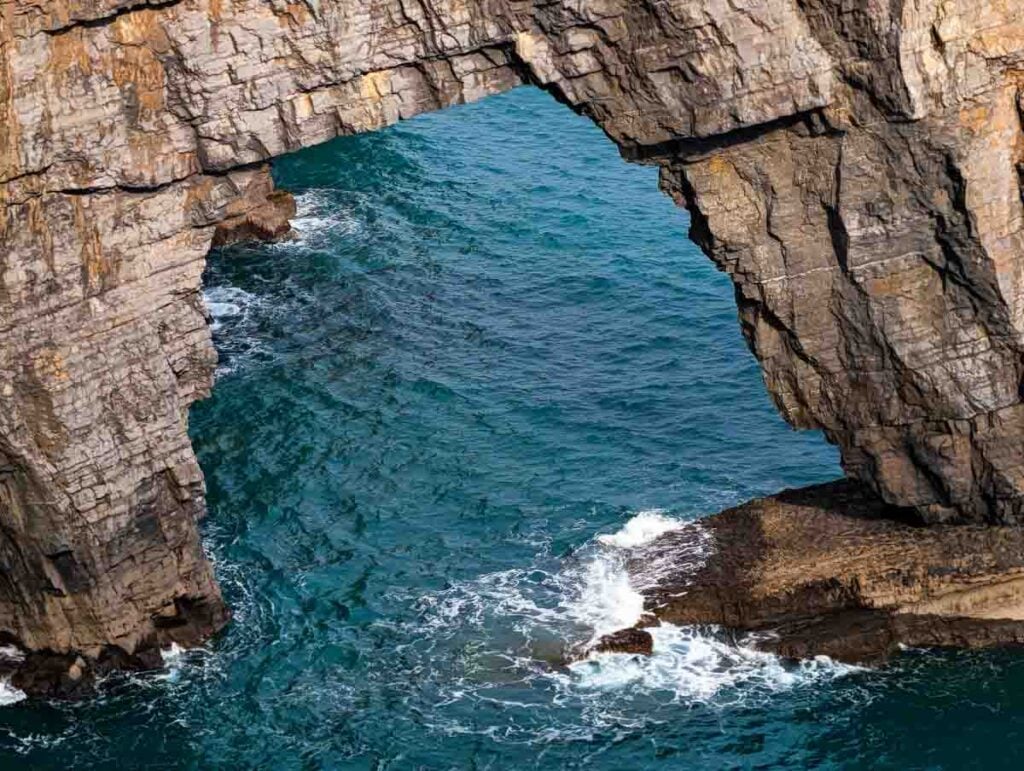
It is undeniably one of the most photographed landmarks in Wales, and when you see it with your own eyes, you completely understand why.
Elegug Stacks (Stack Rocks): A Birdwatcher’s Paradise
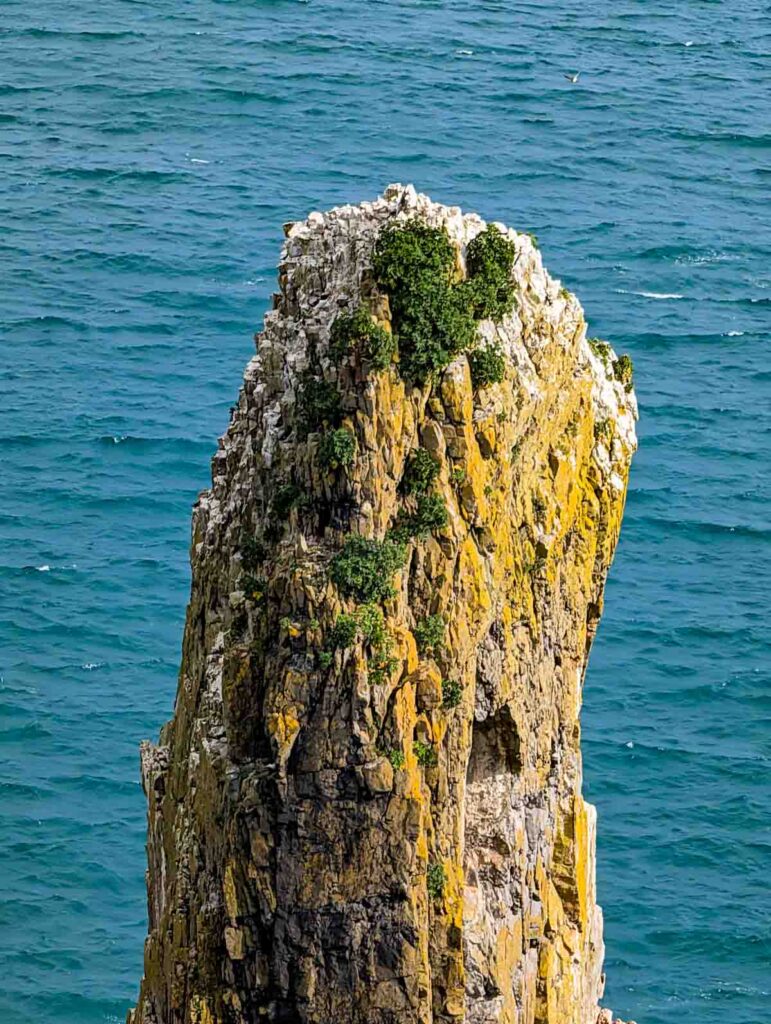
Just a few hundred yards east along the Pembrokeshire Coast Path, the landscape changes again. Rising vertically out of the swirling water like two ancient, weathered towers are the Elegug Stacks (often just called Stack Rocks on maps).
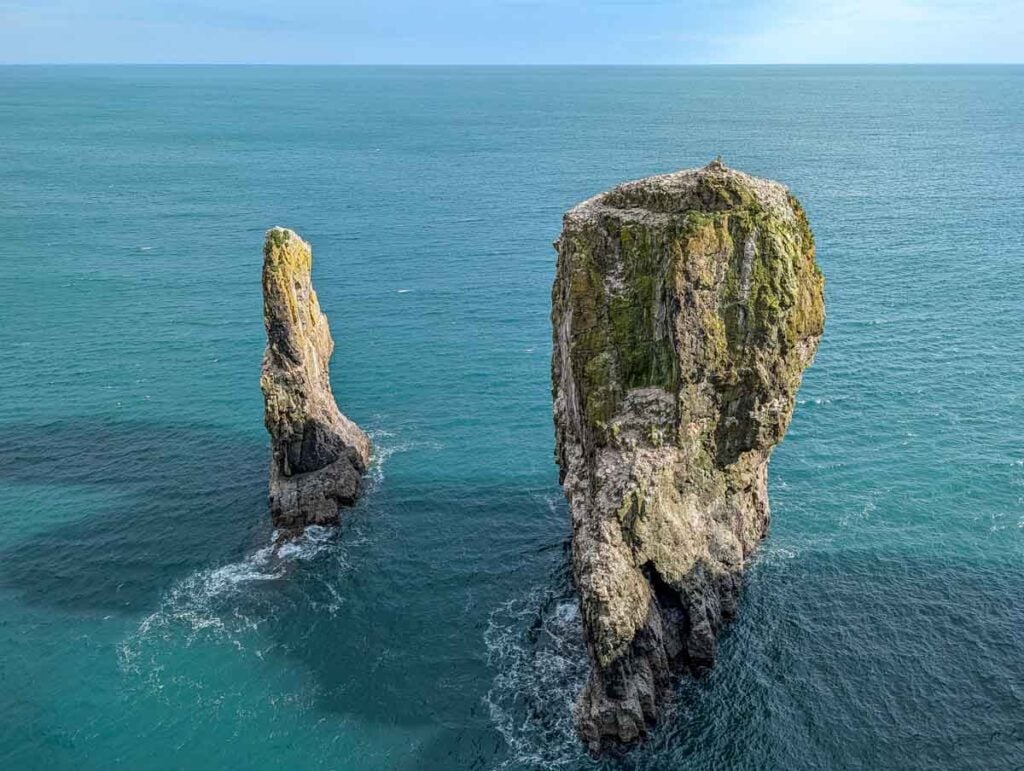
Once upon a time, these isolated pillars were arches themselves, much like the Green Bridge, until their roofs inevitably collapsed into the sea.
But the geology isn’t the only reason you need to see them. If you visit during the spring and early summer, these stacks are utterly alive.
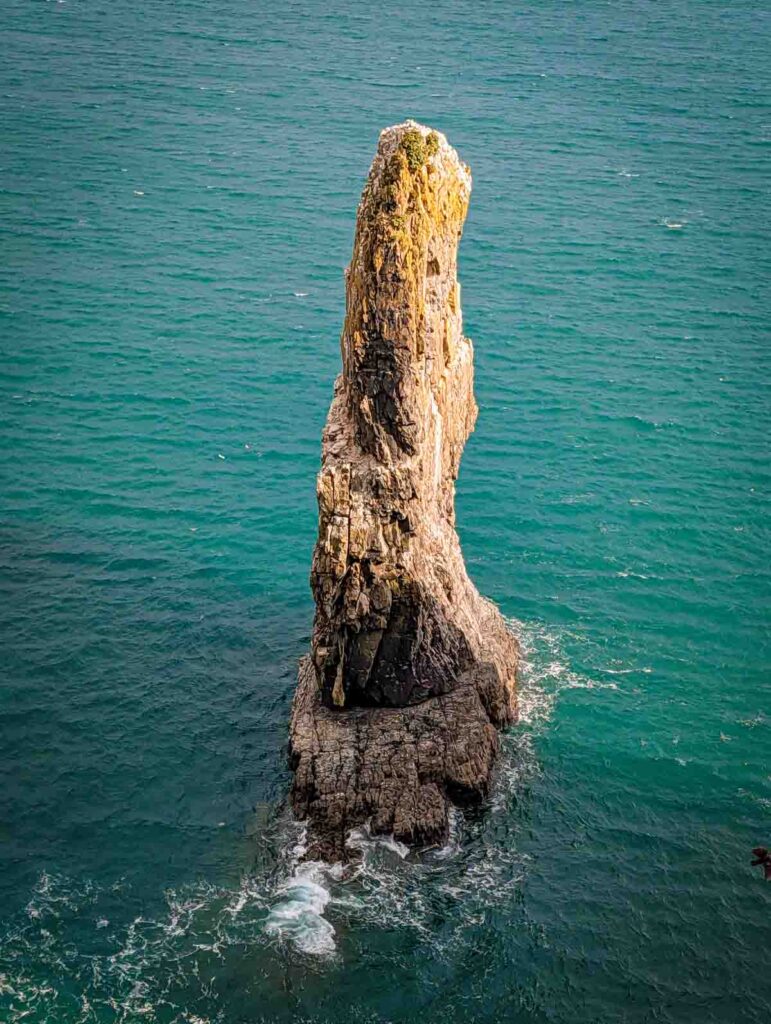
“Elegug” is the Welsh word for Guillemot, and from March to July, these rocks are a crucial breeding ground for thousands of Guillemots and Razorbills.
The noise of the colony is deafening, the smell is… well, let’s just say it’s ‘authentic’, and the sight of these incredible birds diving into the sea is a true wildlife spectacle. Don’t forget your binoculars!
The Cauldron: A Churning Abyss
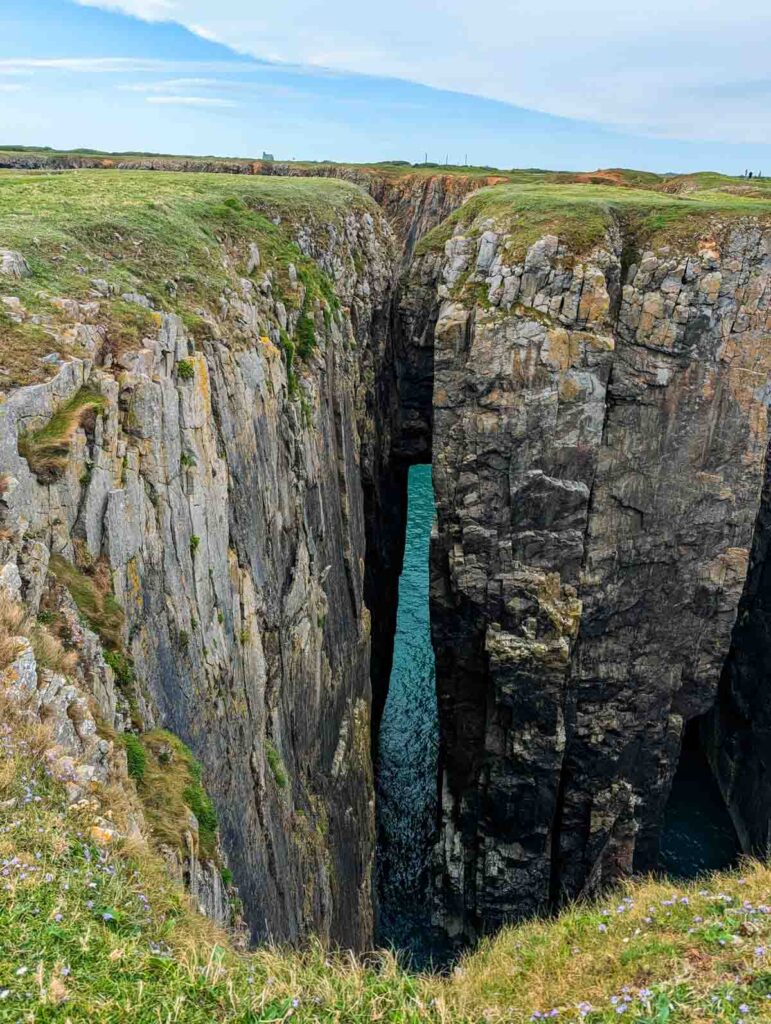
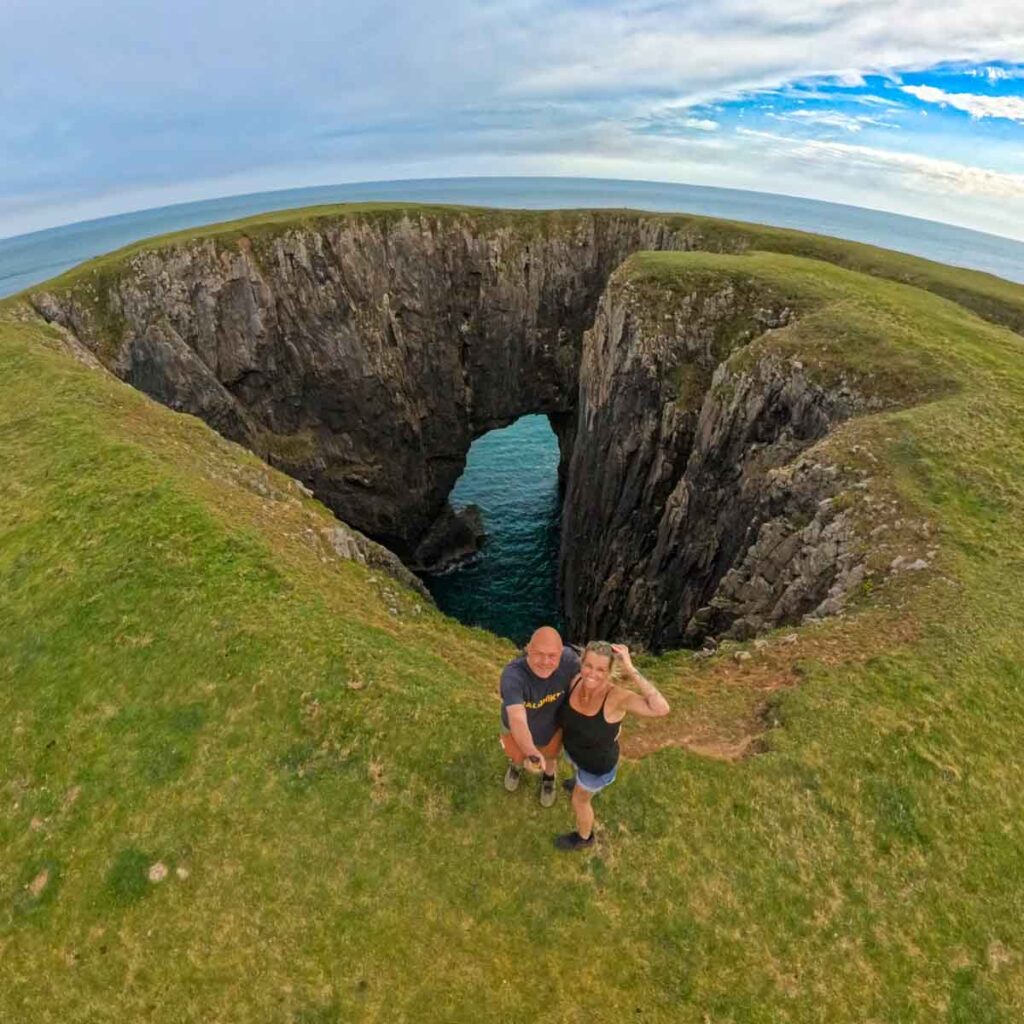
As you continue your walk along the cliffs, keep your eyes peeled for a massive, gaping hole in the ground. This is The Cauldron.
The Cauldron is a collapsed sea cave—a massive blowhole where the roof has caved in, leaving a deep crater just back from the cliff edge.
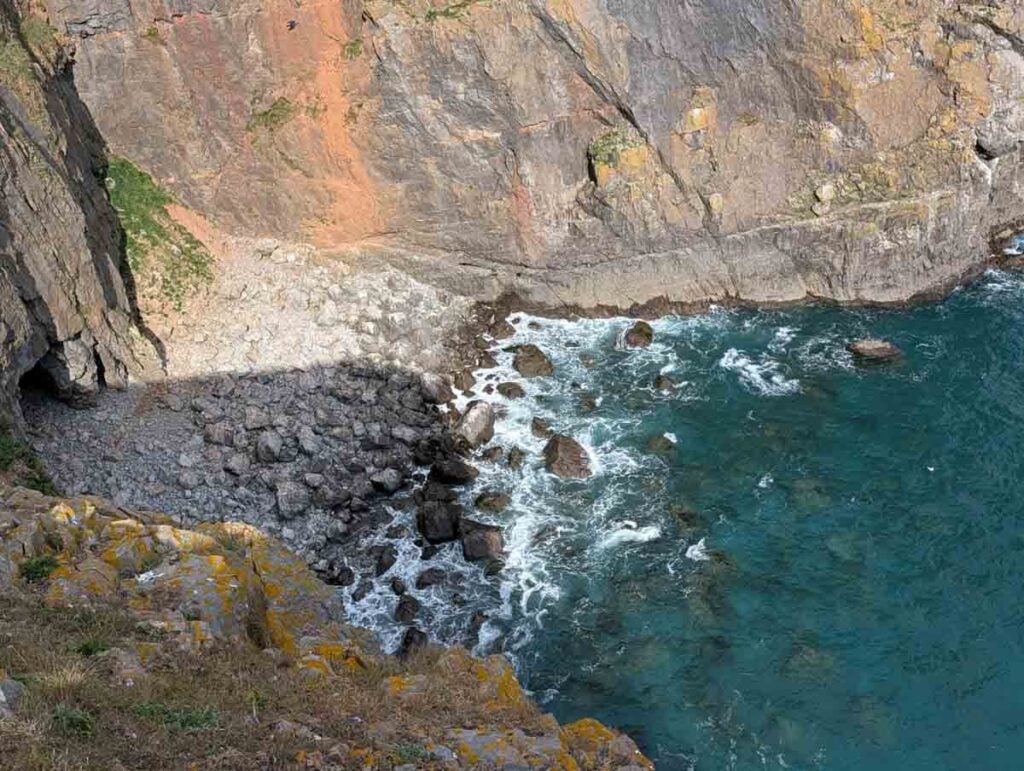
At high tide, or during rough weather, the sea water violently surges into the cavern below, churning and boiling just like a witch’s cauldron. It is a sobering reminder of the sheer erosive power of the ocean that shaped this entire coastline.
How to Get There & Parking (The MoD Catch!)
Because this area is so dramatic, getting here comes with a very unique, highly important quirk.
The road to the Green Bridge of Wales runs directly through the middle of the Ministry of Defence’s Castlemartin Firing Range. Yes, you read that right—you are driving through a live tank training area!
- Check Before You Travel: When the military is conducting live firing exercises, the road is completely closed to the public. You must check the Castlemartin firing times online or call the range office before you set off. If the red flags are flying, you cannot enter.
- By Car: If the road is open, head south from Pembroke towards Castlemartin and Merrion. Follow the signs for “Stack Rocks”. You will eventually pass through the MoD guard posts and down a long, straight military road right to the coast.
- Parking: There is a free, fairly large gravel car park right at the end of the road (Stack Rocks Car Park). From here, the terrain is wonderfully flat and accessible, making the viewpoints easy to reach for all abilities.
No Facilities, Just Wild Nature
Much like nearby St Govan’s, there are zero facilities out here. No toilets, no cafes, and no shelter from the weather.
It is just you, the cliffs, and the seabirds. Make sure you pack a flask of hot tea and dress for the wind, as it can be incredibly bracing on the headland, even in summer.
Make a Full Pembrokeshire Day Of It
If you want the ultimate Pembrokeshire itinerary, you can easily turn this into a full day of exploring.
Start your morning wandering through the tranquil Bosherston Lily Ponds and Barafundle Bay, head down the coast to discover the 13th-century magic of St Govan’s Chapel, and finish your afternoon watching the sunset hit the Green Bridge of Wales.
Have you ever stood on the edge and looked down into The Cauldron? Let me know about your Pembrokeshire adventures in the comments below!
If you are looking for more inspiration along the Pembrokeshire coast then take a look at Our Ultimate Guide to Pembrokeshire Puffins: A Trip to Skomer Island