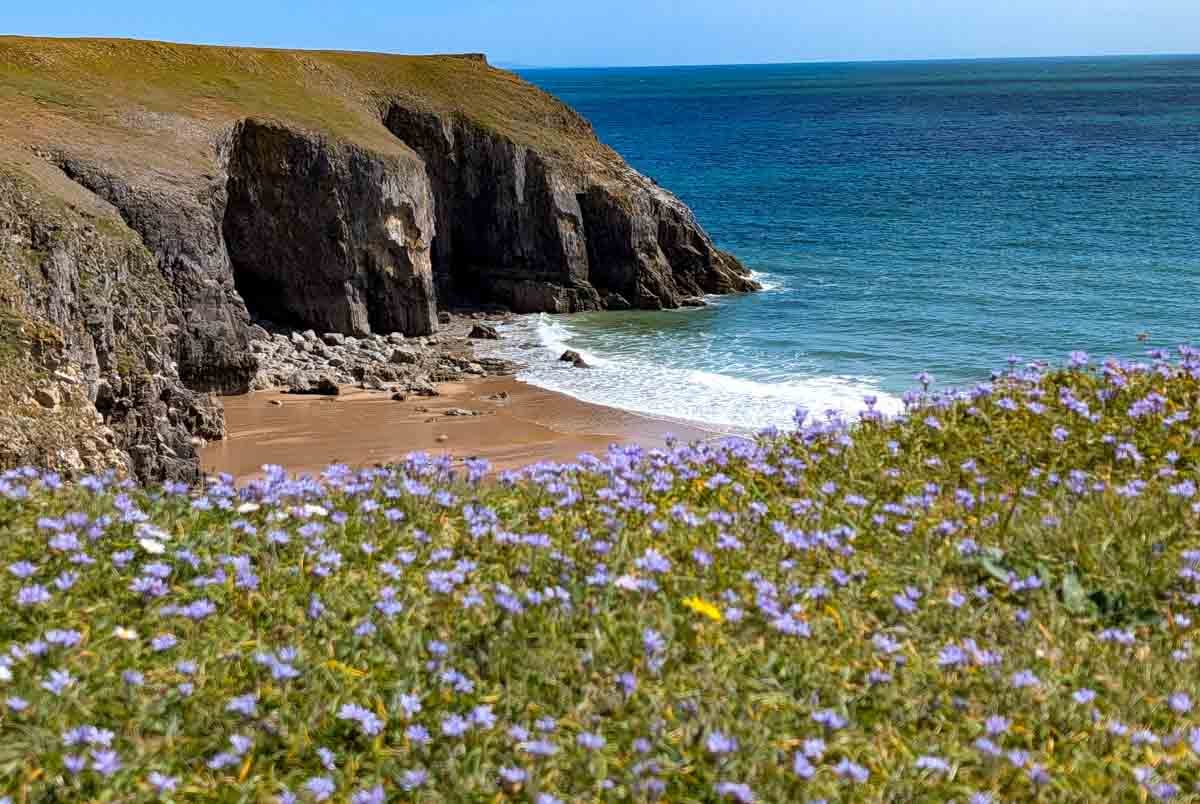
There are few things better for the soul than a walk along the Pembrokeshire Coast Path. But if you happen to time your hike for late April or May, you are treated to something truly spectacular. The harsh, grey limestone cliffs transform into a vibrant canvas of colour.
On my recent wander along the headlands, with the salty wind howling and the sea crashing below, I found myself repeatedly stopping to look down.
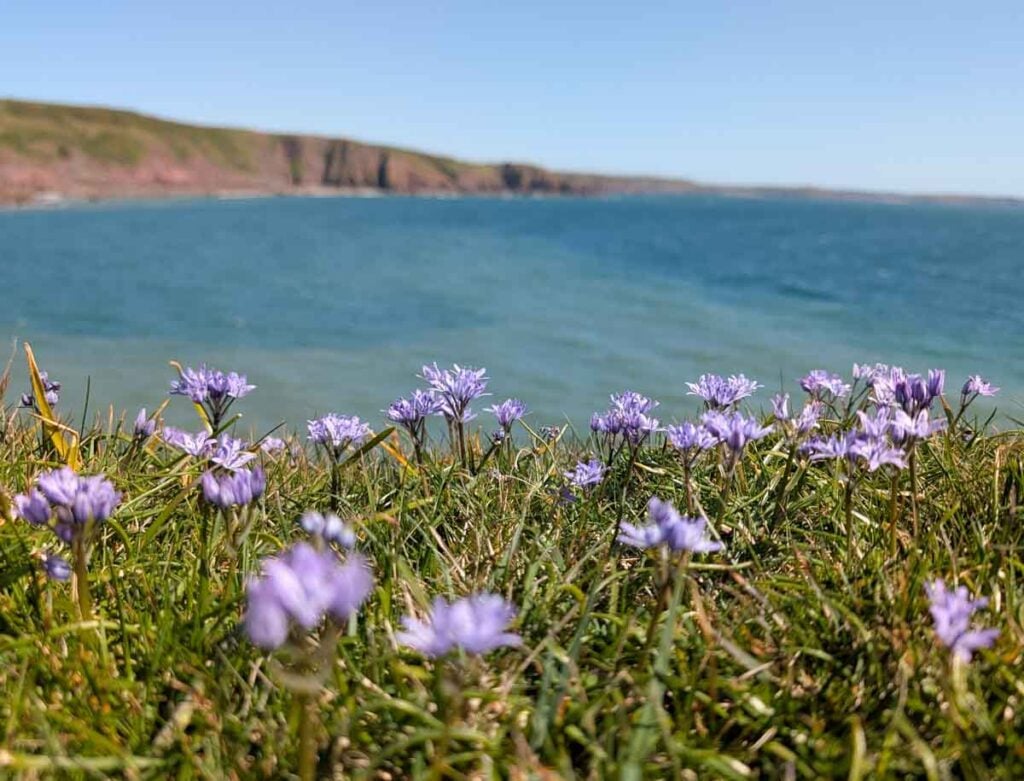
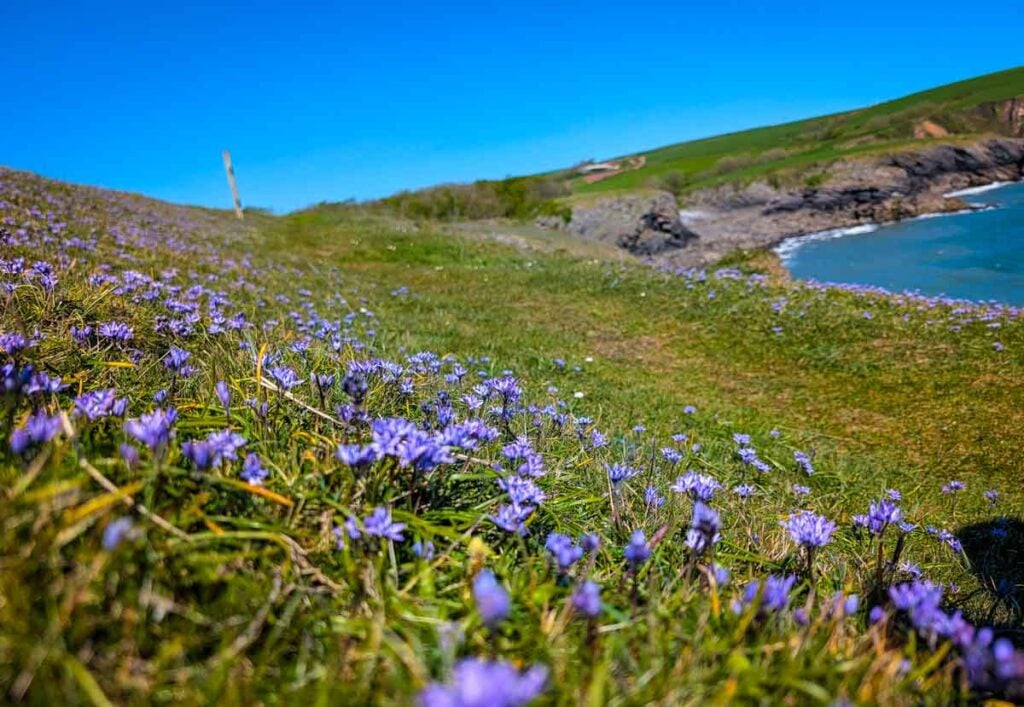
Nestled right into the short, windswept coastal turf were thousands of tiny, star-shaped, pale blue flowers.
They looked far too delicate to survive such a brutal, exposed environment, yet there they were, thriving. I had stumbled upon one of the true gems of the British coastline: Spring Squill.
If you love coastal hiking and have a soft spot for the flora and fungi that line our trails, here is everything you need to know about these brilliant little blue stars.
What is Spring Squill?
To give it its official title, Spring Squill is known botanically as Scilla verna.
It is a tiny, low-growing perennial plant that rarely reaches more than 10 to 15 centimetres in height.
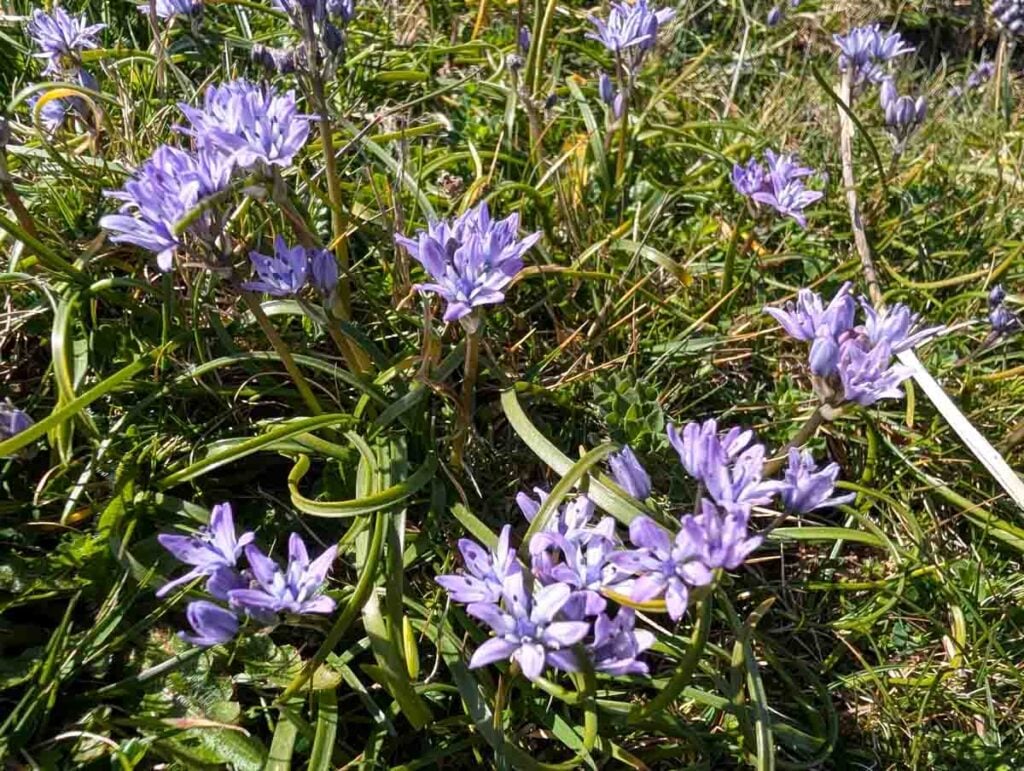
The flowers themselves are tiny (just 1 to 1.5cm across) and grow in tightly packed spikes of up to a dozen blooms.
They have six delicate violet-blue petals that form a perfect star shape, capturing the colour of the summer sky.
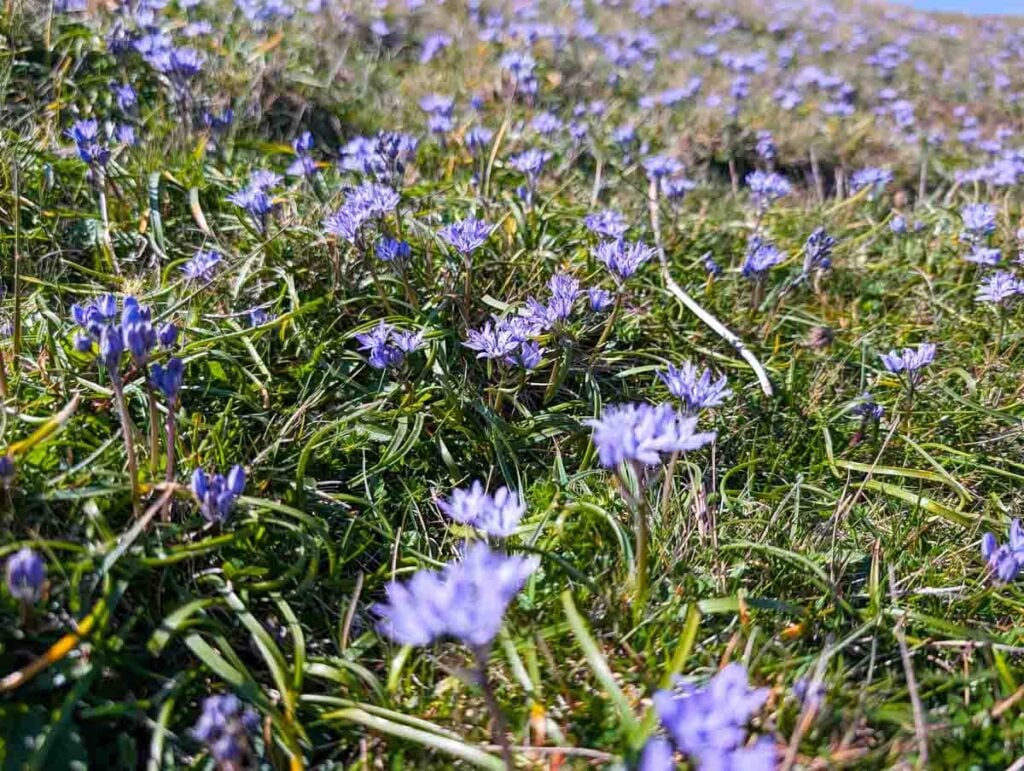
A quick botanical quirk: If you look at the shape of the flower, you might guess that it is related to the lily. You’d be half right!
For centuries, botanists included Spring Squill in the Lily family (Liliaceae). However, recent DNA analysis shook things up, and it has now been officially reclassified into the Asparagus family (Asparagaceae).
Yes, the same family as the vegetable you have with your Sunday roast!
Where and When to Spot It
As the name suggests, timing is everything. Spring Squill blooms from March to June, but it is at its absolute, breathtaking best in April and May.
If you are hunting for it, you need to head west. In the UK, it is almost exclusively found on the western coastlines of Wales, Scotland, and western Ireland.
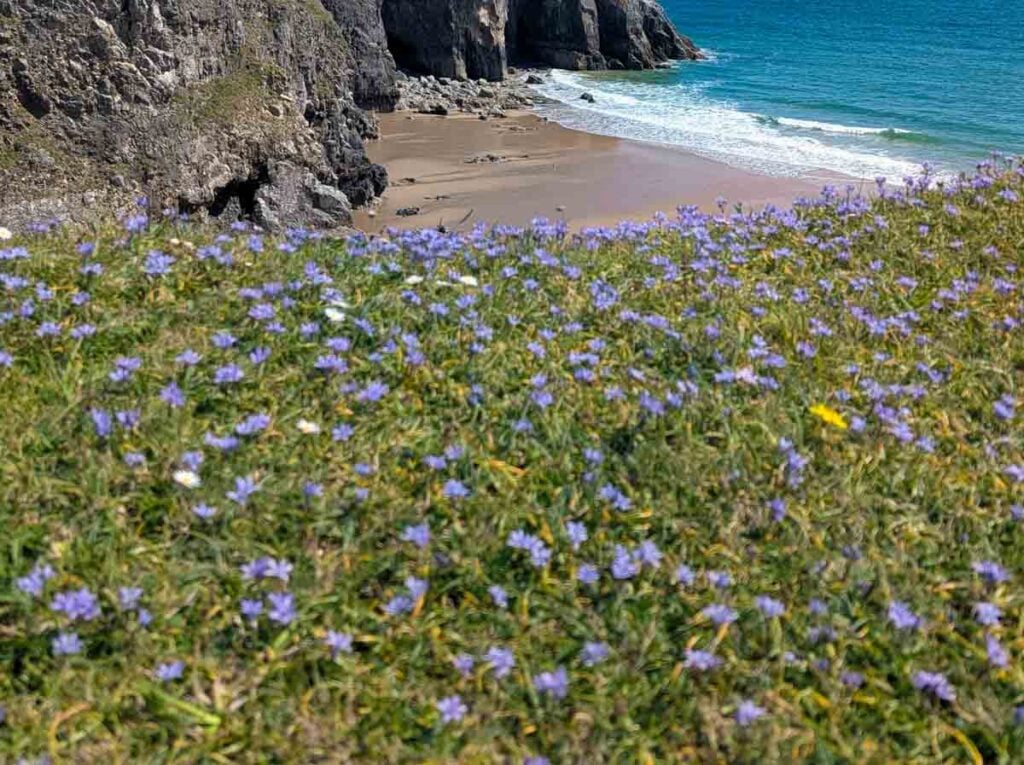
In Pembrokeshire, it is practically a local celebrity. You will find it carpeting the short-sward grassy clifftops at places like St Govan’s Head, Castlemartin, Worm’s Head, and the rugged slopes of Cemaes Head.
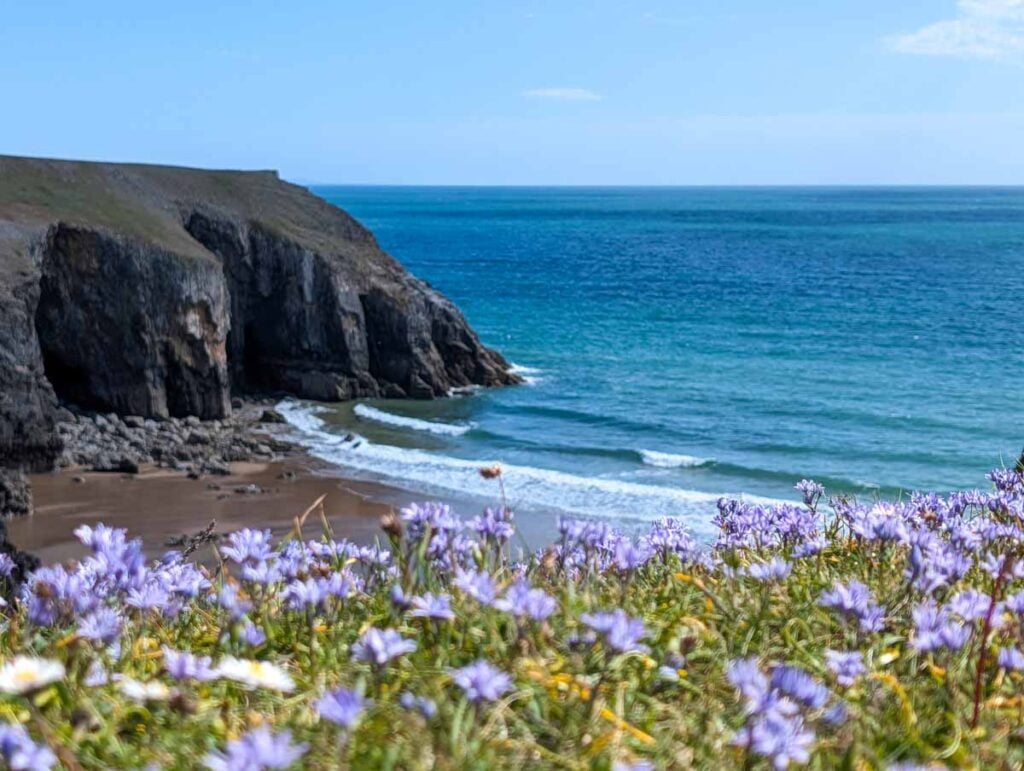
Why does it love the coast so much? Because Spring Squill is incredibly tough.
It is highly tolerant of the harsh, salty sea spray that blows off the Atlantic—conditions that would quickly kill off fussier plants.
When it isn’t in bloom, however, its thin, curled leaves blend perfectly into the grass, making it nearly impossible to spot until the following spring.
The Fungi Connection (A Treat for Mycologists!)
Because this is the Flora and Fungi section of the site, I can’t talk about Spring Squill without mentioning its fascinating relationship with wild fungi.
Despite being a tough little survivor, Scilla verna is susceptible to some incredibly rare and specific fungal parasites.
- The Squill Rust: If you look closely at the leaves of Spring Squill, you might spot orange-brown concentric pustules. This is a rare rust fungus (often Uromyces scillarum or Uromyces muscari), which is a fantastic find for any keen fungi recorder wandering the Welsh cliffs.
- The Smut: It also plays host to a specific “smut” fungus called Antherospora tractemae. This bizarre fungus actually infects the flowers, producing a dark, olivaceous-brown mass of spores right inside the anthers of the bloom.
Finding either of these on your coastal walk is a brilliant little bonus for nature geeks!
3 Quirky Facts About Spring Squill
- It is entirely scentless: Unlike its woodland cousin, the Bluebell (which smells incredible), Spring Squill has absolutely no scent at all. It relies purely on its bright colour to attract early spring insects.
- Look, but don’t eat: While it might look beautiful, Spring Squill grows from a small underground bulb that is highly poisonous. Extracts from Scilla bulbs have been used in historical medicine, but they are definitely not for foraging!
- A County Emblem: While Thrift (Sea Pink) was ultimately chosen as the county flower of Pembrokeshire, Spring Squill didn’t miss out on royal status entirely. In a 2002 public vote, it was officially crowned the county flower of County Down in Northern Ireland.
Final Thoughts
The next time you are lacing up your boots for a spring hike along the Pembrokeshire Coast, take a moment to look down.
It is easy to get caught up in the sweeping ocean views and dramatic sea stacks, but the magic of the trail is often right beneath your boots.
Finding a patch of Spring Squill, battered by the salty wind but blooming brilliantly anyway, is a perfect reminder of just how resilient nature can be.
Have you spotted Spring Squill on your coastal wanderings?