When you spend enough time wandering the coastal paths and winding country lanes of Pembrokeshire, you quickly realise that this corner of Wales is absolutely dripping in history.
But every now and then, you stumble upon a location that stops you right in your tracks.
On a recent trip, after exploring the rugged cliffs of St Govan’s and the Green Bridge of Wales, I decided to head slightly inland. My destination? Carew Castle.
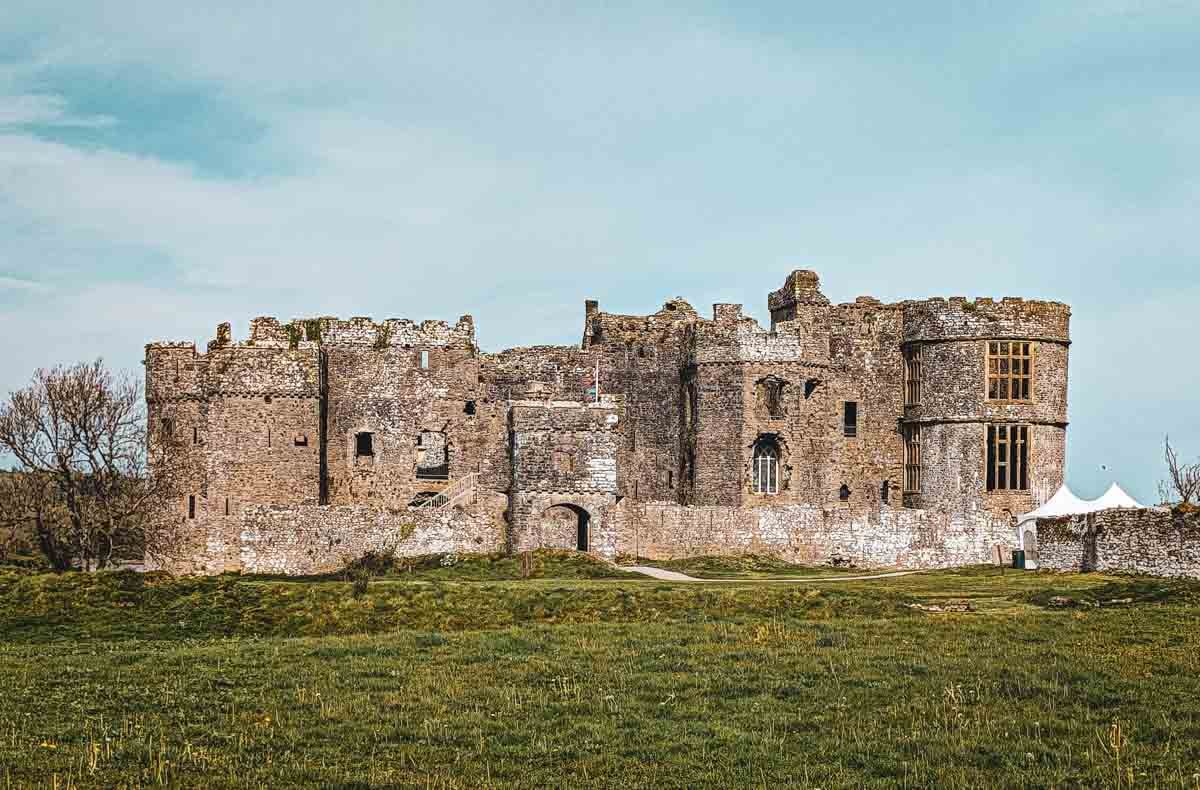
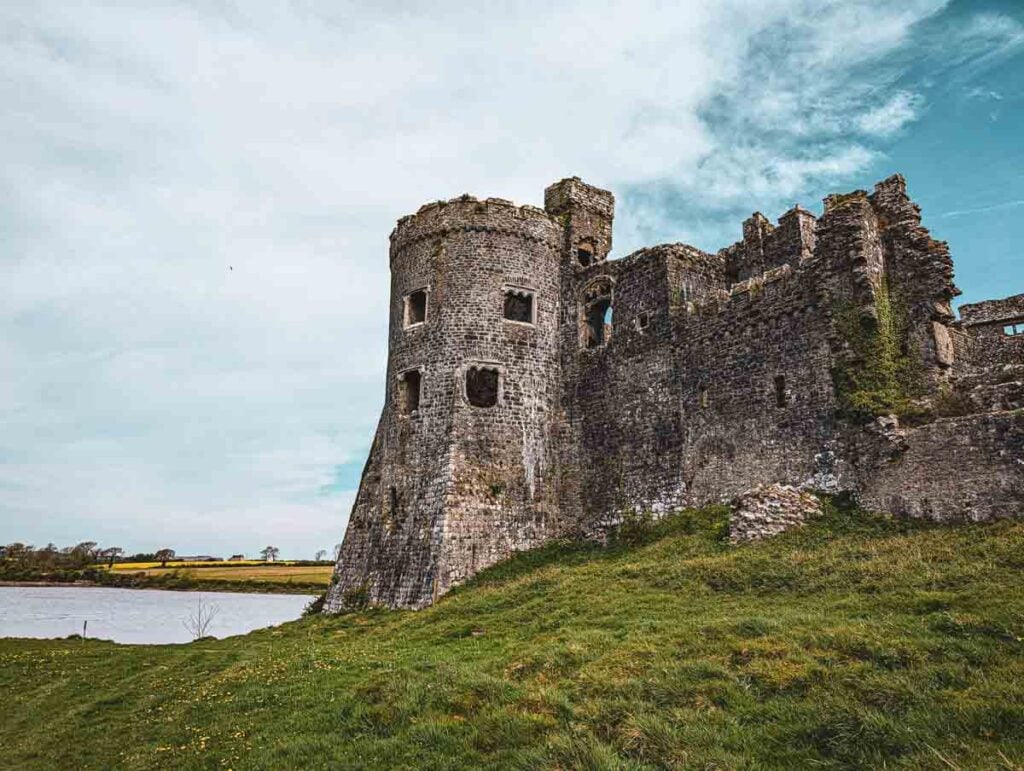
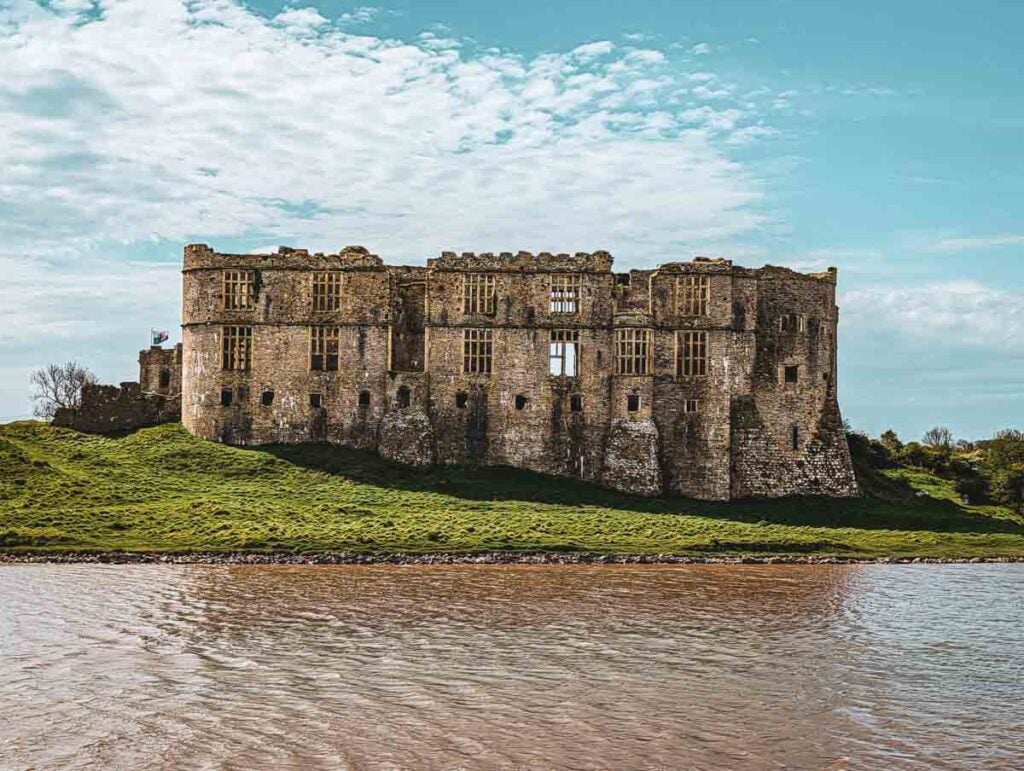
Sitting magnificently on the banks of a shimmering 23-acre millpond, Carew (pronounced care-ooo) isn’t just a ruined fortress. It is an architectural timeline.
If you love a gentle, scenic walk paired with a heavy dose of knights, Tudor gossip, and swashbuckling history, you absolutely need to add this to your Pembrokeshire itinerary.
From Norman Fortress to Tudor Palace
The site of Carew Castle has a history spanning over 2,000 years, with evidence of Iron Age settlements long before the stones were laid.
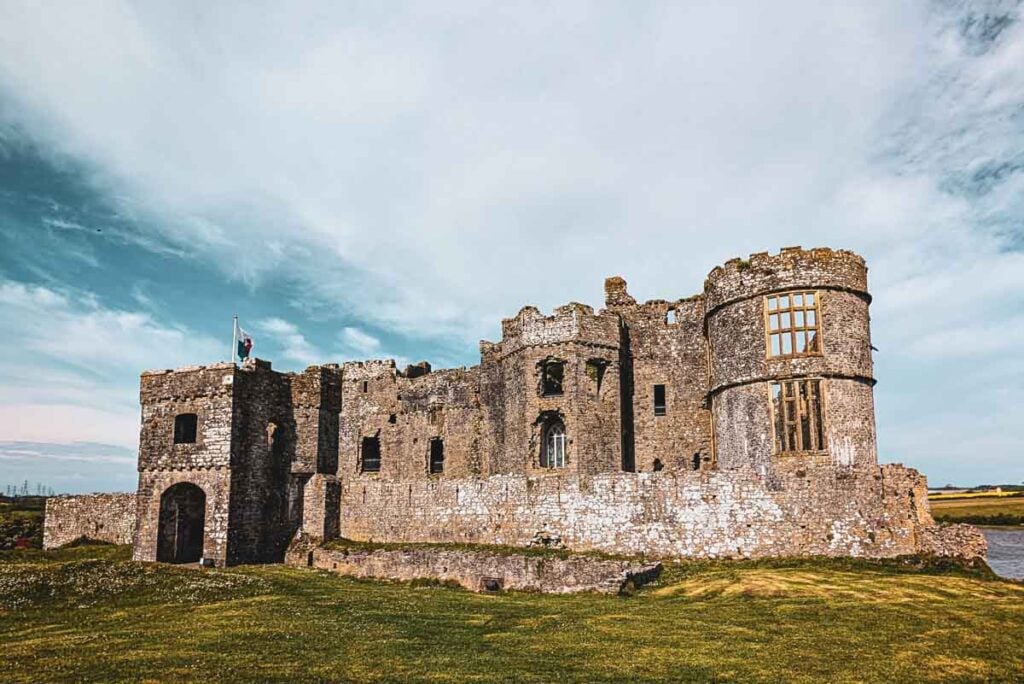
But the castle we see today really began its life in 1100, built as a formidable earth and timber fortress by the Norman ruler Gerald of Windsor.
Over the centuries, as the need for heavy military defence faded, the castle evolved. The most spectacular transformation happened in the 16th century under the ownership of Sir John Perrot—who, according to local whispers, was the illegitimate son of King Henry VIII.
Sir John added the magnificent Elizabethan North Range, turning the grim fortress into a luxurious palace with vast mullioned windows designed to take in those sweeping views across the water.
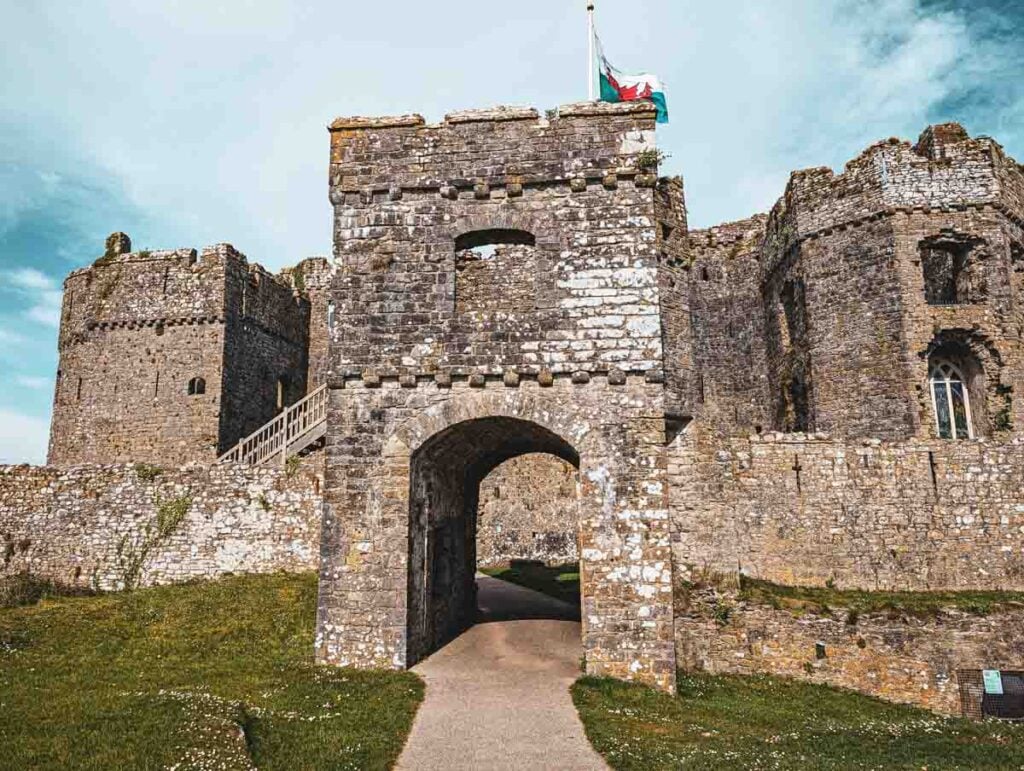
Walking around the perimeter today, the contrast is incredible. From one side, it looks like a rugged, impenetrable medieval stronghold, and from the other, an extravagant Elizabethan mansion.
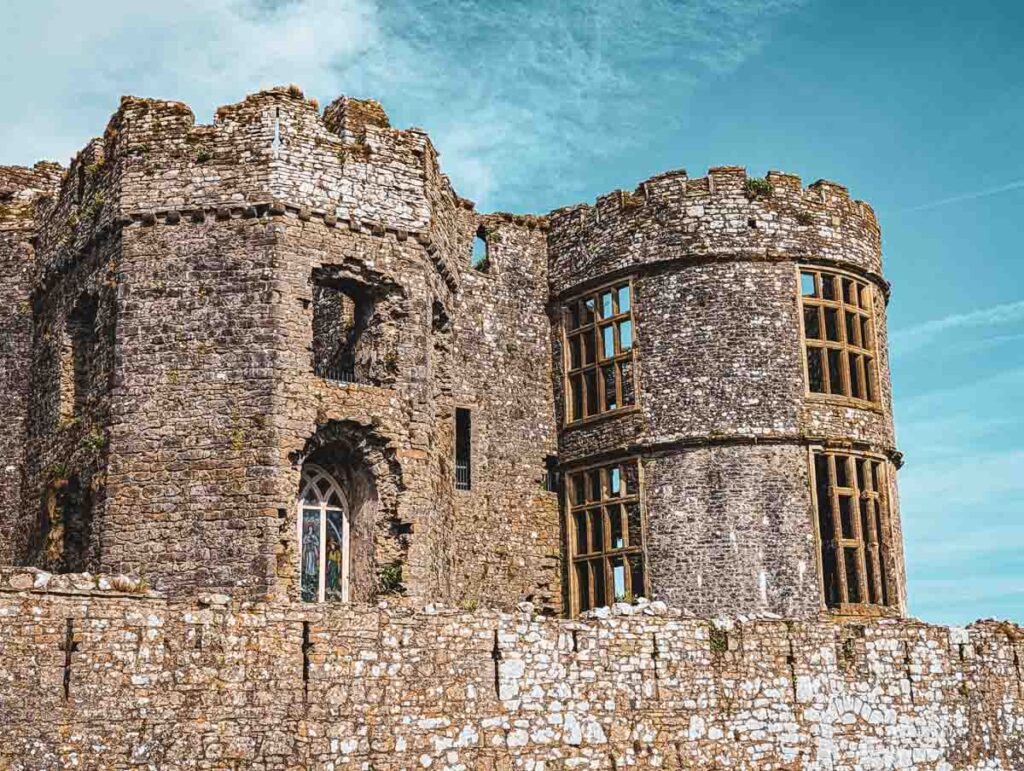
But the real magic happens when you cross the threshold and actually step inside the ruins. This isn’t a museum where you are kept behind ropes; you have the freedom to really explore.
You can wander right through the grand, roofless halls where lavish Tudor banquets were once held and duck through low, heavy stone doorways into the undercrofts.
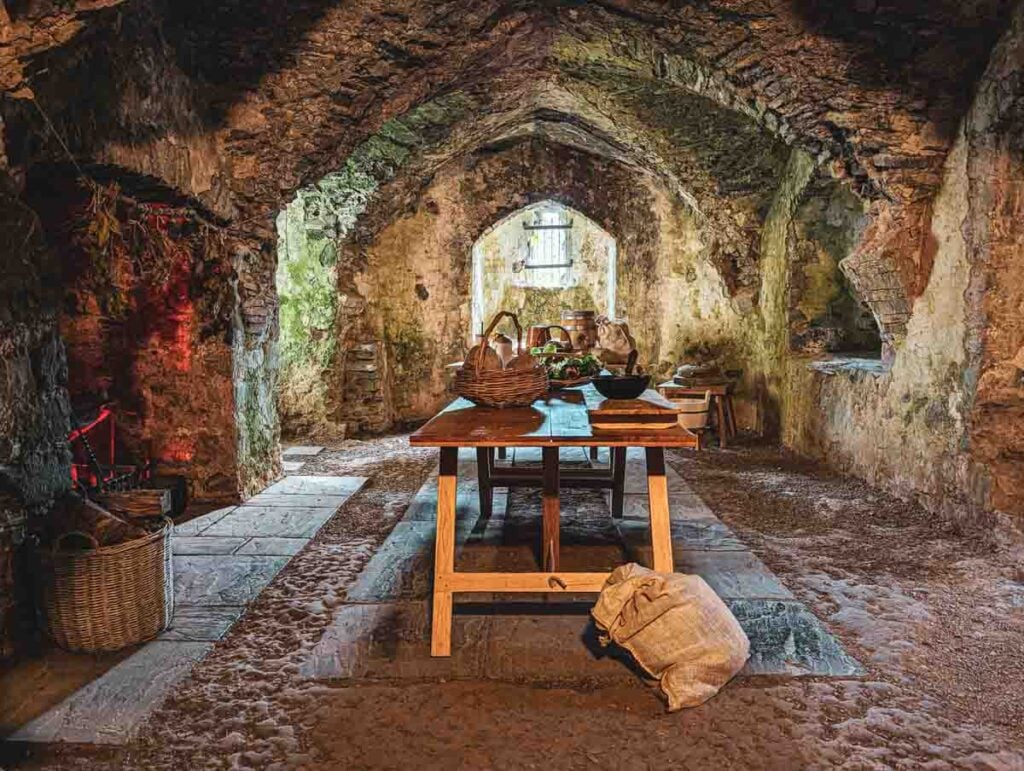
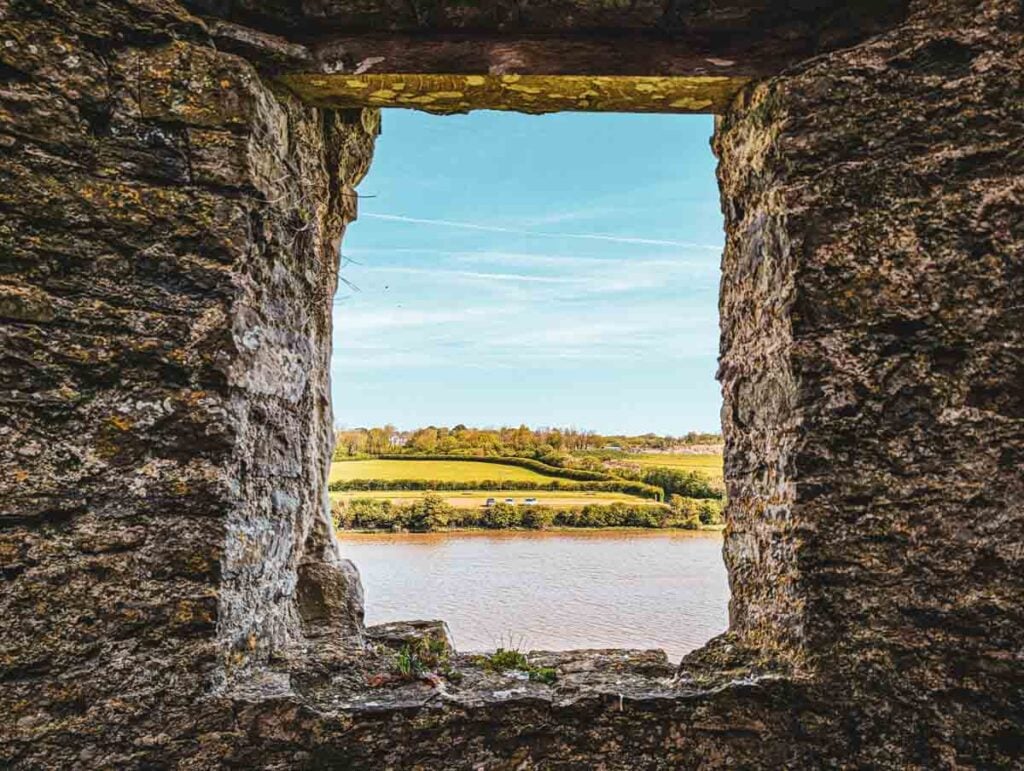
Best of all, you can climb the winding spiral staircases right up into the towers. Poking your head out from some of the top battlements gives you an incredible, sweeping perspective over the tidal river and the sprawling estate below!
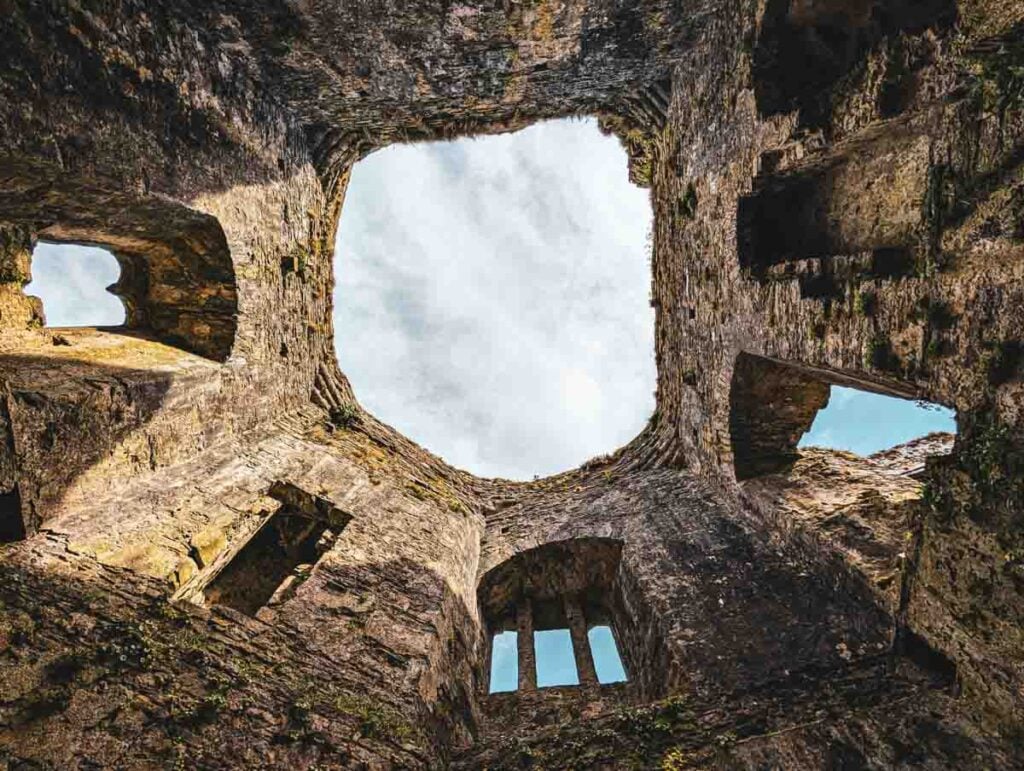
The Tidal Mill: Harnessing the Sea
Just a short, wonderfully peaceful stroll from the castle along the edge of the water brings you to the Carew Tidal Mill.
This isn’t just any old mill; it is the only fully restored tidal mill in Wales. Built in the 19th century (though there has been a mill on this site since 1541), it used the natural ebb and flow of the estuarine tides to power its heavy grinding machinery.
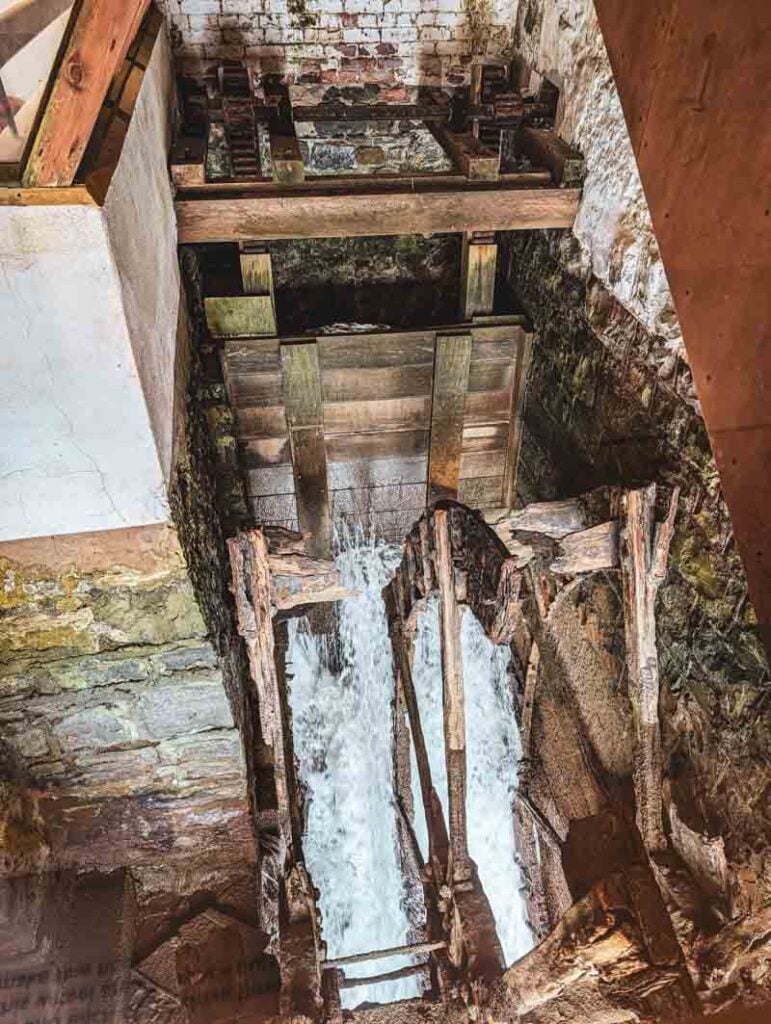
Walking inside, you are treated to a brilliant, hands-on history lesson spread across three fascinating floors. As you climb up through the different levels of the building, the displays break down exactly how the millers harnessed the tide to turn the grain into flour.
It is a brilliant piece of historic engineering, and you can even peer down into the lower levels to see the massive, original water wheels themselves, sitting exactly where they have been for centuries.
Plus, looking back across the water from the mill windows offers arguably the best photographic view of the castle over the pond.
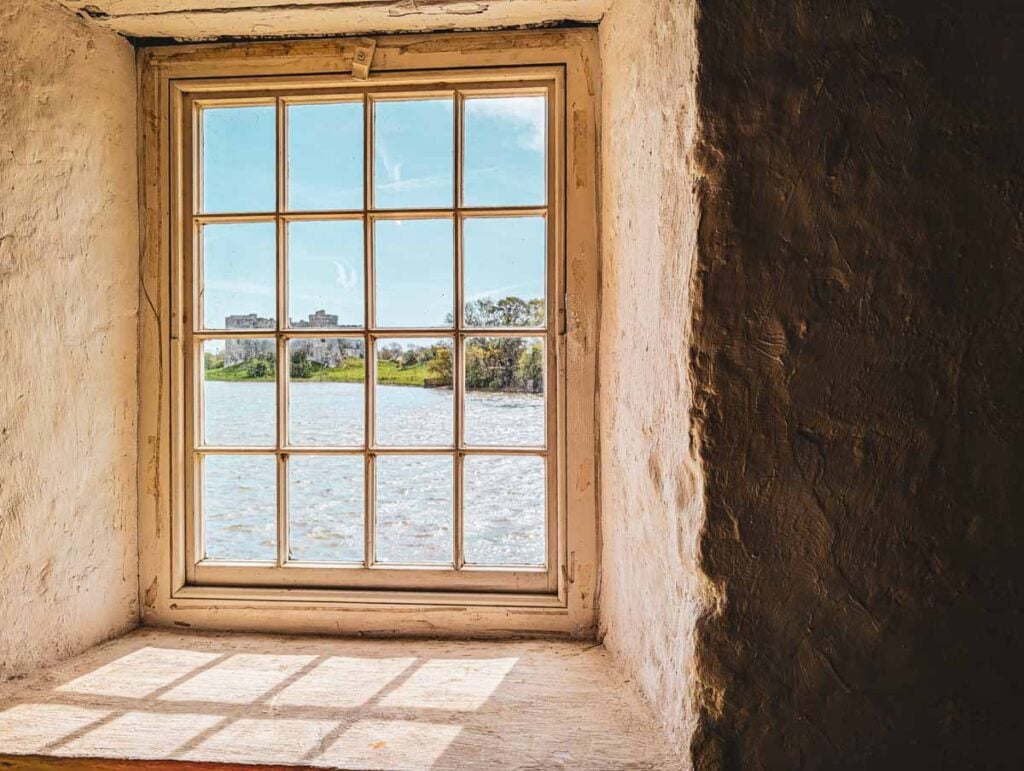
Note: Entrance to the mill exhibition comes as part of your entry to ticket to the Castle.
Princesses, Pirates, and a Ghostly Ape
You simply cannot have a Welsh castle without a few myths and legends, and Carew delivers on all fronts.
The Helen of Wales
The castle was once home to Princess Nest, Gerald of Windsor’s wife, who was famously dubbed the “most beautiful woman in Wales.”
In 1109, a Welsh prince named Owain was so besotted with her that he laid siege to Carew Castle and kidnapped her, sparking a massive, bloody conflict. Her ghost—often referred to as the “White Lady”—is still said to peacefully wander the castle rooms.
The Ghostly Ape
Now for my absolute favourite quirky fact. In the 17th century, a tenant named Sir Roland Rhys lived in the castle with his devoted pet: a Barbary ape he had rescued from a wrecked Spanish galleon.
After a furious argument with a local merchant, Sir Roland set his ape on the man. The merchant narrowly escaped and cursed Sir Roland.
That very night, piercing screams echoed from the tower. The next morning, Sir Roland was found dead in a pool of blood, and the ape had vanished without a trace.
On dark, stormy nights, locals say you can still hear the ape howling from the battlements!

The Millpond Circular Walk (And Yes, It’s Dog Friendly!)
If you are a regular reader, you know I always look for lovely walking routes, and Carew offers a true little gem.
Linking the castle, the tidal mill, an impressive 11th-century Celtic cross, and a medieval bridge is a delightful 1-mile circular walk. The path wraps entirely around the 23-acre millpond.
The best part? It is incredibly accessible. The path is largely flat, well-surfaced, and perfectly suited for wheelchairs and buggies. It is also highly dog-friendly!
Dogs on short leads are welcome on the walk, around the grounds, and even inside the the castle itself, making it a fantastic day out if you have a four-legged hiking buddy in tow.
Practical Info for Your Visit
If you are plotting your trip, here are the boots-on-the-ground logistics you need to know:
- Where is it? Carew Castle is located just a few miles from the popular seaside town of Tenby and Pembroke. Postcode: SA70 8SL.
- Parking: There is a dedicated, free car park right alongside the castle. If it gets busy during the summer, there is an overflow parking area near the Tidal Mill on the opposite side of the water.
- Facilities: The site features the lovely Nest Tearoom (perfect for a post-walk slice of cake and a brew), a gift shop, and accessible toilets.
- The Carew Inn: If you fancy something a bit more substantial after your walk, the Carew Inn is situated just across the road from the castle. It serves fantastic, hearty pub food and has a great dog-friendly beer garden.
Final Thoughts
Pembrokeshire is famous worldwide for its coastline, but taking a few hours to step away from the beaches and coast to explore Carew Castle is incredibly rewarding.
Whether you are there to climb the Tudor towers, learn the mechanics of the three-storey tidal mill, or just enjoy a flat, scenic dog walk around the water, Carew has a little bit of magic for everyone. Just keep an ear out for that ghostly ape!
Wales is packed with castles and history. As I toured Carew my mind went back to a special road trip I had in North Wales, The Iron Ring of Castles, of Edward I.