
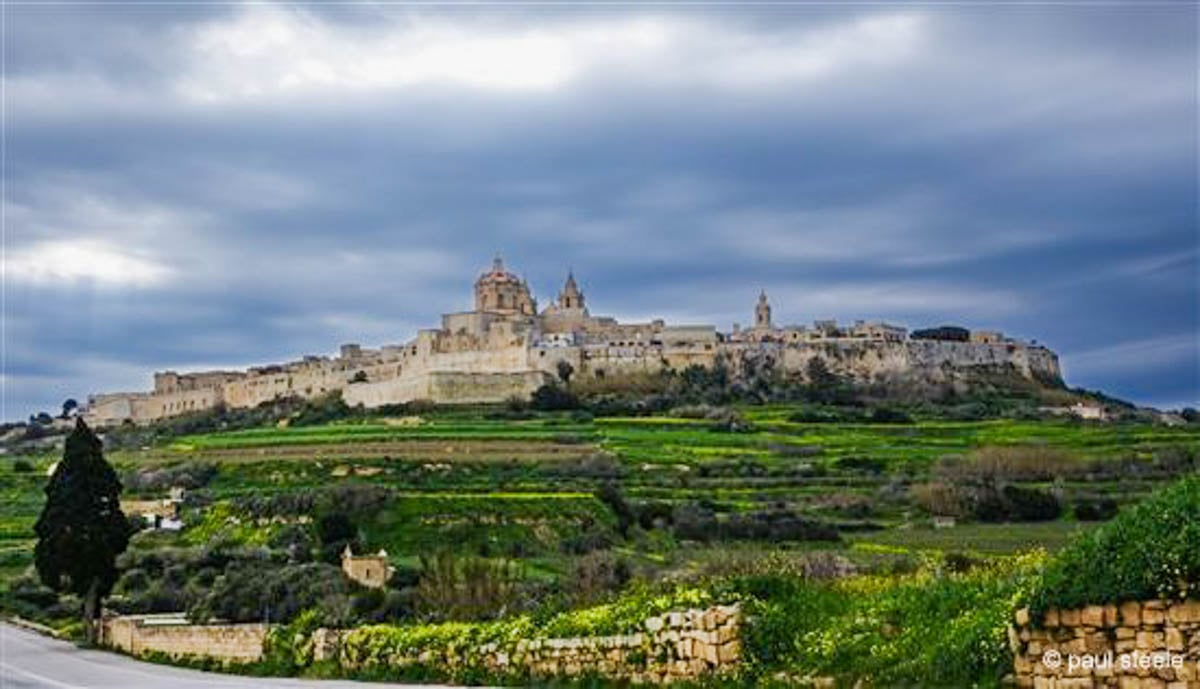
On every single trip I take to the Mediterranean island of Malta, I make it a non-negotiable rule to leave the coastal beaches and crowded bars behind for at least one afternoon.
I pack my camera and head straight to the center of the island to walk the stone ramparts of Mdina.
Perched high on a natural limestone plateau, this ancient, fortified stronghold cuts an imposing figure against the skyline.
It served as the island’s capital from antiquity right through to the medieval period.
Today, it is widely known as the “Silent City.” To walk through its monumental stone gates is to experience an immediate, profound shift in pace.
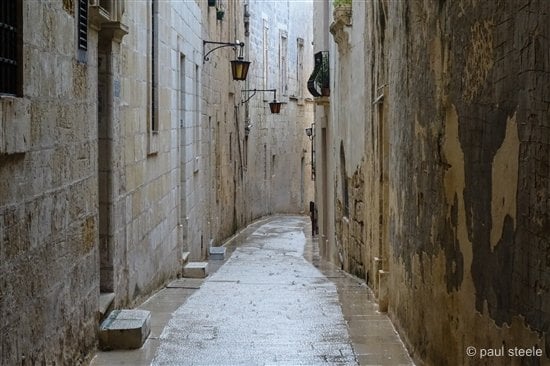
The modern world simply vanishes, replaced by narrow, winding alleys, sun-bleached limestone palaces, and centuries of military grit.
Whether you are a history buff looking to trace the footsteps of medieval knights or a traveler looking for spectacular panoramic views across the island, here is your practical, boots-on-the-ground guide to exploring Mdina.
🏰 Mdina Entry & Exploration Logistics
Location:
Situated in the Northern Region of Malta, directly adjacent to the bustling town of Rabat.
The Car Ban:
To protect the fragile historic infrastructure and maintain its signature atmosphere, car traffic is strictly banned inside the city walls. Only emergency vehicles, wedding cars, and a handful of local residents hold permits to drive inside.
Parking Strategy:
Because you cannot drive inside, park in the large public parking bays located just outside the main gate in Rabat. Carry loose change, as local car park attendants operate these lots on a tipping basis.
Admission:
Entering the fortress walls and wandering the historic streets is entirely free of charge. Separate entry tickets are required for internal museums and the cathedral.
Footwear Warning:
The labyrinth of narrow stone alleys is paved with smooth, centuries-old limestone blocks that can become exceptionally slick, especially after a brief shower. Leave the flip-flops at the hotel and wear a sturdy pair of walking shoes with reliable grip.
The Bastions of History: 4,000 Years of Defense
Mdina boasts a rich, strategic history that stretches back over four millennia.
Originally fortified by the Phoenicians around 700 BC, the city has been occupied and reshaped by almost every major civilization that dominated the Mediterranean, including the Romans (who named it Melita), the Arabs, the Normans, and the legendary Knights of St. John.

For me, the most compelling aspect of the city is its sheer military engineering.
The outer bastion walls offer a breathtaking, unobstructed view sweeping across the northern plains all the way to the modern capital of Valletta on the coast.

Standing on these high stone ramparts brings the defensive history into sharp focus.
During the Great Siege of Malta in 1565, it was the strategic positioning of Mdina—and the relentless artillery fire from its defenders—that repeatedly harassed the Ottoman forces, ultimately disrupting their lines and forcing a retreat back toward the coast.
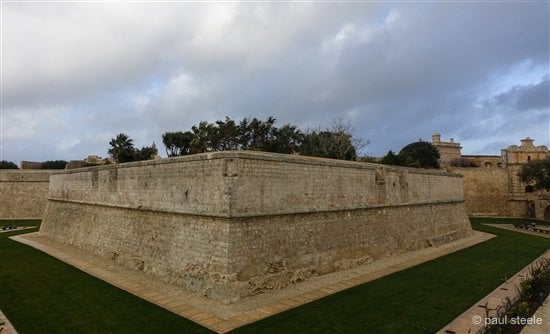
Every stone block in these walls has earned its place in military history.
Navigating the Silent City: Alleys and Hidden Courtyards
The present-day population of Mdina sits at fewer than 300 residents.
The combination of the strict car ban and the massive stone walls creates a natural acoustic buffer.

The noise of the modern island is entirely erased, replaced by the quiet echo of your own footsteps fading down the lanes.
The city layout was intentionally designed by medieval architects as a labyrinth of tightly winding, curved alleys.
This wasn’t just an aesthetic choice; the sharp bends were a tactical defensive mechanism designed to disorient invading soldiers and prevent archers or musketeers from having a clear, straight line of sight through the streets.
The Main Gate
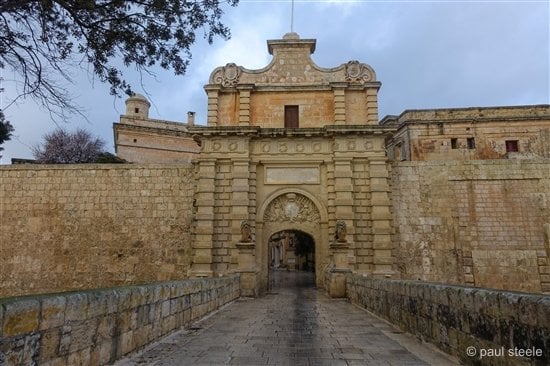
Your exploration begins at the iconic Mdina Gate (the Main Gate), a grand, Baroque masterpiece designed by architect Charles François de Mondion in 1724.
Walking beneath its towering stone arches and historic coats of arms sets a magnificent tone for the trip.
As you move deeper into the interior, look past the main routes to discover the quiet, hidden residential courtyards.
These small oases are framed by blooming bougainvillea, intricately carved wooden doorways, and traditional Maltese brass door knockers, offering a beautiful look at private island life.

Must-See Historic Landmarks
While the entire city functions as an open-air museum, there are a few key architectural anchors you should structurally map into your walk:
St. Paul’s Cathedral
Dominating the central square is St. Paul’s Cathedral, a jaw-dropping Baroque masterpiece. The original Norman church on the site was completely leveled by a catastrophic earthquake in 1693.
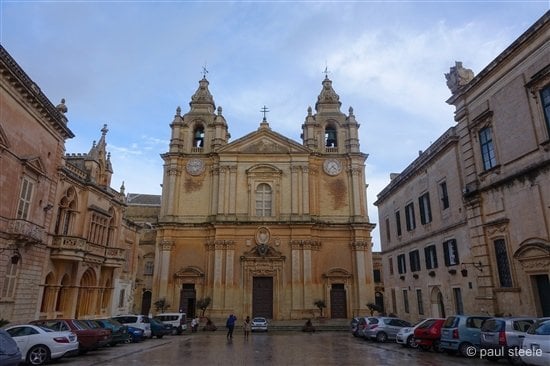
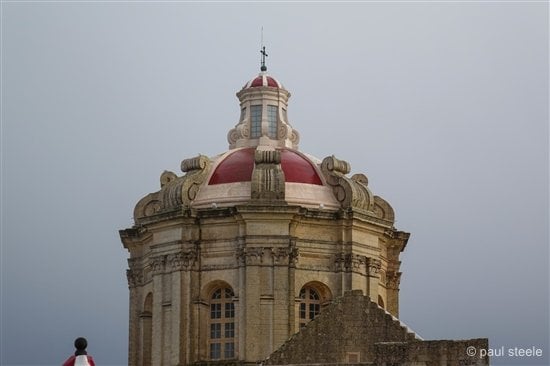
The replacement structure, completed in 1705 by the acclaimed Maltese architect Lorenzo Gafà, features a towering dome, intricate marble floor graves of Maltese nobility, and spectacular frescoes detailing the shipwreck of St. Paul on the island.
It stands as a brilliant testament to Maltese resilience.
Palazzo Falson
For a genuine look at medieval grandeur, head to the Palazzo Falson Historic House Museum.
This is the second-oldest building in the city, dating back to the 13th century.
It houses an extraordinary, eclectic collection of historic art, antique weaponry, oriental rugs, and rare books, preserved exactly as it was when the noble families occupied the rooms.

The Hiker’s Kitchen: Pastizzi and Bastion Cakes
Walking the stone inclines of Mdina works up a serious appetite.
The culinary landscape here perfectly reflects the island’s unique blend of Mediterranean and North African influences.
Before heading inside the gates, make a quick stop in neighboring Rabat to sample authentic Pastizzi—flaky, savory pastries filled with rich ricotta cheese or curried peas.
They are the ultimate, cheap, high-calorie street food fuel for a day of walking.
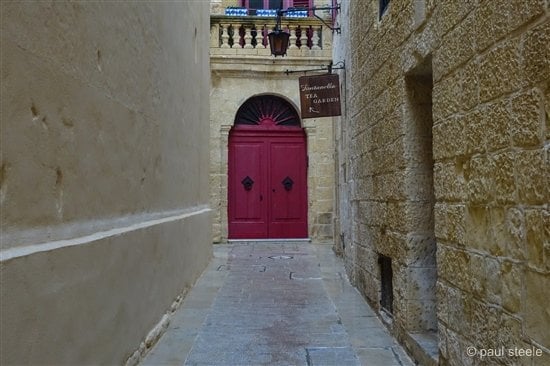
The Fontanella Tip
Once inside the fortress, my absolute, non-negotiable culinary recommendation is to head directly to the Fontanella Tea Garden.
Perched right on top of the high bastion walls, this local institution is famous across the island for its massive, decadent cakes.
Sitting on the open-air upper terrace with a coffee and a giant slice of their signature chocolate cake, while staring out over the panoramic views of the Maltese countryside stretching to the sea, is a phenomenal experience that completely rewards a long afternoon of exploring.
The Evening Transformation
If your itinerary allows, stay past sunset. As the daytime tour buses depart, Mdina undergoes a dramatic, atmospheric transformation.
The bright glare of the Mediterranean sun is replaced by the warm, golden glow of traditional lanterns illuminating the narrow limestone passages.
The silence deepens, and the empty, shadowed streets take on a deeply historic, cinematic character.
It is the perfect time for low-light photography, allowing you to capture the raw, timeless texture of the stone architecture without any crowds in your frame.
Explore More Spectacular Maltese Wilderness & Heritage Guides
- The Coastal Cliffs: Malta – Walk the Dingli Cliffs: A Local’s Trail Manual
- The Prehistoric Ruins: The Megalithic Temples of Malta: An Expert Heritage Guide
- The Defensive Perimeter: The Coastal Towers of Malta: A Hiker’s History Guide


Oh Paul, you make me feel so homesick to see these beautiful pictures of Malta! I’m very impressed with your history of the Island. I hope you also had a chance to visit the sister islands, Gozo and Comino. Make sure you only visit Comino in summer. There’s only a hotel and an old house but the attraction is the most beautiful colour of the sea. Day ferries in summer and make sure you take your bathing suit.
thanks for the tips for next time Sandra
Have you ever visited Salvador City in Bahia State in Brazil.
Please visit also the TOWN of OURO PRETO ( black GOLD )in MINAS GERAIS – you will like it very much.
I will enjoy reading, again. THANKS !
(EB/EK)
Wonderful! Took me back to our visit there 6 years ago. I have to say I’m envious of the first photo particularly, since I tried to take a photo of the city in the distance from a tour bus and it didn’t work! I found it a fascinating place and now want to go there again!