

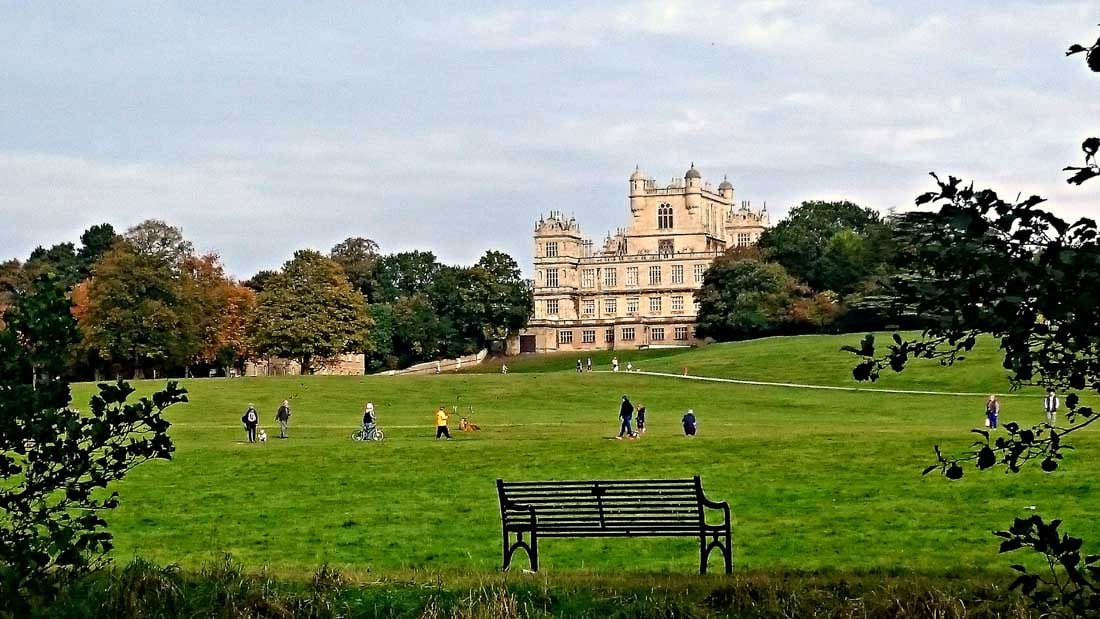
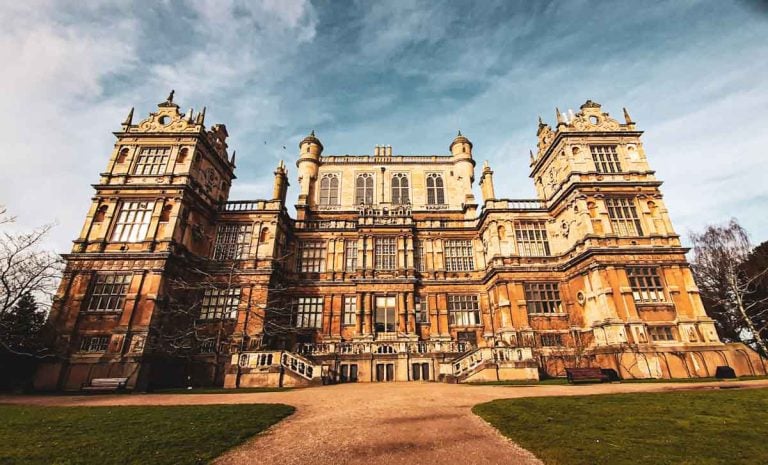
Standing proudly on a hill overlooking 500 acres of parkland, Wollaton Hall is an architectural marvel.
This spectacular Elizabethan mansion is not only a jewel of Nottingham’s history but has also captured modern imaginations as the real-life Wayne Manor in the Batman film, The Dark Knight Rises.
Whether you’re drawn by its Hollywood fame, its herds of wild deer, or its fascinating museums, this guide provides every detail you need to plan the perfect visit.
Planning Your Visit to Wollaton Hall: What You Need to Know
This section covers the essential logistics to help you plan your trip, from opening times and prices to parking and accessibility.
Opening Times & Prices
- Park: Opens weekdays at 8 am and weekends/bank holidays at 9 am. Closing times are seasonal and staggered, so it’s best to check the official website for the most current times.
- Hall & Museums: Open daily from 11 am to 4 pm (last entry at 3:30 pm).
- Cafés & Shops: The Courtyard Café is open from 9 am to 5 pm, and the 508 Café is open from 10 am to 5 pm.
Entry to the park is free. Admission to the Hall operates on a ‘Pay once, visit all year’ basis. An adult ticket is £15, and up to three children (15 and under) get in free with each paying adult.
Get the latest information from Wollaton Hall.

Getting There: Location, Parking & Public Transport
- Address: Wollaton Hall & Deer Park, Wollaton, Nottingham, NG8 2AE.
- By Car: The park is located 3 miles west of the city centre. If driving from the M1, take Junction 25 and follow the brown tourist signs.
- Parking: Parking costs £5 on weekdays and £6 on weekends for the full day. You can pay via the RingGo app (location code 18914) or by card in the on-site shops and cafés.
- By Public Transport: Several bus routes run from Nottingham’s Victoria bus station, including the L2, 30, and ‘The 2’.

Facilities & Accessibility
Wollaton Park is well-equipped for a full day out. You’ll find multiple toilet locations, including a Changing Places toilet, and baby changing facilities.
There are two children’s play parks and three on-site cafés to choose from.
The park is largely accessible for wheelchair users, with designated blue badge parking spaces and wheelchair-friendly paths.
The Hall museum is accessible via a lift that serves all three floors. For specific tour accessibility, it’s recommended to email the hall in advance.
A Rich History: From Elizabethan Prodigy House to Public Museum
The story of Wollaton Hall is a rich tapestry woven through centuries of English history, reflecting the ambitions of one family and the evolution of a nation.
The Vision of Sir Francis Willoughby
The magnificent hall you see today was the creation of Sir Francis Willoughby, a wealthy industrialist and coal owner who envisioned a home that would be the “architectural sensation of its age”.
To achieve this, he commissioned Robert Smythson, one of the first men in England to be called an ‘architect’, who had already proven his genius at Longleat.
Construction began in 1580 and was completed in 1588, a landmark year in English history that saw the defeat of the Spanish Armada.
The project was a monumental undertaking, funded by Willoughby’s lucrative coal mines and built with Ancaster stone, which was painstakingly transported by horse and exchanged for coal from the estate’s pits.
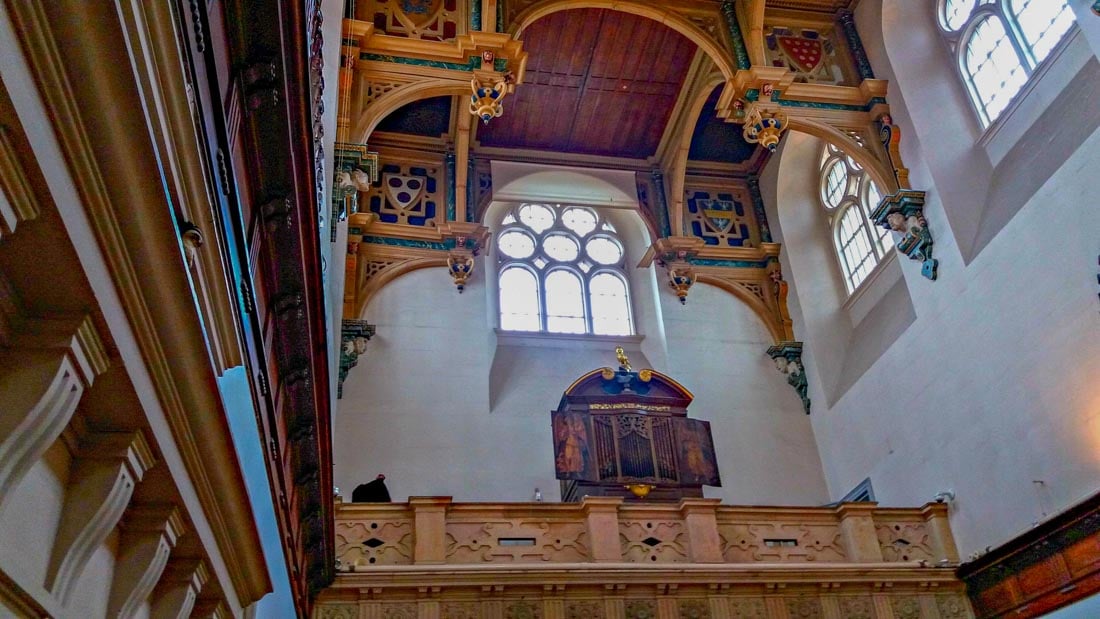
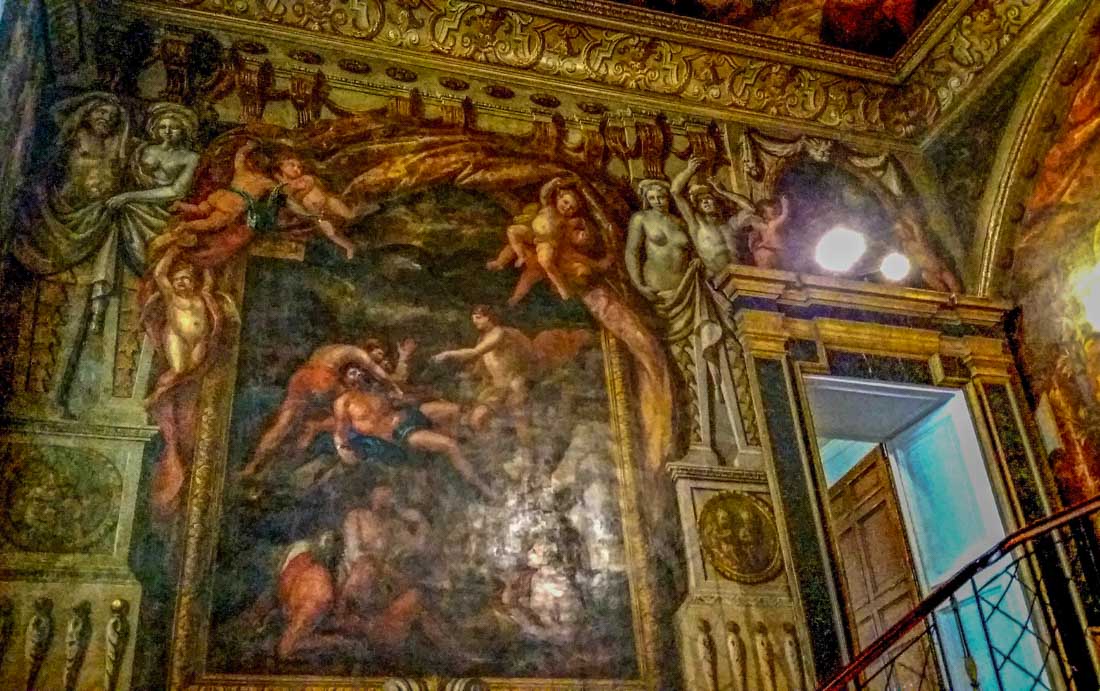
The result was a classic “prodigy house,” an advanced Elizabethan design with exuberant Jacobean and continental Renaissance influences.
Tragically, Sir Francis died in 1596, just eight years after its completion, and with no surviving sons, the estate passed to his eldest daughter, Bridget, and her husband, Sir Percival Willoughby.
The Willoughby Legacy and Centuries of Change
The Willoughby family’s connection to the Wollaton estate began long before the grand hall was built.
Descended from a 13th-century Nottingham merchant named Ralph Bugge, the family acquired the land around 1314.
For over 600 years and through thirteen generations, they shaped its destiny.
The hall endured significant challenges, including a major fire in 1642 during the English Civil War that left it badly damaged and unoccupied for nearly half a century.
It was the dedication of Cassandra Willoughby, Duchess of Chandos, that led to its restoration in the late 17th century.
Another fire in 1801 prompted a further wave of extensive remodeling by the fashionable architect Jeffry Wyattville, who was commissioned by the 6th Baron Middleton—the family having been elevated to the peerage in 1712.
From Private Residence to Public Treasure
By the late 19th century, the relentless expansion of industrial Nottingham was encroaching on the estate.
The family began to feel that their grand home was “too near the smoke and busy activity of a large manufacturing town,” and in 1881, the 9th Baron Middleton moved out, leaving the hall vacant.
Facing crippling double death duties, the 11th Baron Middleton sold the hall and park to the Nottingham Corporation in 1925.
This marked a new chapter in Wollaton’s story. In 1926, its doors were opened to the public, and it began its new life as Nottingham’s Natural History Museum, a role it proudly continues to this day.
Top Things to See and Do at Wollaton Hall
From natural history treasures to industrial heritage and roaming deer, there’s something for everyone at Wollaton.
Inside the Hall: The Natural History Museum
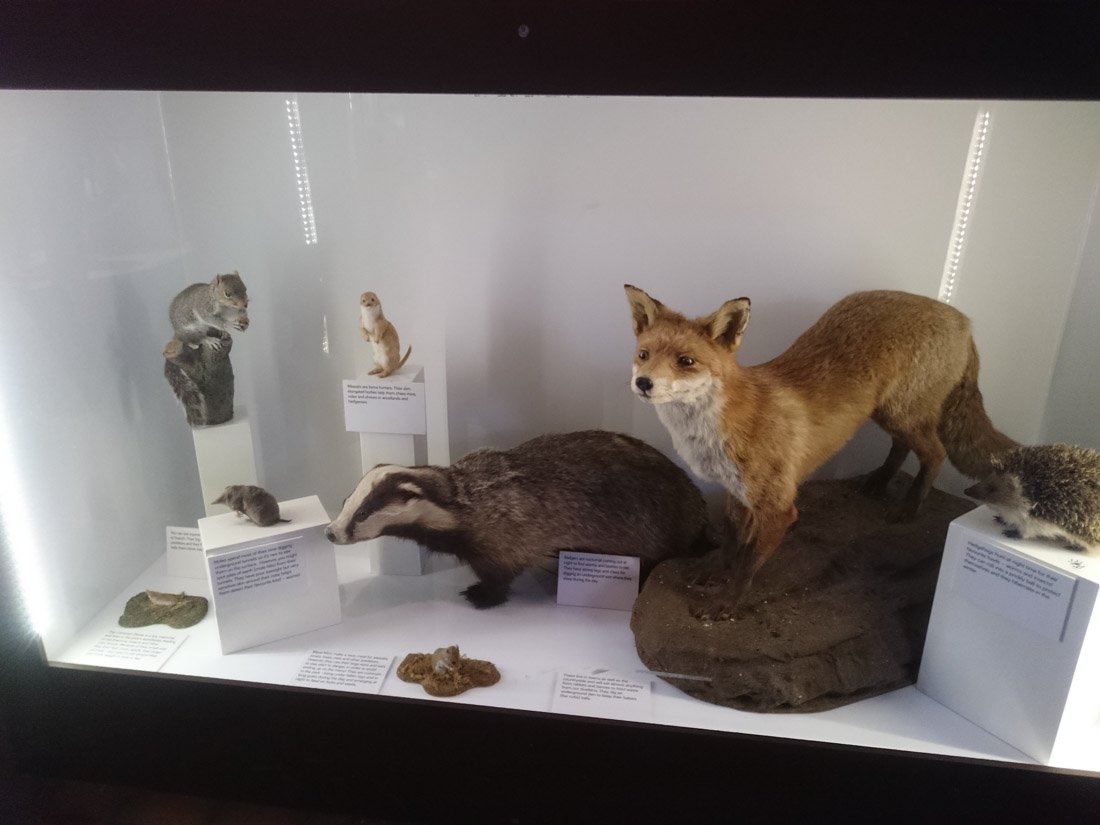
Since 1926, the grand hall has housed Nottingham’s Natural History Museum, which contains a vast collection of 750,000 specimens.
The museum’s origins can be traced back to an interest group at the Nottingham Mechanics’ Institution in the 19th century, but its connection to natural history is even deeper.

Francis Willughby (1635-1672), an early and brilliant member of the Royal Society and a descendant of the hall’s builder, was a pioneering naturalist whose collections helped form the foundation of the museum’s extensive holdings.
The collection is spread across six main galleries, including the Bird Gallery, Insect Gallery, and Africa Gallery, showcasing everything from fossils and minerals to taxidermy.
Be sure to say hello to some of the museum’s most famous residents, Gerald the Giraffe and George the Gorilla.
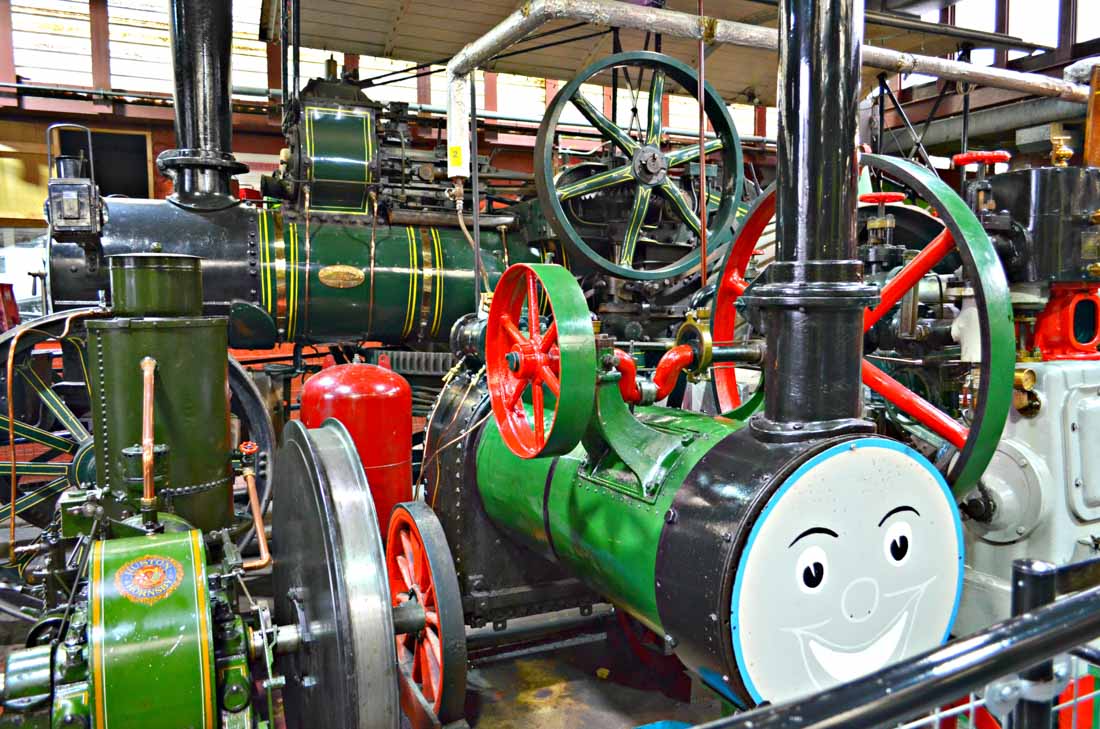
You can find specific details about its unique collections, opening hours, and special “Steaming Days on the industrial museum site.
Go Behind the Scenes: The Hidden History Tour
For a look beyond the public galleries, the Hidden History Tour is a must.
These daily tours take you into the lesser-known parts of the hall, including the magnificent Prospect Room at the very top, the historic Tudor Kitchens, and even the Admiral’s Bath in the cellars.
These are not just empty rooms; they are steeped in history. The Prospect Room was part of Robert Smythson’s original design, offering panoramic views over the estate.
The Tudor Kitchens date back to the hall’s construction in the 1580s, giving a glimpse into Elizabethan life. The Admiral’s Bath is a reservoir in the basement where, according to some accounts, an admiral of the Willoughby family took a daily bath.
Tours run daily at 11 am and 2 pm, last approximately one hour, and cost £8 per person.
A Trip Back in Time: The Nottingham Industrial Museum
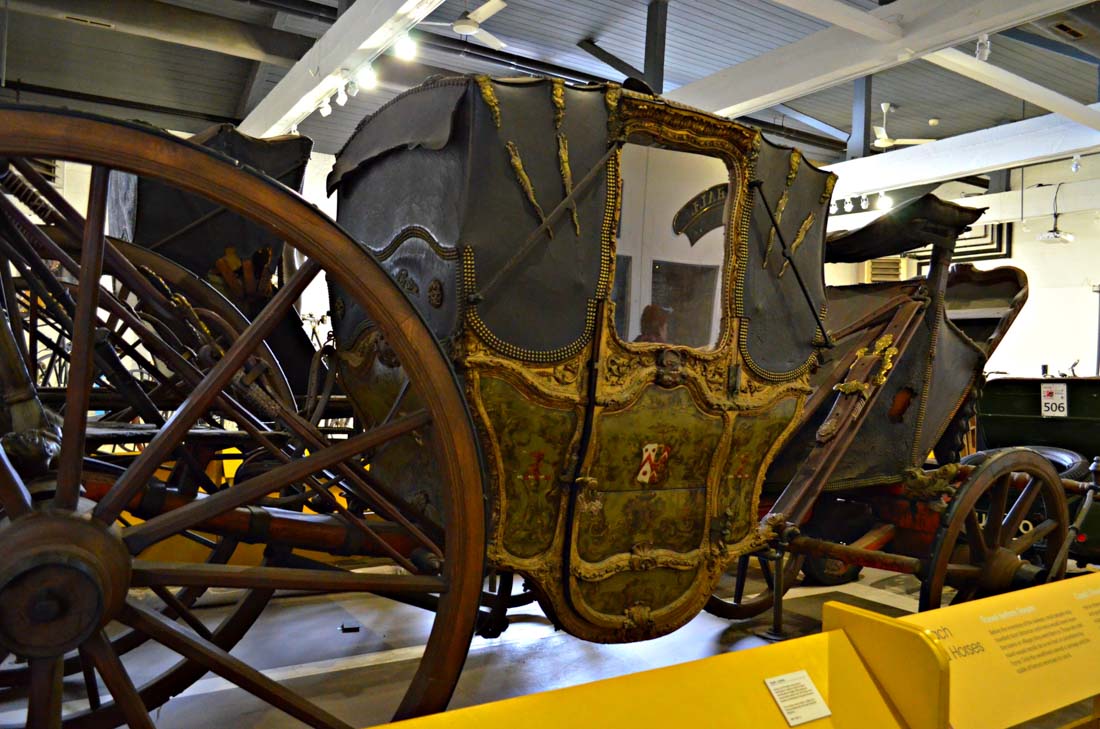
Located in the old stable block, the Nottingham Industrial Museum is a treasure trove of local history.
This building itself tells a story of the estate’s evolution, with the stables being built and extended in the 18th and 19th centuries, including the addition of a grand Riding School in 1829.
The museum, which opened in 1971, pays homage to the industries that generated the Willoughby family’s great wealth.
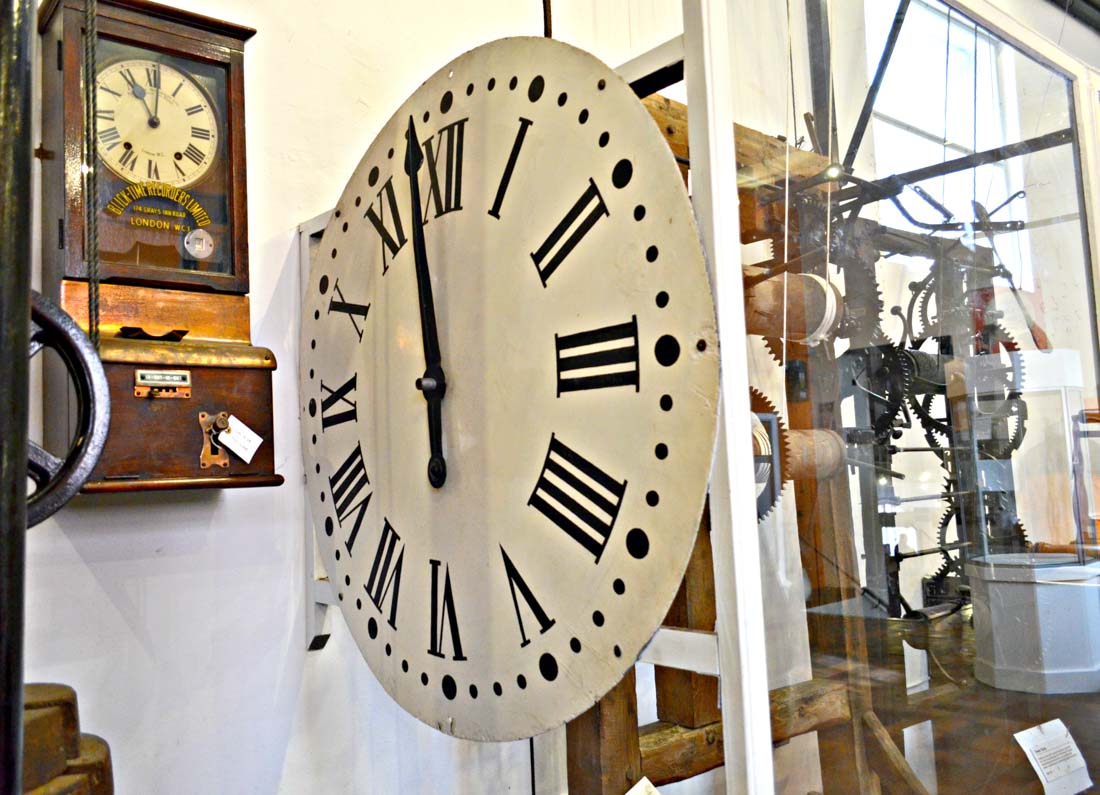
This place takes me right back to my childhood visits. Years on from my early fascination with the steam engines, I now appreciate the links to my own family history, as my dad worked in the local telecommunications industry.
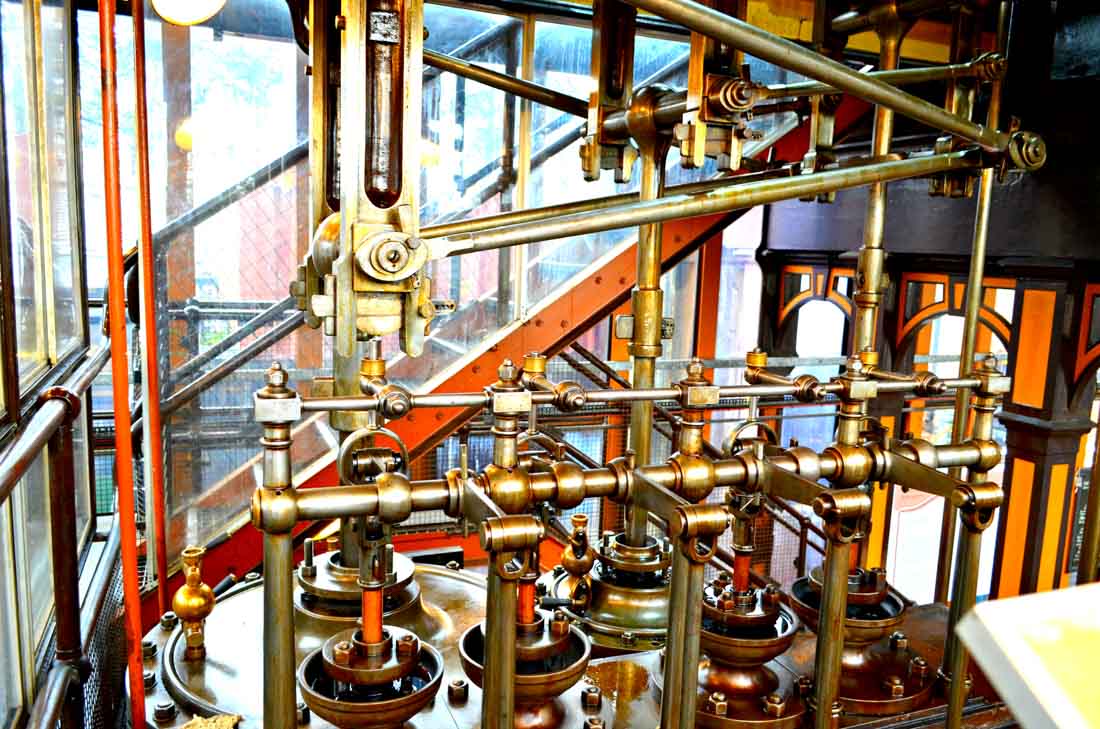
The Steam Gallery is a delight, especially on the last Sunday of the month when the giant Basford Beam Engine is in full steam.
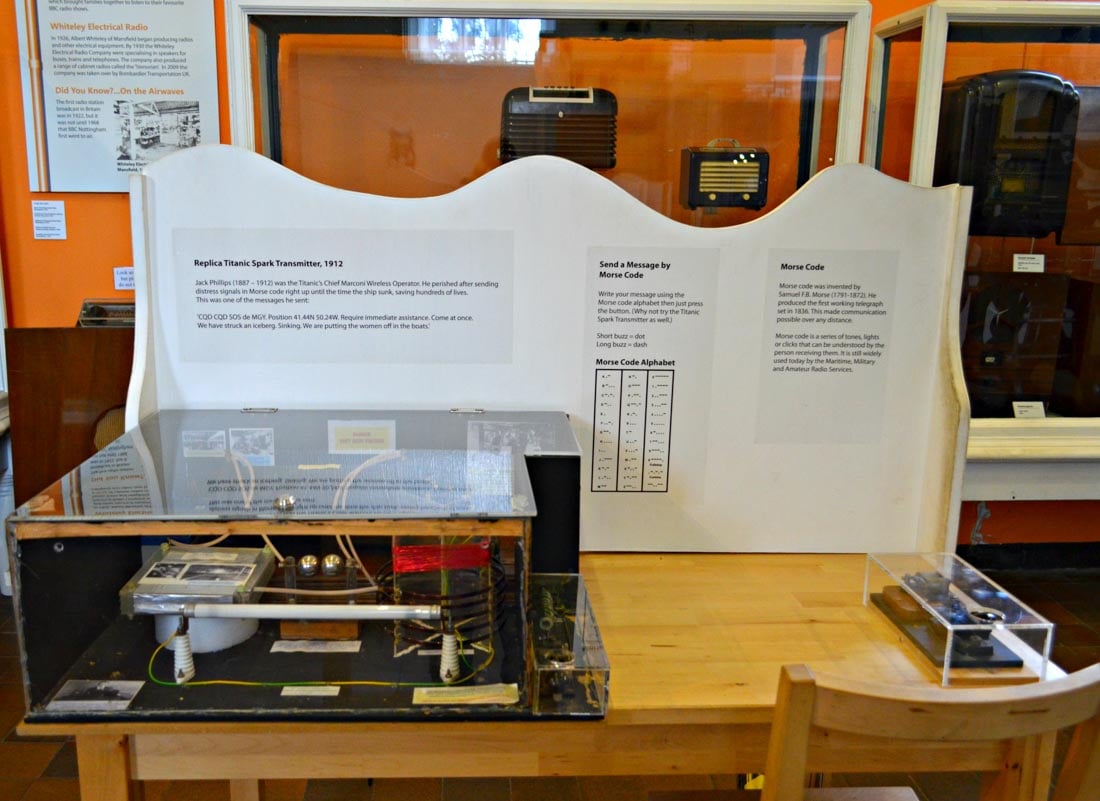
You can also see a working telephone exchange—where you can make calls and watch the components whir—and even use a replica of the Morse code transmitter used on the Titanic.
Exploring the Grounds: The Deer Park & Formal Gardens
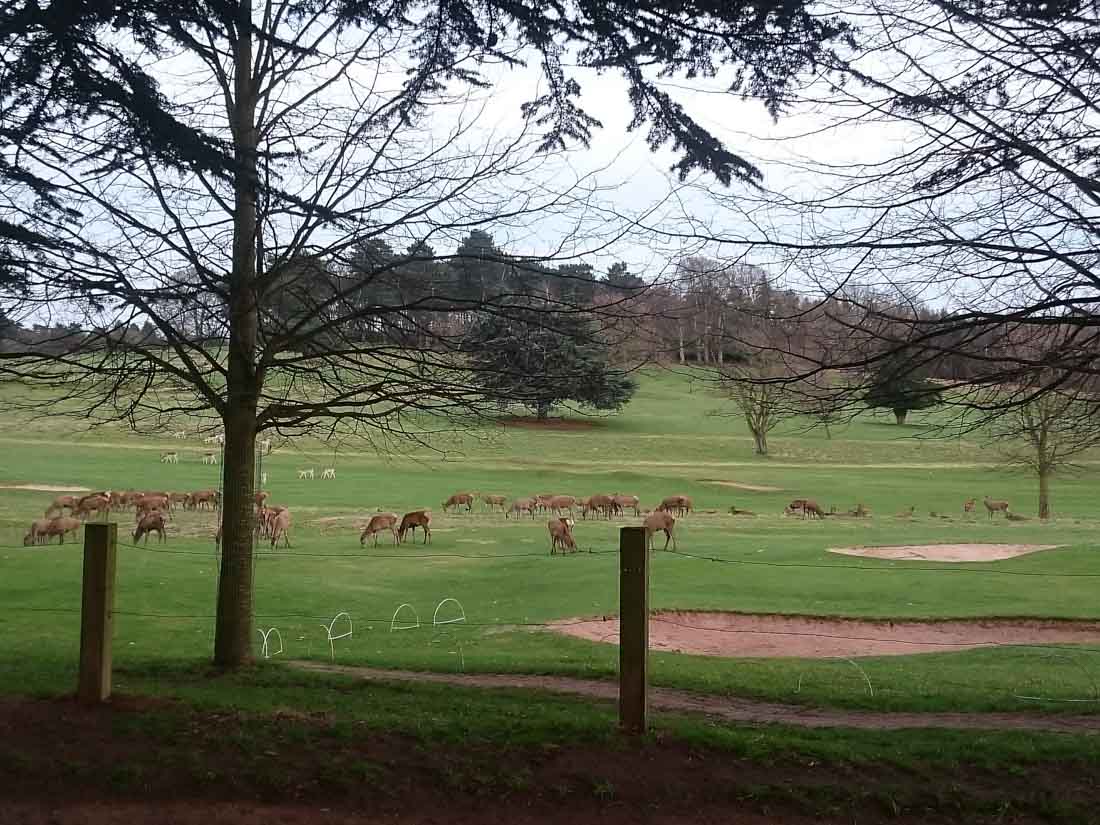
The 500 acres of parkland are a historic landscape in their own right. And is home to both Fallow and Red Deer.
The park was first enclosed for deer between 1492 and 1510, long before the current hall was even conceived, and deer have roamed here since the 14th century.
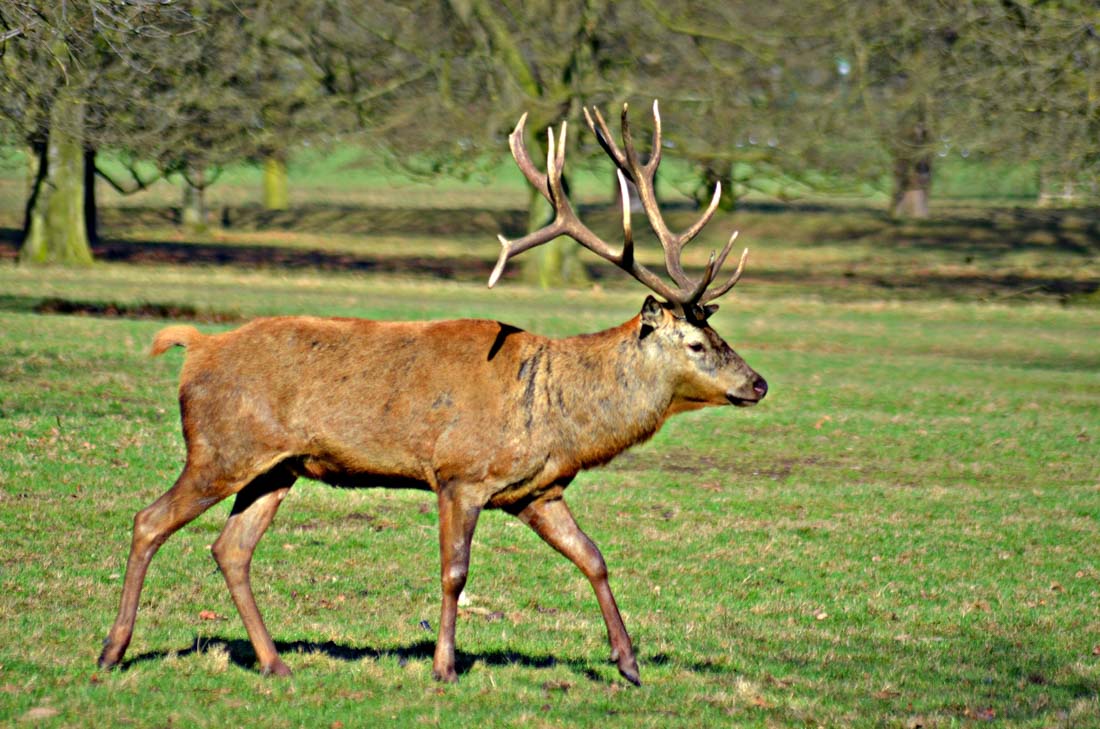
It’s a magnificent sight, but for your safety and the animals’ welfare, please keep a minimum distance of 50 metres and never feed them.
The rutting season, from September to November, is a particularly dramatic time to visit.
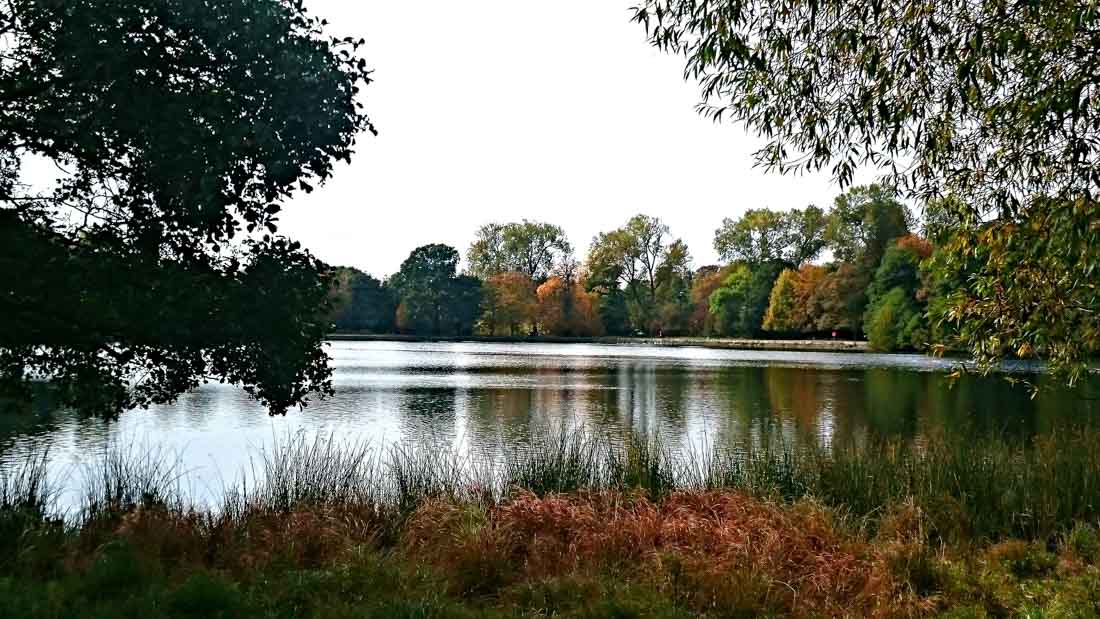
Beyond the deer, you can explore formal gardens, a serene lake that was landscaped and extended in the 18th and 19th centuries, and the historic Camellia House, one of Britain’s earliest cast-iron glasshouses, built in 1823.
For Batman Fans: Finding Wayne Manor in Nottingham
Wollaton Hall’s striking facade was the perfect choice for Wayne Manor in the 2012 Batman film,The Dark Knight Rises.
The hall’s grandeur and its surprising network of caves beneath it made it an ideal filming location.
What makes this connection even more perfect is a fascinating piece of local geography. The real village of Gotham, from which the famous Gotham City gets its name, is just 5 miles away.
You can read all about that incredible story in my other post, A Visit to the Real Gotham – Nottinghamshire.
Our Personal Take on a Perfect Day at Wollaton
For me, no visit is complete without a few personal rituals.
I love to grab a mug of frothy coffee at the café and take a stroll around the lake to watch the deer and squirrels.

The gift shop, located in the former stables of the Nottinghamshire mounted police, is a great place to browse for a unique gift or, my personal choice, an ice cream.
Don’t miss the Potting Shed in the courtyard; it’s a gem of a shop for gardeners and anyone looking for a lovely, unique gift. It’s a place to relax, learn, and have fun, and I always leave feeling recharged.
After exploring the grounds, a pleasant walk will take you to the neighbouring Highfields Park, famous for its boating lake.






Hello,
What a wonderful experience that must have been. I imagine you have some amazing memories of your childhood. It’s a lovely place indeed. It’s so nice to hear about your experience. Thank you.
Kind regards,
Janine
I lived on the Gatehouse to Wollaton hall when i was a child, my late father Lawrie Williamson renovated it, it was magical as a little girl!