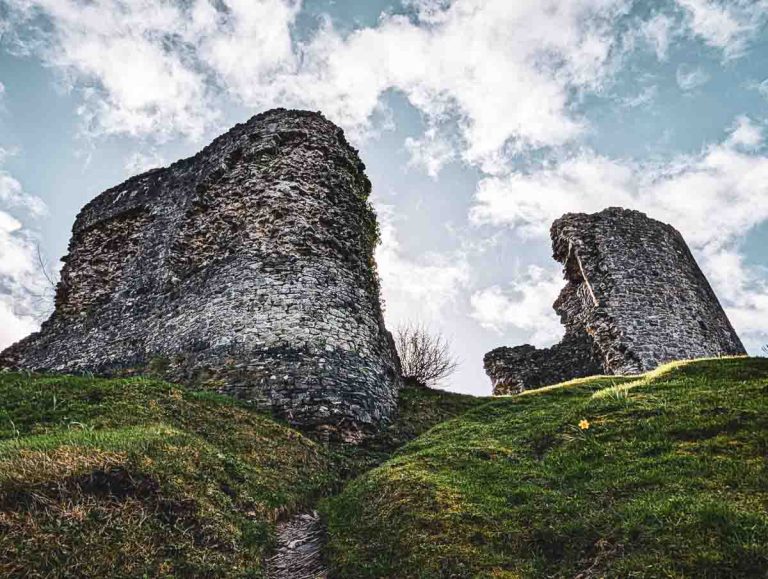
There are castles, and then there is Conwy.
If you’ve followed my journeys through Wales, you know I have a soft spot for the sheer, brutal majesty of Caernarfon and amazing backdrop of Harlech. Or the beautiful ruins of Beaumaris.
But Conwy? Conwy is different. It’s the fairytale fortress you drew as a kid—eight massive towers, soaring battlements, and a suspension bridge that looks like it was dropped straight out of a storybook.
Wedged between the mountains of Snowdonia and the Conwy estuary, this isn’t just a ruin; it’s a time machine.
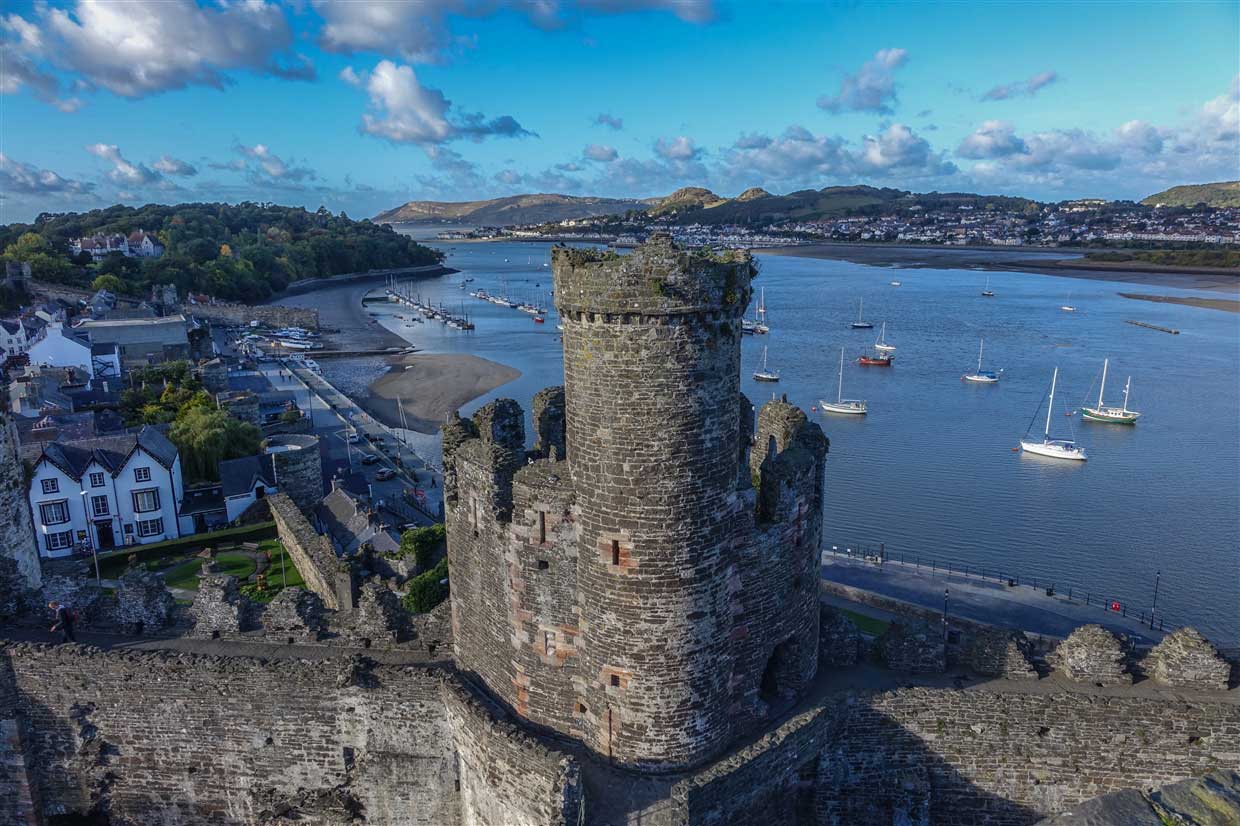
Whether you’re a history buff, a photographer chasing the “golden hour,” or a family looking for the ultimate dragon-hunting ground, Conwy delivers.
I’ve just revisited this UNESCO World Heritage site to bring you a completely updated guide—including some crucial info on wall closures, the best secret photo spots, and why you definitely shouldn’t bring your dog into the castle itself.
Let’s step inside the walls.
The Iron Ring: Why Conwy Exists
To understand Conwy, you have to understand the man who built it: King Edward I. In the late 13th century, he was determined to subdue the rebellious princes of Gwynedd once and for all. His solution?
The “Iron Ring”—a chain of suffocatingly expensive, technologically advanced castles designed to strangle Welsh independence.
Conwy was the jewel in that crown. Built in a blistering four years between 1283 and 1287 (a miracle of speed for the Middle Ages), it cost around £15,000.
To put that in perspective, the King’s entire annual income was only about double that. He effectively mortgaged the kingdom to build this stone beast.
But he didn’t just build a castle; he erased a memory. The site was originally home to Aberconwy Abbey, the spiritual heart of Welsh princes and the burial place of Llywelyn the Great.
Edward forced the monks to move miles away and built his fortress right on top of their high altar. It was a calculated psychological blow—building his military might on top of their spiritual ancestors.

Exploring the Castle: My Highlights
When you cross the drawbridge (now a wooden walkway) into the castle, you are walking in the footsteps of kings, prisoners, and revolutionaries. Here is what you need to look out for.
1. The Master Mind: James of St George
As you walk around, you might notice this castle feels… foreign. That’s because the architect, Master James of St George, was from the Savoy region (near modern Italy/France).
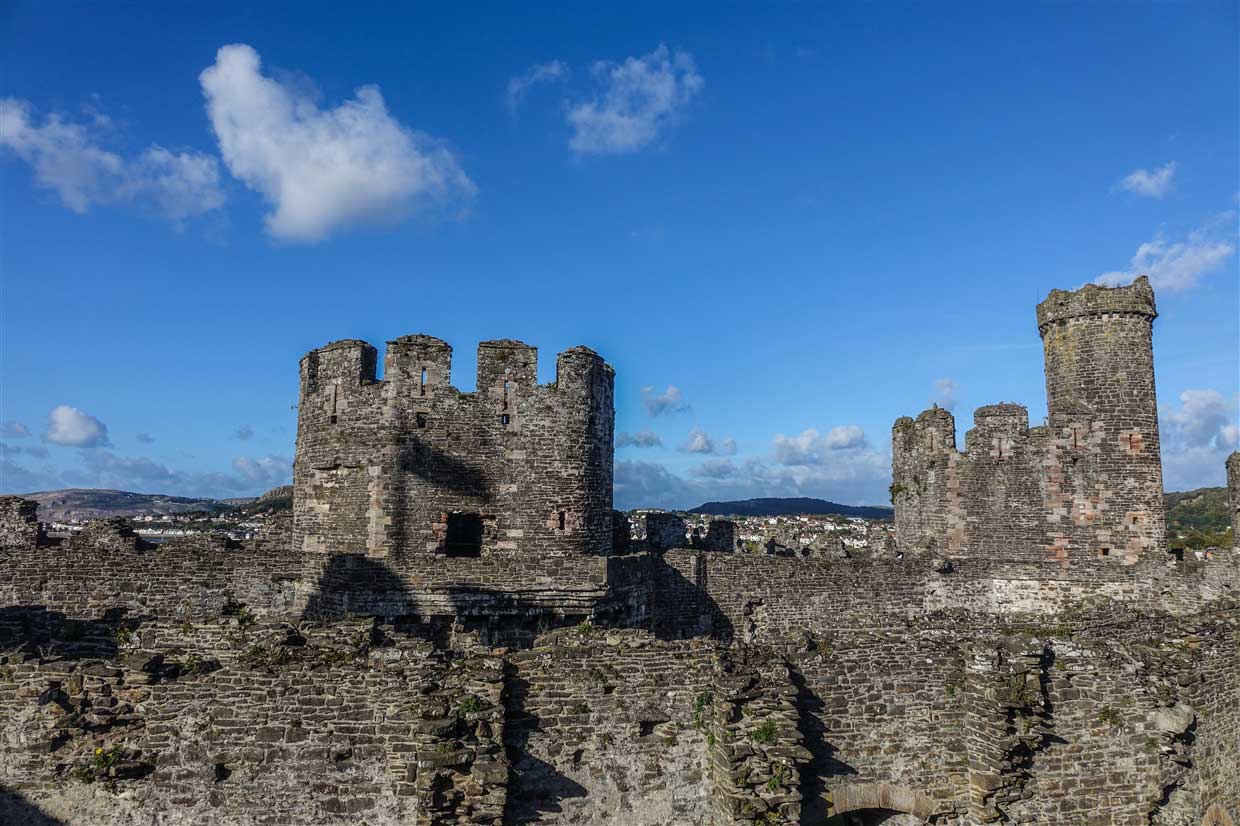
He brought continental flair to North Wales. Look up at the towers—the pinnacles on the battlements are a classic Savoyard touch that you rarely see elsewhere in Britain.

2. The Prison Tower & The Oubliette
This is the part that always sends a shiver down my spine. In the Outer Ward, head to the Prison Tower. On the main level, there was a “debtors’ chamber”—not great, but livable. But beneath the floor lies the oubliette (from the French oublier, “to forget”).
It’s a pit hewn 12 feet deep into the solid rock. No doors, no windows, just a trapdoor in the ceiling. If you were thrown down there, you were literally forgotten.
Standing above it today, peering into the darkness, you get a grim sense of medieval justice.

3. The Tragedy of the Royal Apartments
Cross into the Inner Ward, and the vibe changes. This was the private sanctuary for the King and Queen. These are considered the best-preserved medieval royal chambers in Wales.
But there’s a sadness here. These lavish rooms were built for Edward’s beloved wife, Queen Eleanor of Castile.
She died in 1290, just before they were finished. She never saw the view from these windows.
Edward himself only stayed here once—trapped during a siege in 1294, drinking honey-water and eating stale bread while the Welsh rebels surrounded the walls.

4. The Chapel’s “Squint”
Don’t miss the Chapel Tower. If you look closely at the wall, you’ll see a small viewing recess known as a “squint.” This allowed the King to watch the church service from a private chamber without being seen by the congregation. A mix of piety and paranoia?

The Town Walls: The Best Free Walk in Wales
Here is a pro-tip that too many visitors miss: The castle is only half the story. Conwy is one of the best-preserved walled towns in Europe. The walls stretch for 1.3km with 21 towers, enclosing the medieval streets in a stone corset.
⚠️ Important Update for 2025/2026 Visitors
If you are planning to walk the complete circuit, note that Cadw has temporarily closed the section from the Watch Tower to the Wing Gate for conservation work. This is expected to last until Easter 2026.
My advice: Start your walk at Porth Uchaf (Upper Gate) and head clockwise towards the castle. You’ll get the iconic views of the harbour and the castle towers rising above the rooftops before you have to double back. It’s still absolutely worth doing—and it’s completely free.
Ghosts, Mermaids, and “Jackdaws”
You can’t visit an ancient site in Wales without tripping over a legend or two.
- The Jackdaws: If you chat with a local in the pub, ask them if they are a “Jackdaw” (Jac-do). This is the nickname for anyone born within the town walls, named after the birds that nest in the castle crags. There’s even a ceremonial “Jackdaw Chair” in the Guildhall!
- The Mermaid’s Curse: Head down to the quay and you might hear about the Conwy Mermaid. Legend says fishermen caught her and, despite her pleas, refused to return her to the sea. She died on land, cursing the town to suffer “war, plague, and disaster.” When the old Town Hall burned down in 1966, some locals swore they heard silver-toned laughter in the flames.
- The Hooded Monks: Remember the monks Edward kicked out? Legend says they never left. Two hooded figures are often reported levitating in the castle corridors, perhaps still angry about their evicted abbey.
Conwy vs. Caernarfon: Which One Should You Visit?
I get asked this all the time: “If I only have time for one castle, which should it be?”
Here is my verdict:
- Choose Caernarfon if you want sheer, imperial scale and Game of Thrones vibes. It’s massive, polygonal, and feels like a fortress built by giants. It also houses the Royal Welch Fusiliers Museum.
- Choose Conwy if you want the “fairytale” silhouette and a better visitor experience. Conwy feels more complete, the wall walk is more spectacular, and the town itself is packed with better cafes and shops right on the doorstep.
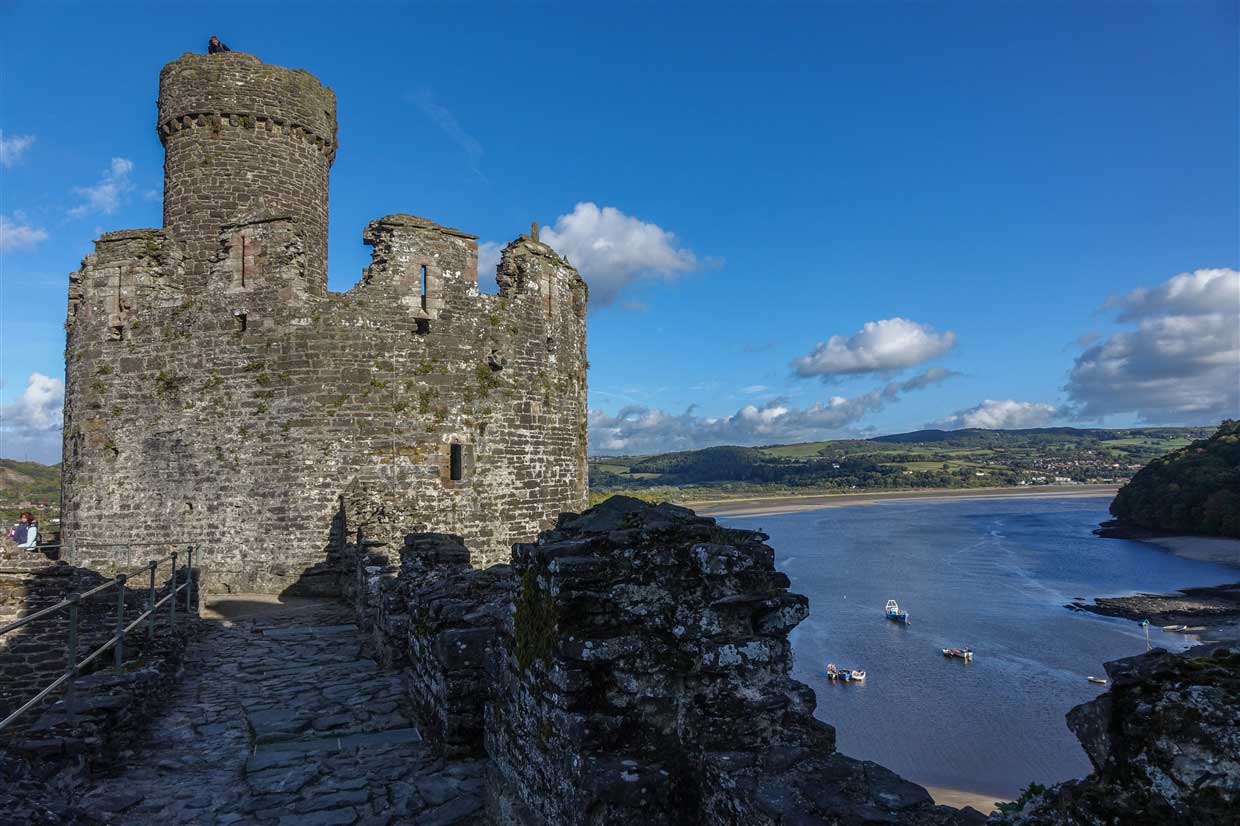
The Winner? For me, it’s Conwy—purely for the view from the battlements looking out over the estuary at sunset.
Practical Guide: Visiting
I’ve gathered the latest logistics to save you time.
Opening Times:
- Spring/Summer: 09:30 – 17:00 (Open until 18:00 in July/Aug).
- Winter (Nov-Feb): 10:00 – 16:00.
2025 Ticket Prices:
- Adult: £12.50
- Family: £40.00 (2 Adults + 3 Children)
- Top Tip: Buy the Joint Ticket for Conwy Castle and Plas Mawr (the Elizabethan townhouse nearby). It’s £15.70 for an adult, saving you a chunk of change compared to buying separately.
Getting There & Parking: There is no parking at the castle entrance. Park at Morfa Bach Car Park (LL32 8FZ)—it’s a short, scenic walk through the town walls.
Accessibility: I’ll be honest—Conwy is tough for mobility. The path to the gate is steep and cobbled. The inner ward and towers are spiral staircases only. However, the visitor center is fully accessible.
Dog Policy: Hikers, take note: Dogs are NOT allowed inside the castle (except assistance dogs). However, they are allowed on the Town Walls if kept on a lead. So, one of you can walk the walls with the pooch while the other storms the castle!
Eat, Drink, and Be Merry
After storming the battlements, you’ll need fuel.
- Ice Cream: You cannot leave Conwy without visiting Parisella’s. They have a parlour on the High Street and a kiosk on the quay. Get the Honeycomb—trust me.
- Pub Grub: The Erskine Arms is fantastic. It’s right near the castle, does great local mussels (when in season!), and has a cozy, fire-lit vibe.
The Perfect Shot
For the photographers among you, here are the three spots you need to hit:
- The Suspension Bridge: Walk halfway across the Telford bridge for the classic shot of the castle rising from the water.
- The Gyffin View: Head down to the Gyffin stream on the south side for a shot of the castle walls towering over the greenery—much quieter than the town side.
- Conwy Mountain: If you have the legs for it, hike up Conwy Mountain at sunset. You get the castle, the town, and the river all glowing in golden light.
Conclusion
Conwy Castle is a paradox. It was built to oppress, yet today it’s a source of immense Welsh pride. It’s a ruin, yet it feels incredibly alive.
Whether you’re peering into the dark depth of the oubliette or eating ice cream on the quay under the watch of the stone towers, it is a place that stays with you.
Have you visited Conwy? Did you spot the monk or brave the high towers? Let me know in the comments below!
There is another Edward I Welsh Castle you may be interested in: Flint Castle – A Fortress of The Dee Estuary