

Of all the sacred mountain sanctuaries scattered across the high ridges of the Himalayas, none captures the imagination quite like Paro Taktsang—universally known to travelers as the Tiger’s Nest, or more accurately translated from Dzongkha as the “Tigress’ Lair.”
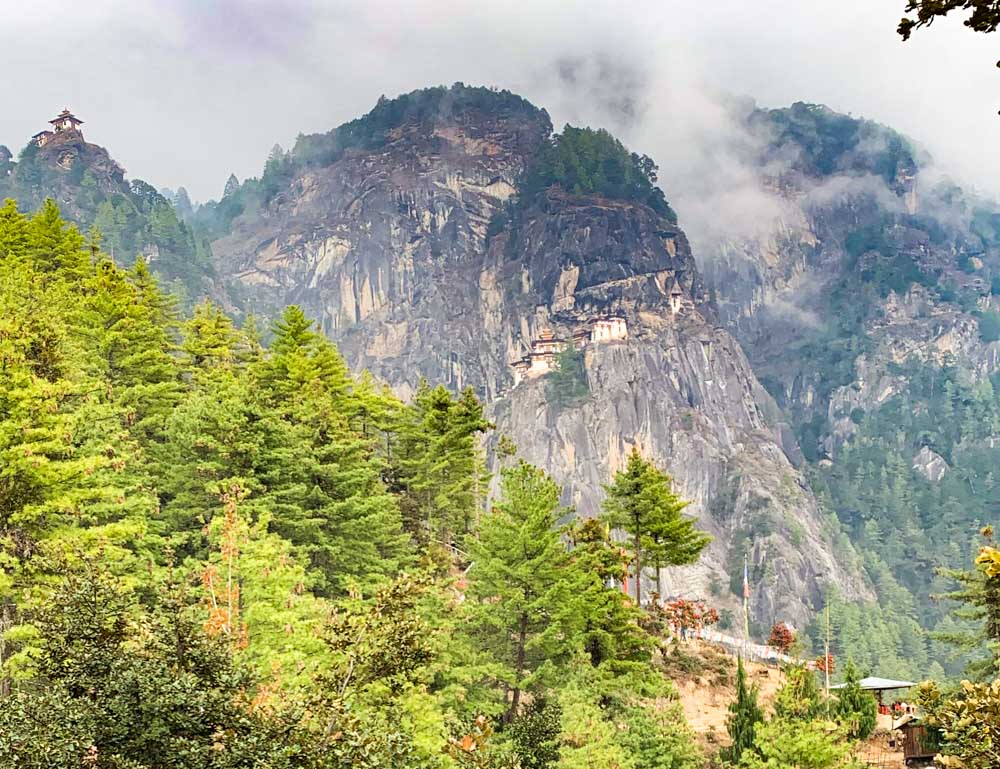
Clinging precariously to a sheer, vertical granite cliff face 3,000 feet above the valley floor, this iconic 17th-century Buddhist monastery looks completely inaccessible from dry land.
To stand on the mountain tracks and look across at its white-washed walls and golden roofs is a bucket-list experience that demands months of planning.
Yet, because the trail starts at an elevation where the air is already thin, conquering this route requires realistic preparation, structural pacing, and a solid understanding of Bhutan’s unique mountain regulations.
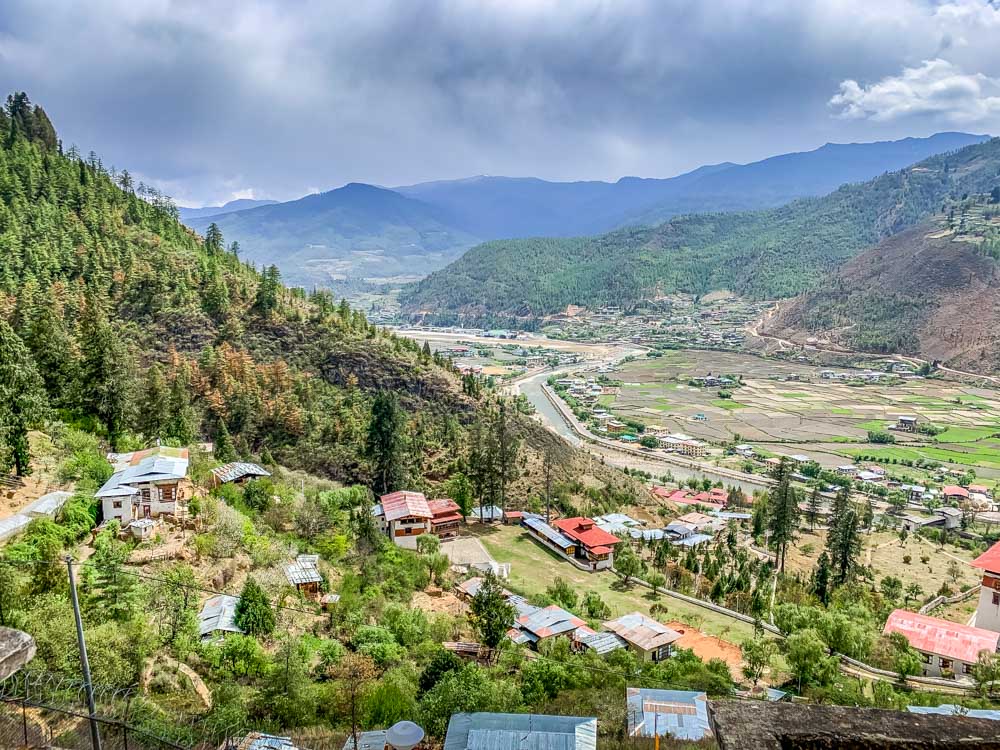
Whether your goal is to push all the way to the inner sanctuaries or enjoy a slower, traditional tea-and-biscuit break at the halfway point, here is the definitive field blueprint for tackling the Tiger’s Nest hike.
🥾 Tiger’s Nest Trail Blueprint & Logistics
Trail Distance:
4 miles (6.4 km) out-and-back to the main monastery complex.
Elevation Change:
Starting at 8,500 feet (2,600m) at the base pavilion, climbing steeply to 10,240 feet (3,120m) at the upper viewpoint. Total vertical gain is roughly 1,700 feet (518 meters).
Time Required:
4 to 5 hours for the full round trip, depending heavily on your acclimatisation and pace.
The Bhutanese Mandate:
You legally cannot hike this trail independently. All international tourists must be accompanied by a licensed local guide and display pre-arranged visa clearances at the valley check-post.
The Horse Rental Alternative:
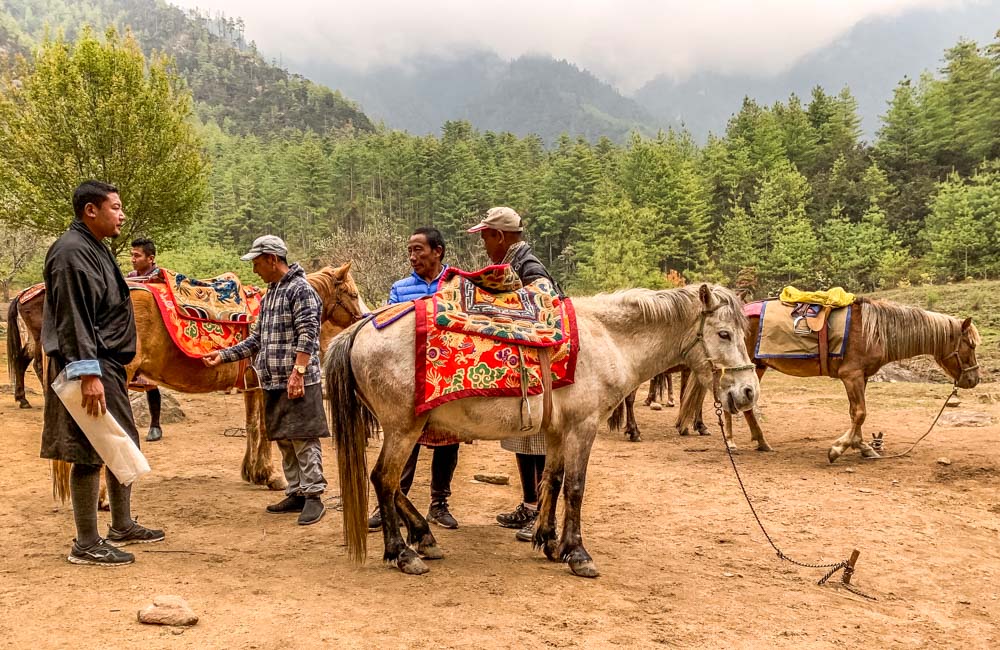
For hikers managing lower fitness levels, age, or old joint injuries, local handlers offer trail horses and mules for rent at the base pavilion. Horses can legally only carry you halfway up the mountain to the teahouse. From the teahouse onward, the terrain transitions into steep stone steps that must be navigated entirely on foot.
Getting Started: Regulations and Traditional Textiles
Bhutan deserves immense credit for how it manages its pristine environments.
By enforcing a strict Sustainable Development Fee (SDF) and visitor regulations, the kingdom ensures its ancient trackways remain remarkably clean, well-worn, and completely free of mass-tourism clutter.
The hike begins at a bustling base pavilion situated at 8,500 feet.
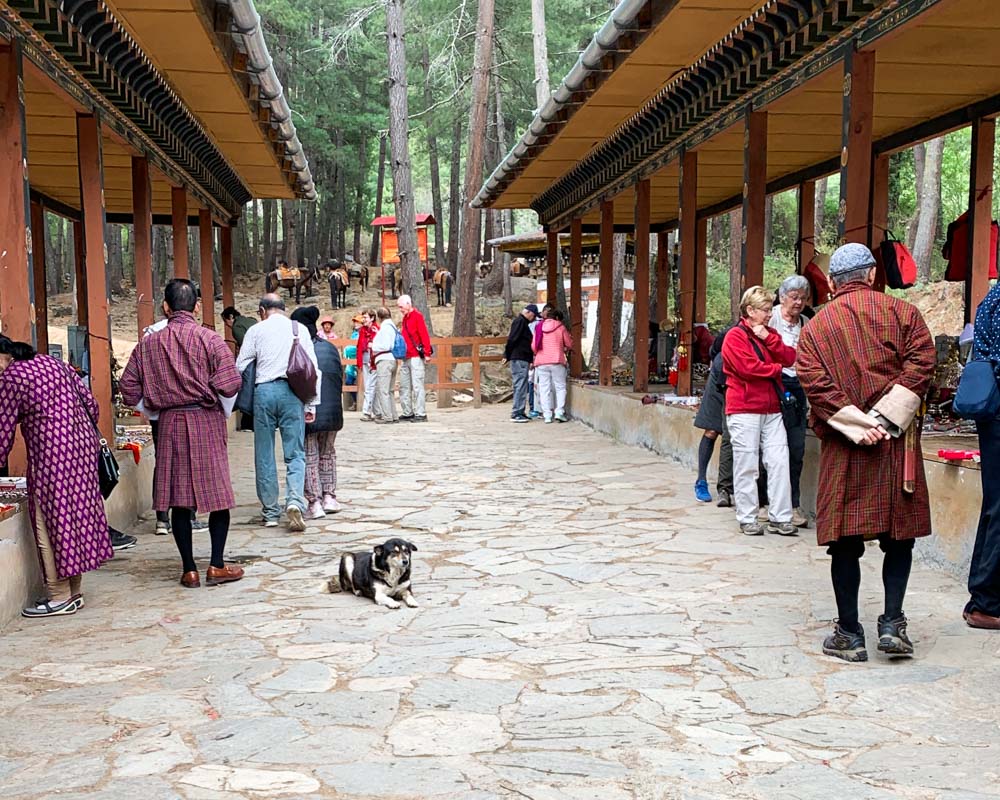
Here, you can rent traditional wooden walking sticks and browse local handicrafts.
One of the most beautiful aspects of starting the trek is interacting with the trail staff. Recognizing the local workers is effortless, as they all wear traditional Bhutanese attire—the elegant Gho for men and Kira for women.
Seeing these intricate, historic textiles worn actively on the mountain perfectly reflects Bhutan’s successful balance between preserving cultural heritage and meeting modern travel needs.
The Lower Section: Moss Forests and Mechanical Cicadas
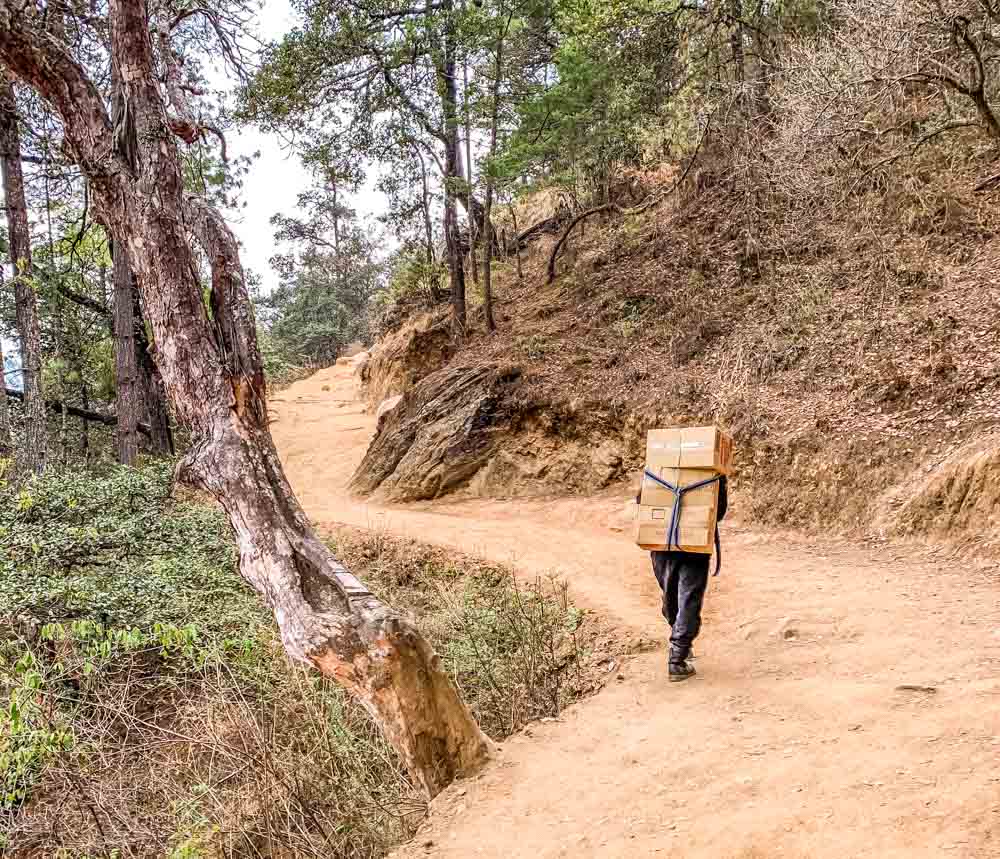
Leaving the valley floor behind, the wide dirt trail immediately sets a challenging tone, pushing straight up into a dense forest at a sharp incline.
Along the path, carefully placed botanical markers identify the native flora in Bhutanese, English, and Latin, accompanied by clear reminders to keep the sacred mountain free from litter.
As you labor up the incline, the humid forest air is filled with a deafening, rhythmic drone from local cicadas.
The sound is incredibly mechanical, echoing through the trees like an unoiled fan belt rather than something natural.
Strung continuously between the high branches are massive, vibrant webs of Buddhist prayer flags.
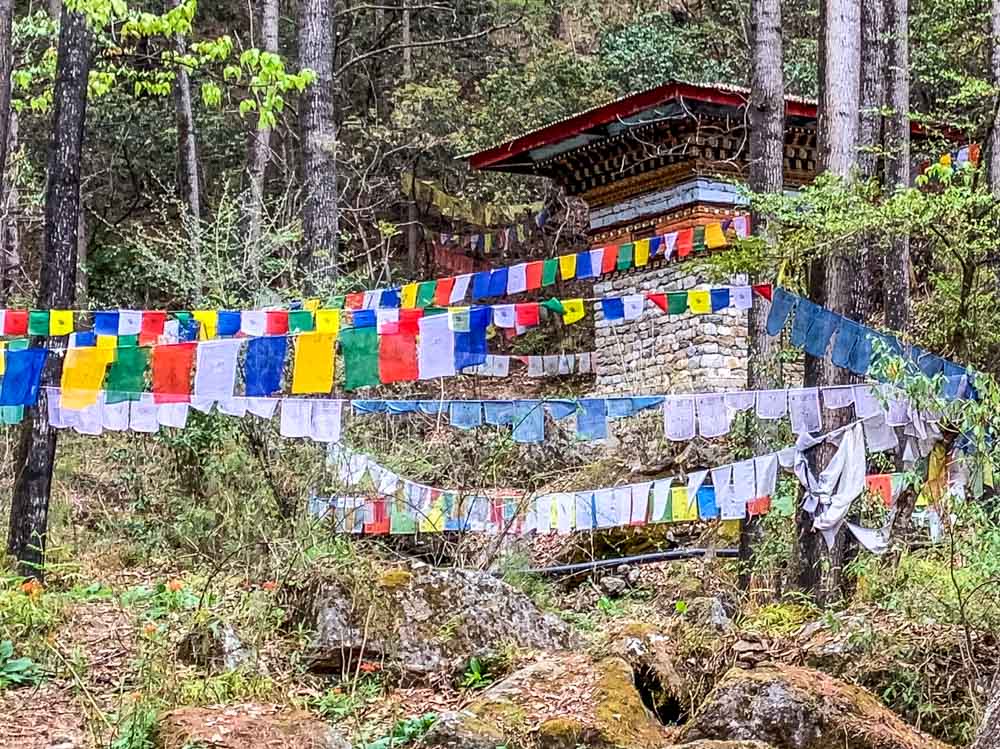
As the mountain winds catch these fabric squares, the traditional prayers and mantras inked onto the cloth are launched into the currents, symbolically spreading goodwill, health, and compassion across the neighboring valleys.
Even if you believe you are fully acclimatised to Bhutan’s base altitude, the unrelenting incline of this lower section will quickly catch your breath, demanding a slow, rhythmic hiking pace.
The Teahouse Sanctuary: Managing Pace and Alpine Blooms
Roughly halfway up the mountain, the steep forest track levels out into a welcome plateau.
This is the home of the famous Tiger’s Nest Teahouse—a wooden pavilion surrounded by small, covered viewing shelters, tables, and chairs.
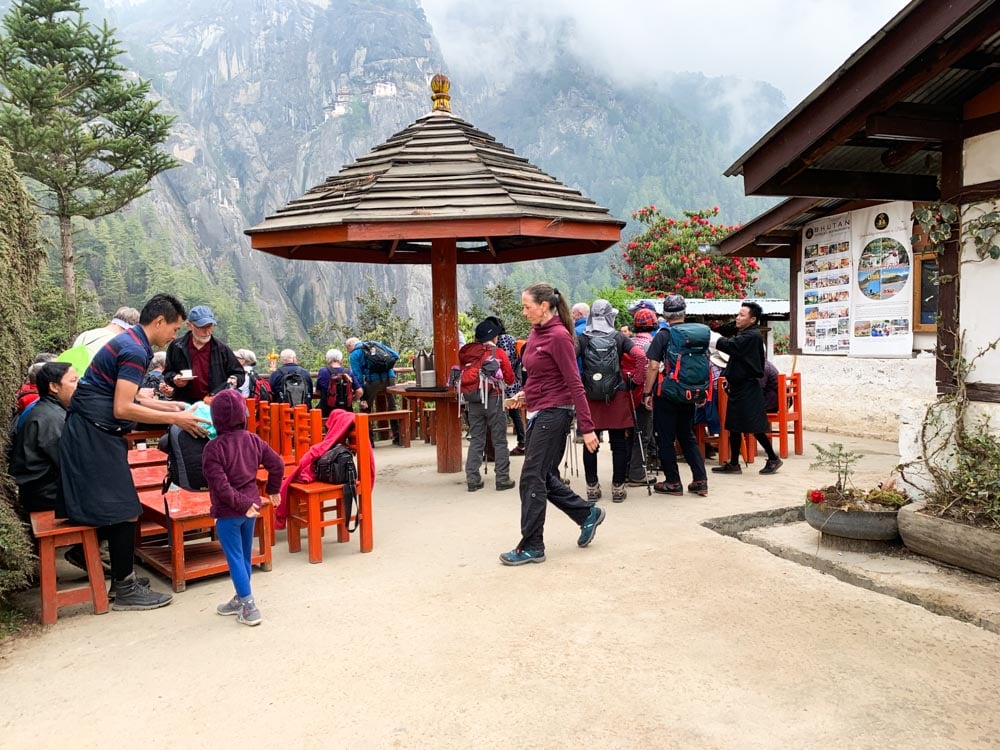
For the vast majority of walkers, reaching this level ground is a sensory relief, filled with the cheerful chatter of international trekkers resting their legs over a steaming mug of hot tea and a plate of local biscuits.

If you plan your expedition for the third week of April, the teahouse clearing is completely filled with a light floral scent from the blooming trees.
Bhutan is a world-class botanical paradise housing 48 distinct species of rhododendron, four of which grow naturally nowhere else on Earth.
At this specific elevation, the varieties grow tall, lanky, and tree-like—reaching heights of 15 feet—and explode into clusters of brilliant, fiery red flowers.
For many hikers—including myself during my journey—this clearing serves as a vital strategic decision point.
Steep, high-altitude mountain inclines can easily aggravate old knee or joint injuries.
If your joints are screaming, the teahouse plateau serves as a spectacular, dignified final destination.
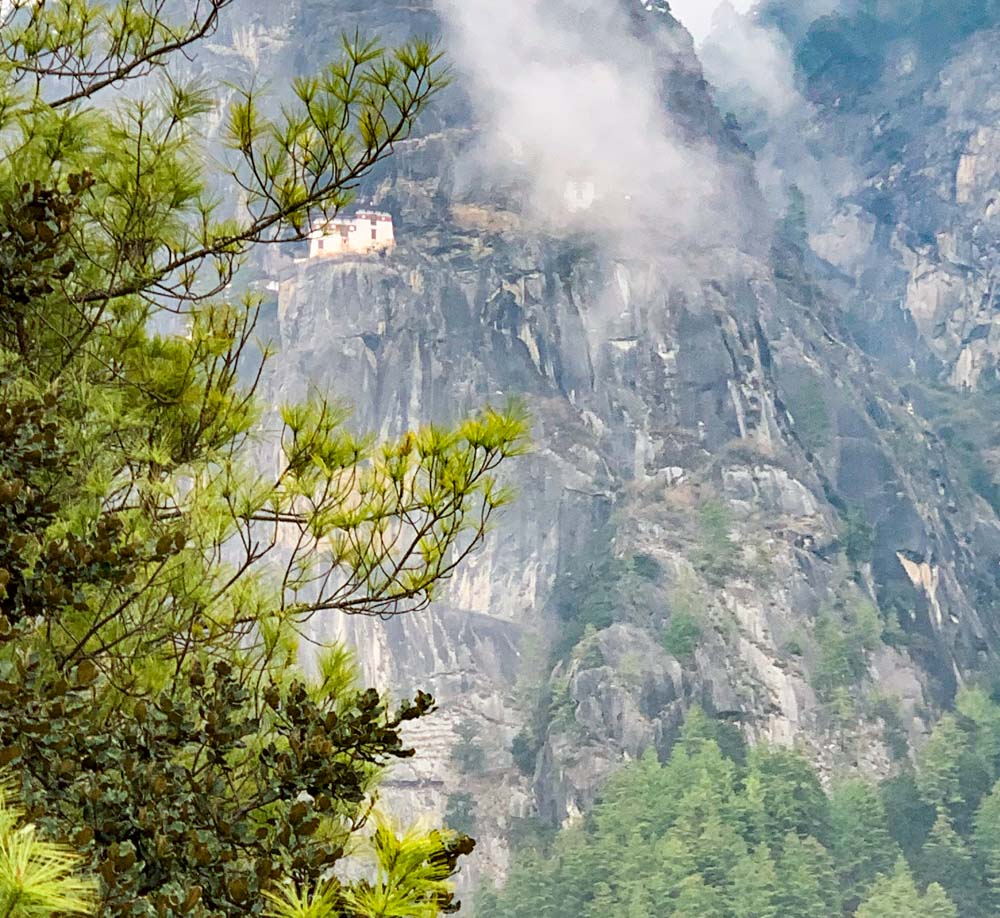
The white buildings of the monastery are remarkably distinct from here, allowing you to sit quietly, rest your joints, and immerse your mind in the spiritual gravity of the landscape without pushing your body to a breaking point.
The Final Push: The 800 Steps to the Tigress’ Lair
For those with stable knees who choose to press past the teahouse, the final third of the trail shifts from a dirt track into a dramatic architectural staircase.
The path climbs to a high ridge viewpoint before plunging down 400 stone steps directly into a steep, shadowed gorge.
At the base of the chasm, the trail passes a roaring mountain waterfall framed by a small, white-washed prayer building, before crossing a bridge and ascending another 400 steps carved straight into the cliff face to reach the monastery gates.
Rebuilding a National Icon
The complex of temples and meditation caves we see today carries a profound history of resilience.
While Guru Padmasambhava (Guru Rinpoche) originally flew to this cliff face on the back of a flaming tigress in the 8th century to meditate in the caves, the structural monastery was built in 1692.
Tragically, in 1998, a devastating fire broke out, burning the historic wooden complex completely to the ground.
Recognizing the site as the spiritual heart of the nation, the King of Bhutan directed a meticulous, hyper-authentic reconstruction project, completing the replicas we see today in 2005.
To prevent a repeat of the tragedy, strict safety measures were implemented: traditional butter lamps are no longer legally allowed to burn inside the main timber rooms, housed instead in separate, secure outdoor pavilions.
For devout pilgrims, navigating the grueling 800 steps to reach these altars is a vital exercise in earning spiritual merit—using the repetitive physical exertion to quiet the body and free the mind for deep contemplation.

Whether you finish your trek at the steps of the inner shrines or over a warm cup of tea at the blooming midway pavilion, the journey to Paro Taktsang remains an unforgettable encounter with a landscape where nature and devotion are completely inseparable.
Explore More Epic High-Altitude Wilderness Treks
- The High Mountain Loop: The Annapurna Circuit: A Guide’s Complete Stage-by-Stage Trekking Manual
- The Himalayan Summit: Climbing Mera Peak: Stepping from Trekking into Mountaineering
- The Sacred Source: The Tapovan Expedition: Trekking to the Sacred Source of the Ganges


Hi Nima,
So excited you are planning to go! My group started about 9:00 am, and I was at the tea house by 11:30 am. The members of our group who went all the way to the temple were back down by about 4:00 pm. The distance is a bit deceptive. The steepness and the altitude make this a slower hike than I expected, even with being acclimated.
Have a wonderful trip!
Hello Sharon
This is a good hike to see the Tiger Nest, how many hours did you take? I am also planning a trip to Bhutan for2022 and 2023. So nice to see some fresh 2021 photos.