On a gloomy, damp Lancashire afternoon when staying indoors isn’t an option, finding a destination that satisfies a deep curiosity for history while offering a solid leg-stretch is a top priority.
On a recent wet day when the low clouds rolled in over the Ribble Valley, I threw my gear into the car and made a run out to Samlesbury Hall.
It turned out to be an exceptional decision. Standing as a magnificent, Grade I listed black-and-white timber medieval manor house, Samlesbury Hall is one of the most culturally significant and historically volatile properties in Northern England.

Dating back to the 14th century, the hall has survived Scottish border raids, brutal religious persecution, and the imminent threat of the twentieth-century demolition axe.
Today, managed as an independent charitable trust, it functions as an immersive, free-to-enter heritage site packed with ghost lore, artisan food, and deep historic gravity.
Whether you are looking for a quick historical pitstop off the motorway corridor or planning an overnight stay in an artisan shepherd’s hut, here is my definitive field manual to Samlesbury Hall.
🏰 Samlesbury Hall Estate Blueprint & Logistics
Location & Address:
Preston New Road, Samlesbury, Preston, Lancashire, Postcode: PR5 0UP.
Strategic Access:
Exceptionally straightforward to find. It sits directly off Junction 31 of the M6 motorway, tracking cleanly along the main A59 corridor.
Operating Hours:
The hall and grounds are open daily from 10:00 AM to 4:00 PM. Crucial Insider Tip: The hall is strictly closed on Saturdays for private weddings, so plan your weekend visits exclusively for Sundays.
Admission:
Entirely free to enter for all visitors. Because the hall is preserved by an independent charitable trust, dropping a donation into the central boxes or supporting the on-site café is highly encouraged to keep the doors open.
Accessibility:
High utility. The majority of the ground floor rooms, courtyards, gardens, and the visitor center feature level access suitable for all mobilities, though the upper historic chambers require climbing old timber stairs.
The Timeline of a Medieval Manor House
The architectural shell of Samlesbury Hall tells a story of extreme survival.
The timber structure I walked through was constructed in 1325 by Gilbert de Southworth, serving as the primary ancestral home of the prominent Southworth family for over three centuries.
Historical records indicate that this timber hall was built to replace an earlier manor on the same ground, which had been completely burned to the ground during a brutal, scorched-earth raid by invading Scots in 1322.
Over the post-medieval centuries, the hall underwent an incredibly diverse array of transformations, serving time as a public house, a rural agricultural store, and even a strict girls’ boarding school.

By 1925, the house faced its ultimate threat: it was purchased by a building syndicate that intended to pull the historic manor down entirely to harvest and sell its ancient, valuable oak timber panels.
Recognizing the catastrophic loss to British heritage, a group of local preservationists rallied to buy the property back, establishing The Samlesbury Hall Trust.
Today, it attracts over 50,000 visitors annually, proving how community action can save world-class architecture from being lost forever.

Ghosts, Priests, and Bloodstains: The Dark History
For those fascinated by the paranormal and the darker chapters of British history, the interior rooms of the hall hold a heavy, atmospheric gravity.
The property has earned a well-deserved reputation as one of the most haunted houses in the UK.
The most famous resident spirit is Lady Dorothy Southworth, the “White Lady,” who is said to wander the corridors and grounds looking for her lost lover—a Protestant youth who was brutally murdered by her staunchly Catholic family when their secret romance was discovered.
Visitors regularly report experiencing unexplainable drops in temperature, disembodied voices late at night, and the bizarre sensation of their hair being lightly stroked from behind in the quietest galleries.
The Priest Room Execution
For me, the real pull of the building’s history sits in the Priest Room.
During the Elizabethan era in the late 1500s, the Southworth family remained fiercely loyal to the Catholic faith despite severe anti-Catholic legislation sweeping England.
They constructed a hidden Priest Hole inside the upper walls, turning the manor into a high-stakes refuge for travelling, illegal Catholic priests.
Tragically, royal soldiers tracked a priest directly to the hall. They discovered his hiding place inside the secret chamber and executed him on the spot by beheading.
According to local legend, the resulting bloodstains saturated the timber floorboards so deeply that they completely defied all cleaning efforts for centuries, remaining visible until the planks were finally replaced generations later.

If you visit on a Sunday, you can join free historical tours led by actors portraying Henry VIII, Witch Janey, or the Ghost of Goodwife Agnes to unpack these gripping stories in full detail.
The Hiker’s Kitchen: Waffles, Carrot Cake, and Artisan Honey
After navigating the historic timber rooms and tracking the old structural layouts, paying a visit to the estate’s restaurant is a must.
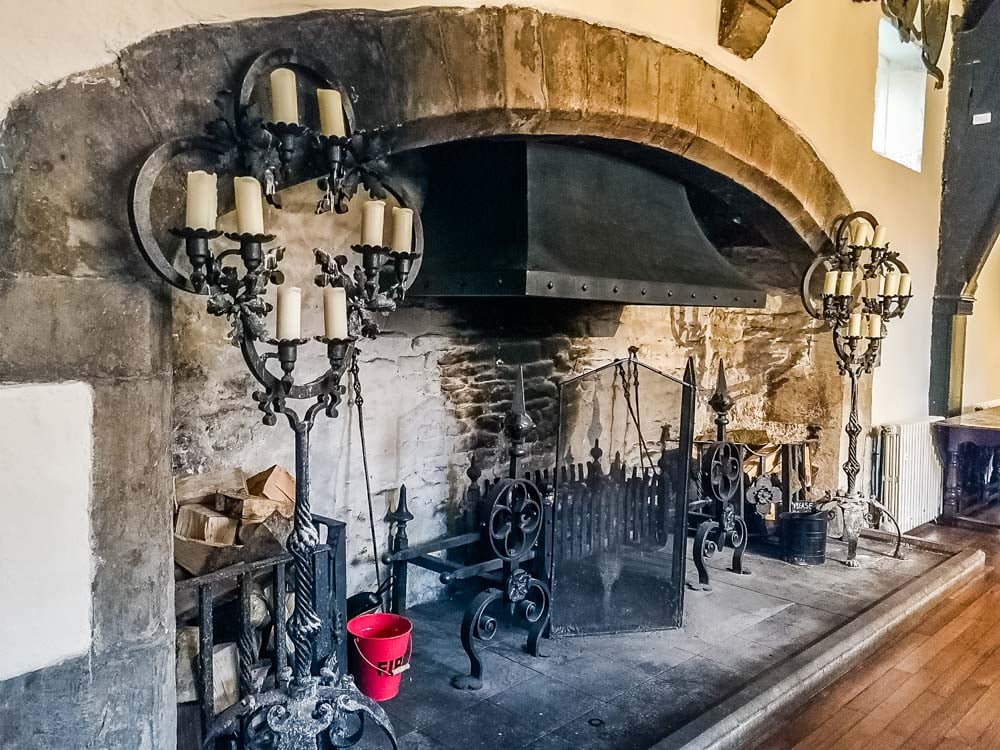
The dining spaces are beautifully restored, featuring grand historic fireplaces and comfortable seating.

The Waffle Disappointment (and Cake Redemption)
I headed directly to Dotties Wafflery, an on-site sweet parlor that has become famous across Lancashire for its decadent, freshly made waffles.
Unfortunately, I hit a stroke of bad timing—the kitchen had just run out of fresh waffle batter right as I placed my order at the counter.
While I was initially disappointed, the cake counter quickly provided a spectacular fallback plan.
I ordered a slice of their homemade carrot cake. The portion size was absolutely massive, incredibly moist, packed with spice, and so substantial that I barely managed to finish it off myself.
Paired with a hot black coffee, it is the ultimate rainy-day comfort food.
The Bee and Heritage Centre
Before heading back to the car park, make sure to cross the courtyard to visit the Samlesbury Hall Bee and Heritage Centre.

This dedicated environmental education hub is open on Wednesdays and Sundays, offering visitors a fascinating look at the critical role bees play in the British ecosystem.
Expert beekeepers are regularly on hand to conduct live hive demonstrations, answer technical questions, and explain the intricate history of honey production.
The on-site shop sells jars of pure, unpasteurized honey harvested directly from the estate’s own hives.

I picked up a jar of their Wildflower Honey. The flavour profile is exceptional—rich, sweet, and leaving a distinctly perfumed, floral aftertaste that completely outclasses mass-produced supermarket alternatives.
For anyone interested in supporting local wildlife conservation, the center also offers a brilliant ‘adopt-a-bee’ awareness program, which functions as a fantastic tool to spark interest in countryside preservation.
Glamping and Luxury: The Overnight Estate Options
If a single afternoon isn’t enough to absorb the history, the trust has developed two distinct, high-quality accommodation styles that allow you to stay right on the historic grounds after the gates close to the public:

The Plankbridge Shepherd’s Huts: Positioned within the old festoon-lit woodland clearings, these luxury timber huts sleep up to four people. They are fully insulated and equipped with modern en-suite bathrooms, comfortable double beds, bunk setups, and outdoor firepits—perfect for an outdoor evening supper under the stars.
The Gatehouse Luxury Suite: For a more opulent, historical experience, you can book the independent Gatehouse. This premium lodge features a grand double bedroom, a dedicated dressing room with full-length mirrors, a double walk-in shower, and a traditional standalone slipper bath.
Combining a walk through the ancient Great Hall with a wander through the artisan bee gardens and an overnight stay in the woods offers a fantastic, multi-layered Lancashire escape.
It proves that even on the most gloomy, rain-soaked northern afternoons, our historic manor houses continue to offer incredible utility, deep comfort, and timeless stories.
Explore More Spectacular Lancashire Heritage & Walking Guides
- The Literary Trail: The Tolkien Trail: A Great 6.5-Mile Circular Lancashire Walk
- The Lancashire Peaks: Fair Snape Fell and Parlick: A Guide’s Route to the Forest of Bowland
- The High Peak Fell: Longridge Fell: A Walk Up Britain’s Most Southerly Named Fell
- The Luxury Stay: Fence Gate Lodge & Inn: Luxurious Stay and Dine At The Foot Of Pendle Hill