
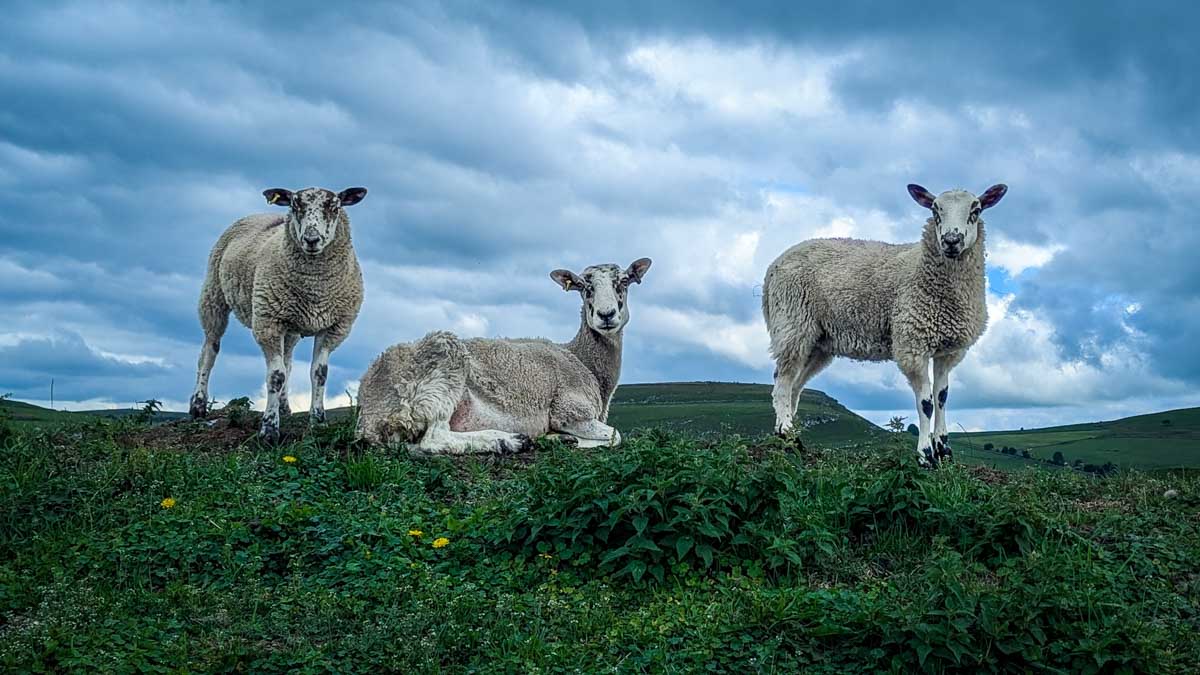
If you spend any time walking the high ridges, green valleys, or historic tracks of the British countryside, you quickly realize you are never truly alone.
Long before hikers mapped out these trails, millions of four-legged locals claimed ownership of the hills.
Sheep are an definitive symbol of the British rural landscape. From the craggy, stone-walled enclosures of the Yorkshire Dales to the windswept summits of the Lake District fells, these resilient animals are an inseparable part of the outdoor experience.
For any hiker, encountering livestock is a daily reality.

Yet, many walkers treat them merely as passive background dressing for a photograph, completely missing the deep agricultural history beneath their hooves—or worse, forgetting the vital safety boundaries required to share the trails responsibly.
Whether you want to identify the iconic breeds you pass on the hills or ensure you are managing the tracks safely with your dogs, here is a practical guide’s manual to Britain’s sheep country.
🐑 The Countryside Code: Livestock Safety Blueprint
The Golden Lead Rule:
If you are hiking with dogs, you must keep them on a short, fixed lead the moment you enter a field or open fell with sheep. Even the most well-trained dog has an instinct to chase, and livestock worrying is a serious criminal offense in the UK that carries heavy fines.
The Cattle Exception:
If you are crossed by protective cattle (cows with calves) and they begin to charge or advance on your dog, do not try to hold onto your dog. Drop the lead immediately. Your dog can easily outrun them, and keeping them attached puts you directly in the line of danger.
Leave Gates as You Find Them:
If a gate is closed, clip it shut securely behind you. If it is pinned wide open, leave it open—farmers frequently leave gates open intentionally to allow livestock access to vital water sources across different fields.
Give Wide Birth:
Never walk directly through the middle of a resting flock. Loop widely around them to avoid causing unnecessary stress, especially during the spring lambing season (March to May).
The Architects of the Fells: How Sheep Shaped Britain
The wide-open, tree-less vistas that hikers love across the UK’s National Parks aren’t entirely natural. They are the direct result of centuries of intensive conservation grazing.

When monastic orders and medieval farmers cleared the ancient forests of Britain, they introduced massive flocks of sheep.
By continuously browsing on fresh saplings, heather, and rough grasses, these animals prevented the woodland from reclaiming the hills, effectively creating the sweeping, heather-clad moorlands and open turf paths we walk today.
Without the sheep, the iconic drystone walls that trace patterns across the hillsides wouldn’t exist either—they were built by hand over generations for the explicit purpose of managing distinct grazing boundaries on the open commons.
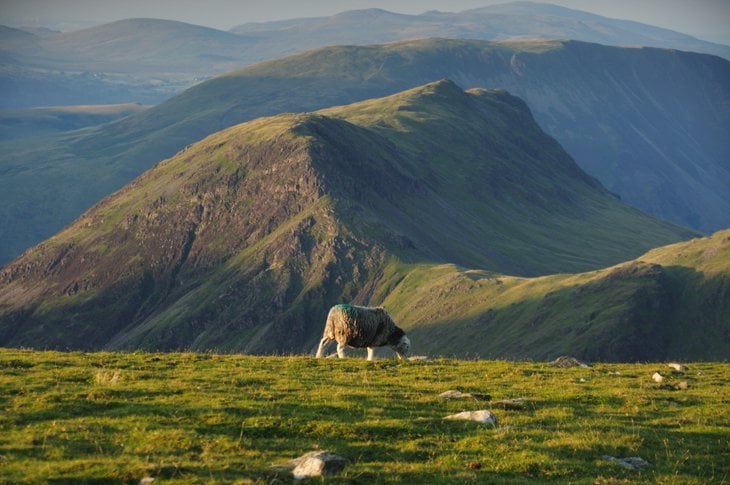
Spotting the Locals: Three Iconic Breeds Every Hiker Should Know
As you clock up miles on the trail, you will notice that different regions feature highly specialized sheep uniquely adapted to their specific mountain environments:
The Herdwick (The Spirit of the Lake District)
If you are scaling summits like Helvellyn or Scafell Pike, you will be surrounded by Herdwicks.
These are the undisputed kings of the high fells. Born completely black, their coats gradually fade to a rugged, storm-grey color as they age, topped with a distinctive white face and legs.
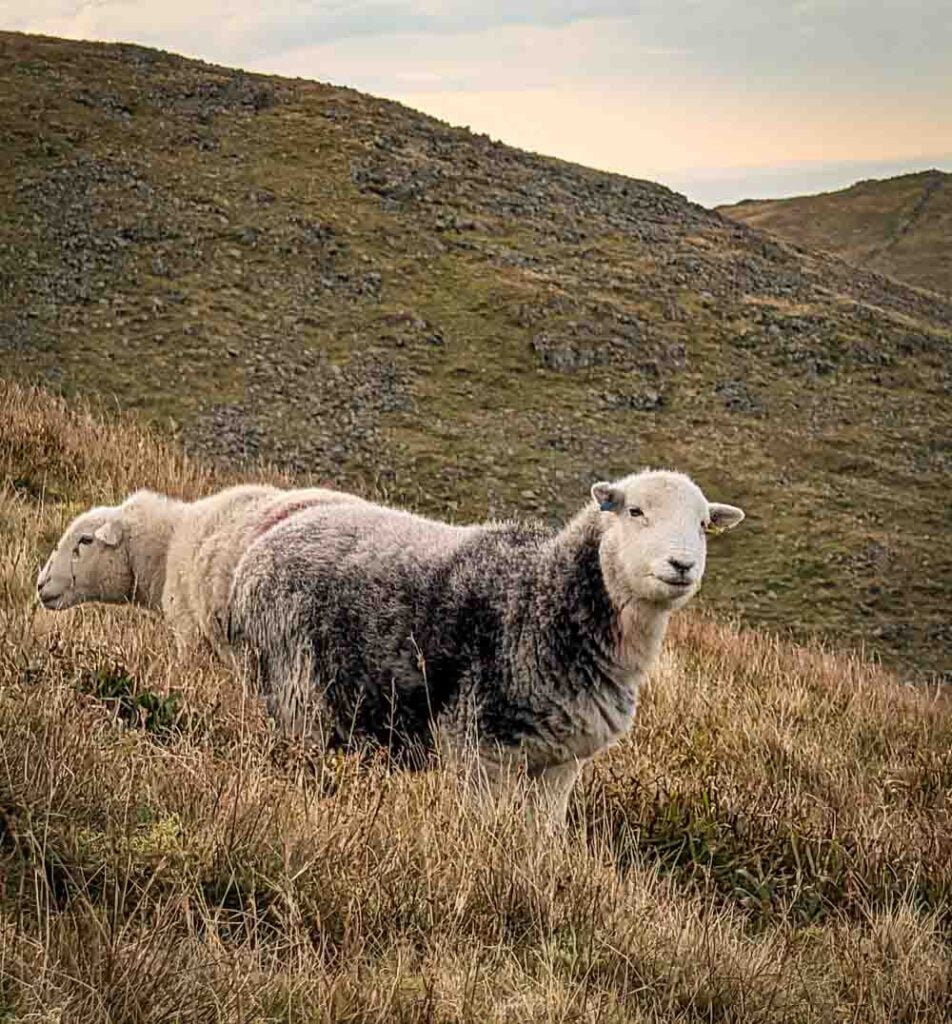
Herdwicks possess an incredible natural resilience, capable of surviving brutal sub-zero winter blizzards on the highest peaks.
They are also famous for being “heafed” to the mountain—meaning a flock naturally stays on its specific area of the open common without the need for fences, passing this geographic memory down from mother to lamb.
The Swaledale (The Face of Yorkshire)
Dominating the limestone steps of the Yorkshire Dales, the Swaledale is instantly recognizable by its striking black face adorned with clean white markings around the nose and eyes, paired with elegant, curling horns on both rams and ewes.
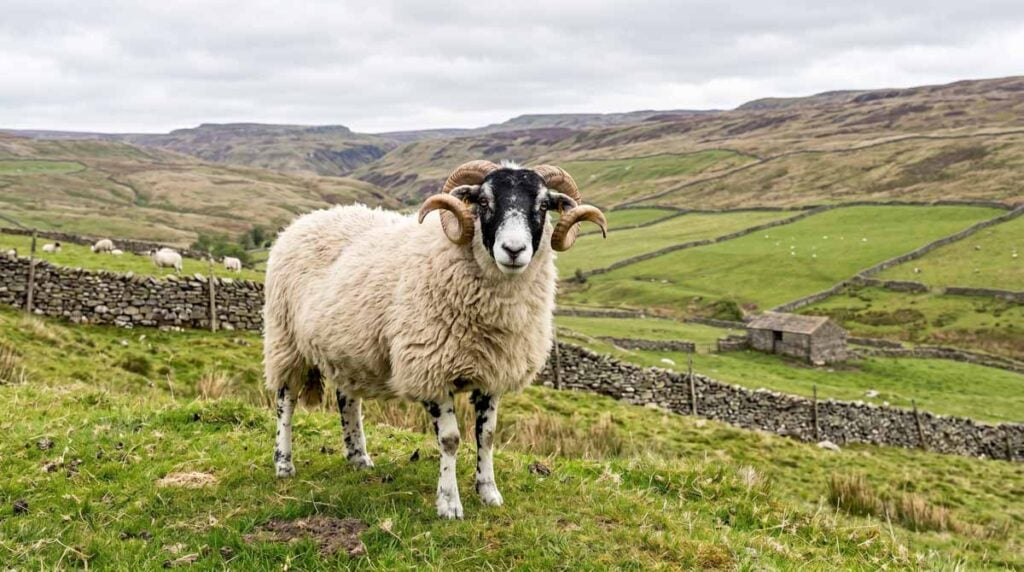
Their thick, coarse wool is built to shed heavy, continuous rainfall, making them perfectly suited for the wet, peat-heavy moorlands of northern England.
If you want to see more of them in their territory then check our great Swalesdale walk that takes in the wildflower meadows too.
The Rough Fell (The High Peak Foragers)
Commonly encountered across the Howgill Fells and the upper edges of Cumbria, these are massive, powerful sheep with a broad white stripe across their dark faces.
They produce an incredibly dense, heavy fleece designed to withstand the relentless winds of the high ridges, spending their entire lives foraging on the sparsest mountain grasses.
The Photography Perspective: Capturing the Scene Safely
Integrating livestock into your landscape photography adds a beautiful sense of scale and atmosphere to a shot.
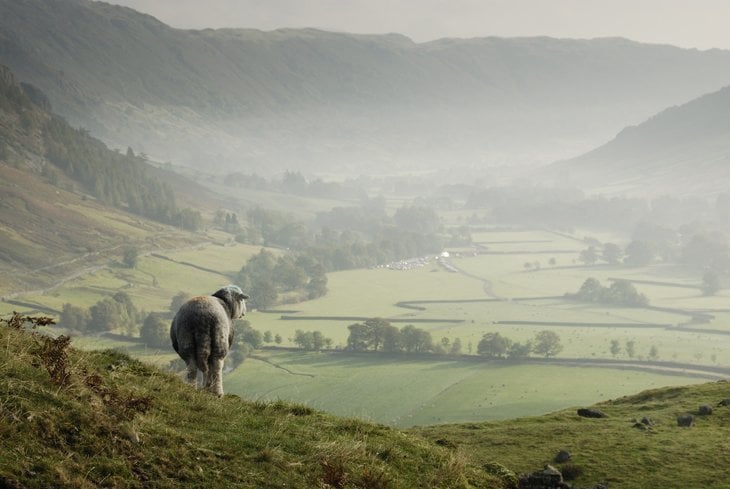
A single Herdwick staring out from a rocky crag into a misty valley can tell a far more powerful story than a blank horizon line.
However, getting the perfect frame should never come at the expense of the animal’s wellbeing. Here are a few field habits to use on your next walk:
Embrace the Telephoto Lens: Never try to creep up close to a sheep to get a shot with a wide-angle mobile phone lens. You will spook them, causing them to bolt and waste vital energy. Use a zoom lens instead, allowing you to capture their natural expressions from a comfortable, respectful distance.
Watch the Body Language: If a sheep stops grazing, raises its head high, and stares intently at you, you have entered its personal comfort bubble. Stand completely still or take a step backward. If it begins to stamp its front hoof, it is a clear defensive warning that you are causing distress.
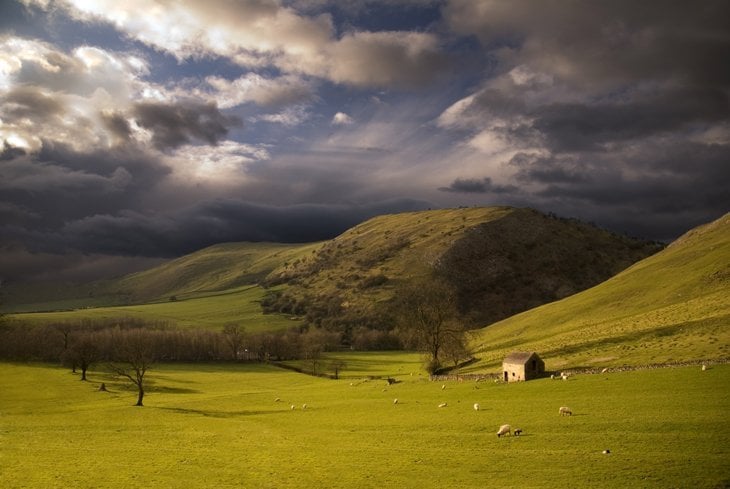
Savour the Golden Hour: The best images happen during early mornings or late summer sunsets. When the low, warm light hits the texture of the wool and illuminates the stone walls of the fields, it creates a timeless image that perfectly captures the raw character of the British countryside.
Sharing the fells with these resilient animals is one of the distinct joys of hiking in Britain.

By understanding their history, respecting their space, and following the Countryside Code, we can ensure these historic paths remain a secure, beautiful sanctuary for both walkers and wildlife alike.
Explore More Essential Countryside Safety & Dog Walking Guides
- The Cattle Conundrum: Walking Through Cow Fields With Dogs and What To do
- The British Trail Rules: UK Countryside Code Explained: Footpaths, Dogs & Rules
- The Canine Trail Manual: A Beginner’s Guide to Hiking with Your Dog (What to Pack, Safety & Etiquette)
- The Eco-Mindset: Leave No Trace: A Beginner’s Guide for UK Walkers



Beautiful pics! Love the one with the dark clouds. Also the contrast between the white sheep and the green grass. Amazing!
Absolutely stunning glorious photography Peter…!
Gorgeous photos. Love the moody skies contrasting with the land.
I also love sheep,surprise surprise. For me they always represent peace and tranquility however whilst most of these super images do suggest this the Great Langdale shot I feel suggests contemplation which is why its my own favorite. Love the focusing also. Thanks for sharing 🙂
Beautiful shots! Just what I need to inspire me to go out for a Welsh hill walk 🙂
Stunning photos – so lovely. Thank you for windows onto beautiful, wild, landscapes near at hand.
Love the photos. Especially the Peak District, Borrowdale and Langdale. What camera/lenses are you using and are you using filters for the sky?
Thank you!
These are absolutely stunning. Thank you for sharing mate.
Fabulous photos … I gues the sheep with the colored marks are a certain age or breed possibly?
The Peak District photograph is very powerful, but I also like the Great Langdale one with that sheep surveying the landscape. You have some spectacular shots here. It makes me think of a question I have often pondered; why are sheep not grass / landscape coloured? For a tasty and wolf-friendly snack, I would have thought they should be more camouflaged.
Your sheep pictures are great. Animals can make great subjects. They often appear on my photos. I also find that people I walk with who visit the Lakes from away have a fascination with the 'Hefted' sheep on our fells. How they know their own territory and stay there. This was a major issue during the foot and mouth epidemics. If the sheep flocks were slaughtered then they would lose this local instinct.
Beautiful scenery, love the sheep. Fabulous photos!
Wow! These are simply breathtaking! I miss it so bad, and now I MUST travel to the Isle of Skye, Wow!
Cheers Jd!
Thank you!
WOW, Amazing pics Paul!
I love the cold! 🙂 thank you Ann
I love the last picture, Beautiful!