

Stepping off the coastal ferry from Dar es Salaam into the thick, humid air of the Zanzibar Archipelago is an immediate sensory shock.
Before your eyes even adjust to the blinding equatorial sun bouncing off the white coral-stone buildings, your senses are hit by the heavy, sweet scent of crushed cloves, drying nutmeg, and saltwater drifting from the harbor dhows.
Known historically as the Spice Island, Zanzibar (Unguja) is a culturally complex, geographically spectacular land mass anchored 25 miles off the coast of mainland Tanzania.
For adventure travelers, wildlife trackers, and mountaineers seeking the ultimate active recovery after pushing their bodies to the absolute limit on Mount Kilimanjaro, this island serves as a vital staging post.

But far from being a lazy beach resort, Zanzibar demands active exploration.
From the labyrinthine coral-rag alleys of Stone Town to the dense mahogany canopies of Jozani Forest, navigating this island requires a keen eye for logistics, tides, and local heritage.
Here is my first-person field manual to navigating Zanzibar.
🗺️ Zanzibar Archipelago Expedition Blueprint
The Transit Vector:
Accessible via a 20-minute prop-plane flight from Dar es Salaam or the high-speed Azam Marine passenger ferry across the Zanzibar Channel (approx. 2 hours of open-sea transit).
The Navigation Reality:
Stone Town’s ancient core is a dead zone for standard GPS mapping systems. Deep, narrow alleys block satellite signals; rely on distinct structural landmarks like the Old Fort or harbor front to maintain your bearings.
The Tidal Metric:
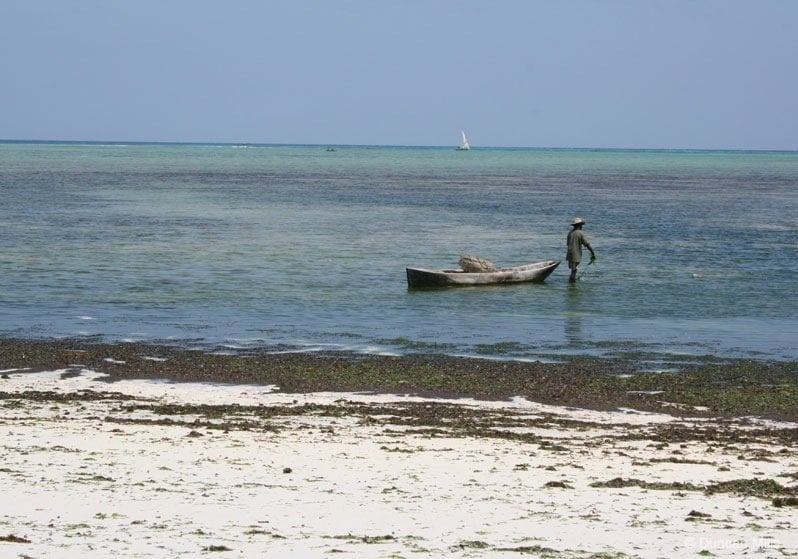
Extreme. The East Coast (Paje/Jambiani) experiences massive, high-yield shifts. At low tide, the ocean retreats up to a mile, exposing vast shallow lagoons and seaweed farms. Map your trail times tightly against local tide charts.
Cultural Etiquette Node:
Zanzibar is a predominantly Islamic society. When exploring outside the beach perimeters—particularly within Stone Town—ensure shoulders and knees are completely covered out of respect for local communities.
Currency & Logistics:
Tanzanian Shilling (TZS) is the standard currency. While major hotels accept card payments, local spice markets, street stalls, and dhow operators function strictly on cash. ATMs are sparse outside of Stone Town and Nungwi; stock up early.
Stone Town: Navigating the Historical Coral Labyrinth
My exploration launched within the crumbling, historic heart of the capital: Stone Town.
Designated as a UNESCO World Heritage site, this ancient metropolis is a mesmerizing, volatile architectural matrix built from local coral rag, mortar, and mangrove timbers.
Walking these alleys, you are tracking through a deep, multi-layered historical crossroads where Swahili culture blends seamlessly with Arabian, Persian, Indian, and European influences.
The architecture tells a story of intense wealth and dark maritime exploitation.

I spent hours tracing the iconic Zanzibari Doors—massive, ancient teak portals studded with brass spikes (a historical Indian defense mechanism against war elephants) and carved with intricate Arabic script detailing the status of the long-dead merchants who lived behind them.
Key Structural Checkpoints
The Old Fort (Gereja): Built by Omani Arabs in the late 17th century to repel Portuguese armadas. Its heavy, weathered battlements now function as a striking open-air amphitheater for local musicians and woodcarvers.
The House of Wonders (Beit-al-Ajaib): A grand, towering palace that was the very first building in East Africa to introduce electricity and a mechanical lift, standing as a testament to the opulence of the Zanzibari Sultans.
The Forodhani Night Market: As the intense daytime heat drops, the waterfront plaza shifts into a smoky, high-energy open-air kitchen. Skip the tourist traps and pull up a bench alongside the locals to sample fresh Urojo (a glorious, tangy potato-based mango soup packed with crispy fritters) and authentic seafood skewers seared over open coals.

Jozani Chwaka Bay: Tracking the Endemic Red Colobus
Leaving the stone walls of the capital behind, I headed straight for the interior of the island to map the unique biodiversity of Jozani Forest—Zanzibar’s solitary national park.
This lush, low-lying tropical ecosystem is a critical sanctuary for the endangered Zanzibar Red Colobus Monkey (Piliocolobus kirkii).
Tracking these primates through the towering mahogany groves and damp swamp ferns requires quiet, focused foot-travel.
Because they are entirely endemic to this specific archipelago, observing their behavioral dynamics up close is an incredible privilege for any wildlife tracker.
Unlike common vervet monkeys, the Red Colobus lacks a thumb—an evolutionary adaptation optimized for rapid, high-velocity canopy travel.
On my nature walk, a family troupe dropped right down to the lower branches just feet away, entirely unbothered by my camera lens.
They spent an hour feeding on wild almond leaves, showcasing their vibrant crimson mantles, chaotic shock of white hair, and exceptionally long, balancing tails.

Pushing further toward the coastline, the forest canopy fractures into an intricate, primordial boardwalk winding through salt-water mangrove networks—a vital marine nursery that protects the island’s fragile shoreline from Indian Ocean erosion.

The Botanical Reality: The Science of the Spice Farms
To truly understand how this tiny island managed to reshape global trade routes for centuries, you have to leave the trails and get into the red earth of the interior spice plantations.
The label “Spice Island” isn’t a modern marketing gimmick; it is the historical foundation of the entire Zanzibari economy.

Moving through the dense, aromatic agricultural plots, the cultivation mechanics of these exotic plants are a masterclass in tropical botany:
Cloves (Alosto): The undisputed economic engine of historical Zanzibar. Introduced by the Sultan of Oman in the early 1800s, these trees thrive in the rich volcanic soil, their sun-dried flower buds once dominating the global spice monopoly.
The Vanilla Vine: A fascinating, highly delicate orchid structure that climbs up the bark of protective nurse trees. Because the specific pollinating bees do not exist on the island, every single green vanilla orchid must be hand-pollinated by local farmers using a tiny bamboo needle.
Cinnamon & Nutmeg: Stripping the bark of a local cinnamon tree releases an intense, spicy oil that acts as a natural defensive barrier against tropical insects, while cracking open the hard shell of a nutmeg pod reveals the vibrant red webbing of mace wrapped tightly around the inner kernel.
|
Coastal Region |
Physical Topography |
Primary Active Use Case |
Tactical Guide Evaluation |
|---|---|---|---|
|
Nungwi & Kendwa (North Coast) |
Deep, powdery white sands unaffected by tidal drops. Crystal clear turquoise walls. |
Deep-water swimming, dhow sailing, scuba diving. |
The ultimate location for direct blue-water immersion. The ocean here stays consistently deep throughout the day, making it an exceptional base for boat-launching to the deep coral walls of Mnemba Atoll. |
|
Paje & Jambiani (East Coast) |
Massive, shallow sand flats bounded by a distant coral reef barrier. Extreme tidal shifts. |
Kitesurfing, wildlife reef-walking, seaweed tracking. |
An absolute paradise for wind sports. The steady, reliable trade winds combined with the flat, ankle-deep lagoon water create world-class conditions for kitesurfing. At low tide, the ocean retreats over a mile, letting you hike straight out onto the exposed flats to watch Swahili women harvesting nutrient-dense marine seaweed. |
Marine Reserves: Snorkeling the Mnemba Wall
To close out my island survey, I chartered a traditional wooden dhow boat from the northern headland and set sail toward the protected waters of the Mnemba Atoll Marine Reserve.
This pristine coral ring drops vertically into the deep ocean trenches of the Zanzibar Channel, creating one of the most volatile marine gathering points in East Africa.
Plunging into the deep turquoise water reveals a spectacular, high-visibility world of underwater topography.

The sheer coral wall is teeming with life—surrounded by clouds of colorful triggerfish, green sea turtles riding the deep currents, and large pods of resident spinner dolphins mapping the shallows.
The visibility here frequently exceeds 30 meters, offering a serene, silent space that feels worlds away from the bustling city markets.
Zanzibar succeeds because it refuses to be a flat, generic holiday escape; instead, it demands you engage with its history, respect its cultural rhythms, and sweat through its tropical trails.
If you value true cultural immersion, deep wildlife tracking, and coastal landscapes shaped by the raw mechanics of the Indian Ocean, this spice-scented archipelago deserves a permanent slot on your global expedition radar.
Explore More Spectacular East African & Tropical Island Wilderness Guides
- The Mountain Roof: Kilimanjaro Guide: Everything You Need to Know to Climb the Roof of Africa
- The Castaway Island: Mafia Island – A Tropical Tanzania Castaway Exploration Guide
- The Island Laboratory: Madagascar: A Journey into the Heart of the Eighth Continent



This is an amazing place! was planning on making a trip, now motivated even more!! Great article! cheers! x