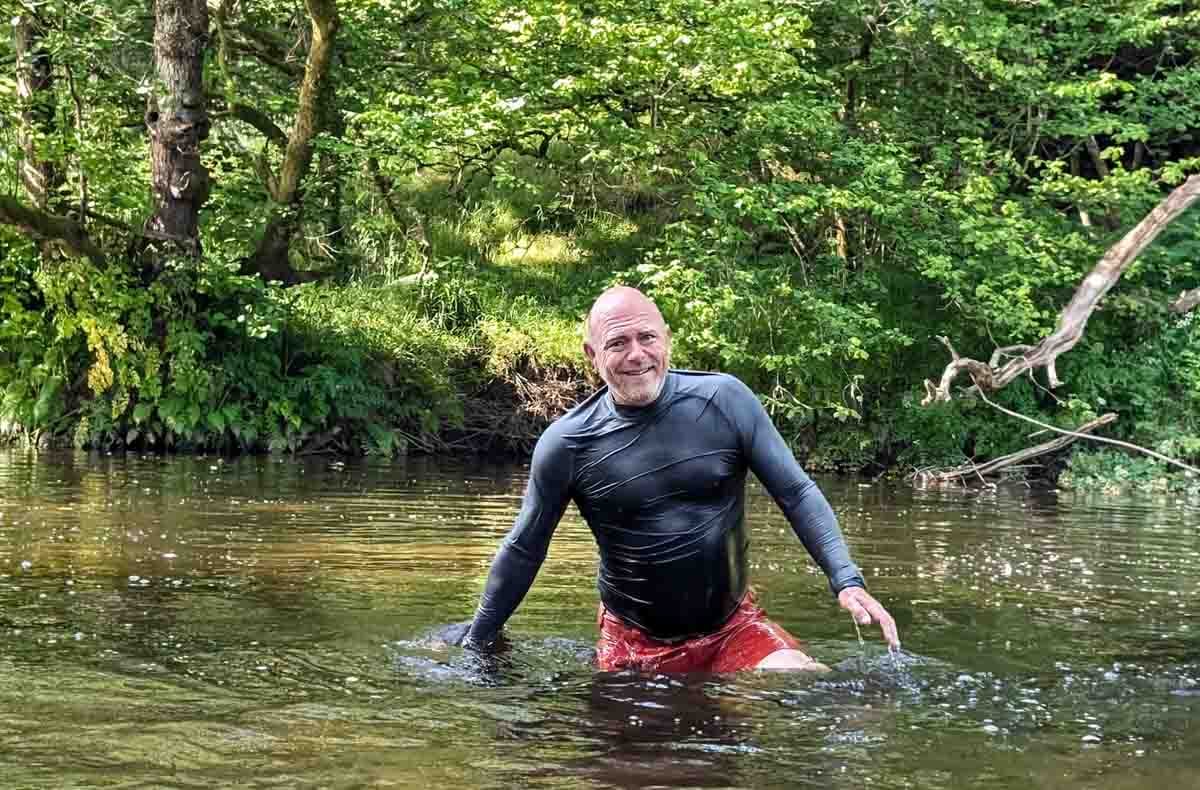
If you are looking to escape the ordinary, exercise at your own pace, and reap the benefits of a new activity in the outdoors, why not seek the thrill of wild swimming?
Personally, I haven’t looked back since entering the exhilarating world of taking a regular wild swim.
Whether you prefer the tranquil embrace of the Lake District, the thrill of rushing rivers, or the enchantment of hidden waterfalls, wild swimming offers a unique and refreshing way to connect with nature, with one’s self, and with a community of like-minded people.
This isn’t just a trend; it’s a movement. But why are so many of us trading heated pools for the biting chill of a British river?
In this guide, we dive deep into the science of “Blue Health,” the essential safety protocols from the RNLI, and how to combine your love of hiking with the restorative power of cold water.
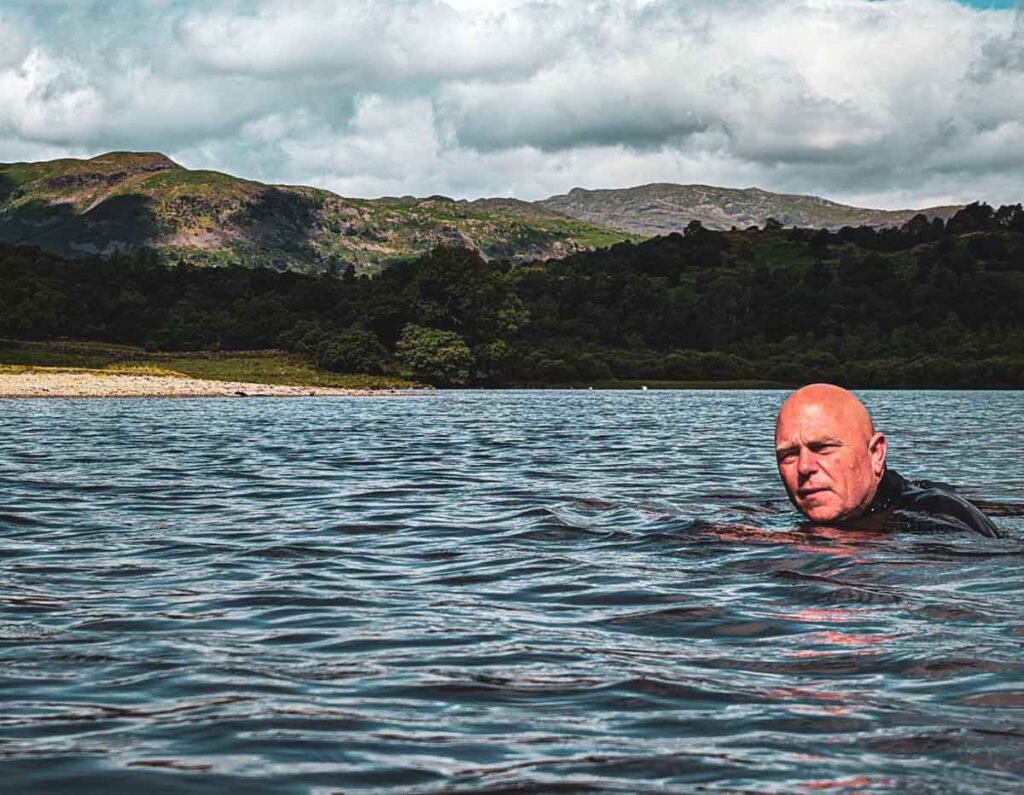
What is Wild Swimming? (Defining Blue Space)
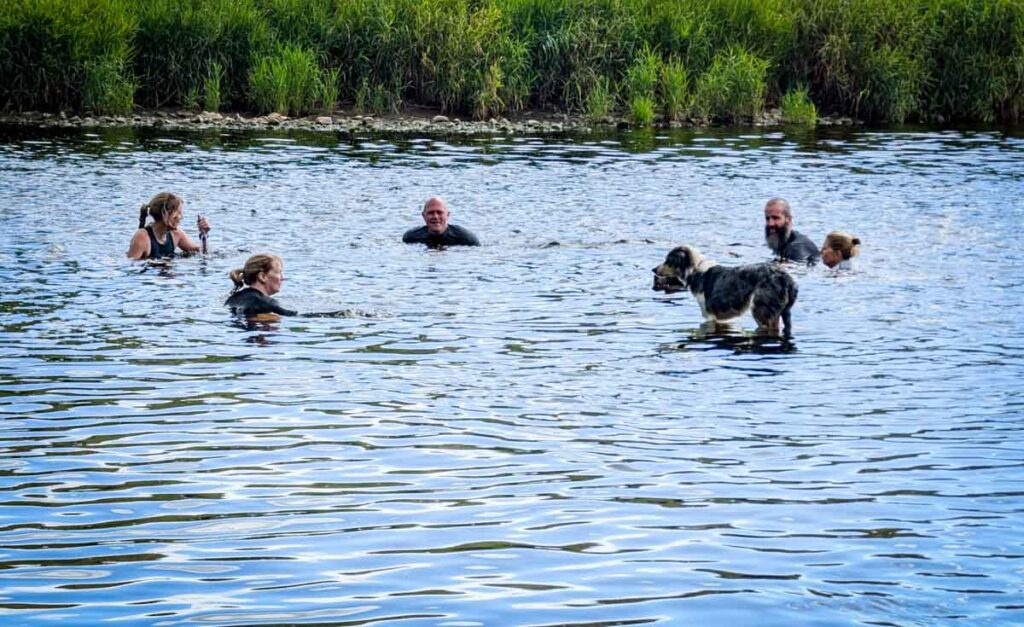
At its core, wild swimming—or open water swimming—is simply the act of swimming in natural bodies of water rather than man-made pools.
But in the world of environmental psychology, it represents something much deeper: an immersion in “Blue Space.”
While we hikers are well-versed in the benefits of “Green Space” (forests and fells), researchers have found that Blue Spaces (environments featuring water) have a unique ability to reduce stress.
A massive study spanning 19 countries found that while all swimming is good for you, wild swimming provides an extra boost to mental wellbeing.
Why? Because unlike a tiled pool, a loch or river is wild, changing, and alive. Navigating it gives us a sense of freedom and competence that doing lengths in a lane simply cannot match.
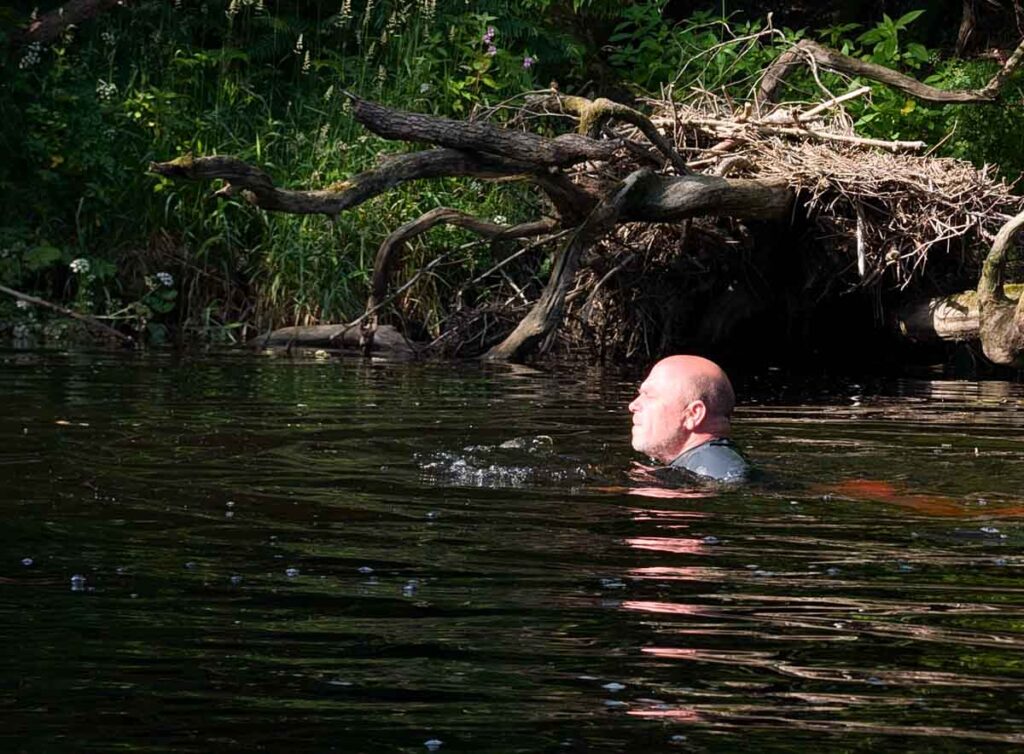
The Science: Why Cold Water Makes Us Happy
It sounds counter-intuitive. How can stepping into freezing water make you happy? It turns out, the “post-swim high” is a very real, chemically measurable phenomenon.
The Dopamine Rush
When you submerge your body in cold water (typically below 15°C, which is most UK waters year-round!), your body reacts to the thermal stress.
Research from the University of Portsmouth—leaders in this field—has shown that cold water immersion can trigger a massive release of dopamine (the brain’s reward chemical), increasing levels by up to 250%.
This provides a natural, sustained mood boost that can last for hours after you dry off.
Stress Reset and the Vagus Nerve
The initial shock of the cold stimulates the Vagus nerve, which connects the brain to the body’s major organs.
Over time, overcoming the stress of the cold trains your body to handle stress better in everyday life. It’s a concept called “Cross-Adaptation.”
By learning to breathe through the panic of the cold water, you are literally teaching your brain to remain calm under pressure.
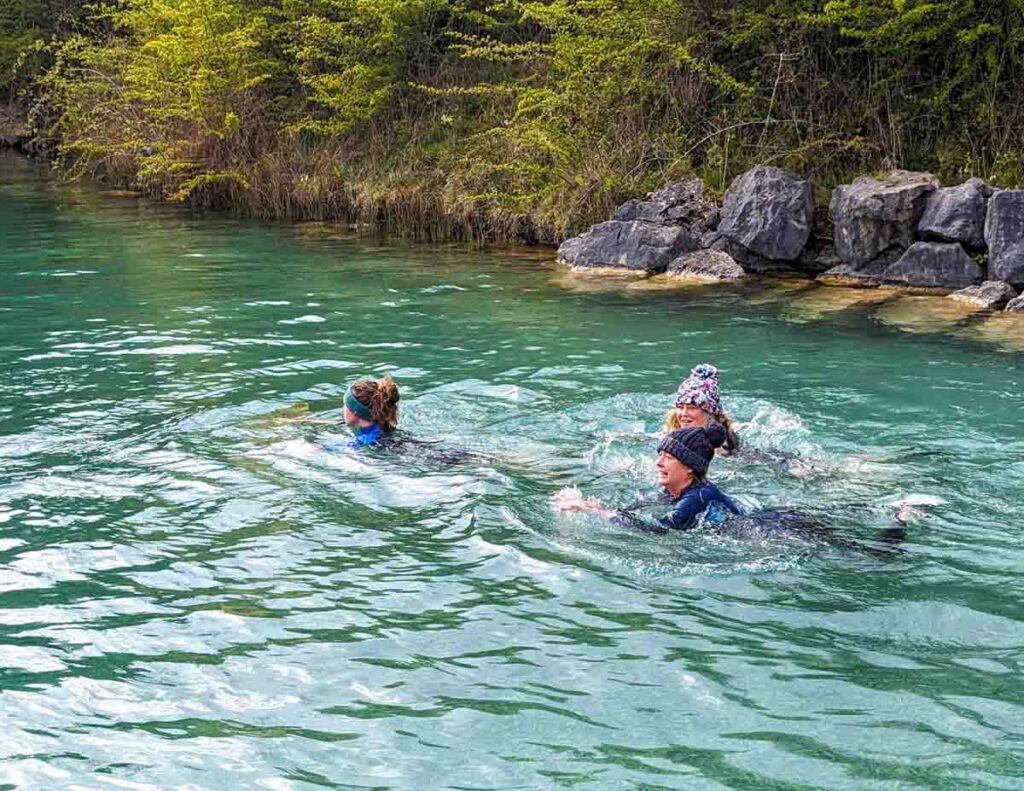
Immune System and Inflammation
Regular cold water dippers often report fewer colds. The science suggests that the mild stress of the cold (hormesis) kicks your immune system into gear, causing a short-term increase in white blood cells (leukocytes).
Furthermore, the cooling effect can help reduce inflammation, which is why athletes have used ice baths for recovery for decades.
The “Hike-Swim”: Finding the Perfect UK Blue Space
One of the greatest joys of wild swimming is combining it with a hike. Carrying your kit up a mountain to find a secluded tarn transforms a walk into a full sensory adventure.
Here are three distinct UK spots that range from easy roadside dips to hidden gems:
- Wain Wath: Located in Upper Swaledale near the village of Keld, this is an idyllic limestone amphitheatre. The waterfall tumbles into a wide, deep pool that is easily accessible from the roadside, making it perfect for those who don’t want a long hike in wet gear. Safety Tip: While you may see people jumping from the top, the depth changes with rainfall and rocks are hidden—we recommend entering gracefully from the bank instead.
- Thirlmere Infinty Pool: A true hidden gem that has become an Instagram icon. Tucked away on Fisherplace Gill high above Thirlmere reservoir, this small natural pool offers breathtaking views across the valley. It requires a steep, scrambly hike to reach, ensuring you earn your dip. Note: It is small and popular, so go early in the morning for serenity. Swimming is prohibited in the main Thirlmere Reservoir itself by United Utilities
for safety reasons; stick to the natural pools on the gill. - Rydal Water: For a gentler introduction, Rydal Water is ideal. It is one of the shallowest lakes in the Lake District, meaning it warms up faster than the deep waters of Wastwater or Windermere. There are lovely shelving beaches near the south side, perfect for wading in slowly while admiring Wordsworth country.
Safety First: How to Survive the Cold
Whatever the benefits, we must respect the water. UK waters are dangerously cold, even in summer. The RNLI and outdoor safety experts emphasize that the cold is a formidable force. Here is how to stay safe.
1. The Cold Shock Response (The First 3 Minutes)
When you enter cold water, your body involuntarily gasps. This is the Cold Shock Response. If your head is underwater when you gasp, you can drown.
- The Rule: Never jump or dive in unless you know the depth and have acclimated. Enter slowly. Splash water on your neck and face to let your body know what’s coming.
- The Breather: Take a minute to just stand there. Regulate your breathing. Do not try to swim until your breathing is calm.
2. Float to Live
If you get into trouble, fight the instinct to thrash. Thrashing wastes energy and cools you down faster. Instead, lean back, extend your arms and legs like a starfish, and float.
Wait for the shock to pass, then call for help or plan your next move.
3. Beware the “Afterdrop”
You often feel coldest after you get out. This is called Afterdrop. When you exit the water, warm blood from your core rushes to your cold skin, cooling it down before it returns to your heart. This can cause your core temperature to plummet 10–20 minutes after your swim.
- The Fix: Dry off immediately. Put on warm layers (including a woolly hat!) instantly. Drink something warm. Do not drive until you have fully warmed up (at least 30 mins).

4. Know Your Hazards & Rights
- Blue-Green Algae: Common in the Lakes (like Windermere) during hot summers. It is toxic to humans and fatal to dogs. If the water looks like pea soup or has green flakes, stay out. Download the Bloomin’ Algae app to check reports.
- Sewage: Sadly, this is a reality in UK rivers. Always check the Safer Seas & Rivers Service (SAS) app before swimming, especially after heavy rain.
- Access Laws:
- Scotland: You generally have a “Right to Roam” (Land Reform Act 2003) which extends to swimming, provided you are responsible.
- England & Wales: There is no general right to swim. Most rivers are privately owned. Stick to recognized spots or areas with a “Public Right of Navigation” (like the Wye or Thames), or check local permissions.
Essential Gear: What You Actually Need
You don’t need expensive kit to start, but a few items are non-negotiable for safety in UK waters.
- Tow Float: A bright orange inflatable buoy that drags behind you on a waist strap. It makes you visible to boats (essential in places like Loch Lomond or Windermere) and gives you something to hold onto if you get tired. Essential.
- Bright Swim Hat: Helps you be seen. Neoprene hats are great for keeping your head warm.
- Changing Robe: Essential for managing Afterdrop. It allows you to get changed quickly while protected from the wind.
- Wetsuit vs. Skins:
- Wetsuit: Extends your time in the water and provides buoyancy. Highly recommended for beginners in UK waters.
- Skins (Swimsuit only): The “purist” approach. You feel the cold more intensely (more dopamine!), but you can’t stay in as long.
Getting Started: Apps and Resources
Don’t just guess where to swim. The UK wild swimming community has built incredible digital tools to help you find safe, clean spots.
- WildSwim: A crowd-sourced app and website with thousands of UK swim spots marked by users.
- NOWCA: Essential if you want to swim in managed lakes (like Shepperton or various quarries). It uses a safety wristband system.
- Safer Seas & Rivers Service: Tracks real-time pollution alerts. Always check this after heavy rain.

The Final Plunge
Wild swimming is more than exercise; it is a way to reclaim a sense of wildness in a tamed world. It washes away the digital fatigue of modern life and leaves you feeling vibrant, alert, and deeply connected to the landscape.
So, pack your towel, check your safety apps, and go find your blue space. The water is lovely—once you’re in!
Disclaimer: Outdoor swimming carries inherent risks. Always swim within your limits, check local advice, and never swim alone. In an emergency in the UK, dial 999 and ask for the Coastguard.