From the outside, the British Museum looks exactly as you’d expect: a magnificent, old building worthy of its stature.1 But step inside, and you are transported from the 19th century into the 21st.
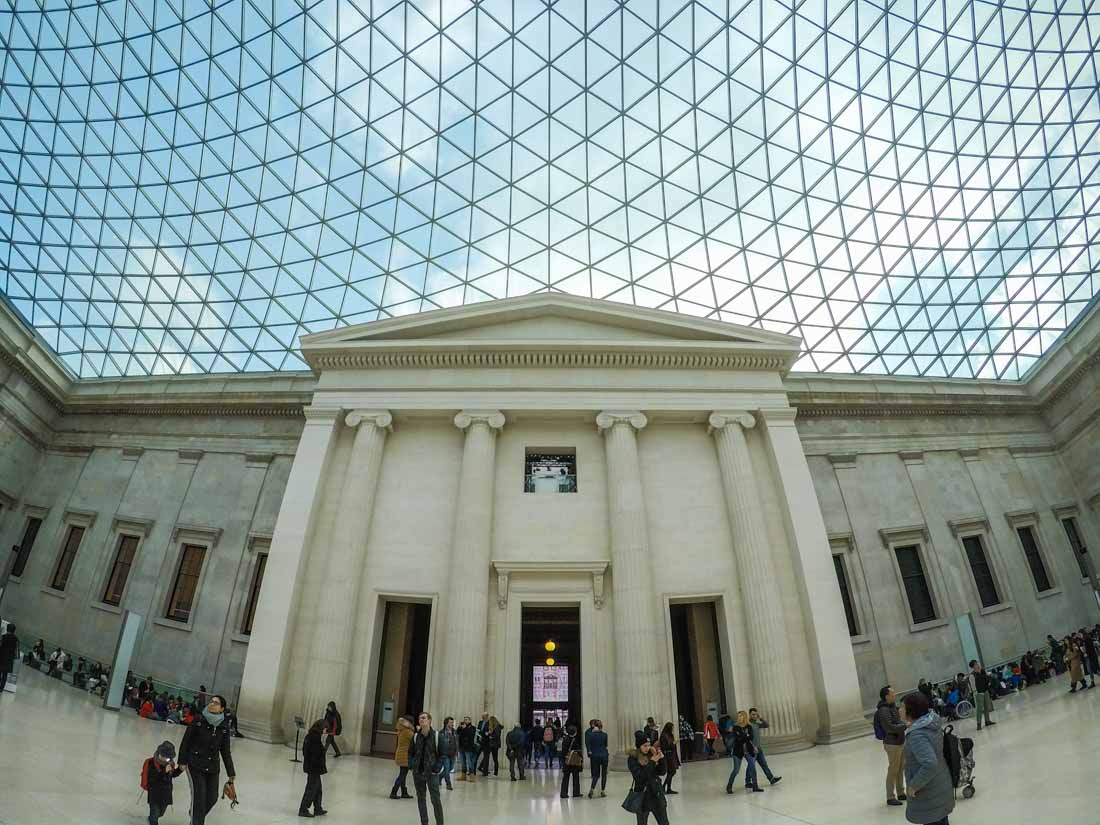
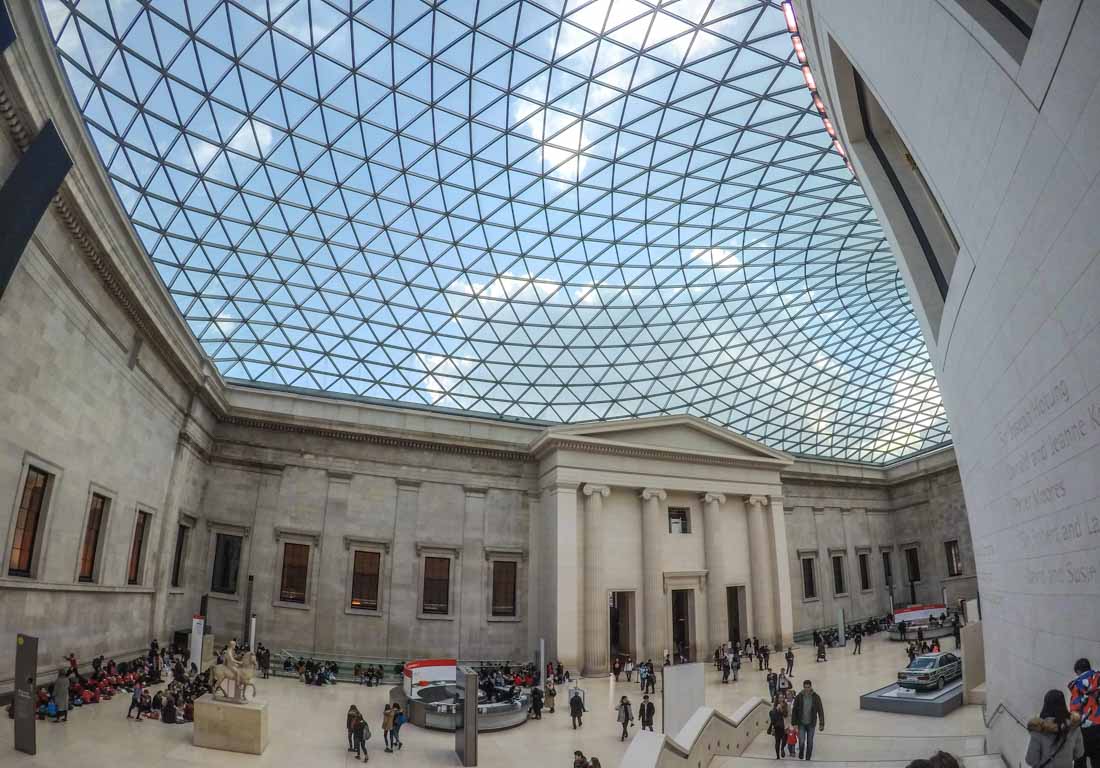
You are in the Queen Elizabeth II Great Court, a spectacular modern space that is now the beating heart of the entire museum.
It’s hard to believe this space was once a hidden, private courtyard filled with the British Library’s book stacks, inaccessible to the public.
Today, it is the largest covered public square in Europe, a two-acre piazza that serves as the main entrance, a central hub for navigation, and a breathtaking destination in its own right.
But the Great Court is more than just a beautiful pass-through. It’s a place to eat, a gallery of its own, and the “compass” you need to navigate the museum’s vast collections.
This is your ultimate guide to seeing, doing, and eating everything the Great Court has to offer.
Visiting the Great Court: What to Know Before You Go
First, the essentials. This is the practical information you need to plan your visit.
At a Glance
Opening Hours and Admission
The British Museum is open daily from 10:00 am to 5:30 pm. On Fridays, the museum stays open late until 8:30 pm. The Great Court’s hours are tied to the museum’s.
Location and How to Get There
The museum is located on Great Russell Street, London WC1.
The closest Tube stations are Tottenham Court Road (Central and Northern lines) and Holborn (Central and Piccadilly lines).
Do You Need a Ticket for the Great Court?
No. Entry to the British Museum’s main collection and the Great Court is completely free.
You may, however, need to purchase separate tickets for special or temporary exhibitions, which are located in galleries off the court.
The Story of the Glass Roof: An Architectural Marvel
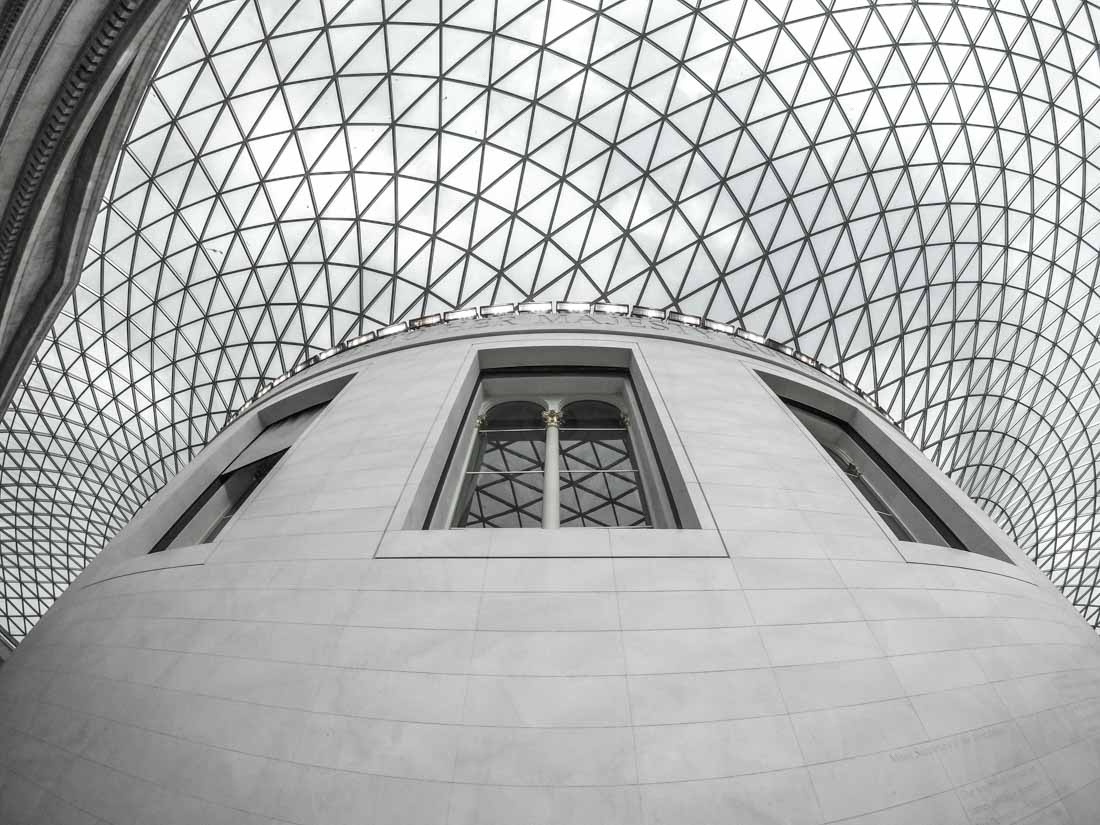
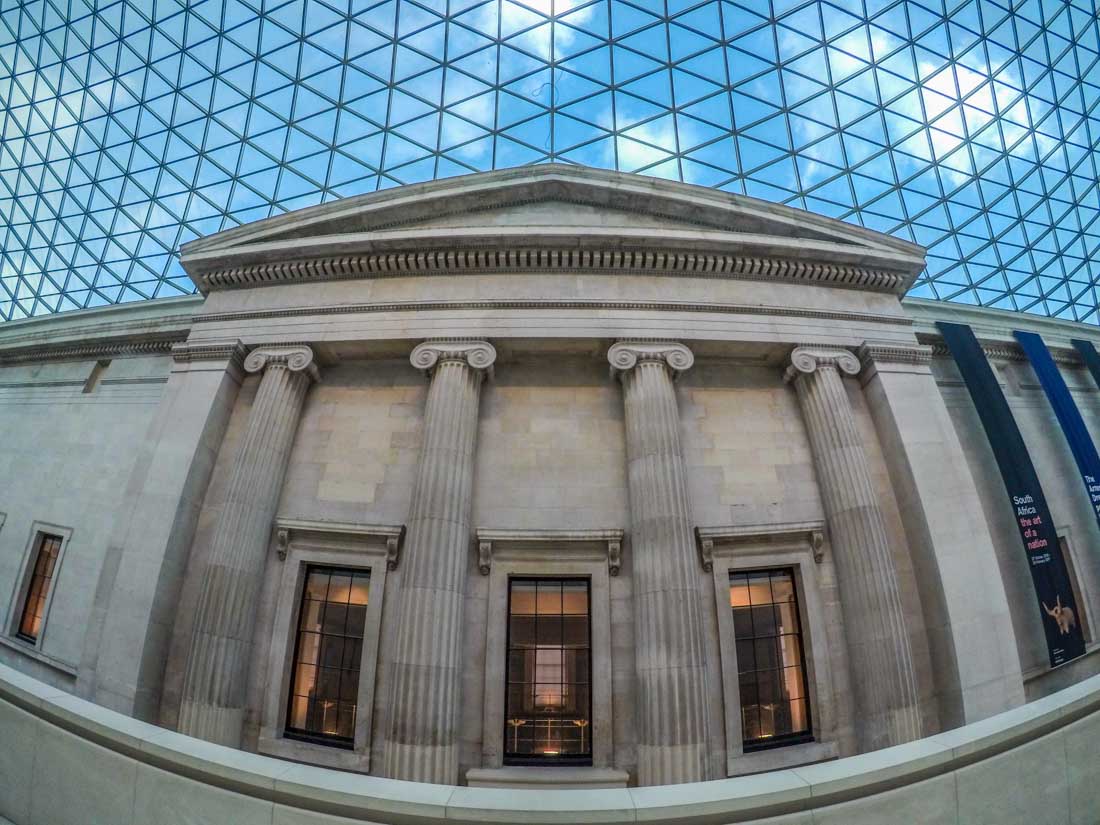
The Great Court is an awesome space, and visitors are immediately drawn to look up at the “undulating roof”.
This section covers the “what-am-I-looking-at” story of this incredible feat of engineering.
The “Before” Picture: The Lost Book Stacks
For over 150 years, this space was not a public square. It was the museum’s central courtyard, but it was filled entirely by the British Library’s “book stacks”—three storeys of bookshelves holding millions of volumes.
This inner sanctum was only accessible to scholars. When the British Library moved to its new building at St Pancras in 1997, the book stacks were cleared, revealing a “lost” space for the first time in generations.
The Architect and Engineers: Foster + Partners and Buro Happold
The commission to transform this hidden space went to the celebrated architects Foster and Partners, led by Lord Norman Foster.
The complex engineering required to span the vast courtyard without pillars was handled by Buro Happold.
The roof itself was constructed by Waagner-Biro. The court as we see it was opened by Queen Elizabeth II in 2000.
By the Numbers: The “Gridshell” Roof
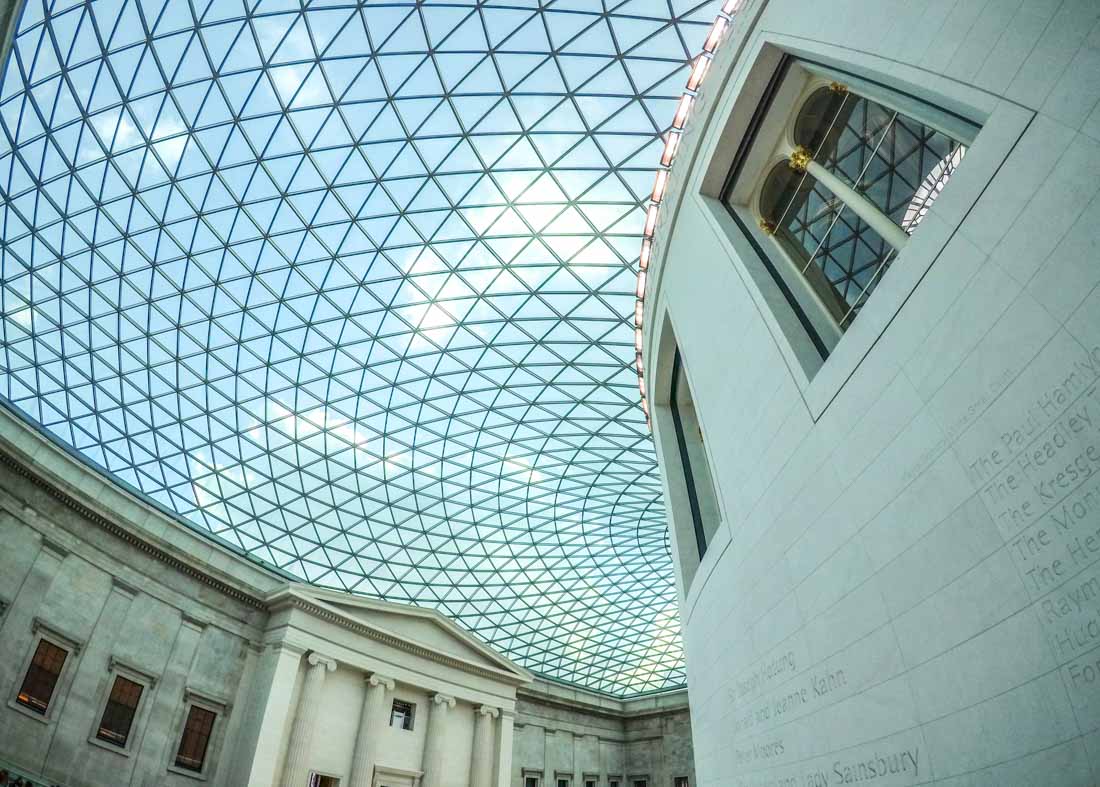
The stunning glass-and-steel “gridshell” roof is what makes the space work. Here are the key statistics:
- It covers a total area of 6,100 $m^2$.
- It is made of 4,878 unique steel members.
- These are connected by 1,566 unique nodes.
- It holds 1,656 pairs of unique glass windowpanes.
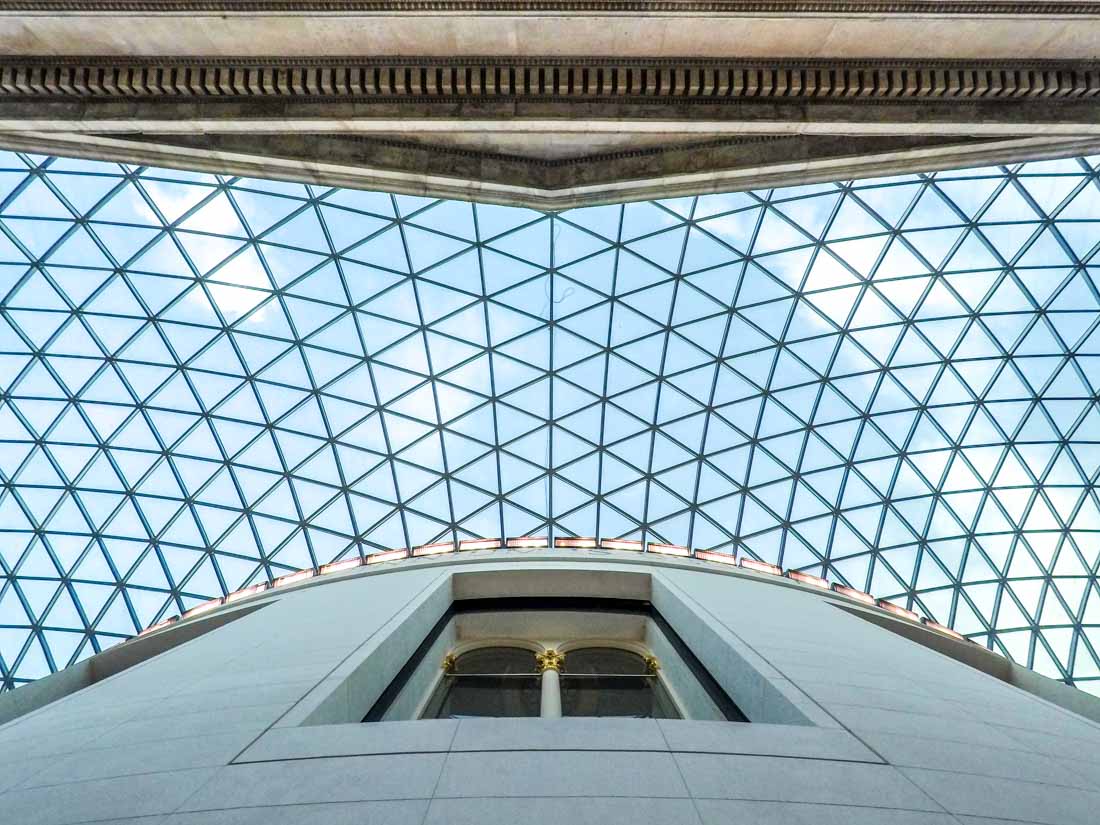
The complex, undulating shape of the roof means that every single steel member and pane of glass is unique.
The “Hidden” Centerpiece: The Round Reading Room
At the very center of the court is the magnificent, circular Reading Room.
This was the original British Library, a world-famous center of learning whose famous readers included Sir Arthur Conan Doyle and Bram Stoker.
Before the redevelopment, the Reading Room had no outer wall; the book stacks were built right up against its back.
Foster’s design built a new outer wall to protect it, finally allowing the public to see its beautiful exterior.
Today, it is used as the museum’s library and information centre.
The Stone Controversy
A fascinating historical footnote for architecture fans: there was a controversy over the building materials. The contract specified the use of English Portland stone, but a more cream-toned French limestone was used instead.
Eating and Drinking: An Insider’s Guide to the Great Court
The court isn’t just for walking; it’s also the museum’s primary hub for food and drink. Here’s the insider tip.
Review: Is the Great Court Restaurant a Hidden Gem?
Yes. Located on the upper level, just below the spectacular glass roof, is the Great Court Restaurant (sometimes referred to as “Resto 32”).
While reviewers note the food is of “average value,” its true purpose is serving as an “atmosphere of calm and tranquillity”.
It is, as one reviewer put it, a “haven from the crowds” and a “reasonably well-kept secret”. This is the perfect spot to escape the rush of the galleries, have a coffee or afternoon tea, and admire the architecture from above.
The Ground-Floor Cafe: For a Quick Coffee
For a faster, more casual option, there is also the Cafe in the Queen Elizabeth II Great Court.
This is located on the main ground-floor concourse and is ideal for grabbing a quick coffee and a pastry before diving into the next gallery.
What to See: Highlights Inside the Great Court
Before you dash off to find the mummies, pause.
The Great Court is a gallery in its own right, displaying several key objects from the collection. When it opened, twelve sculptures were installed on the main floor. While some have been moved, key pieces remain.
The Lion of Knidos
This 3rd-century BC marble statue is one of the first things you’ll see.
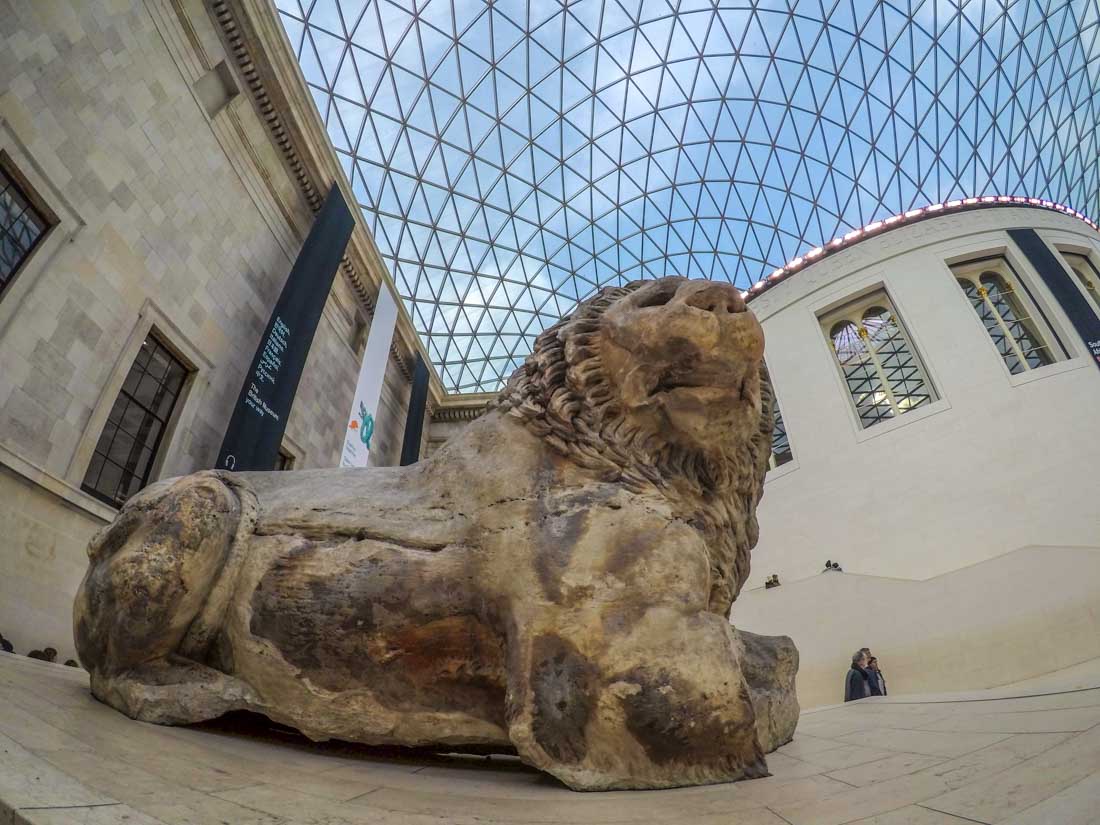
This massive, beautifully preserved lion once crowned a 12-meter-high funerary monument in ancient Knidos (modern-day Turkey).
The Kayung (Haida) Totem Pole
You can’t miss the two towering totem poles. One of these is the 15-meter Haida House Pole from Kayung, British Columbia, dating to around 1850.
It features crests of ancestral beings that mark a family’s identity and rights.
Another nearby 8-meter pole is from the Nisga’a nation.
The Full Sculpture Collection
Look around to see other sculptures “hiding in plain sight.” These include:
- Two massive stone heads of Pharaoh Amenhotep III (c. 1400 BC).
- Two obelisks of the Egyptian King Nectanebo II (c. 350 BC).
- A stela (carved slab) of the Assyrian King Ashurnasirpal II (9th century BC).
The Great Court as Your Hub: Accessing the Museum’s Top 5 Treasures
The Great Court is your central “compass.” It acts as the “central linking point” for the entire museum.4 From here, you can get anywhere. Here is a simple guide to finding the museum’s top 5 highlights, starting from the court.
1. The Rosetta Stone (Room 4)
The museum’s most visited object. This ancient translation tool is located in the Egyptian Sculpture gallery, just off the Great Court.
- How to find it: Enter the galleries on the west side of the Court (to your left, if your back is to the main entrance). Room 4 is on the Ground Floor.
2. The Egyptian Mummies (Room 63)
The extensive collection of mummies is a must-see. The famous mummy of Katebet is a key highlight.
- How to find it: Take the stairs in the Great Court up to the Upper Floor. The mummies are in Room 63.
3. The Parthenon Marbles (Room 18)
Also known as the Elgin Marbles, these sculptures from the Parthenon in Athens are in a huge, dedicated hall.
- How to find it: On the Ground Floor, proceed to the west side of the Court (left) and follow the signs for Room 18.
4. The Sutton Hoo Helmet (Room 41)
One of the most magnificent archaeological discoveries in Britain, this Anglo-Saxon helmet is an icon of the Dark Ages.
- How to find it: Go to the Upper Floor and find Room 41.
5. The Lewis Chessmen (Room 40)
These famous 12th-century chess pieces, carved from walrus ivory, are full of personality.
- How to find it: Also on the Upper Floor, located in Room 40, near the Sutton Hoo exhibit.
A Photographer’s Guide: The Best Spot for That Photo
You will want to take a picture. The Great Court is one of the most “massively Insta-worthy” spots in all of London.
- The Ground Floor Shot: Get low and shoot wide to capture the scale of the Reading Room and the roof above.
- The “Insider” Shot: For the best photo, take the stairs up towards the Great Court Restaurant. From the upper-level balconies, you can get a clean, symmetrical, and perfectly framed shot of the entire court, the Reading Room, and the “undulating roof” all in one.
A Space for Debate: The Court and its Controversies
Finally, the Great Court is not just a neutral space. Like the museum itself, it is a place for discussion and debate.
An “Homage to Imperialism”?
Some academic analysis has described the court, with its grand, masculine air, as extending an “homage to imperialism”.15 It is a powerful, monumental space built to house a collection from a former empire.
How the Museum is Responding
The museum is actively engaging with these complex histories. It uses its galleries to discuss “histories in ways that blend past and present with political intent”.21 You can see this in action in exhibitions on “contemporary issues,” such as “A Revolutionary Legacy: Haiti and Toussaint Louverture,” which was held in Room 3, located right at the museum’s entrance.
Final Thoughts from a Bald Hiker
The Great Court is truly a wonder of what can be done with a space transformed. It’s a space to just be, to sit and marvel at the shapes and light, to wander amongst the sculptures, or to simply enjoy a coffee.
It has taken the centre of an old, magnificent building and given it a new, vibrant life.