

Mount Kilimanjaro is the highest peak in Africa and one of the most iconic, mesmerizing mountains in the world.
Standing tall at a breathtaking 5,895 meters (19,341 feet), this majestic giant rises seamlessly out of the Tanzanian plains, a standalone sentinel capped with snow and ice right near the equator.
I had spent years staring at photos, reading journals, and being utterly inspired by the tales of those who had stood at the summit.
Eventually, the call became too loud to ignore. It was time to head to Tanzania with an incredible group of friends and climb it myself.
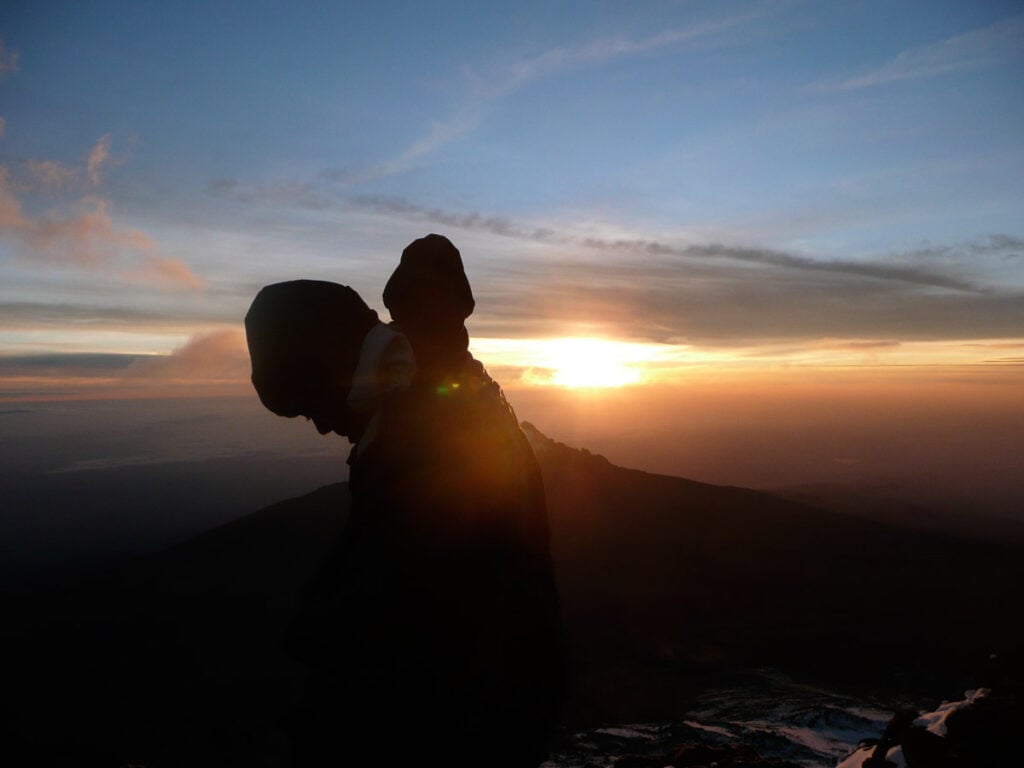
If you have ever dreamt of testing your limits, walking through five distinct ecosystems, and watching the sunrise from the Roof of Africa, this complete guide will help you understand exactly what to expect on the trail.
Mount Kilimanjaro Need-to-Know:
Location:
Kilimanjaro National Park, Tanzania, East Africa.
The Highest Point:
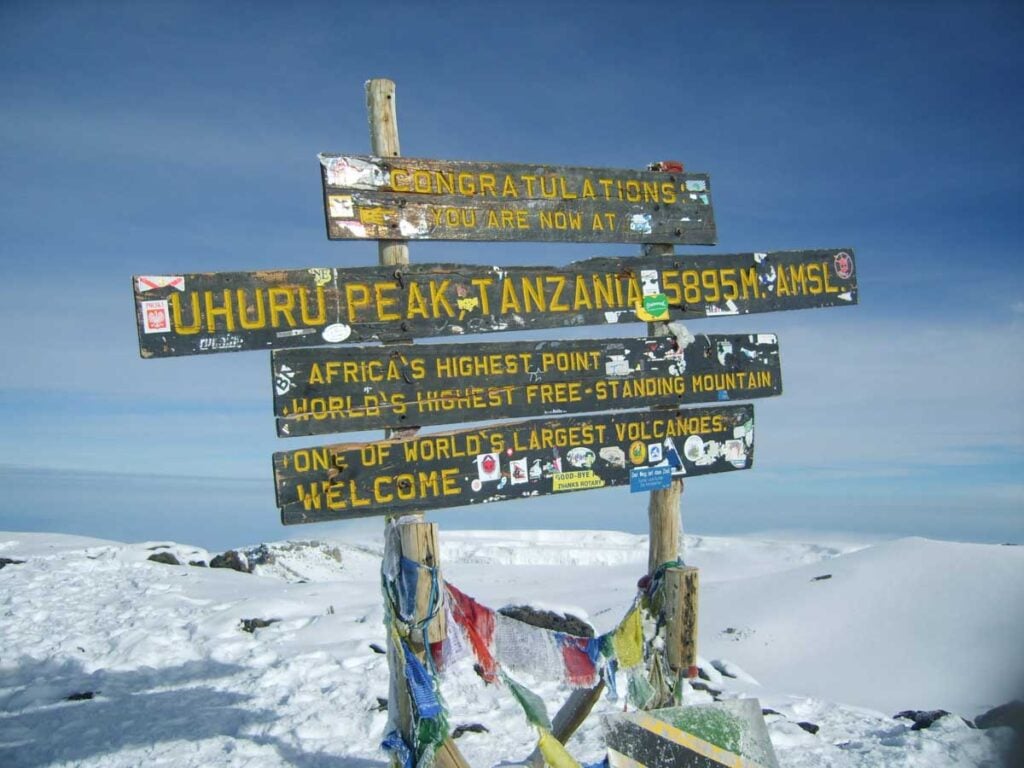
Uhuru Peak on the Kibo volcanic cone (5,895m / 19,341ft).
Trek Duration:
Typically takes between 5 to 9 days depending on the route. A slower 7 or 8-day climb is highly recommended for proper altitude acclimatisation.
Technicality:
Kilimanjaro is a non-technical “walk-up” mountain. You do not need ropes, crampons, or mountaineering experience, but excellent physical fitness and mental grit are required.
Choosing Your Route to the Summit
One of the most critical decisions you will make when planning your climb is choosing the right trail.
There are seven official routes up the mountain, each offering a completely different experience in terms of scenery, difficulty, and acclimatisation layouts:
The Machame Route (The “Whiskey” Route)
This is one of the most popular and scenic routes on the mountain.
It approaches from the south and offers a fantastic layout for acclimatisation because it follows the classic mountaineering rule of “climb high, sleep low.”
It is a physically demanding trail with steep ridges, including the famous scramble up the Barranco Wall, but it boasts a very high success rate on 7-day itineraries.
The Lemosho Route (The Premium Choice)
If you want a quieter, more pristine start to your trek, Lemosho approaches from the west through a beautiful rainforest.
It is a longer route, typically taken over 7 or 8 days, which gives your body maximum time to adapt to the altitude. Because of this gradual ascent, Lemosho has the highest summit success rate on the mountain.
The Marangu Route (The “Coca-Cola” Route)
Marangu is the oldest and most established route. It is often falsely labeled as the “easiest” because it follows a classic, well-worn path and is the only route that features permanent A-frame sleeping huts instead of camping tents.
However, because it can be done in just 5 days, it has a notoriously low success rate. Taking only 5 days simply does not give the human body enough time to adjust to the radical change in altitude.
When is the Best Time to Climb Kilimanjaro?
Because the mountain sits just south of the equator, it doesn’t experience traditional winter and summer seasons.
Instead, your planning should revolve around the dry and wet seasons. You can climb all year round, but the optimal windows are:
January to March (The Warm Window): This is a beautiful, relatively quiet time to climb. The weather is clear, temperatures are slightly warmer, and you get spectacular views of snow on the summit.
June to October (The Peak Dry Season): This window offers the crispest, clearest days and the lowest chance of rain on the lower slopes. It is the most popular time to trek, so expect the camps to be bustling with international climbers.
The Rainy Seasons to Avoid: The “long rains” fall from late March through May, and the “short rains” arrive in November. Climbing in these months means navigating deep mud in the rainforest and heavy snowstorms at the summit.
The Volcanic History of Africa’s Giant
To truly appreciate Kilimanjaro, you have to understand the geology beneath your boots.
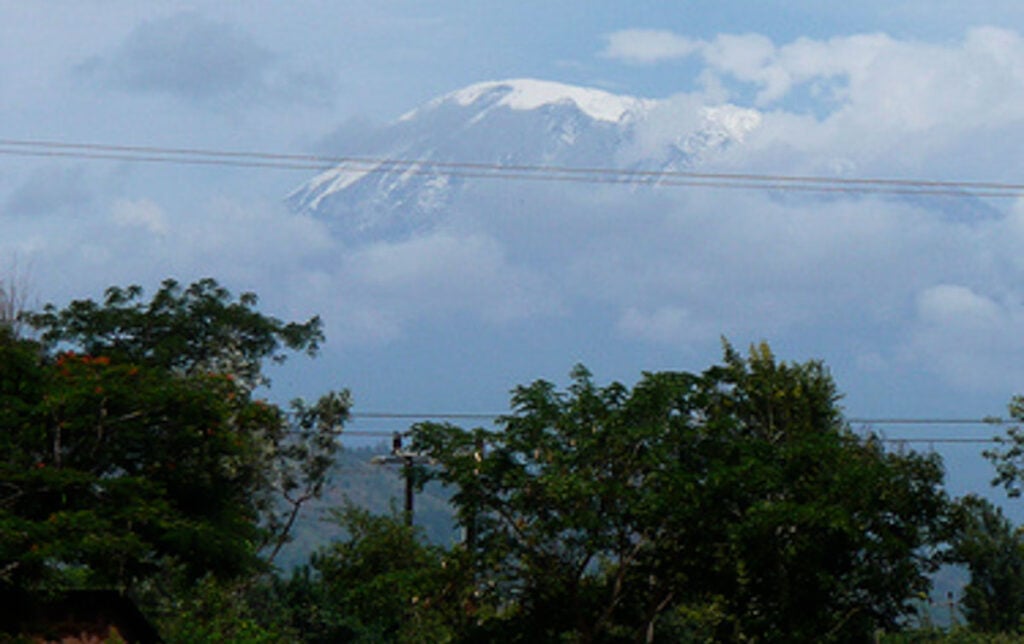
Kilimanjaro is a dormant stratovolcano comprised of three distinct volcanic cones that formed over two and a half million years of tectonic activity: Shira, Mawenzi, and Kibo.
Shira and Mawenzi have collapsed and eroded over time, leaving dramatic ridges in their wake.
Kibo, however, remains the highest and most prominent cone. The absolute highest point on Kibo’s massive crater rim is Uhuru Peak—the ultimate destination for trekkers.
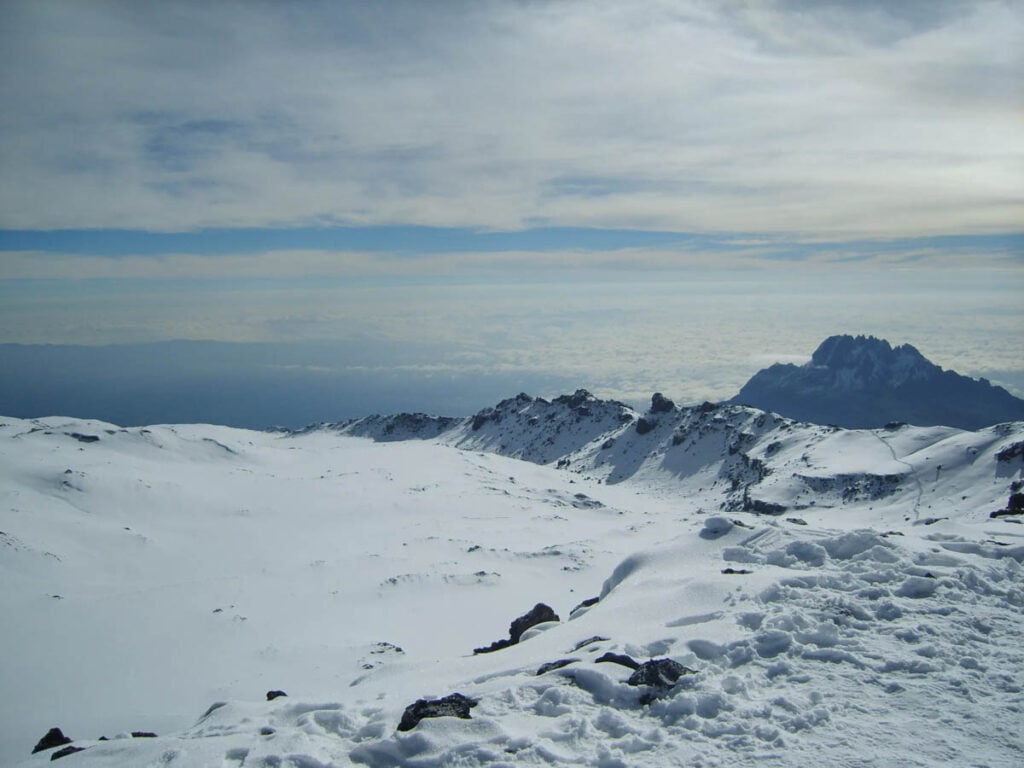
While the volcano is currently dormant, it isn’t completely dead.
The last major cataclysmic eruption occurred roughly 360,000 years ago, but the last signs of minor volcanic activity, such as escaping steam and sulfur vapors from the ash pit, occurred just 200 years ago.
The Five Climatic Zones: Walking from the Equator to the Arctic
One of the most incredible aspects of climbing Kilimanjaro is the sheer ecological diversity.
Because the mountain rises directly from the hot African plains, climbing to the summit is effectively the equivalent of walking from the equator to the North Pole in just a matter of days.
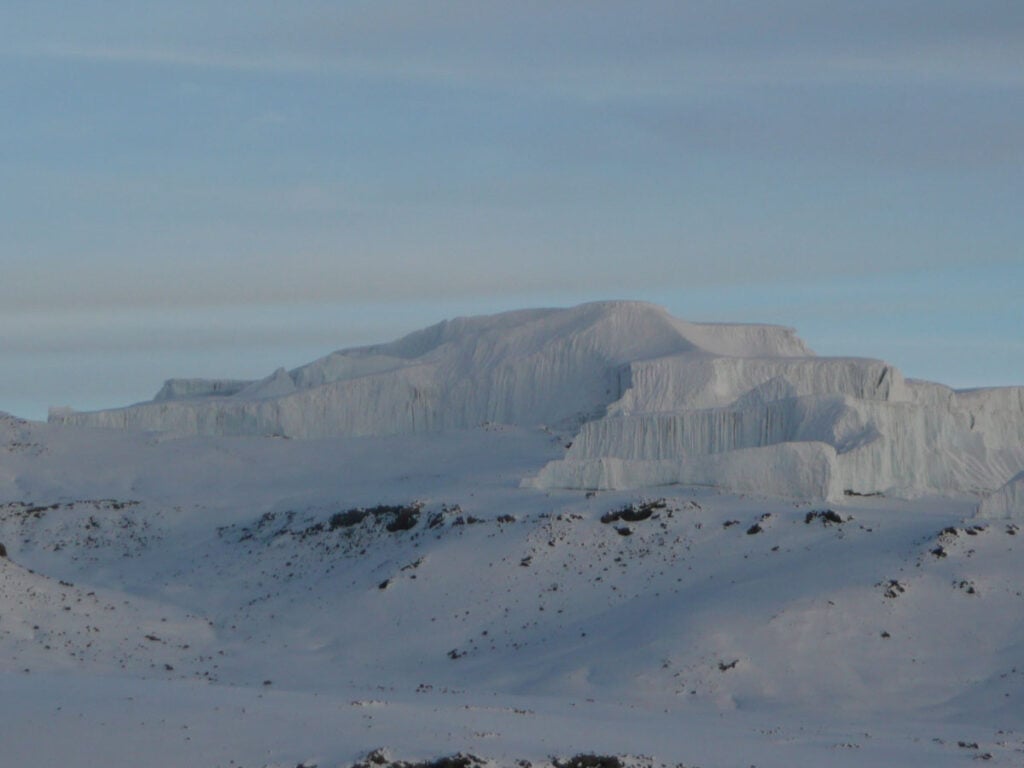
You will pass through five distinct climatic zones:
The Cultivation Zone (800m – 1,800m): The lower slopes are rich, fertile farmland cultivated by local villagers, characterized by high rainfall and lush agriculture.
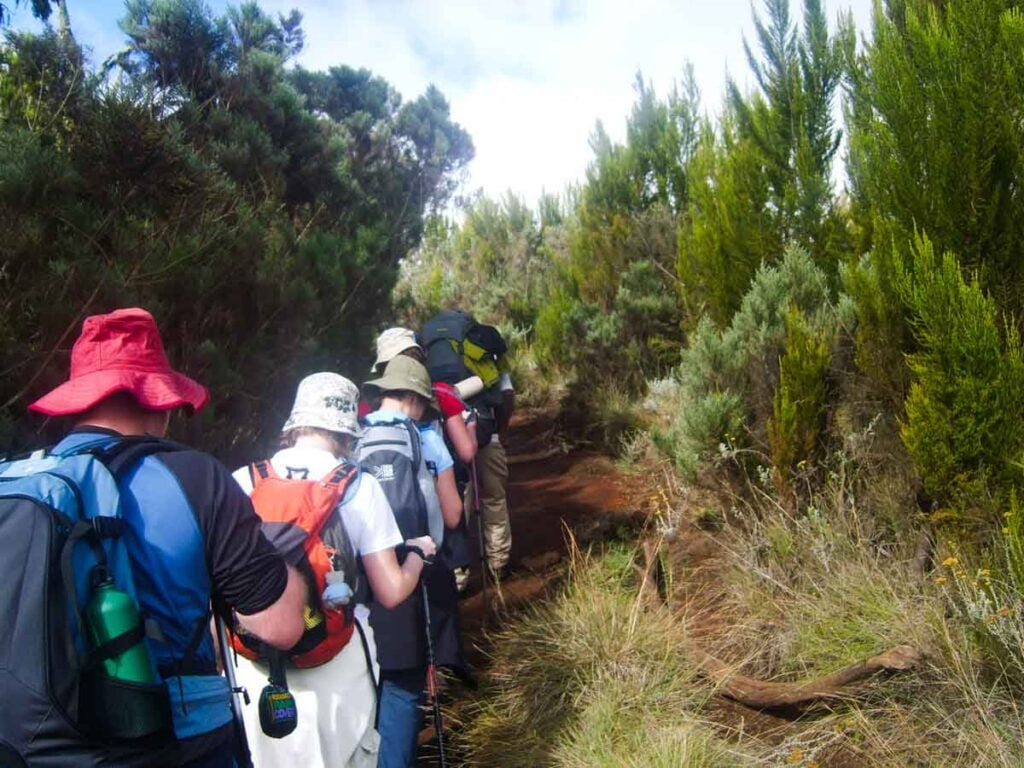
The Rainforest Zone (1,800m – 2,800m): The official start of the trek takes you into a dense, misty, and vibrant montane rainforest. Keep your eyes peeled for blue monkeys and black-and-white colobus monkeys in the canopy.
The Heath and Moorland Zone (2,800m – 4,000m): As the trees thin out due to altitude, you emerge into low-lying alpine shrubbery and grasslands. This zone is famous for its otherworldly flora, including the prehistoric giant groundsels (Dendrosenecio) and giant lobelias.
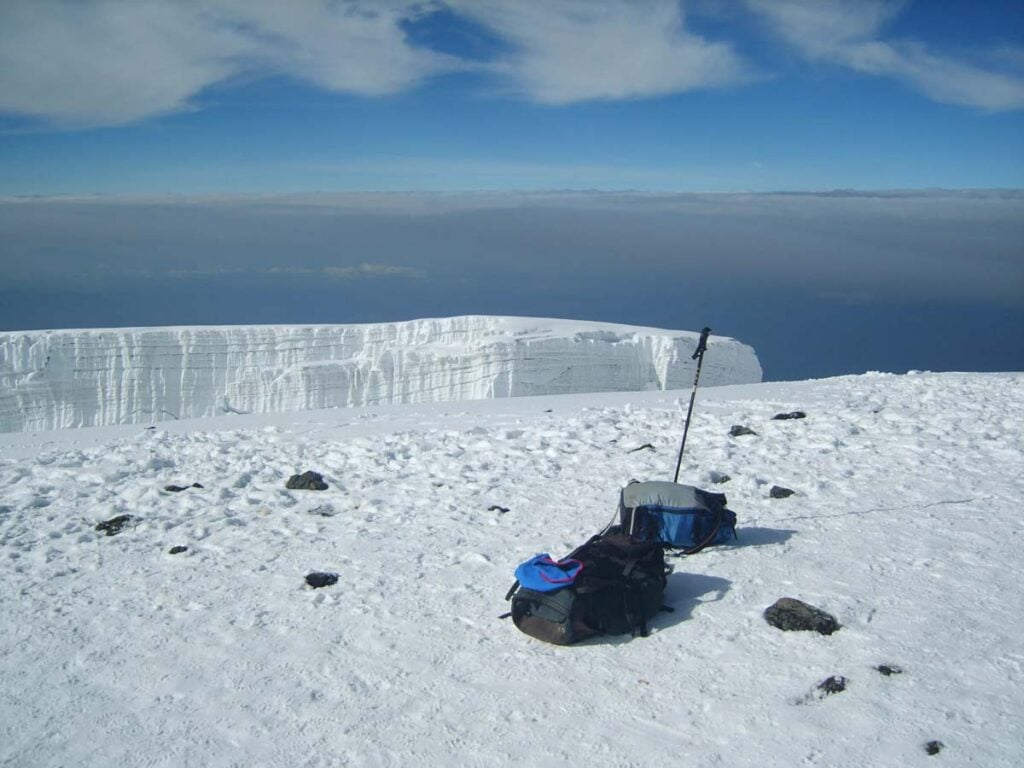
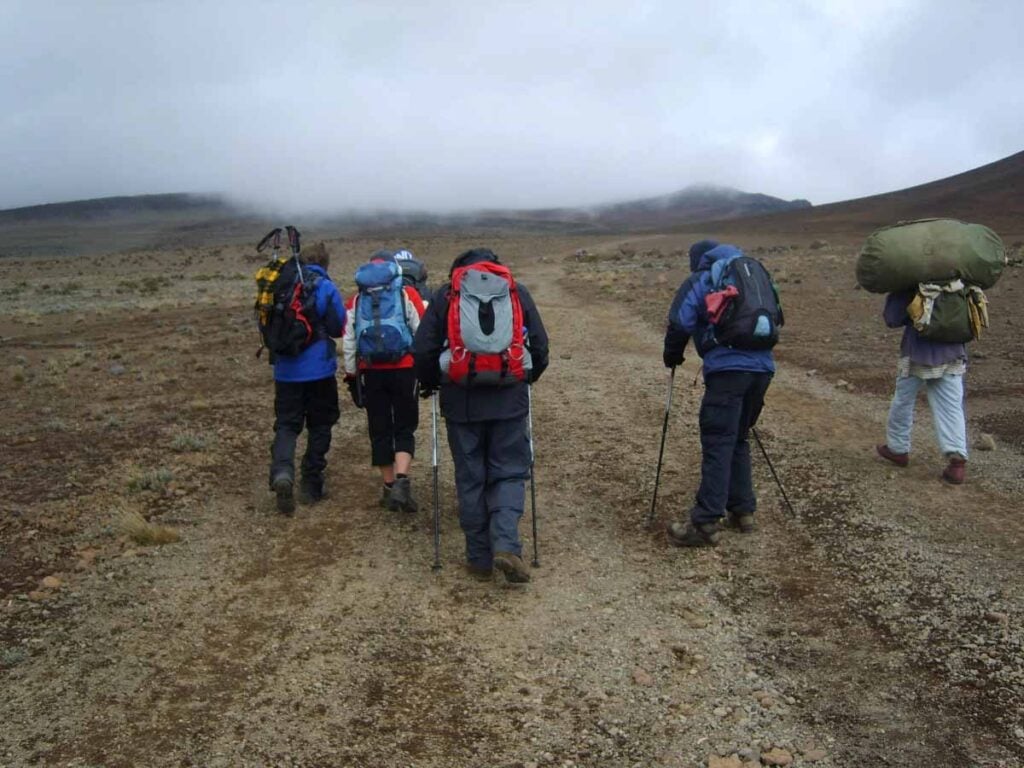
The Alpine Desert Zone (4,000m – 5,000m): Here, the landscape transforms into a stark, barren, and wind-swept Martian landscape. Temperatures plummet at night, and the air becomes noticeably thinner.
The Arctic Zone (5,000m+): The final push to Uhuru Peak takes you into a freezing, glaciated wonderland of loose scree, biting cold, and towering walls of ice.
The Equator Oxygen Factor: Kilimanjaro vs. The Himalayas
When preparing for a high-altitude expedition, a lot of hikers compare Kilimanjaro to other famous treks, like my subsequent expeditions to peaks like Aconcagua or routes through the Himalayas.
But Kilimanjaro has a fascinating secret weapon when it comes to atmospheric physics.
Because Kilimanjaro sits almost directly on the equator, the earth’s rotation causes the atmosphere to bulge outward. This means that at the equator, the column of air above you is thicker than it would be at the poles or at higher latitudes.
The practical result for hikers? Due to this atmospheric bulge and the curvature of the earth, you actually enjoy slightly higher barometric pressure and marginally higher oxygen levels at 5,000 meters on Kilimanjaro than you would at the exact same altitude in the Himalayas.
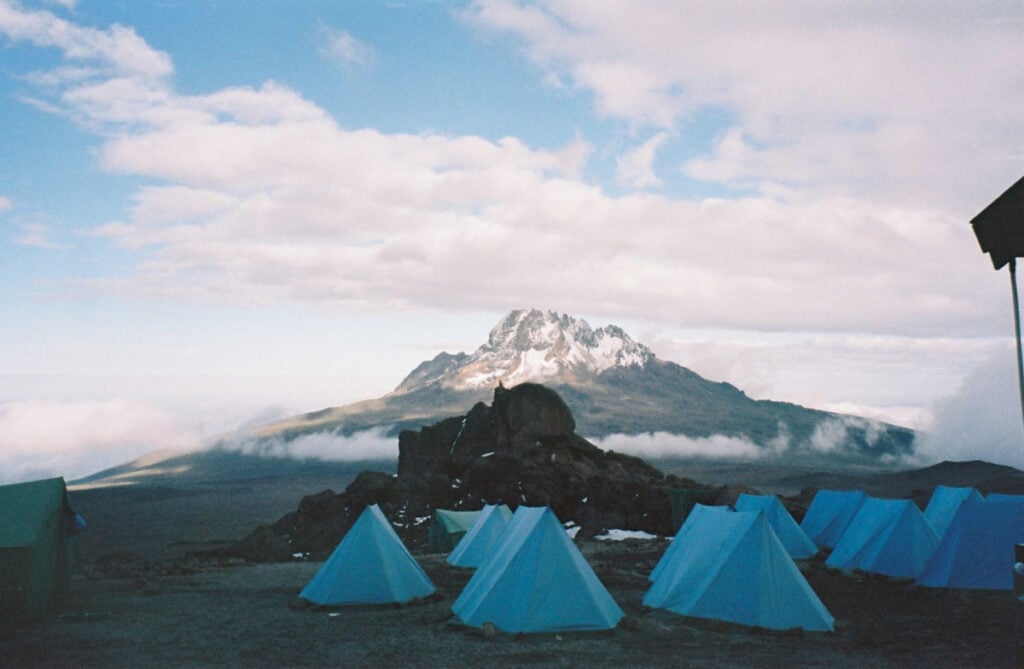
It is a subtle but brilliant natural advantage that makes this massive altitude a little more manageable for the human body.
Porter Welfare and Ethical Trekking
You cannot climb Kilimanjaro alone; by law, you must climb with a registered guide and support crew.
These local porters, cooks, and guides are the absolute heartbeat of the mountain. They carry the camp gear, cook your hot meals, and provide the encouragement you need to reach the top.
Ethical trekking is an incredibly important aspect of choosing a tour operator. Before booking, ensure your guiding company is a member of or aligned with the Kilimanjaro Porters Assistance Project (KPAP).
KPAP monitors companies to ensure porters are paid fair wages, given proper meals, provided with warm sleeping environments, and not overloaded beyond safe weight limits.
Additionally, tipping your crew at the end of the trek is a deeply ingrained local custom. Budget for this ahead of time as part of your overall trip cost, as it forms a critical part of the local economy.
The Tragedy of the Disappearing Glaciers
I feel incredibly fortunate to have climbed Kilimanjaro while its majestic summit glaciers are still standing.
However, standing amidst those towering blue ice walls is a bittersweet experience; you can’t help but notice that they are rapidly disappearing. Over the last century, more than 80% of Kilimanjaro’s ice cap has vanished.
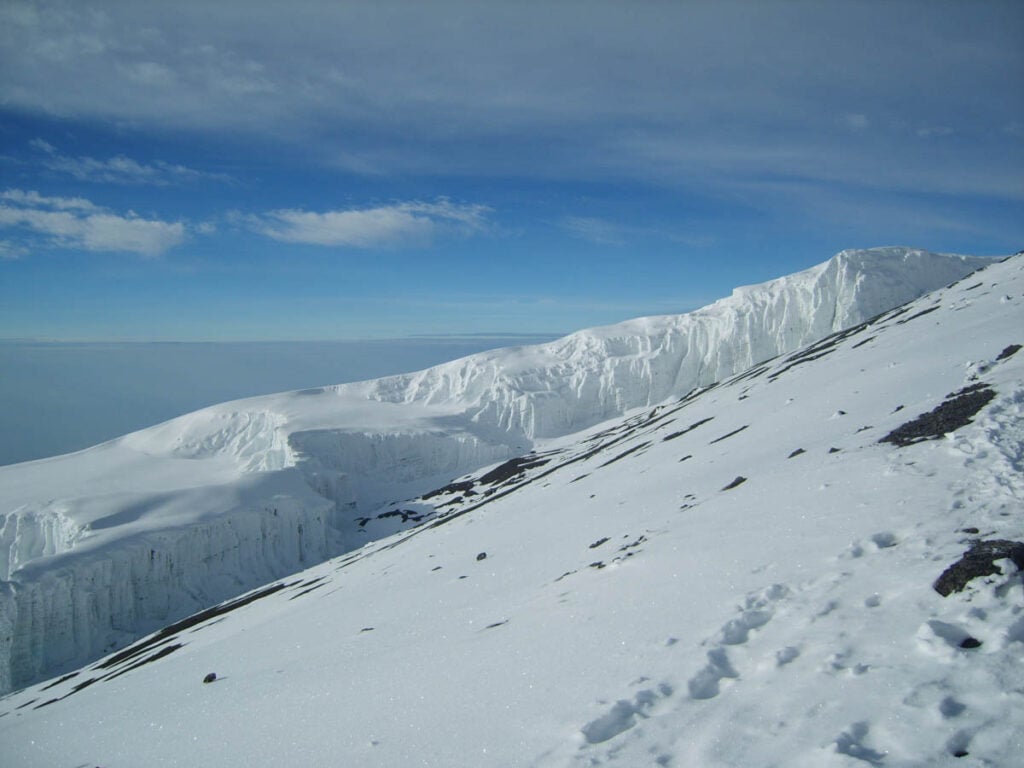
The causes behind this environmental tragedy are complex, driven by a combination of global and localized factors:
Global Climate Change: Rising global temperatures are the primary driver, causing the high-altitude ice to melt faster than seasonal weather can replenish it.
Regional Deforestation: Massive deforestation around the base of the mountain has disrupted the local microclimate. Forests naturally release moisture into the atmosphere through a process called evapotranspiration. With fewer trees, the air moving up the mountain is much drier, leading to a dramatic reduction in snowfall.
Sublimation: Because the sun is incredibly intense near the equator and the air at the summit is bone-dry, much of the ice undergoes sublimation—turning directly from solid ice into water vapor without ever melting into water.
Scientists predict that within the next few decades, these historic glaciers may vanish entirely. If climbing Kilimanjaro is on your bucket list, my advice is to go as soon as you can.
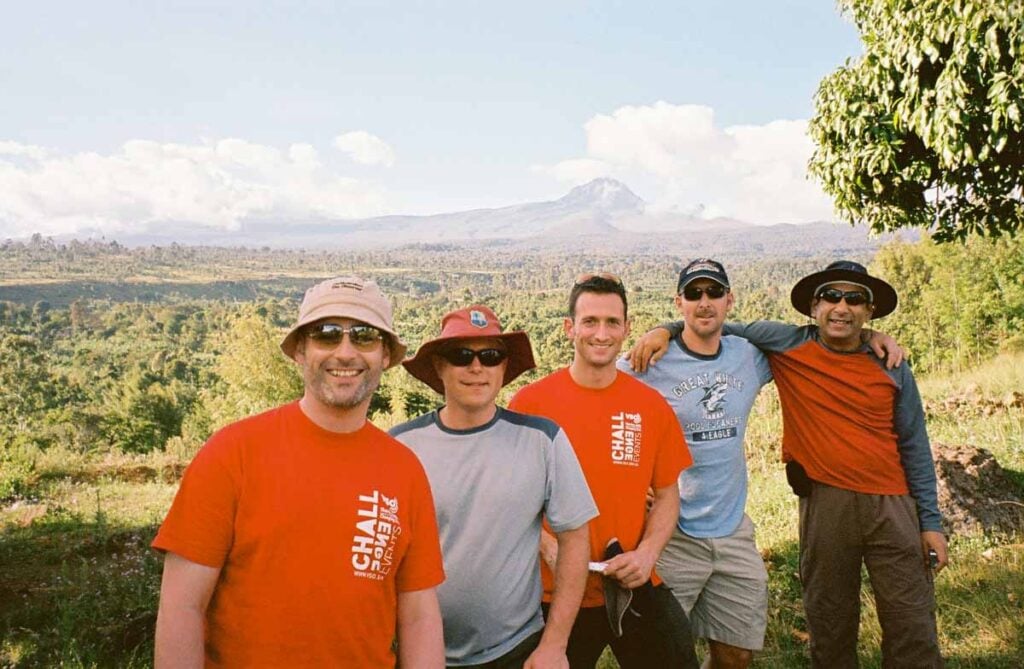
Practical Tips for a Successful Summit
While Kilimanjaro is entirely walkable with no technical rock climbing required, it should never be underestimated. The sheer altitude makes it a formidable challenge.
Go Slow (Pole, Pole): You will hear your guides repeat the Swahili phrase “Pole, pole” (slowly, slowly) a thousand times a day. Keeping a slow, rhythmic pace is the absolute golden rule for preventing acute mountain sickness (AMS).
Train for Endurance: Focus your training on long, sustained cardiovascular workouts and multi-hour hill walks with a weighted daypack to condition your legs and joints for the descent.
Pack for Extremes: Your kit bag needs to accommodate everything from tropical rain to sub-zero arctic blizzards. Layering is key—high-quality thermal base layers, a fleece mid-layer, and a heavy down jacket are essential for the freezing midnight summit push.
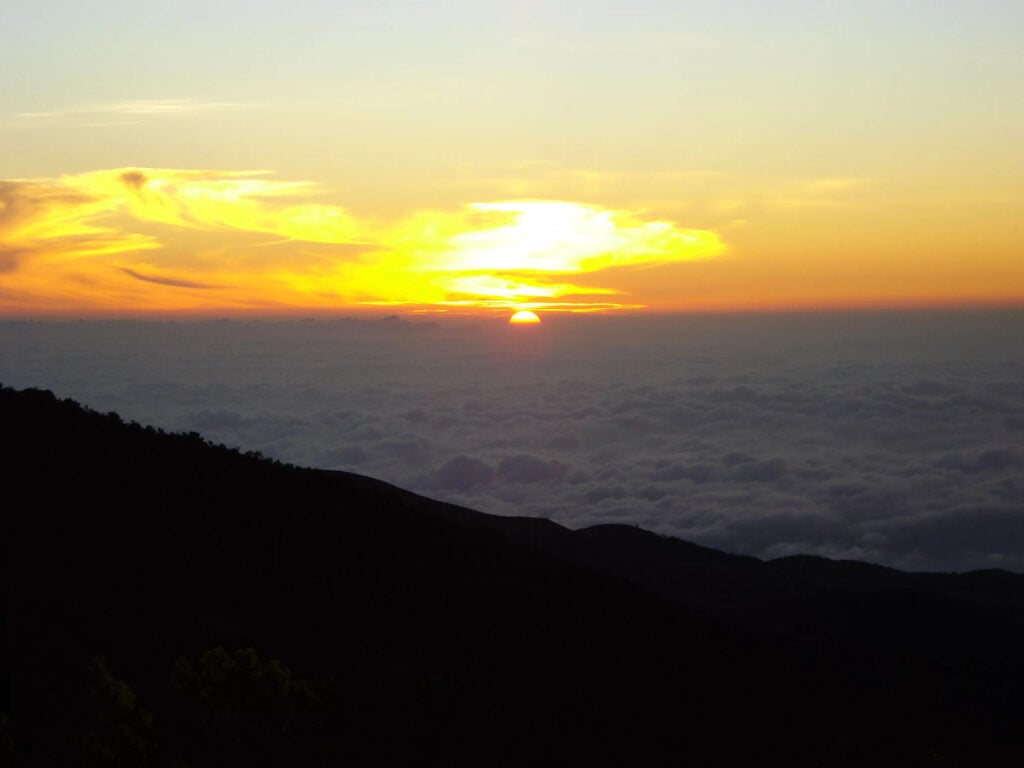
Standing on Uhuru Peak at sunrise, looking down over the vast African continent below, is a truly life-changing moment. It is a grueling, emotional, and unforgettable week on the trail, but the reward at the top is worth every single step.
If you want to see more of my trip then watch this video……


Hi Paul,
Just stumbled upon this post! Enjoyed seeing your video! I climbed Kili back in 2009. One of the most beautiful experiences of my life! Really tough though. I’ve been writing about it on my blog over the last few weeks and I felt like I was back there!
You look like you had more fun though! I didn’t have a group! But it was amazing!
Helen
Hi Helen, thank you. Yes it is a magical place isn’t it? 🙂
Truly enjoyed your little video and all the photos! I guess we all have that one hiking experience that will forever give us that bug. Mine def was hiking Patagonia for 5 days.
WAOUUUUUUUUUUUUUUUH c’est SUBLISSIME, il faut que je dise,j’aime beaucoup la photo et tout ce qui est paysage divers, les animaux, la nature en somme, je craque ! 😉
I love it! Climbing Mt Kilimanjaro rests a top of my bucket list – as I’m sure it does on a lot of people’s lists!
Awesome! We are definitely planning to climb Kilimanjaro in the near future!!!
Wonderful place!
Hey congratulations for the new blog!! Awesome first post …Good wishes for the future, hope to see more of these coming in!! Cheers…
Such a mesmerizing photo slideshow… I really regreted not climbing the Kilimanjaro when I was volunteering in Tanzania, money was my main issue but I guess I was scared too. Now I've promised myself the next time I'm back there, I'll make it a point to climb the Roof of Africa, wish me luck! 🙂
Wow, impressive and captivating Paul. Thanks for sharing your visual memory from such an adventure all the way up through the Kili. I agree, photographs never make up for the feeling of 'being there' but I can imagine the rewards and satisfaction you may feel.
Thanks again.
Hi Paul,You always take me on a little adventure. How long did it take you to complete the adventure? I love all the smiling that went on on the journey. You make the world seem like such a beautiful place. Filling it with your wonderful ideas and pictures. Thanks for the post,Lanette
Amazing! Beautiful slide-show. My husband did this same climb once. Impressive.
x Joyce
Fabulous Paul. I just have to do that trip soon.
Thanks so so much for the kind words and feedback.
Gina/Dian good point. I am seeking out code for email feed but at present I have the RSS feed up and running top right.
Thanks bunches friends
I love your Blog Sir Paul… Same like Gina.. Can we subcribe via email ? :)).. Congratz and happy hiking ! got to go back to work …
Well, it’s about time!! 😉 So glad to see your moving and inspiring blog. I watched the slide show twice already! It looks like a phenomenal experience. I’m thrilled you were able to do it and I’m excited to be on board for Mera. Thank you for sharing and for your inspiration! Cheers and congrats! Gina
P.S. Can we subscribe via email?
What a beautiful blog, Paul. Congratulations!!! True, photographs can’t make up for the feeling, but one gets a pretty good idea of what it must have felt like over there. Looking forward to your next posts. Happy hiking! 🙂
Caro
where to next paul? great collection of pics!
Hi Paul,
Now that you have stood on the roof of Africa, only the sky is the limit.
Thanks for a great read with great pictures – and all the best for your next projects.
To infinity and beyond!
Michael (a fellow hiker)
Wow. Congratulations Paul!
Sir Paul, just wanted to stop by and thank you for providing a window through which we can experience the many wonders of this world. All the best to you 🙂
Hi Paul,
This looks amazing, I have to do it. I need to start samll and work my way up I know but I will keep looking at this to inspire me Tracey T x
Paul,
Great!! My wife and I plan to hike Kilimanjaro together one day. It looks beautiful!!.
robin
Wahoo! Congrats on your new blog, Paul. I absolutely loved reading/seeing this, It brought back many memories of my own Kili climb!
As always, Thank you for sharing – You Rock!!
Hi Paul! Great first post! Congrats on the blog! ! I’m looking forward to your posts & pics of the "hownds" !! 🙂
Thanks so much kind friends. It is because of great people like you I can learn to be able to share in this way.
Paul
Congratulations on your new blog Paul, it’s going to be great fun joining you on your adventures with your fine words and fantastic images.
Good luck
Tony
Paul,
Congratulations on the launch of this blog!!! I’m so happy for you and so proud to call you my friend. You are wonderful and wow – what a great writer!!! Thank you for sharing this with us all! It’s very inspirational!!
Diana