There are places that feel like a single, perfectly preserved photograph of a moment in time. And then there is Shugborough.
To arrive here is to step not into a static picture, but into a sprawling, living novel, its chapters spanning centuries of ambition, adventure, tragedy, and glamour.
It’s a place that was once described as a ‘perfect paradise’, and as I followed the brown signs through the gentle Staffordshire countryside, leaving the M6 a distant memory, I felt a palpable sense of transition.
The modern world recedes, and you are funnelled through the grand Lichfield Lodges into a carefully managed landscape, a 900-acre world that was built to impress and enchant.
My first real view of the estate, from the new visitor car park, was not of the house itself, but of the sweeping parkland punctuated by a magnificent, classical arch standing proud against the skyline. It’s an immediate declaration of intent.
You have not just arrived at a stately home; you have entered an Arcadia, a landscape meticulously crafted to tell a story.

This careful choreography of a visitor’s arrival is nothing new here. The new, safer one-way system and welcome building are simply the 21st-century continuation of a tradition started by the estate’s visionary creator, who once moved an entire village to perfect his view.
From the very first step, Shugborough makes it clear that it is a rare and precious thing: a complete working historic estate, where the great house, the servants’ quarters, the model farm, and the glorious gardens all survive intact, each waiting to share its part of the story.

The Brothers Who Built a World: A Tale of a Sailor and a Scholar
The story of Shugborough as we see it today is, fundamentally, the story of two brothers. The Anson family had owned the land since 1624, and the core of the mansion was built in 1693, but it was the vision and fortune of Thomas and George Anson in the 18th century that transformed it from a modest country house into a stage for Britain’s burgeoning global power.
The younger brother, George Anson, was the man of action. Born in 1697, he went to sea at 14 and forged a formidable career in the Royal Navy.
In 1740, at the outset of the wonderfully named War of Jenkins’ Ear, Commodore Anson was given a daunting mission: to sail a squadron of six poorly equipped vessels around the world to harass Spain’s colonial empire in the Pacific.
The voyage was an epic of endurance and disaster. Battered by storms rounding Cape Horn, his fleet was scattered, his ships lost, and his crews decimated by scurvy. Of the nearly 2,000 men who set out, more than half would perish. Yet Anson persevered, sharing the hardships with his men and earning their fierce loyalty.
His fortunes turned spectacularly in June 1743. Lying in wait off the Philippines with his one remaining ship, the HMS Centurion, he intercepted and captured the legendary Spanish treasure galleon, the Nuestra Señora de Covadonga.
The prize was staggering. He returned to England in 1744 a national hero, his ship laden with South American silver worth around £400,000 at the time—a colossal fortune.

The treasure was paraded through the streets of London in 32 wagons, cementing his fame and providing the financial bedrock for everything Shugborough would become.
While George was battling tempests and the Spanish fleet, his elder brother Thomas was cultivating a life of the mind.
A man of “uncommonly cultivated” taste, Thomas (1695-1773) was a founding member of the influential Society of Dilettanti, a group of noblemen dedicated to the study of classical art and architecture.
He embarked on his own Grand Tour of Europe, collecting art and ideas. He had inherited the estate in 1720 and began its transformation, but it was George’s prize money, bequeathed to Thomas when the admiral died childless in 1762, that allowed his Arcadian dreams to be fully realised.
The story of Shugborough is, therefore, a physical manifestation of Britain’s 18th-century global expansion. The wealth that funded this idyllic paradise was born from imperial conflict and a global trade network.
Recent scholarship has revealed the Anson family’s deep connections to this wider Atlantic economy, in which slave labour was a crucial component. George Anson owned more than 12,000 acres in the Carolinas, and the Charleston suburb of Ansonborough still bears his name.
The classical elegance and exotic follies that dot the landscape are, in part, built on the profits of a complex and often brutal global system. To walk through Shugborough is to walk through a microcosm of empire, where the spoils of war, the profits of colonial land, the taste of classical Europe, and the exoticism of the Far East all converge in the heart of the English countryside.
A Wander Through an 18th-Century Mind: The Monuments of the Parkland
Setting out from the house, I felt as though I was taking a stroll through Thomas Anson’s imagination. The 900 acres of parkland became his canvas, and he filled it with a collection of follies and monuments that were ground-breaking for their time, positioning Shugborough at the forefront of new architectural trends.
Each structure is not merely decorative; it is a chapter in the Anson family’s autobiography, a statement of their passions, travels, and relationships.
Echoes of Athens: The Greek Revival
My walk first took me towards the magnificent Triumphal Arch. Designed around 1761 by James ‘Athenian’ Stuart, a friend of Thomas’s, it is a direct copy of the Arch of Hadrian in Athens.

Stuart was a pioneer of the Greek Revival, and this was one of the first such structures in the country. Its purpose, however, was transformed by personal tragedy. When Admiral George Anson died in 1762, Thomas repurposed the arch as a grand memorial to his beloved brother and his wife, Elizabeth.
The symbolism is incredibly moving: a bust of George, carved by Peter Scheemakers, faces towards the hall he helped to create, while a bust of Elizabeth faces towards the nearby village of Colwich, where they are both buried.
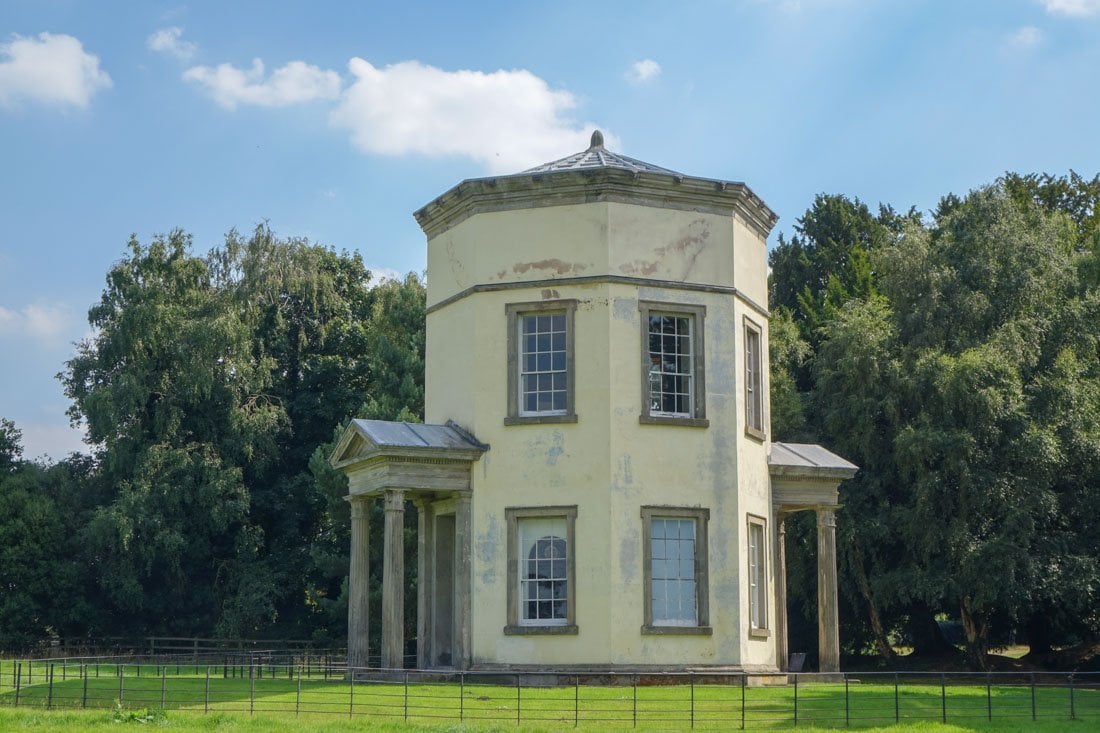
Further on, I came across the Tower of the Winds, another Stuart creation from around 1765. An elegant, octagonal building, it is based on the Horologium of Andronikos in Athens.
Originally, it stood on an island in an ornamental lake, a perfect classical temple reflected in the water. Later, it was converted into an ornamental dairy for Lady Anson, and rumour has it the 1st Earl of Lichfield used its upper room as a private gambling den—a delightful fall from classical grace.
A Whisper of the Orient: Chinoiserie
In a quiet corner of the pleasure grounds, I found a building that seemed to have been transported from another continent entirely. The Chinese House, completed in 1747, is a jewel box of a building and one of the earliest and most authentic examples of Chinoiserie in England.
Its design is no fantasy; it was based on original sketches of garden architecture in Canton (now Guangzhou), drawn by Sir Percy Brett, one of Admiral Anson’s officers during his stay there in 1742.

It is the most direct and tangible link between George’s perilous voyage and the aesthetic of his brother’s parkland.
The Unsolved Enigma: The Shepherd’s Monument
Of all the monuments, one holds a special, mysterious allure. Tucked away in a grove, the Shepherd’s Monument (c. 1748-56) has baffled codebreakers and historians for over 250 years. It features a beautifully carved marble relief by Peter Scheemakers, a mirror image of Nicolas Poussin’s famous painting, The Shepherds of Arcadia.

But it is the inscription carved beneath it that has captured so many imaginations, including those of Charles Darwin and Charles Dickens, both of whom failed to solve it. Between the letters D and M is a cryptic sequence of eight letters:
O U O S V A V V.
What could it mean? The theories are as romantic and varied as the parkland itself. Some believe it is a Latin acrostic, a secret message of love from a widower to his wife: Optimae Uxoris Optimae Sororis Viduus Amantissimus Vovit Virtutibus (‘Best of wives, Best of sisters, a most devoted Widower dedicates this to your virtues’).
Others suggest a biblical reference:
Oro Ut Omnes Sequantur Viam Ad Veram Vitam (‘I pray that all may follow the Way to True Life’). Most famously, the mystery was woven into the fabric of pseudohistorical thrillers like
The Holy Blood and the Holy Grail and The Da Vinci Code, which proposed it as a clue left by the Priory of Sion pointing to the location of the Holy Grail. Standing before it, feeling the cool stone, it’s impossible not to get swept up in the romance of the puzzle.
As I continued my walk, I passed other personal touches, like the charming Cat Monument, thought to commemorate either George’s ship’s cat who circumnavigated the globe with him, or Thomas’s own beloved Persian cat, Kouli Khan.

Each structure confirmed that this landscape was more than just a garden; it was the Anson brothers’ life story, written in stone and water.
Unlocking the Mansion: From State Secrets to Celebrity Snapshots
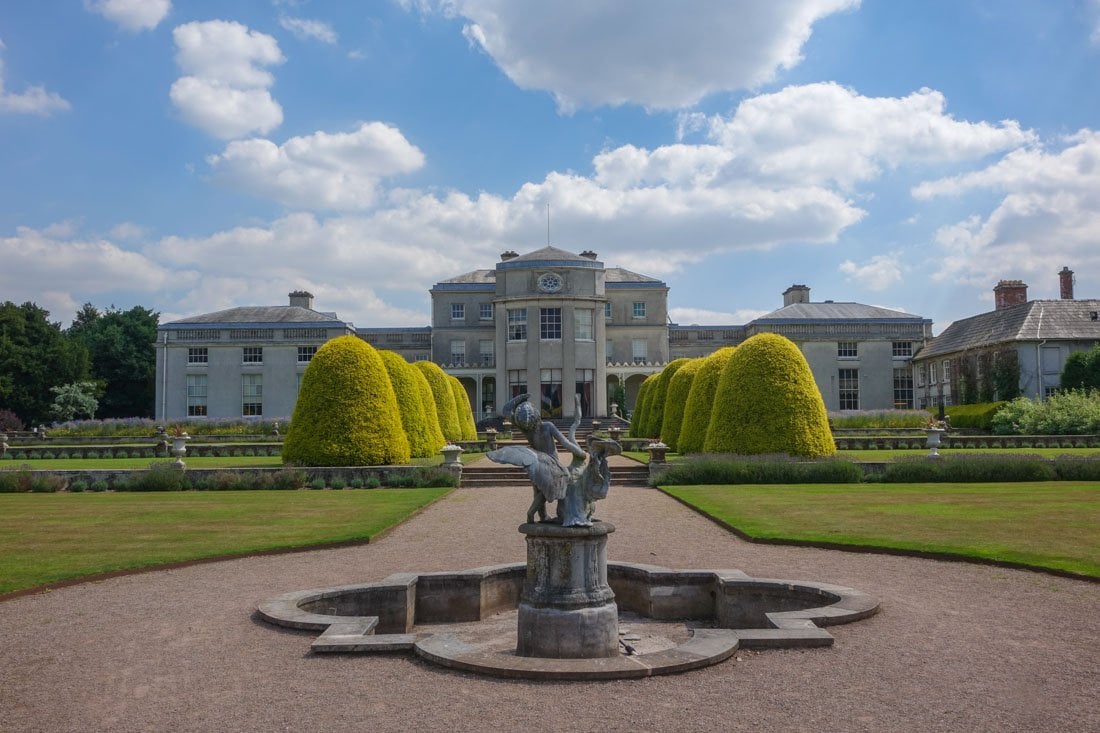
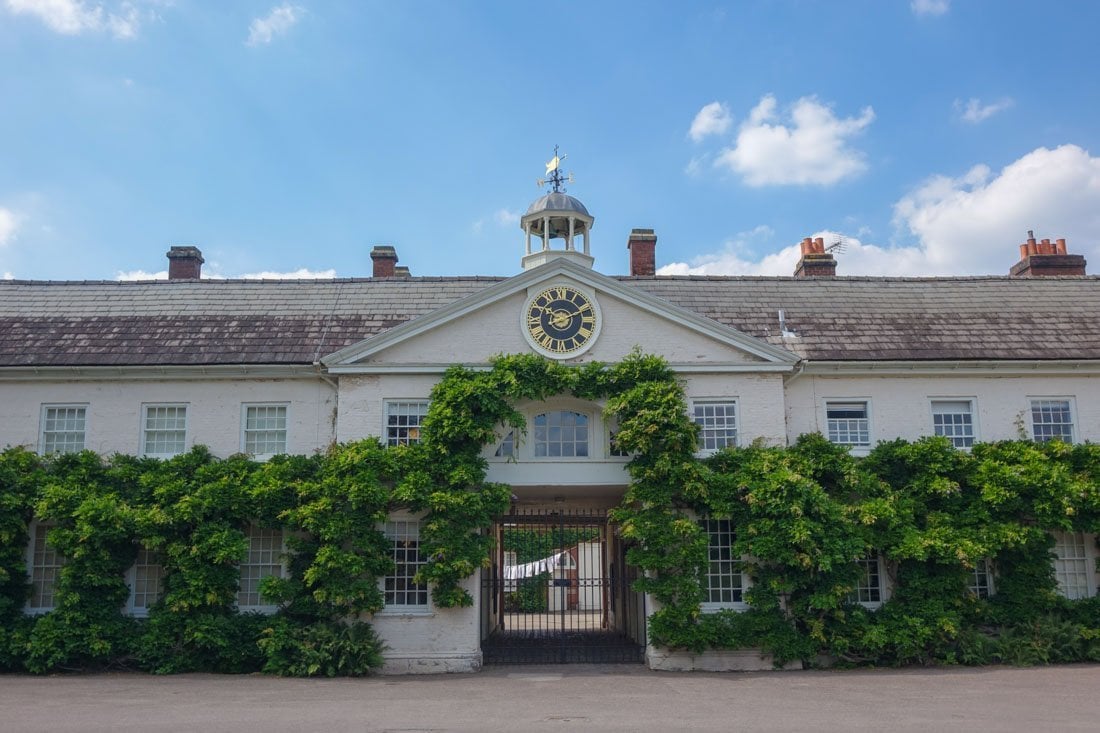
The walk from the parkland to the mansion is an experience in itself, a kilometre-long approach that builds anticipation before you arrive at the grand east front, with its magnificent portico of ten Ionic pillars—a later addition by the architect Samuel Wyatt that gives the house its commanding presence.
Stepping inside is like stepping into a time machine, with the dial set to spin through three distinct eras of British history, all contained within these walls.
The Georgian Heart: Upstairs
The tour through the state rooms reveals the pinnacle of 18th-century aristocratic taste. You move in a carefully orchestrated anti-clockwise route, from the grand Entrance Hall into a series of rooms filled with treasures from around the globe.
The Saloon is a vast, elegant space overlooking the formal gardens and the River Sow, its stunning Rococo plasterwork ceiling a testament to the Italian craftsmen Thomas Anson employed.
The collections tell the story of the family’s global encounters. In the Verandah Room, I marvelled at the exquisite 208-piece Chinese porcelain dinner service, commissioned to commemorate George’s circumnavigation and given to him in gratitude by Canton merchants after his crew helped fight a devastating fire in the city.
In the Anson Room, pride of place is given to the very sword surrendered to George by the captain of the captured Spanish galleon.
The house has also played host to history. In 1832, a 13-year-old Princess Victoria stayed in the State Bedroom Suite with her mother. It is said she brought her own bed, as was her custom, but a sketch she gave the family as a thank-you gift still hangs on the wall.
The Unseen Engine: Below Stairs
A short walk from the opulent state rooms takes you into another world entirely. Shugborough’s Servants’ Quarters are among the most complete in the country, and the change in atmosphere is immediate.
The soft carpets give way to hard stone flags, the delicate plasterwork to whitewashed brick, and the genteel quiet to the imagined clang and clatter of a domestic engine that never stopped.
Here, you get a visceral sense of the rigid hierarchy that underpinned aristocratic life. Placards at the great wooden table in the Servants’ Hall detail the roles and wages in 1871: at the top, the Butler, John Crisp, earning £100 a year; at the bottom, the 19-year-old Scullerymaid, Sarah Willis, earning just £12.
I explored the enormous 18th-century kitchen, its walls lined with a vast collection of copper pots and pans, all bearing the Lichfield family crest.
I saw the laundry, split into wet and dry rooms, and the brewhouse, a reminder that servants were often given a daily allowance of up to a gallon of beer as part of their wages—a necessary source of calories for a life of hard physical labour.
A Flash of the 20th Century: The Lichfield Apartments
The final temporal shift in the mansion is perhaps the most surprising. A staircase leads up to the private apartments of Patrick Lichfield, the 5th Earl, who lived here until his death in 2005.
A world-renowned fashion and society photographer, he inherited the title in 1960 and, facing enormous death duties, gave the estate to the National Trust, leasing back this wing as his family home.
Suddenly, you are in the Swinging Sixties and beyond. The rooms are preserved as he left them—his spectacles resting on a table, his dog’s toys by a chair, the cocktail bar fully stocked.
It was from this base that Lichfield photographed the world’s most famous faces, from royalty to rock stars. The stories are legendary.
The Rolling Stones came to stay and, finding the dining room without a table, ate their dinner sitting on the floor. An H was often mown into the lawn to guide in the helicopters of his glamorous guests.
One of his most iconic photographs, of a slightly nervous-looking Mick Jagger clutching a cockerel from the estate’s farm, was taken just outside and is wryly titled ‘Little Red Rooster’.
To walk from a room where a young queen slept, through the kitchens that fuelled a Georgian dynasty, and into the apartment where a rock star partied, is to experience a unique and powerful compression of British history.
The Enduring Landscape: From Rare Breeds to Future Gardens
Back outside, my attention turned to the living, breathing elements of the estate, a reminder that Shugborough is not just a museum but a place of continuous cultivation and innovation.
The gardens are a delight, changing with the seasons. I strolled along the formal terraces that run down to the River Sow, their neat designs contrasting with the wilder parkland beyond.

The historic Walled Garden, first built in 1805, continues its legacy as a centre of horticultural excellence, its beds filled with seasonal vegetables and flowers that supply the estate’s tearooms.
It is here that Shugborough’s tradition of looking forward is most vibrantly alive. The estate is currently developing ‘Arcadia: Every Garden Counts’, a pioneering Forest Garden in the historic slip gardens.
Due to open in 2026, this project is a direct nod to Thomas Anson’s original ambition to create his own Arcadia. It will feature 80,000 plants working in symbiosis, designed to combat climate change and inspire visitors.
It will even feature a Toona Sinensis tree, whose leaves are said to taste remarkably like beef and onion crisps—a wonderfully quirky continuation of Shugborough’s innovative spirit.
From the gardens, I wandered through the Arboretum, a peaceful sanctuary that was once Patrick Lichfield’s private garden.
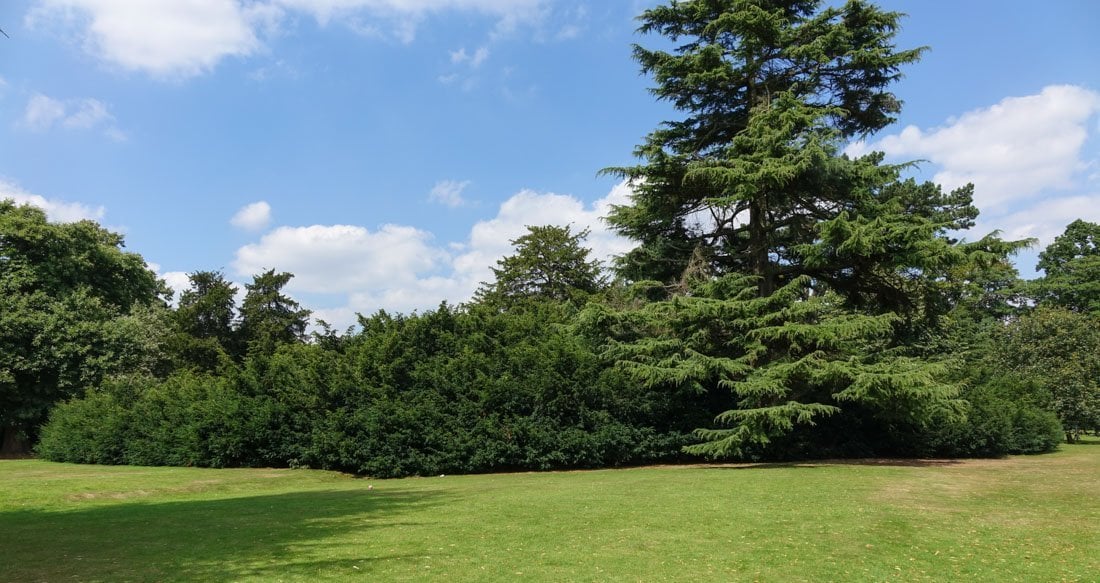
It contains over 150 oak trees, all grown from acorns he collected during a lifetime of global travel, a living map of his own modern-day circumnavigation.
My final stop was Park Farm. Built in 1806, it was a model of agricultural reform in its day, and it remains a working farm, home to historic and rare breeds that graze the parkland.

I was greeted by the sight of magnificent Longhorn cattle, their gentle nature belying their formidable horns, and flocks of Southdown sheep.
But the rarest residents are the Bagot goats. With fewer than 100 breeding females left in the world, this herd is of critical importance. They are so precious, in fact, that they don’t belong to the estate but are on loan from the Rare Breeds Survival Trust, entrusted to Shugborough for their excellent care.

On special event days, the farm comes alive with costumed characters demonstrating historic farming techniques in the dairy and the working watermill, a wonderful experience for families.
Plan Your Own Shugborough Adventure: A Practical Guide
A day at Shugborough can be as relaxed or as active as you wish. You could spend hours simply absorbing the history within the mansion walls, or you could spend the entire day exploring the 900 acres of grounds.
To help you plan your visit, here is all the practical information you’ll need.
Getting There
Shugborough Estate is located at Milford, near Stafford, postcode ST17 0UP.
It is well signposted, located 6 miles east of Stafford on the A513, and is easily accessible from junction 13 of the M6 motorway. Entry is via the Milford Gates only, which operates a one-way system for vehicles.
Parking is available in the main car park. The nearest train station is 5 miles away, making public transport a less convenient option.
Opening Times & Prices (2025)
Opening times can vary, so it is always best to check the National Trust website before you travel. The table below provides a guide based on information for September 2025. Please note that last admission to the Mansion, Lichfield Apartments, and Servants’ Quarters is 30 minutes before closing.
| Attraction | Opening Time | Closing Time |
| House | 11:00 | 16:30 |
| Lichfield Apartments | 11:00 | 16:30 |
| Servants’ Quarters | 11:00 | 16:30 |
| Garden | 09:00 | 17:00 |
| Parkland | 09:00 | 17:00 |
| Walled Garden | 09:00 | 17:00 |
| Mansion Tea-room | 10:00 | 16:00 |
| Park Farm Café | 09:30 | 16:00 |
| Shop | 10:00 | 16:00 |
Ticket prices for 2025 are structured in two tiers: ‘Whole Property’ or ‘Park and Gardens only’. Prices are listed with and without a voluntary Gift Aid donation. Carers are admitted free of charge.
Whole Property
- Adult (18+): £18.70 (With Gift Aid) / £17.00 (Without Gift Aid)
- Child (5-17): £9.35 (With Gift Aid) / £8.50 (Without Gift Aid)
- Family (2 Adults, up to 3 children): £46.75 (With Gift Aid) / £42.50 (Without Gift Aid)
- Family (1 Adult, up to 3 children): £28.05 (With Gift Aid) / £25.50 (Without Gift Aid)
Park and Gardens
- Adult (18+): £11.50 (With Gift Aid) / £10.00 (Without Gift Aid)
- Child (5-17): £5.50 (With Gift Aid) / £5.00 (Without Gift Aid)
- Family (2 Adults, up to 3 children): £27.50 (With Gift Aid) / £25.00 (Without Gift Aid)
- Family (1 Adult, up to 3 children): £16.50 (With Gift Aid) / £15.00 (Without Gift Aid)
Note: Under 5s are free. Pre-booking is not required unless you are part of a large organised group.
Accessibility
Shugborough is commendable for its accessibility. There are 18 designated disabled parking spaces near the visitor reception.
A free mobility shuttle service runs from the reception to the mansion (a distance of about 1km) and one of the vehicles is wheelchair accessible.
For exploring the wider grounds, all-terrain mobility scooters (Trampers) can be booked in advance at no extra cost.
Access to the mansion for wheelchair users is via a stair-climber for the 7 steps at the entrance; however, this cannot accommodate motorised wheelchairs. The formal gardens, Park Farm, and Walled Garden are largely accessible, with paths of rolled stone or gravel.
The estate also provides a dedicated quiet room, ‘The Zen Den’, for visitors who may need a calming space.
Facilities and Walks
The estate has two excellent cafés: the Mansion Tea-room for lunches and cream teas, and the Park Farm Café for lighter bites.
There are also several shops, including a plant centre, mansion shop, and a lovely second-hand bookshop.
For walkers, beyond the immediate estate paths, there are longer waymarked trails. The Shugborough Hall and Sherbrook Valley circular walk is a popular 8-mile (12.8 km) route that takes you through the estate and into the beautiful scenery of Cannock Chase.
Final Reflections: More Than a House, A Complete Story
Leaving Shugborough, I felt I had walked through not just one story, but a whole library of them. It is a place of fascinating contradictions: a tranquil English paradise funded by a dramatic high-seas adventure; a showcase of classical taste that hides a cryptic puzzle; a grand Georgian mansion that also served as the backdrop for 20th-century celebrity culture.
It is this completeness, this ability to journey through so many different layers of history, art, and nature in a single day, that makes Shugborough utterly unique. You arrive expecting a stately home, and you leave having experienced a small, perfectly preserved world.