

There is no sight in the British countryside quite like a bluebell wood in full bloom. It is a sensory immersion—that unique, heady scent that hangs in the air and the visual shock of that deep, vibrant blue carpeting the forest floor as far as the eye can see.
For many of us, the Bluebell (Hyacinthoides non-scripta) is the true finale of spring. It marks the moment when the ancient woodlands are at their absolute peak, just before the canopy closes and summer takes hold.

But while we all love them, there is a silent battle going on in our woods. The native bluebell is under threat, and learning to spot the difference between the “real thing” and the imposter is key to understanding our landscape.
Editor’s Note: This article is part of our Ultimate Guide to UK Spring Wildflowers, creating a complete timeline of the British blooming season.
Native vs. Spanish: The Identity Parade
You might think a bluebell is a bluebell, but take a closer look next time you are out. You might be looking at the invasive Spanish Bluebell (Hyacinthoides hispanica), or a hybrid of the two.
The Spanish variety was introduced by Victorians as a garden plant. It is tougher, more vigorous, and sadly, it cross-breeds with our delicate native species, diluting the gene pool.

Here is how to tell if you are in a truly “wild” bluebell wood:
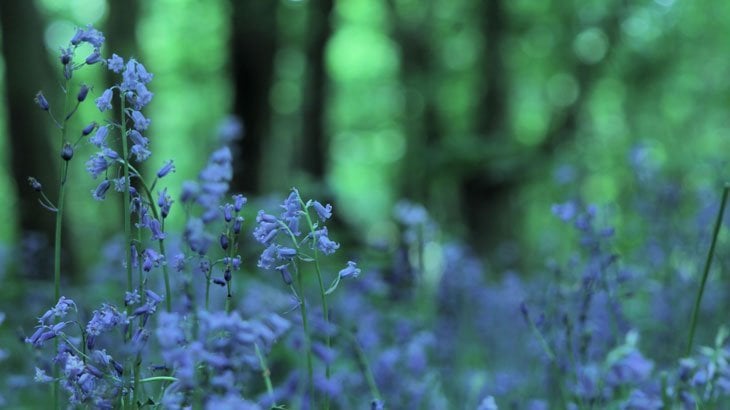
The Droop: The native bluebell is humble; the flower stem droops or nods distinctly to one side. The Spanish bluebell stands stiff and upright.
The Pollen: Look inside the bell. If the pollen is creamy-white, it’s native. If the pollen is blue or pale green, it’s Spanish (or a hybrid).
The Scent: If you walk into a wood and are hit by a sweet, strong perfume, you are likely among natives. Spanish bluebells have little to no scent.
The Curl: The petals of the native flower curl back beautifully at the tips.

A Sticky History: Arrows and Ruffs
We tend to think of bluebells purely as decorative, but our ancestors found some incredibly practical uses for them—mostly involving glue.
The bulbs of the bluebell are packed with a sticky, mucilaginous substance. In the Bronze Age, it is believed that fletchers used this slime to glue feathers onto the shafts of their arrows.

Fast forward to Elizabethan times, and the bluebell found its way into high fashion.
The juice from the bulbs was used to make the starch that stiffened those elaborate, giant ruff collars seen in portraits of the era.
It was also used by bookbinders to glue the pages into the spines of books, as the sap had the added benefit of repelling silverfish and insects.

Folklore: The Fairy Bell
It is impossible to walk through a bluebell wood without feeling a little bit of magic, so it’s no surprise they are heavily linked to fairy folklore.
It was said that the bells ring out to call the fairies to their gatherings. However, humans were warned never to try and hear this sound.
If you heard the bluebells ring, it was an omen that you would die before the year was out.

In some parts of the country, it was considered unlucky to walk through a patch of bluebells, as you might disturb the spells woven there.
Thankfully, we now know that the only thing you disturb by walking through them is the plant itself—they are incredibly sensitive to footfall, which is why we always stick to the path!
Where to See Them
The UK is home to up to half of the world’s population of bluebells, making this a globally unique habitat.
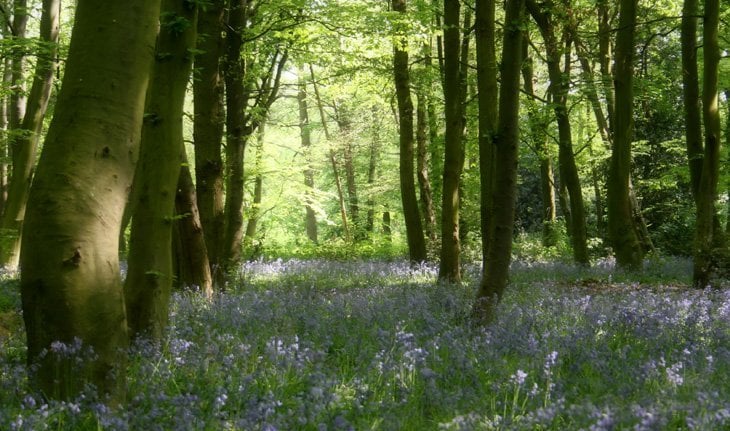
One of my absolute favourite spots to see them is Eartham Woods in West Sussex. If you catch it in late April or early May, the beech trees provide a cathedral-like canopy above a sea of blue that feels almost unearthly.
- Walk Idea: Check out our guide to the Eartham Woods and Nore Folly Walk for a route that takes you right through the best displays.

Part of the Spring Story
The Bluebell doesn’t appear in isolation. It is the final chapter of a story that begins in January/February. It follows the Snowdrop, the Lesser Celandine, and the Wood Anemone in the great race for the light.
To understand where the Bluebell fits into this timeline, and to see what other flowers you should be looking out for right now, check out our new Ultimate Guide to UK Spring Wildflowers.
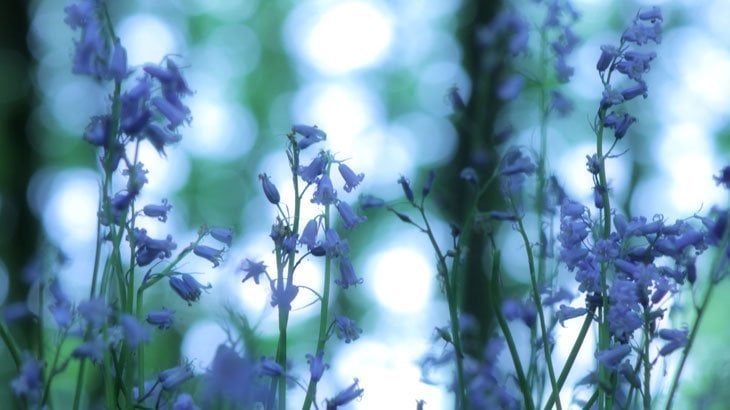
So, get out there while you can. The Bluebell season is fleeting—usually only a few weeks—and it is a spectacle you really don’t want to miss.




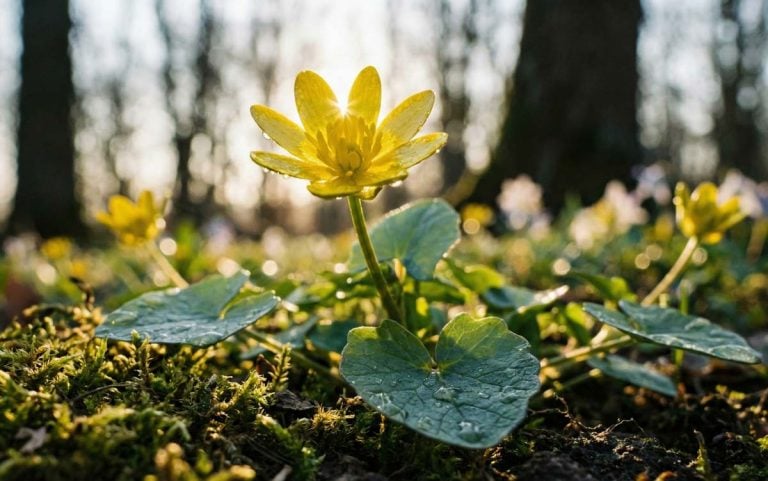

What absolutely beautiful photos. Lovely
(And I know taking decent photos of bluebell woods is much harder than it looks!)
Beautiful pictures! I love the filter on them, it makes them so whimsical and magical. If I ever make it to the UK in the Spring I will be sure to visit these woodlands.
cheers~Erin
Very informative. I’ll be on the lookout now. It’s not too far away.(Spring, that is)
Thank you! Glad you like the pictures – they’re quite magical in a woodland aren’t they? 🙂
Great photos and excellent use of depth of field on those close ups really enjoyed the photos
This is definitely magical and charming. Very pleasing in the eyes.
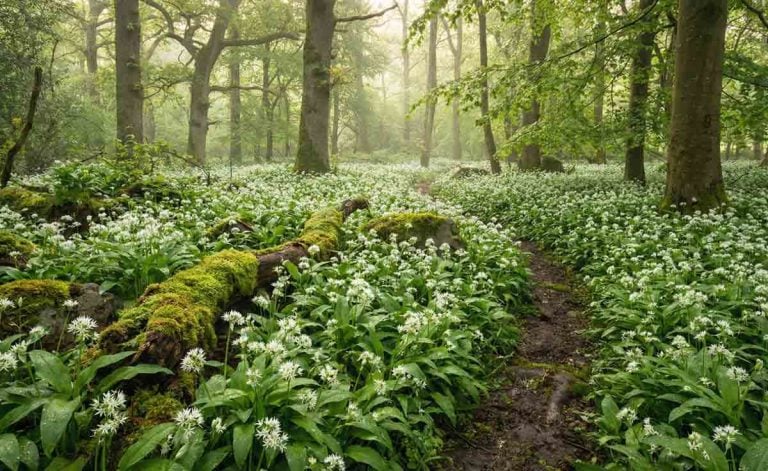
Beautiful pictures of the bluebells, we love walking through bluebell woods. We have some nice ones around where I live – we also love walking through a carpet of wild garlic.
I’ve always wanted to be in a bluebell wood during the perfect weather conditions……I’m hopeful it will still happen 🙂