

The Gambia is a paradise for bird watchers, with around 540 bird species officially logged. While it may not have the large mammal populations of East Africa, its compact size and rich ecosystems offer some of the most accessible and rewarding wildlife encounters on the continent.
This is especially true in the Makasutu Culture Forest, a place I visited where birds and baboons are the undisputed stars of the show.
Birders from all over the world come here, and it’s no surprise that UK TV presenter and keen birdwatcher Chris Packham has led groups here, describing it as “a little piece of paradise”.
The local guides are phenomenal. My guide could spot a bird, identify it, and tell me where to look before I’d even raised my binoculars! Or my camera. It’s this blend of incredible wildlife and local expertise that makes a visit unforgettable.
About Makasutu Culture Forest
Located near the town of Brikama, Makasutu is a private ecotourism reserve covering approximately 1,000 acres.
Its name is a Mandinka phrase meaning “holy forest,” a title that reflects its sacred status in local culture.
The forest is a stunning mosaic of five distinct ecosystems: dense palm and hardwood forest, mangrove-lined creeks, wetlands, and open savannah.
This diversity creates a haven for an incredible array of animals and plants, many of which are used in traditional medicine by the local community.
The country is part of the West Africa marine ecoregion, a globally important area for biodiversity.
The Famous Guinea Baboons: A Conservation Success Story
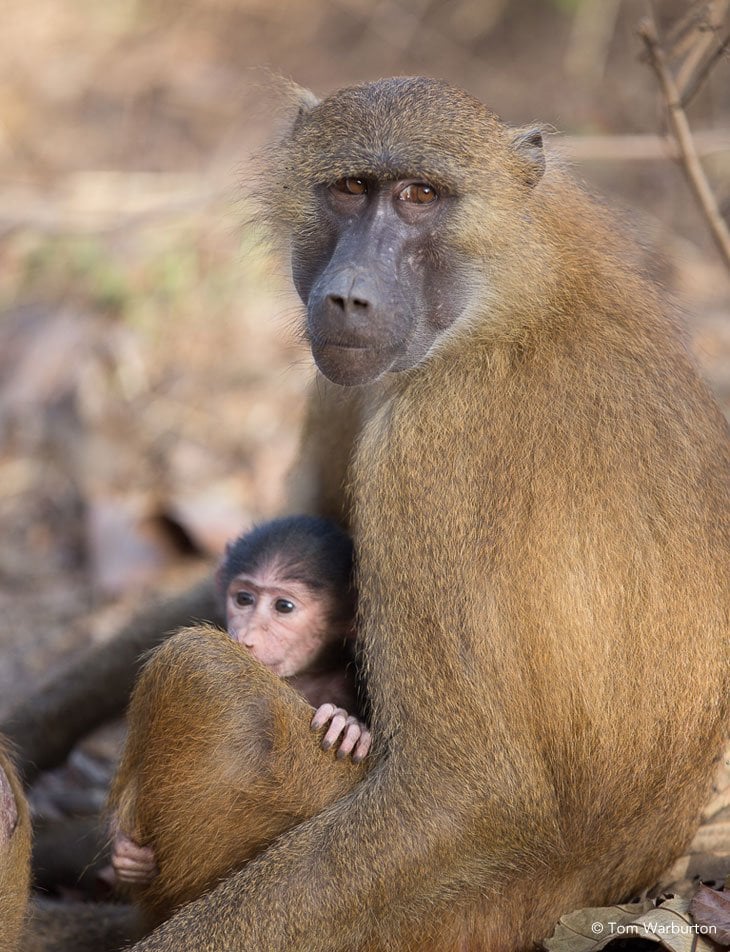
Gambia is a haven for Guinea Baboons, and in Makasutu, you can see them everywhere, walking through the forests and going about their daily lives.

But their presence here is a modern miracle. For decades, the baboons were absent from this area due to habitat loss.
Their return is a direct result of a successful 20-year reforestation project that brought the decimated forest back to life. Today, a thriving troop of around 200 baboons calls Makasutu home .
It was wonderful to see them thriving, with plenty of females carrying infants clinging to their stomachs.
These are Guinea baboons (Papio papio), the smallest of the five baboon species, and are classified as “near threatened” by the IUCN due to deforestation.
They are Old World Monkeys, which means they do not use their tails to grasp branches as New World Monkeys do. Watching them forage, groom, and interact was a highlight of my trip.
A Paradise for Birdwatching
For me, the birds of Makasutu were centre stage. The sheer variety is astounding, and even with my limited photography skills, I managed to capture a few of the larger, slower birds.
It is always a joy, photographing birds.
Professional bird photographers, you may want to look away now! These are the best I could do, but each one was a thrill to see.
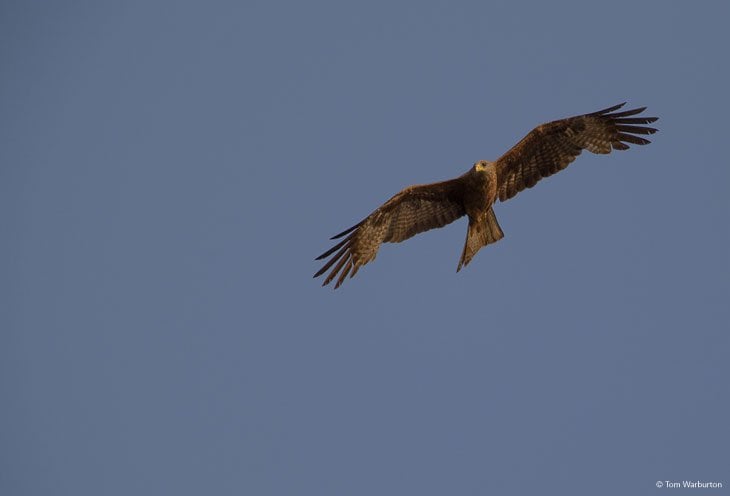
African Harrier Hawk
It was a delight to see this beautiful raptor, found only south of the Sahara.
It builds its nests high in the crowns of palm trees and has an unusual and fascinating feature: long, double-jointed knees. This unique adaptation helps it raid nests in tree cavities that other birds of prey simply cannot access.
Violet Turaco
A beautifully coloured bird that should be showing off, but they are incredibly shy.
I was thrilled to catch even a fleeting glimpse of one hiding among the leaves. They are more often heard than seen, but spotting their vibrant purple and yellow plumage is a real treat.

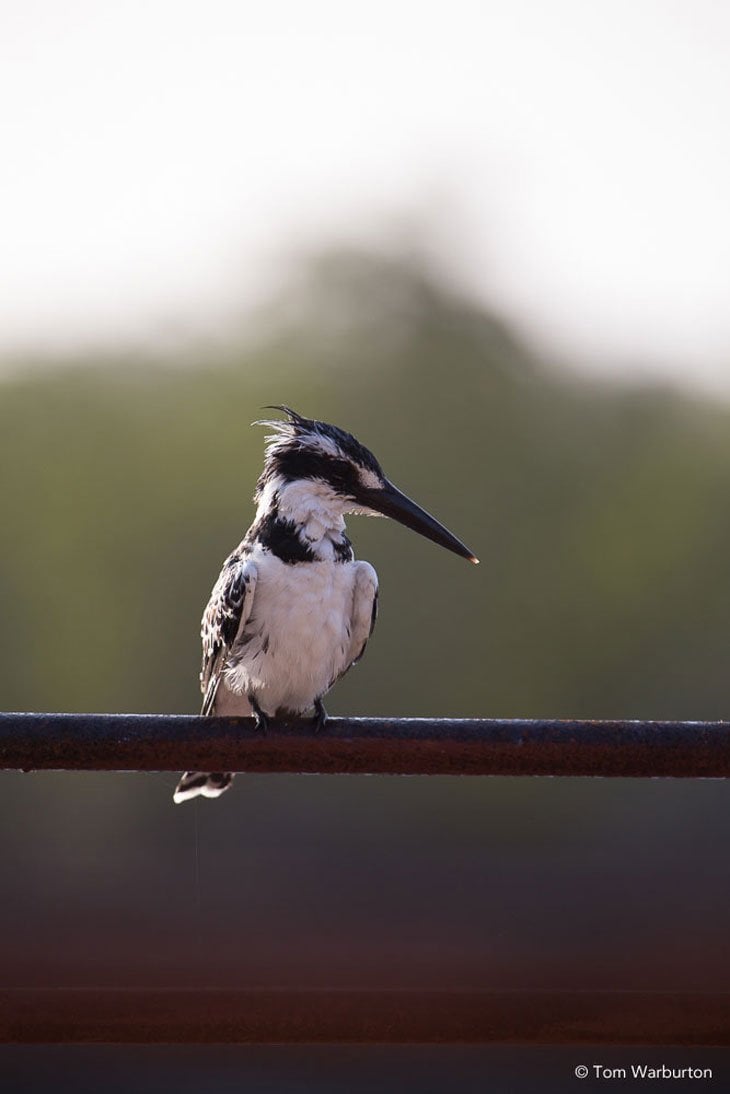
Pied Kingfisher
Native to both Africa and Asia, the Pied Kingfisher is a striking black and white bird.
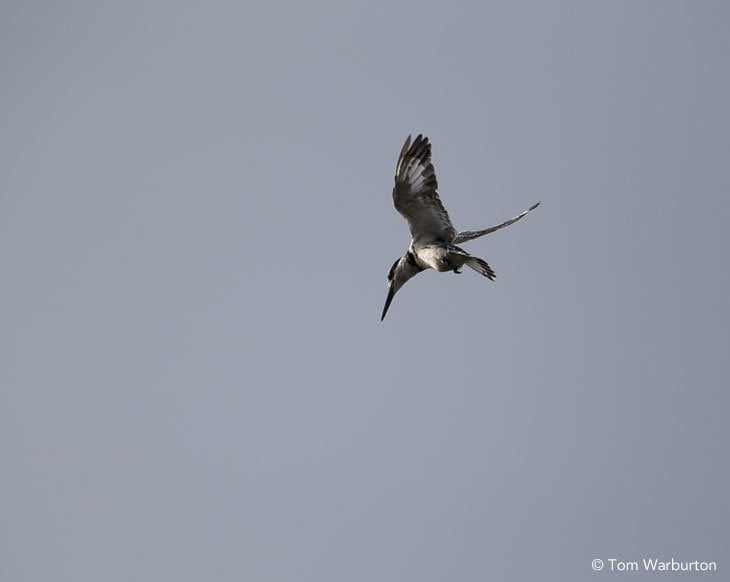
This is a stark contrast to the common Kingfisher in Britain, which is known for its bright blue feathers. Like all kingfishers, its habitat is by the river, and watching it hover before diving for fish is a spectacular sight.
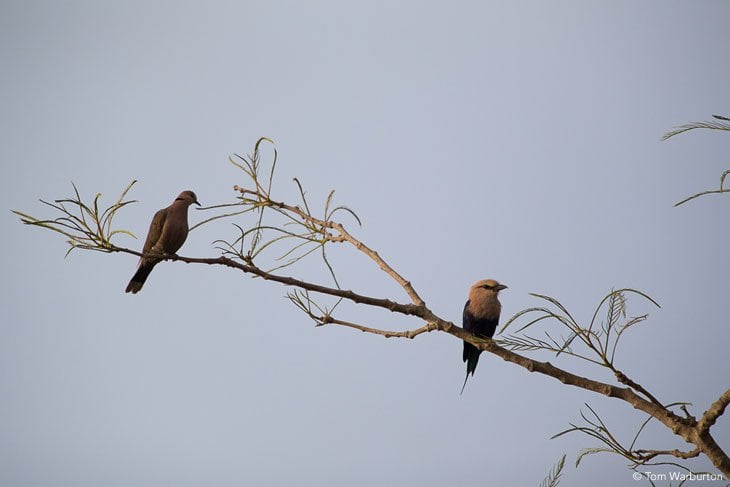
Beyond these, the forest is alive with the calls of countless other species. You can spot everything from hornbills and rollers to tiny, jewel-like sunbirds and bee-eaters.
Other Wildlife to Spot in the Forest
While baboons and birds are the main attractions, keep your eyes peeled for other residents.
The forest is home to troops of Green Monkeys and the endangered Red Colobus Monkey.
Monitor lizards are also a common sight, often seen basking in the sun near the water’s edge.
A guided walk or a quiet canoe trip along the mangrove-lined Bolong (a tributary of the River Gambia) offers the best chances to spot this wider array of wildlife .
Planning Your Visit to Makasutu Forest
A trip to Makasutu is easily arranged from the main coastal resorts and takes just under an hour by car.
I was staying local at the Mandina Lodges which was perfect.
Getting There: Most visitors arrive as part of an organized full-day tour, which typically includes transportation, a guide, lunch, and activities.
Activities: The most popular activities on offer include:
- Guided Forest Walks: Learn about the medicinal uses of local plants and trees .
- Canoe Trips: Take a peaceful journey in a traditional dugout canoe along the tributary to see wildlife in the mangroves .
- Bird Watching: Hire an expert local guide to help you spot the incredible diversity of birdlife.
Best Time to Visit: The dry season, from November to April, is generally the best time for wildlife viewing and is when migratory birds from Europe are present .
What to Pack:
- Comfortable walking shoes
- Lightweight clothing, a hat, and sunblock
- Insect repellent
- Binoculars for wildlife spotting
- Plenty of water
For a truly immersive experience beyond the forest, I highly recommend seeking out local cultural celebrations; I’ll never forget the energy and color of a traditional village Kumpo dance I was lucky enough to witness.

For official information on all of the country’s protected areas, you can visit The Gambia’s Department of Parks & Wildlife Management.
Frequently Asked Questions
My couple of days exploring this forest were absolutely remarkable. It is an amazing place to discover wildlife of all shapes and sizes.


