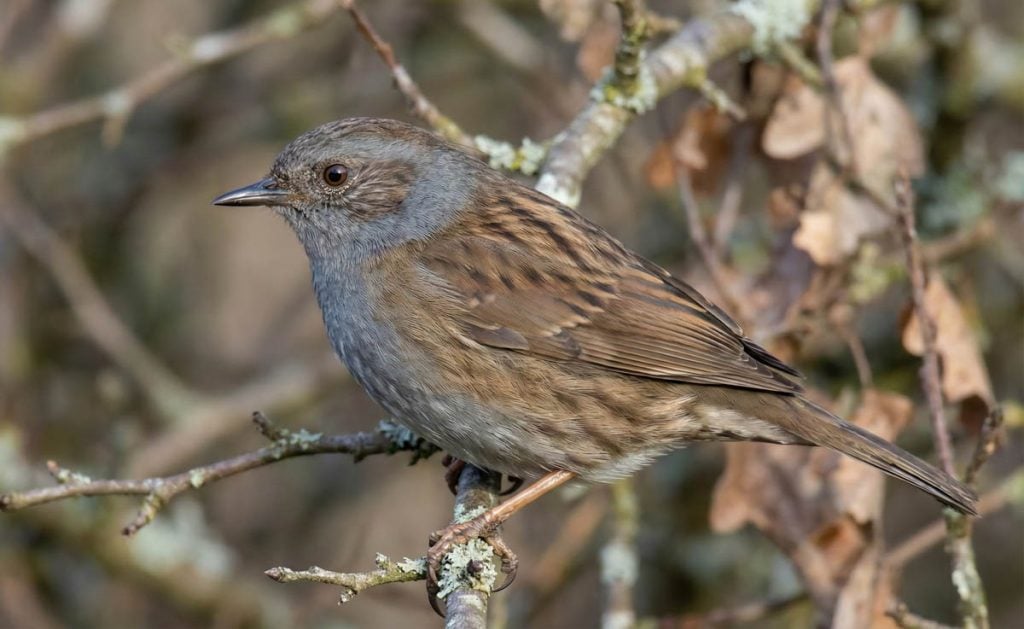
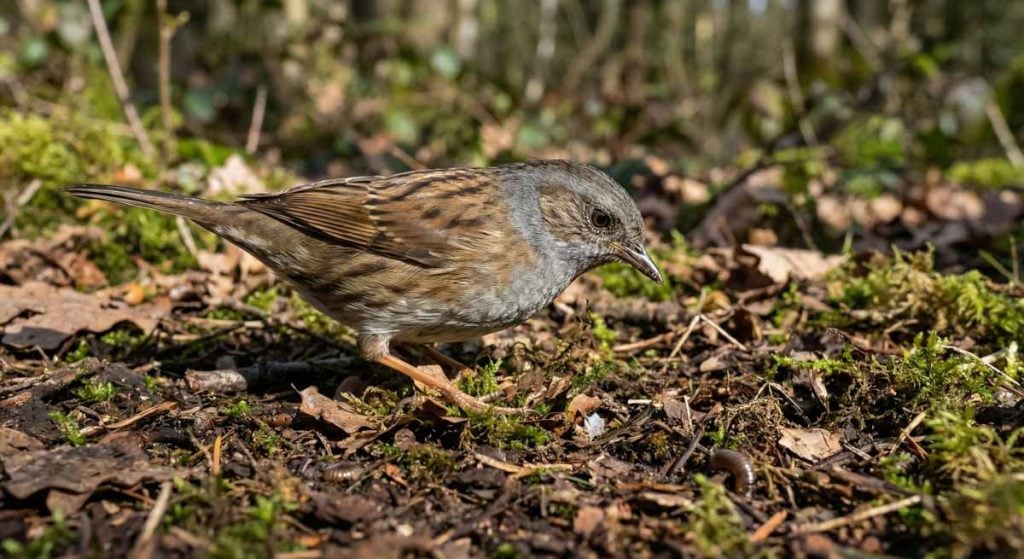
If you glance quickly at the shrubbery in your garden, you might miss him. He’s a small, streaky brown bird, shuffling nervously through the shadows of a rose bush or hopping along the patio like a clockwork mouse.
“Just another sparrow,” you might think.
But look closer. That little bird—the Dunnock (Prunella modularis)—is an impostor. He isn’t a sparrow at all.
And despite his drab, unassuming coat (his name literally comes from the Old English for “Little Brown One”), he is living a life of such high drama, betrayal, and romance that it makes a prime-time soap opera look tame.
For years, I overlooked them. But once you know the secret of the Dunnock, you will never look at that “boring brown bird” the same way again.
The Case of Mistaken Identity
First, let’s clear up the name. For generations, gardeners called this bird the Hedge Sparrow. It makes sense; they look like sparrows and they live in hedges.
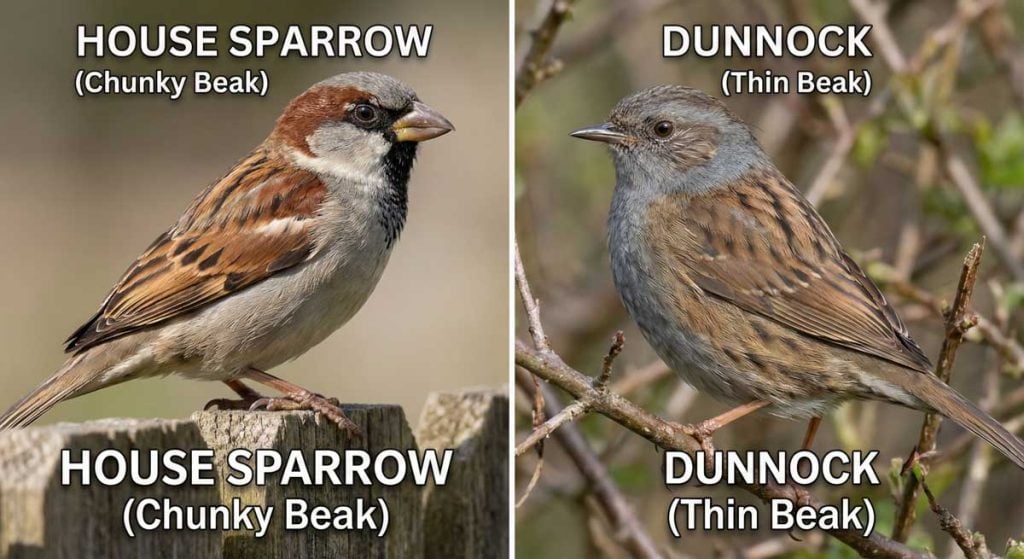
But they aren’t related. The House Sparrow is a bold, loud, seed-eating finch-cousin with a chunky beak designed for cracking grain.
The Dunnock is an Accentor—mostly insectivorous, with a fine, needle-like bill designed for picking tiny spiders and beetles out of the moss.
How to spot the difference:
- The Beak: If it’s chunky and triangular, it’s a Sparrow. If it’s thin and pointy like a pin, it’s a Dunnock.
- The Head: The Dunnock has a distinct slate-grey head and chest, contrasting with its brown wings.
- The Walk: Sparrows hop confidently. Dunnocks have a nervous, shuffling gait, crouching low to the ground and flicking their wings as they move.
Fifty Shades of Grey (Feathers)
The most fascinating thing about the Dunnock is its love life.
To the Victorian naturalists, the Dunnock was the model of humility and modesty. They were wrong. Modern DNA fingerprinting has revealed that the Dunnock has one of the most complex mating systems in the animal kingdom.
While many birds pair off in faithful couples (monogamy), the female Dunnock has a different strategy. She is Polyandrous—meaning she will often keep two males on the go at once.
Why? It’s pure survival. If she can convince two males that they are the father of her chicks, both males will work tirelessly to bring food to the nest. Two dads mean more food, which means her chicks are more likely to survive.
The “Wing-Waving” Dance
This leads to some intense garden drama. The dominant male (Alpha) spends his entire spring guarding the female, trying to chase away the rival male (Beta).
But when the Alpha’s back is turned, the female actively encourages the Beta male.
If you watch them in spring, you will see a strange ritual. The female crouches low, fluffs her feathers, and shivers her wings. This isn’t just a greeting; it’s a solicitation.
The male then performs a peculiar “cloaca-pecking” display. Before mating, he pecks at the female’s rear end.
This stimulates her to eject any sperm stored from the previous male she mated with. He essentially tries to “delete” his rival’s contribution before making his own.
It is a biological arms race happening right under your bird table!
The Cuckoo’s Victim
Perhaps because they are so busy with their own affairs, Dunnocks are surprisingly naive parents.
They are one of the favourite targets of the Cuckoo. Unlike Reed Warblers, who have learned to spot a Cuckoo egg and throw it out, Dunnocks seem unable to tell the difference.
They will dutifully feed a giant Cuckoo chick that is five times their size, even as it pushes their own eggs out of the nest.
It is heartbreaking to watch, but it is also a testament to their powerful parenting instinct.
The Sound of the Suburbs
Even if you don’t see them, you have definitely heard them.
The Dunnock’s song is a fast, rippling, high-pitched warble. It sounds a bit like a squeaky wheelbarrow wheel that needs oiling, or a Wren that is trying to hurry up. It is one of the few songs you’ll hear almost all year round, a cheerful, erratic burst of noise from the top of a hedge.
How to Help Them
Because they are ground feeders with thin beaks, Dunnocks struggle with standard hanging feeders. They can’t hang off a wired feeder like a Blue Tit.
- The Menu: They love Sunflower Hearts (seeds with the husks removed), mealworms, and finely chopped suet.
- The Method: They prefer to feed under cover. Scatter food on the ground beneath a bush or use a ground feeding tray with a roof. This makes them feel safe from predators like Sparrowhawks and cats.
So, next time you are out in the garden, keep an eye on the shadows under the hedge. That shy little bird shuffling about isn’t just “daydreaming.” He’s a player in the wildest drama in the British countryside.
If you are interested in feeding all kinds of garden birds then check out our article: Feeding Garden Birds: A Year-Round Scientific Guide