

What pops into your head when you think of a desert? A vast, scorching sea of sand, right? Maybe a camel or two trekking under a blazing sun.
While that’s not wrong, it’s only a tiny part of a much bigger, more fascinating story. The world of deserts is incredibly diverse, with landscapes that will surprise and inspire you.
Forget the stereotypes! A desert is simply a place that receives very little rainfall—less than 25 cm (10 inches) a year, to be precise. That simple rule means a desert can be a blistering hot sand dune, but it can also be a vast, frozen wasteland.
Ready to explore? Let’s journey through the different types of deserts and uncover their incredible secrets.
Key Takeaways
So, What Exactly Makes a Desert a Desert?
Before we dive into the stunning examples, let’s get the technical bit out of the way, but in a fun way. Imagine a place so dry that rain is a rare, celebrated event. That’s a desert.
This lack of water shapes everything—the land, the plants that dare to grow, and the animals that have adapted to survive in these extreme conditions.
Now, let’s start our world tour of these incredible, misunderstood landscapes!

The Cold Giants: Polar Deserts
Yes, you read that right! The two largest deserts on our planet are freezing cold.
Antarctica: The World’s Largest Icy Desert
Surprised? The entire continent of Antarctica is a desert. It’s the coldest, driest, and highest continent on Earth. It gets only about 200 mm (8 inches) of precipitation per year, and it’s always in the form of snow.
The sheer scale of this icy wilderness is mind-boggling, and it’s home to some of the most resilient wildlife on the planet, like the iconic Emperor Penguin.
The Arctic: A Frozen Ocean Wilderness
Similar to its southern counterpart, the Arctic region is also a massive cold desert. While not a single landmass like Antarctica, the area is a vast, frozen ocean surrounded by land. The lack of precipitation and freezing temperatures create a unique desert environment, home to polar bears, arctic foxes, and walruses.
The Hot Spots: Sun-Baked Wonders
Now for the deserts that match the classic image, but each with its own unique personality.

The Sahara: The King of Hot Deserts
Covering most of North Africa, the Sahara is the largest hot desert in the world. Its iconic rolling sand dunes, known as ergs, are what many of us picture when we hear the word “desert.”
But the Sahara is more than just sand. It also has rocky plateaus, salt flats, and even mountains. It’s a place of extreme temperatures, soaring during the day and often plummeting at night.
The Atacama: The Driest Place on Earth
Stretching along the coast of Chile, the Atacama Desert is a true marvel. It’s the driest non-polar desert in the world. Some weather stations there have never recorded a single drop of rain!

The landscape is so alien and otherworldly that NASA has used it to test Mars rovers. Despite the harsh conditions, life finds a way, with unique cacti and hardy insects making it their home.
The Danakil: The Hottest Place on Earth
If you’re looking for heat, the Danakil Desert in Ethiopia is the place to be. It holds the record for the highest average temperature for an inhabited place on Earth.

It’s a surreal landscape of bubbling volcanoes, and vibrant, acid-yellow sulphur springs. It looks like another planet, but it’s right here on Earth.

The Gobi: The Unstoppable Desert
Located in China and Mongolia, the Gobi is a desert of extremes. It’s known for its freezing winters and scorching summers.
It’s also a “rain shadow” desert, meaning the towering Himalayas block rain-carrying clouds from reaching it. The Gobi is constantly expanding through a process called desertification, a reminder of the delicate balance of our planet’s ecosystems.

The Namib: The World’s Oldest Desert
Stretching along the Atlantic coast of Namibia, Angola, and South Africa, the Namib is believed to be the world’s oldest desert, having been arid for at least 55 million years.
It’s famous for its giant, rust-red sand dunes, which are some of the tallest in the world. It’s a place where the desert meets the sea, creating a stunning and dramatic coastline.
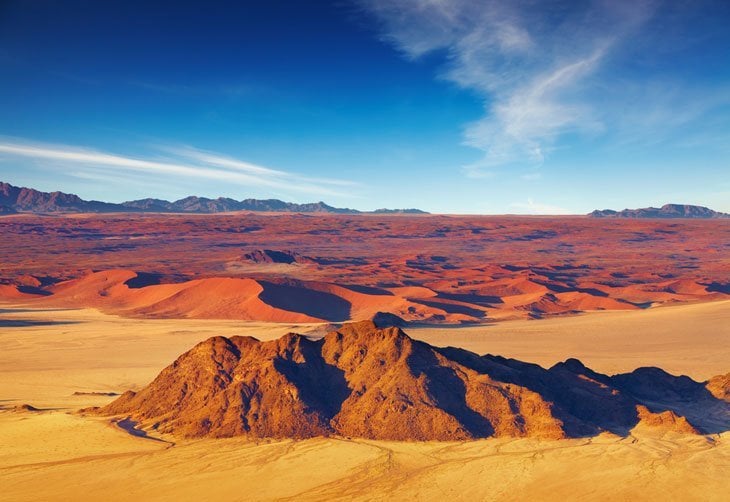
You may be interested in the Namibia desert forbidden zone and the incredible Ghost Town of Kolmanskop.
More Than Just Sand and Ice
As you can see, the world of deserts is far more varied and exciting than you might have imagined. From the frozen poles to the scorching tropics, each desert is a unique and beautiful testament to nature’s power and adaptability.
They are not wastelands, but vibrant ecosystems full of life and wonder.
So, the next time you think of a desert, I hope you’ll picture more than just sand. I hope you’ll see the icy plains of Antarctica, the alien landscapes of the Atacama, and the ancient dunes of the Namib.
What do you think? Have you ever visited a desert? Share your experiences in the comments below!


Love your post, my ultimate dessert is still Antartica. Maybe, someday… 🙂
Hey!
These pictures are amazing 🙂 I specially love “The Unstoppable Desert – Gobi”! I wish pollution wasn’t such a big problem!
Deserts are forbidding, but also have some of the most spectacular scenery on earth. Very interesting post!
Great set of images. You missed Englands only desert though, Dungeness in Kent.
Hi paul – great post! I grew up on a little 'desert' island and as such I love the desert, it is so much more varied and beautiful than people think – and you're post showed just how varied the worlds deserts are 🙂
Wow, I honestly did not know Antarctica is considered a desert. I learned something new today!
Those pictures are grogeous
I've been to the Namib and Atacama deserts – and loved them both. I think I'll pass on the Danakil Desert – I don't do that kind of heat very well.
Lovely, inspiring set of photos.
Nice pictures. I saw the tweet from Debbie from England. Have a great weekend.
Wow!
Beautiful photographs! I especially love the one of the Sahara. Haven't been there, but it's on my list!
— Michelle
wonderful pictures!
Hi Paul, again a great article about nature. I love them. Gives us another perspective of things. Never realized that Antartica was a big desert too.
that photograph of Danakil is awesome it looks surreal!
Thanks for the lovely comments. It's always nice to see the beauty behind all the stereotypical barren world. I enjoy learning and writing about this stuff and want to thank you all for reading.
Interesting stuff Paul and some lovely images too! There is a magic and wonder about the barreness of desert landscapes.
Very good info and Pics A new way to thank of a desert–not just sand, I like it
Wow….these are breathtaking shots. All of them! The Danakil Desert looks especially wonderful…
How true! We are used to think that desert = sand and dunes but it's much more than that!
I couldn't say why, but since I was a teenager I've been attracted by the desert, in all its forms. And I still am. It's one of the contexts that gives me the strongest emotions…