When you think of the legendary White Cliffs of Dover, your mind naturally constructs images of towering, vertical chalk faces plunging directly into the turbulent waters of the English Channel.
For centuries, this sheer barrier meant that walking right at the sea-level base of these massive cliffs was an impossibility.
Yet, sitting just two miles west of Dover is Samphire Hoe—a spectacular, 30-hectare nature reserve that stands as one of the most unique engineering and ecological triumphs in British history.
This entire landscape is completely man-made, created entirely out of 4.9 million cubic metres of chalk marl excavated from deep beneath the seabed during the construction of the Channel Tunnel in the late 1980s.
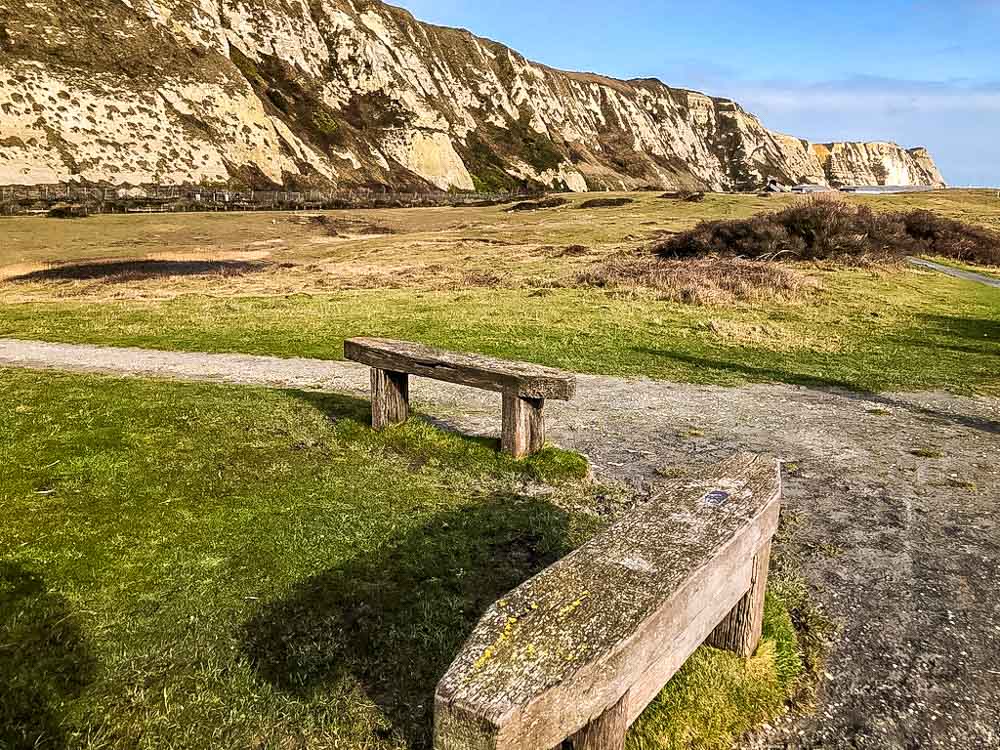
Today, it has been transformed into a thriving wildlife haven, an elite sea angling hotspot, and a beautifully flat, accessible walking loop.
Whether you are looking for a breezy family bike ride or a dramatic coastal walk beneath the looming shadow of the cliffs, here is your practical visitor guide to Samphire Hoe.
🥾 Samphire Hoe Visitor Blueprint & Logistics
Location & Access:
Situated directly off the A20 between Dover and Folkestone. The entrance requires driving through a dramatic, narrow, single-lane tunnel cut straight through the cliff face. Traffic lights manage the flow, allowing only one direction of vehicles at a time.
Operating Hours:
The site opens daily at 7:00 AM and closes strictly at dusk.
Admission & Parking:
Admission to the nature reserve is entirely free, but the on-site car park operates a pay-and-display system. Make sure to carry loose change or use the local parking app, as the coastal winds can make payment kiosks temperamental.
Accessibility:
Exceptionally high. The main circular loop is completely level, smooth, and tarmac-paved, making it an ideal destination for wheelchairs, mobility scooters, and family pushchairs.
Dog Policy:
Dogs are incredibly welcome but must be kept on a short lead at all times to protect the nesting birds and the free-roaming cattle grazing the meadows.
The Birth of a Landscape: Channel Tunnel Chalk
The sheer scale of Samphire Hoe’s creation is difficult to process when you are standing on its quiet, grassy lawns.
During the excavation of the Channel Tunnel, Eurotunnel engineers needed a sustainable solution for the millions of tonnes of ancient chalk marl being carved out by the massive boring machines beneath the sea.
They constructed a massive, water-tight iron wall out in the surf at the base of Shakespeare Cliff, creating an artificial basin.
The excavated chalk was moved to the surface via high-speed conveyor belts, dropped into the basin, compacted, and carefully landscaped into rolling hills, rocky platforms, and low-lying wetlands.

Today, the site is owned by Eurotunnel and meticulously managed by the White Cliffs Countryside Partnership.
The name “Samphire Hoe” was chosen through a public competition won by Mrs. Gillian Janaway, a retired schoolteacher from Dover.
She cleverly combined the traditional word “Hoe” (a piece of land projecting out into the sea) with a brilliant nod to local literary history.

The Shakespeare Connection: A “Dreadful Trade”
The name “Samphire” is a direct reference to Rock Samphire, a wild, fleshy green succulent that thrives naturally in the salt-sprayed crevices of the Dover cliffs.
In the 16th and 17th centuries, harvesting this plant was a massive, highly dangerous local industry.
Men would be lowered down the sheer chalk faces on frayed ropes, dangling hundreds of feet in the air to harvest the leaves, which were pickled in barrels of brine and sent to London markets to be served as a prized delicacy alongside meat dishes.

This perilous industry was famously captured by William Shakespeare in his play King Lear, written during an era when the playwright regularly traveled through Kent:
“There is a cliff, whose high and bending head looks fearfully in the confined deep… Half-way down hangs one that gathers samphire, dreadful trade! Methinks he seems no bigger than his head.”
Because of this specific literary connection, the towering chalk headland rising directly over the western edge of Samphire Hoe is formally known today as Shakespeare Cliff.

Walking the Loop: Wildflowers, Cattle, and Sea Towers
On a crisp, sunny winter day, my family and I ventured through the cliff tunnel to explore this coastal haven for ourselves.
The contrast when you emerge from the dark tunnel is striking—you are stepped out onto a wide, open shelf completely surrounded by the soaring white walls of the cliffs on one side and the vast expanse of the English Channel on the other.
We set off along the main 2-kilometer circular trail, which offers an incredibly smooth, easy walking surface.

Despite the winter chill, the tranquility of the parkland was absolute.
The reserve has become a major biodiversity success story, acting as a permanent home for over 200 plant species—including an incredible population of 5,000 rare early spider orchids that paint the lawns in spring.

As you walk through the grassy meadows, you will likely share the path with the reserve’s resident grazing teams: a friendly herd of 80 sheep and 10 placid cows that roam freely to keep the scrub grass naturally managed.
Along the seawall section, the path passes the striking Samphire Tower.

Standing 33 feet high and clad in bold blue larch timber, this artistic installation designed by Jony Easterby and Pippa Taylor acts as a magnificent, elevated viewing platform to stare out across the shipping lanes toward France.
The Pebble Beach and Sea Angling Hotspot
The outer perimeter of the Hoe features a massive, engineered rock wall that protects the reclaimed land from the brutal winter storms.
At the base of this wall sits a spectacular, raw pebble beach covered in huge, wave-rounded stones and deep rock pools.
Clambering down onto the stones gets you right to the water’s edge.

On a windy day, the sound here is mesmerising—a loud, rhythmic clack as the retreating waves roll thousands of heavy pebbles over one another across the shoreline.
This rocky coastal platform also functions as a premier destination for UK sea anglers.
The deep, swirling waters immediately off the sea wall are highly oxygenated and rich in marine life, drawing in massive populations of Wrasse, Pollack, Bass, Codling, and Conger Eels.
If you want to cast a line, day-fishing permits are exceptionally reasonable and can be purchased directly from the central kiosk.
Refueling: The Welcome Hot Chocolate
Because Samphire Hoe projects right out into the channel, it is completely exposed to the elements.

Even on a clear day, the coastal winds can be incredibly bracing, making a windproof jacket and a warm hat mandatory gear.
After completing our circuit and exploring the rocky shore, we made a beeline for the site’s central eco-constructed visitor center and tea kiosk.
Sitting on a wooden bench out of the wind while clutching a cup of their fabulous, rich hot chocolate was the ultimate way to finish the walk, warming our hands as we watched the clouds clear off the cliff tops.

Samphire Hoe is a powerful reminder of how industrial imagination can be used to heal and enrich the natural world.
It bridges heavy engineering with raw ecological beauty, offering a peaceful, accessible escape right at the foot of England’s most famous cliffs.

Pack your warm layers, check the Dover tide times, and enjoy a walk on a piece of land that history built from the seabed up.
Explore MoreOf The Spectacular Kentish & Southern Coast
- The Cliffside Fortress: A Trip To The Magnificent Dover Castle in Kent
- The Tudor Coastal Shield: A Family Visitor Guide to Deal Castle, Kent
- The Roman Coastal Towers: Exploring the Historic Reculver Towers of Herne Bay