

The Tissington Trail is a captivating route nestled in the heart of the Peak District, offering a picturesque escape for nature lovers, cyclists, and hikers alike.
Spanning approximately 13 miles, the trail runs along a former railway line between Buxton and Ashbourne, showcasing the region’s stunning landscapes, charming villages, and lots of history.
We absolutely love coming here and spending some miles along the trail. It truly is a way to get the all the sessinces of the Peak District in one walk.

History Of The Tissington Trail
In 1899 a railway line was built between Buxton and Ashbourne called The London and North Western Railway (LNWR).
70 years later the line closed and in 1971 it was bought by the Peak District National Park. The railway line was marvelously turned into this 13 mile track suitable for all kinds of people enjoying the outdoors.
The line passed and the path now passes by the quaint village of Tissington and thus it gets its name.
The National Park really did transform the route into a beautiful carefree place to explore on foot or by bicycle, there are even cycle stations on the trail where you can hire a bike and get a refreshment, an ice cream, a hot or cold beverage and take a break.
The trail is part of the National Cycle Network route 68.

Starting Points and Access
The Tissington Trail can be accessed from several starting points, with the popular ones naturally being Ashbourne at the southern end of the trail or Parsley Hay at the northern end.
The Ashbourne end of the trail is well-suited for those arriving by car, with plenty of parking available. From here, you can choose to walk or cycle towards the village of Tissington, which is approximately 5 miles away. Or even do the whole route and carry on all the way to Parsley Hay.
For those starting in Tissington itself, the trail meanders through beautiful countryside, providing a scenic backdrop to your journey. Both access points offer a warm welcome and a starting point for adventure.
The Parsley Hay bike hire centre is a lovely spot on the trail and is situated eight miles south of the spa town of Buxton. It is easily reached via the A515 from both Buxton and Ashbourne.
If using a Sat Nav, here’s a post code for Parsley Hay near Buxton SK17 0DG. Parsley Hay also makes the ideal starting point to explore the Peak District.
The centre has a refreshment kiosk and picnic tables and a toilet block too which can be handy especially when traveling with children.
Access to the trail is also facilitated by other connecting paths and trails, making it easy to create a longer route if desired. Public transport is limited directly to the trail, but there are bus services that connect Ashbourne and nearby towns, allowing for flexible travel arrangements.
The trail is part of the National Cycle Network route 68.

Once on the trail, walking and cycling are the primary means of transport. The flat, compacted surface of the trail makes it accessible for families with children and those with mobility challenges.
Additionally, bike hire services are available in Ashbourne and other starting points, allowing you to explore the route on two wheels without the need to bring your own bicycle.
The trail is very well maintained, and we always find it very easy going, a relaxing area whether walking or cycling we’ve tried both options before and always enjoyed it.
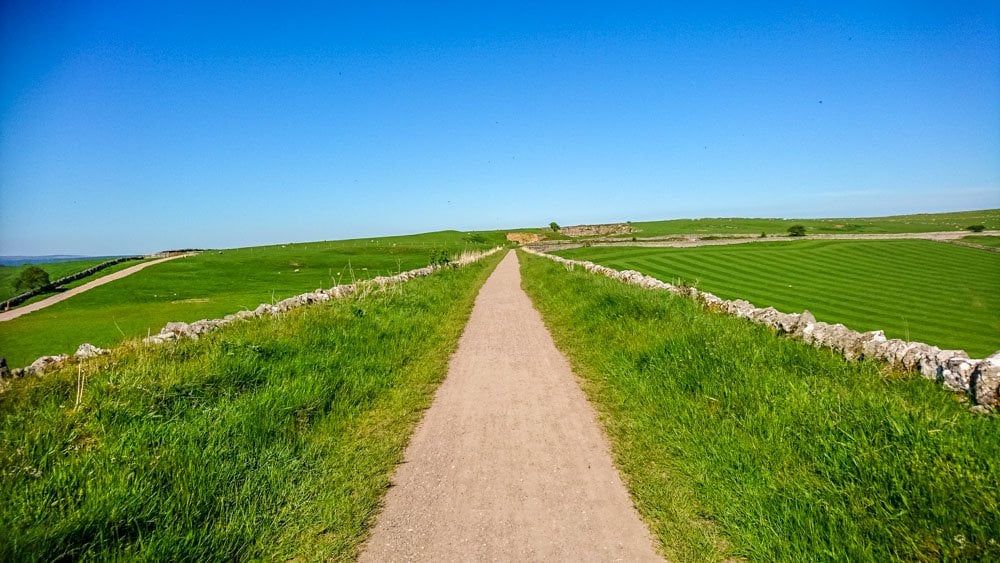
There is a lot to take in on the route, open fields and limestone walls, the occasional herd of cattle grazing or sheep to see while walking through the Derbyshire Dales.

Trail Highlights
Tissington Village and Well Dressings
The village of Tissington is a picturesque place in the Derbyshire Dales where the stone houses are a picture-perfect sight and the village is a part of the Tissington Hall Estate, owned by the FitzHerbert family since 1465.
The village is very popular with tourists especially for its well dressings, also called well flowering. It is a tradition practised in some parts of rural England in which wells, springs and other water sources are decorated with elaborate designs created from flower petals, moss, leaves and other natural decorative sources, making stunning pictures and usually each year a village will choose a different theme.
The custom is most closely associated with the Peak District of Derbyshire and Staffordshire. The custom of well dressing is first attested in 1348 at Tissington and evolved from simple ribbons and flower garlands to more grand gestures with a wider appeal and at times skilled craftmanship.
The reasons for these well dressings could be from Pagan origins worshiping the water source, some say it was to give thanks for a clean water source after the Black plague.
Well dressing was celebrated in at least 12 villages in Derbyshire by the late 19th century, and was introduced in Buxton in 1840, “to commemorate the beneficence of the Duke of Devonshire.”
It was the Duke of Devonshire who made sure there were arrangements to supply fresh water to the upper town because of their distance from St Anne’s Well on the Wye, he supplied a fountain for fresh water at his own expense. I quote;
“A fountain of excellent water within easy reach of all.”
Minninglow Neolithic Burial Site
The scenery is not only photogenic and refreshing but has a lot of hidden history. For example, the Minninglow ancient burial mounds on Mininglow hill, you can see this clearly way marked on the trail and it is an unmistakable site, a raised hill with a woodland copse.
Within the clump of trees there is a Neolithic chambered tomb and two Bronze Age bowl barrows. This is a scheduled monument. The tomb was excavated by Thomas Bateman in 1843 and 1851 and was described by Nikolaus Pevsner as “one of the most impressive of Derbyshire’s surviving prehistoric burials.”
The oldest chamber dates from the Early Neolithic period but other finds indicate the use in the Late Neolithic or early Bronze Age, and during the Roman period. The two bowl barrows were also excavated by Bateman, and date from the Bronze Age and they also show signs of Roman disturbance.
Stunning Scenery and Natural Beauty
The Tissington Trail is renowned for its breathtaking scenery. As you traverse the route, you will encounter rolling hills, lush green fields, and serene woodlands. The trail is particularly beautiful during spring and summer when wildflowers bloom, creating a vibrant tapestry of colors. The panoramic views of the surrounding Peak District National Park enhance the experience, providing countless opportunities for stunning photographs and quiet moments of reflection.
One of the unique features of the Tissington Trail is its transformation with the seasons. In autumn, the leaves turn to rich hues of gold and crimson, while winter might blanket the landscape in a serene layer of snow. Each season brings a different charm, making the trail worth visiting year-round.

Wildlife Spotting Opportunities
The trail is not only a feast for the eyes; it is also home to a diverse array of wildlife. Birdwatchers will delight in spotting species such as robins, swallows, and sparrows flitting through the trees. Occasionally, you might spot deer grazing in the meadows or rabbits darting across the path. If you’re lucky, you may even catch sight of more uncommon species like the elusive barn owl at dusk.
For families and children, the opportunity to observe wildlife adds an educational element to the day out. Encouraging young ones to be mindful of their surroundings and to look out for different creatures enhances their connection to nature. Binoculars can make the experience even more exciting, allowing for closer views of distant birds and animals.

Cycling Adventures
The Tissington Trail is a haven for cyclists, offering a smooth and well-maintained pathway ideal for leisurely rides or more intense cycling adventures. Whether you are a seasoned cyclist or a casual rider, the trail accommodates all skill levels. The flat terrain makes it accessible for families with children riding alongside in trailers or on balance bikes.
For those seeking a challenge, the trail can be combined with other nearby routes to create a more extensive cycling experience. Popular loops include the High Peak Trail, which offers a range of terrains and stunning views. Bike rental services are available in Ashbourne, making it easy for visitors to explore the area without the need to transport their bicycles.
Dining and Refreshment Options
There are various dining options along the trail, catering to different tastes and budgets. Coffee shops and tea rooms in both Tissington and Ashbourne offer a cozy setting to refuel after your adventure. From traditional English tea and freshly baked scones to hearty meals made with local ingredients, the culinary scene is varied and satisfying.
If you’re looking for a picnic spot, many areas along the trail have benches or grassy spaces to enjoy a packed lunch. Local markets often feature food stalls with artisanal products, perfect for picking up treats to take with you. Remember to check opening times, as some establishments may vary by season.
Other Walks In The Area
If you want to enjoy some more beautiful walks in the area then you have plenty on offer. You can take in the delights of Dovedale and the stepping stones. Or you could do the famous ridge walk of Mam Tor, or climb up high on Kinder Scout.

Conclusion
The Tissington Trail is more than just a path through the countryside; it is a vibrant experience that offers something for everyone.
From stunning scenery and wildlife spotting opportunities to historical landmarks and family-friendly activities, the trail combines adventure with relaxation.
Whether you’re cycling, walking, or simply enjoying a picnic, the beauty and charm of the Peak District will leave a lasting impression.
FAQs
Is the Tissington Trail suitable for children?
Yes, the Tissington Trail is very family-friendly, with a flat surface ideal for children to walk or cycle. There are plenty of opportunities for breaks and activities along the way.
Can I cycle on the trail?
Absolutely! The Tissington Trail is perfect for cycling, with smooth paths that accommodate both leisurely rides and more intense cycling experiences.
How long does it take to complete the trail?
The trail is about 13 miles long, so walking it can take 4 to 6 hours depending on your pace. Cycling it typically takes less time, around 2 to 3 hours.



Hi Eric,
The Tissington trail is certainly much better than it used to be, I imagine your cycle ride with Mrs S was quite memorable. Derbyshire is a stunning location no doubt about it.
Thank you for your comments, it’s always lovely to hear about stories and memorable moments in the places I visit and write about.
Regards,
Janine
Me and Mrs S cycled this trail some 30 years ago when the railway sleeper rises were still very evident along and across the track – and our bums didn’t like that one bit!!! Seems that the re- vamp has literally ironed these out and it looks really good now – smashing job, lovely Derbyshire countryside, what more could you want?