

There is a specific moment in the year that always catches my breath. It’s that grey, transitional time when winter feels like it has outstayed its welcome, the ground is hard, and the trees are skeletal.
Even the snowdrops have been white against white.
Then, suddenly—a flash of violet, a splash of gold, or a pristine white streak against the frost.
The Crocus.

For many of us, this humble flower is the first true whisper of spring. It’s a symbol of hope, of resilience, and of the colour returning to our world.
But as I’ve dug deeper into the life of these incredible plants, I’ve realized there is so much more to them than just a pretty face in the snow.
From the secret of the expensive saffron spice to the battle against garden pests, and a vital safety warning for pet owners, the world of the crocus is fascinatingly complex.
Whether you are a seasoned gardener looking to perfect your display or a “nature admirer” just wanting to know what’s blooming at your feet, here is everything you need to know about the genus Crocus.

The Science Beneath the Snow
We often talk about planting “bulbs,” but if we are being botanically precise (and why not?), the crocus actually grows from a corm.
Unlike a true bulb (like an onion or tulip) which has layers, a corm is a solid, starchy stem base. It’s a survival capsule.
Every year, the corm you plant gives its life to produce the flower and foliage you see. By summer, that old corm is gone, replaced by a fresh new one sitting right on top of it.
It’s a cycle of constant renewal that happens silently beneath the earth.
They belong to the Iris family (Iridaceae), which explains their elegant, upright stature even in the face of biting winds.
A Tale of Two Seasons: Spring and Autumn
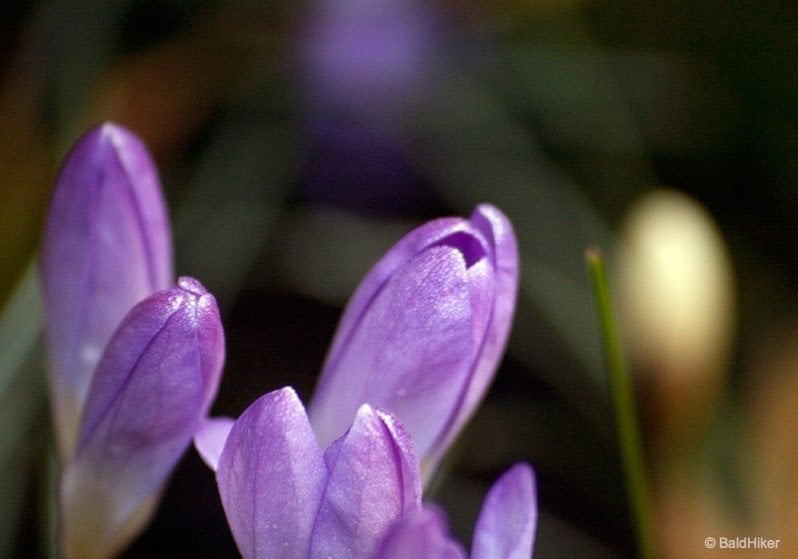
Most of us know the crocus as the herald of spring. Varieties like Crocus vernus (the large Dutch hybrids) and Crocus chrysanthus (the Snow Crocus) are the ones we see popping up in February or March.
But did you know you can have crocuses blooming as the leaves fall?
The Autumn Crocus (Crocus speciosus)
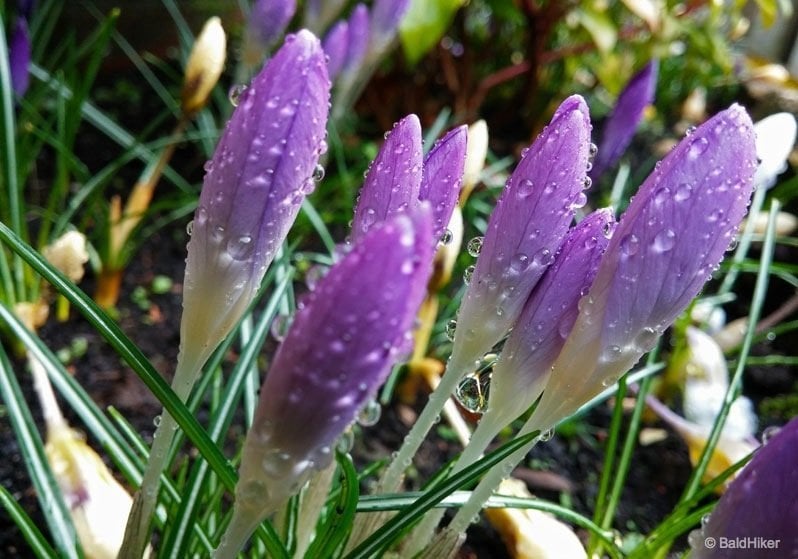
These beauties bloom in September and October, providing vital nectar for bees just as other sources are drying up.
They are distinct from the spring varieties—they often flower without any leaves, sending up naked stems of stunning blue-violet petals with bright orange centres.

The “Red Gold” (Crocus sativus)
This is perhaps the most famous crocus of all: the Saffron Crocus. It’s an autumn bloomer, and it produces deep crimson stigmas that are harvested to create saffron, the world’s most expensive spice.
It’s a sterile plant, meaning it can’t produce seeds; it has relied on human hands to divide its corms for over 3,000 years.
How to Grow Them: Success in the Soil
I’ve learned the hard way that you can’t just throw them in the ground and hope for the best. If you want that carpet of colour, you need to think about where they sleep.

1. The “Puddle Test”
Crocuses hate wet feet. If you have heavy clay soil or a spot where water sits for hours after a rainstorm (the puddle test), your corms will rot.
They need grit, sand, and drainage. If you’re gardening on clay, mix in horticultural grit to create a dry nest for them.
2. Chasing the Sun
These flowers are “thermonastic”—they react to temperature. They need the warmth of the sun to open their petals wide.
Planting them in deep shade will leave you with permanently closed buds.
The perfect spot is under deciduous trees; the crocuses bloom before the leaves on the trees come out, giving them full sun in spring and dappled shade in summer.
3. Planting Depth and “The Zone”
When: Plant spring bloomers in autumn (Sept-Nov) when soil temps drop below 60°F (15°C). Plant autumn bloomers in late summer (August).
Depth: The rule of thumb is often 2-3 inches, but planting them deeper—around 4 inches—can help protect them from extreme cold and hungry animals.
Hardiness: They are tough little things, generally hardy in USDA Zones 3–8 (or RHS H6 in the UK), coping easily with temperatures down to -20°C if the soil is dry.

The Gardener’s Nemesis: Dealing with Thieves
There is nothing more heartbreaking than planting 50 corms on a Saturday and finding 50 small holes in the ground on Sunday.
Squirrels, voles, and chipmunks love crocus corms. To them, we are simply burying tasty, starchy snacks.
The Wire Defense: The only 100% effective method I’ve found is to plant your corms inside a cage made of chicken wire or hardware cloth. Bury the whole cage. The shoots grow through the mesh, but the squirrels can’t dig down to the corm.
The Grit Barrier: If wire feels too industrial, surrounding the corm with sharp, crushed oyster shells or jagged gravel can deter digging paws.

A Critical Warning: The Tale of Two “Autumn Crocuses”
Here is where we need to be serious for a moment. There is a plant often called “Autumn Crocus” or “Naked Ladies” which belongs to a completely different family: Colchicum.
While they look similar, the difference is vital, especially if you have pets.
True Crocus (Iridaceae): If your dog eats a spring crocus or a true autumn crocus, they might get an upset stomach, but they will likely be fine.
Meadow Saffron (Colchicum): These contain colchicine, a highly potent toxin. Ingestion can be fatal to dogs, cats, and even humans, causing organ failure.
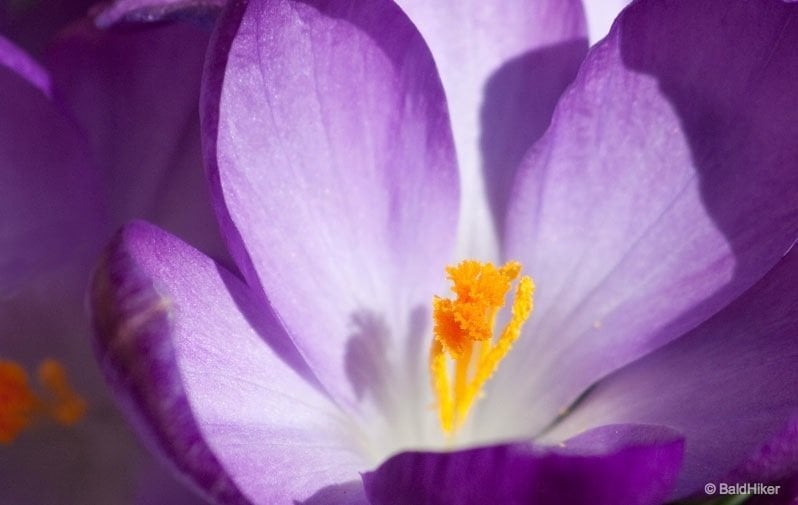
How to tell them apart? Count the stamens. A true Crocus has 3 stamens. A toxic Colchicum has 6 stamens. When in doubt, always assume toxicity and keep pets away.
Myths, Magic, and Meaning
Why do we love them so much? Perhaps it’s because they have been with us for so long.
In Greek mythology, the flower was created from the tragic death of a mortal youth named Crocus.
In one version, he was a companion of the god Hermes, and the flowers sprang from his blood spilled on the grass—a poignant symbol of life persisting after tragedy.
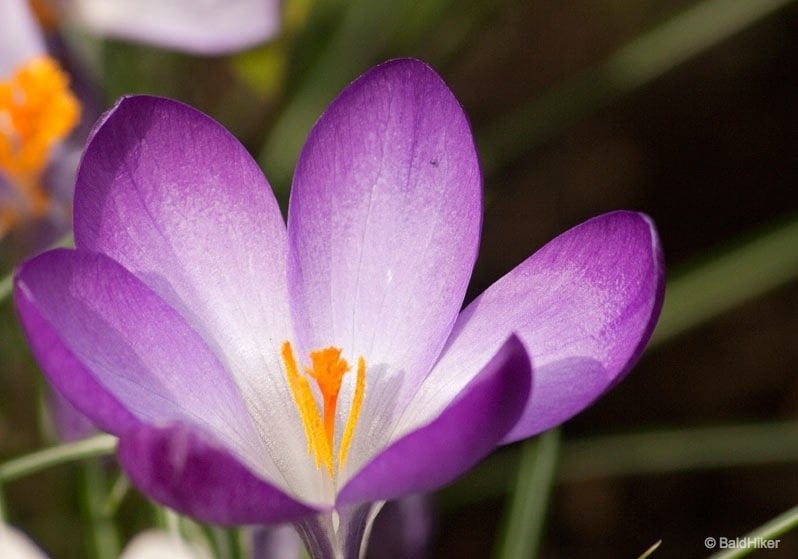
In the Victorian language of flowers, the crocus stood for “cheerfulness” and “youthful gladness”. It’s a fitting sentiment. When I see that purple head pushing through the white snow, “gladness” is exactly what I feel.
Final Thoughts
The crocus is a small plant with a massive impact. It asks for very little—just a bit of well-drained soil and some sunlight—and in return, it gives us the very first promise that the warmth is returning.
So, this autumn, why not tuck a few corms into the ground? You might forget about them over the long, dark winter, but I promise you, when that first splash of colour breaks the grey landscape next spring, you’ll be glad you did.
For more spring colour from the garden check out Dazzling Daffodils – The Herald of Spring


wow, so beautiful. I love flowers
After 5 months of excessive rain here in Taiwan, I am thankful that spring and summer are coming soon. That was a really interesting read about the story behind this flower!