

A View from Above, A Call from Below
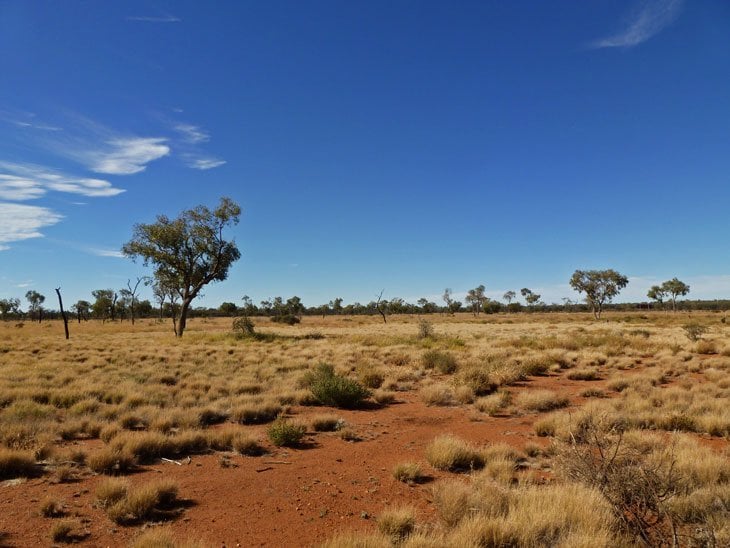
The world falls away with a thrumming whir of rotor blades. Below, the red earth of Central Australia stretches into an infinite, rust-coloured tapestry, stitched with the dark green threads of desert oak and spinifex.
Then, it appears. At first, a deep purple hump on the horizon, then a colossal, ochre-red form that seems to radiate its own internal heat. This is Uluru, seen from the air, and the scale is simply staggering.
I couldn’t believe it. Here I was, in a magical place I had only ever seen on photos. In a helicopter looking down on it at sunset.

From the bubble window of a helicopter, you begin to grasp its physical immensity. It’s not a mountain, but a single, monolithic stone—the world’s largest—rising 348 metres from a perfectly flat plain.
A few minutes later, the 36 weathered domes of Kata Tjuta come into view, their rounded heads clustered together like ancient, sleeping giants.
As the pilot banks for our sunset pass, the late afternoon sun ignites Uluru’s western face. The rock bleeds through a hundred shades of crimson, orange, and violet, a light show 550 million years in the making.

It is a spectacle of pure, geological grandeur, an unforgettable postcard moment. I will never forget that helicopter ride that is for sure.
And yet, even from this thrilling, detached height, there is a palpable sense of something more. A feeling that the true story of this place is not in its height or circumference, but in the subtle textures of its skin, the shadowed caves at its base, and the silent, ancient energy it exudes.
The view from above is an invitation, a stunning but superficial introduction. The real journey, I would soon learn, happens on the ground, with feet planted firmly on the red sand, listening to the whispers of the oldest living culture on Earth.
This guide is born from that journey I had—from the spectacular aerial view to the profound, ground-level connection.
It is designed to lead you beyond the postcard image to the living, breathing heart of Uluru-Kata Tjuta National Park.
Together, we will explore how to visit this sacred place with the respect it commands, delve into the deep cultural foundations that give it meaning, and discover the immersive experiences that transform a simple visit into a truly meaningful encounter.

The Living Heart: Understanding Uluru’s Sacred Foundations
To truly understand Uluru, one must first understand that it is not a wilderness to be explored, but a home to be visited. It is Aṉangu ngura, the land of the Aṉangu people, who have been its custodians for at least 30,000 years.
Pukuḻpa pitjama Aṉanguku ngurakutu (Welcome to Aṉangu Land)
The Aṉangu are the traditional owners of Uluru-Kata Tjuta National Park. The term encompasses several distinct language groups, primarily the Pitjantjatjara and Yankunytjatjara people of Australia’s Western Desert.
Their connection to this land is unbroken and profound. On 26 October 1985, in a landmark moment for Indigenous land rights in Australia, the Australian Government formally returned the title deeds for the park to the Aṉangu.
In turn, the Aṉangu leased the land back to the nation for 99 years, establishing a joint management model with Parks Australia where traditional law and modern conservation work hand-in-hand. This “Handback” is celebrated annually and underscores a fundamental truth for any visitor: you are a guest on Aboriginal land.
A simple way to show respect is to learn a single word: Palya (pronounced pahl-yah). It is a wonderfully versatile greeting in the Pitjantjatjara language, meaning hello, welcome, thank you, and goodbye.

Tjukurpa: The Law of the Land
The foundation of Aṉangu life, culture, and law is Tjukurpa (pronounced ‘chook-orr-pa’). Often inadequately translated as “the Dreamtime,” Tjukurpa is a far more complex and holistic concept.
It is the all-encompassing belief system that explains existence—the creation of the world, the relationships between people, animals, and the land, and the laws for social and moral behaviour.
Tjukurpa is not a relic of the past; it is a living reality that exists in the past, present, and future simultaneously.
It was founded during a creation period when ancestral beings, part human, part animal or plant, journeyed across a formless land, shaping the landscape as we see it today.
Their travels, hunts, battles, and ceremonies created every river, rock, and waterhole. These features are the physical evidence of their actions, and the stories associated with them form the basis of Aṉangu law and spirituality.
This knowledge is not written down but is an inheritance, memorised and passed down through generations in sacred songs (inma), ceremonies, dances, and art.

A Landscape Etched with Stories
For Aṉangu, Uluru is not a monolith; it is a sacred text where the stories of Tjukurpa are physically manifest.
Each cave, fissure, and stain on the rock is a chapter in this living bible. While many stories are secret and sacred, Aṉangu generously share some to help visitors understand the significance of the place.
The Mala Story (Rufous Hare-Wallaby People): The north-west face of Uluru tells the story of the Mala people, who travelled from the north to conduct a ceremony at Uluru.
They were busy preparing when an invitation arrived from the Wintalka men in the west to join another ceremony.
The Mala politely declined, as their own rites had already begun and could not be interrupted. Angered by the refusal, the Wintalka men created a malevolent spirit, a monstrous devil-dog named Kurpany, to destroy the Mala ceremony.
Luunpa, the Kingfisher Woman, saw Kurpany approaching and warned the Mala men, but they were too absorbed in their rituals to listen.
When the beast finally attacked, chaos erupted. Many Mala men were killed, and the survivors fled south in terror.
Today, the caves along the Mala Walk are where the Mala people camped, and the pockmarks and shapes on the rock face are the physical evidence of this epic Tjukurpa event.
The Kuniya and Liru Story (Python Woman and Poisonous Snake Man): At the base of Uluru lies the Mutitjulu Waterhole, a place of immense power and the setting for a dramatic battle.
Kuniya, the Woma Python Woman, was camped nearby when she learned that her nephew had been killed by warriors from the Liru (Poisonous Snake) clan.
Enraged, she slithered to the Liru camp and confronted one of the warriors. He mocked her, and in her fury, she danced a powerful ceremony and struck him dead with her digging stick.
The vertical gashes and smooth grooves on the rock at the waterhole are the marks of this fierce battle, a potent reminder of the consequences of breaking the law.
These stories are more than myths; they are moral and practical guides for life. The tale of the greedy Lungkaṯa (Blue-Tongue Lizard) on the western face, who stole food and was choked to death by smoke, serves as a lesson against dishonesty and a stark warning about the physical dangers of climbing high on the rock.
The entire landscape is crisscrossed by the paths of these ancestral beings, known as iwara or songlines, which serve as spiritual maps connecting sacred sites across the continent.
This cultural worldview exists alongside the scientific explanation for Uluru’s formation.
Geologists explain that about 550 million years ago, sediment eroded from the ancient Petermann Ranges and was deposited in large alluvial fans.
Over time, this sediment was compressed into sandstone (Uluru) and conglomerate rock (Kata Tjuta). Tectonic shifts around 400 million years ago tilted the sandstone slab of Uluru nearly 90 degrees to its present position.
Millions of years of erosion then wore away the surrounding softer rock, exposing the hardened monoliths we see today.
A visitor to Uluru has the rare privilege of experiencing a place through two profound lenses: one of 500-million-year-old geology, and one of 30,000-year-old continuous culture. One explains how the rock came to be, the other explains why it matters.
A Journey of Respect: How to Visit Uluru Today
The way visitors experience Uluru has undergone a profound and necessary transformation.
For decades, the ultimate tourist goal was to climb the monolith, a practice deeply at odds with the values of its traditional owners.
The permanent closure of the climb in 2019 marked a pivotal moment, signaling a shift from a tourism of conquest to one of connection and respect.
I must admit that as soon as I started learning about the cuture and sacredness of it on my visit, even though I like to hike up peaks, I had no desire to climb Uluru. Only to respect the culture.

Why We Don’t Climb: A Celebration of Culture
On 26 October 2019, the 34th anniversary of the Handback, the chain guiding climbers up the steep face of Uluru was permanently removed.
This decision, made by the Uluru-Kata Tjuta National Park Board of Management with its Aṉangu majority, was not about exclusion, but about preservation—of culture, of nature, and of life.
As former Board Chairman Sammy Wilson stated, “Closing the climb is not something to feel upset about but a cause for celebration”.
The reasons for the closure are multifaceted and crucial for every visitor to understand:
Cultural and Spiritual Significance: For Aṉangu, Uluru is an intensely sacred place, not a playground. The climbing route followed the traditional path taken by the ancestral Mala men upon their arrival. To walk this path was to trample on Tjukurpa, a deep desecration of their most sacred beliefs.
Environmental Damage: Decades of foot traffic created a visible white scar on the rock’s face, eroding the ancient sandstone. With no toilet facilities, human waste polluted the monolith, washing into the precious waterholes at its base during rain, contaminating a vital resource for the area’s flora and fauna.
Visitor Safety: The climb was treacherous. At least 37 people have died attempting the ascent, and many more required rescue due to falls, dehydration, or heat exhaustion. For Aṉangu, who feel a profound cultural responsibility to care for visitors on their land, these incidents caused great sorrow and distress.
The closure was the culmination of a long journey. Aṉangu had been respectfully asking visitors not to climb since the Handback in 1985.
The final decision was enabled by a shift in visitor consciousness; by 2017, fewer than 20% of visitors were making the climb, choosing instead to respect the wishes of the traditional owners.
This evolution represents a maturing of tourism in Australia, proving that the most valuable and sustainable experiences are those founded on authentic cultural exchange, not on ticking a box.
Visitor Protocols for a Meaningful Connection
Visiting Uluru respectfully is about more than just not climbing. It involves a conscious effort to engage with the place on Aṉangu terms. Following these protocols will not diminish your experience; it will deepen it.
Photography and Privacy: Certain areas around the base of Uluru are so culturally sensitive that photography is forbidden.
These are places where sacred ceremonies and gender-specific learning take place. Signs clearly mark these areas—please lower your camera and your phone.
Furthermore, always ask for permission before taking a photo of an Aṉangu person. To be photographed without consent is deeply uncomfortable and disrespectful.
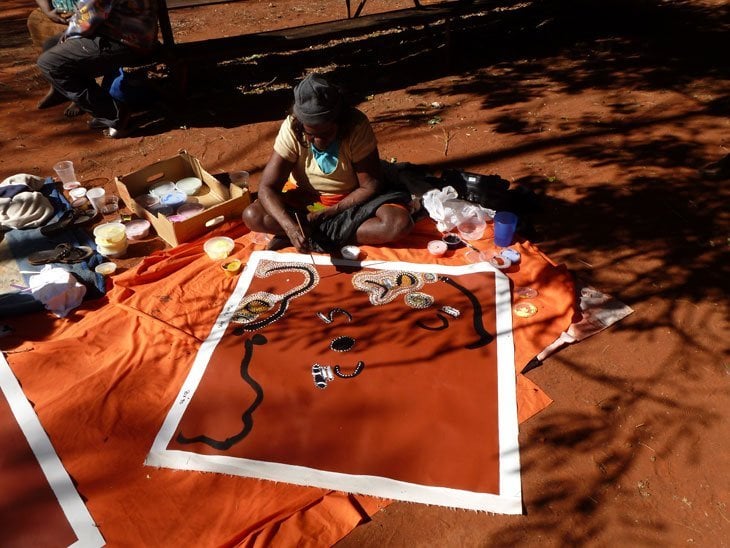
I was allowed after asking to take these photos of Anangu people doing some amazing artwork.

Stay on the Path: The desert ecosystem is fragile. Marked tracks are there to protect delicate plant life and prevent visitors from accidentally straying into sacred sites.
Listen More, Speak Less: In Aṉangu culture, listening is a sign of respect. Constant questions can be perceived as intrusive. Slow down, find a quiet spot, and simply absorb the atmosphere. If an Aṉangu person is silent, it is likely they are listening intently or considering their response, not ignoring you.
Support Ethically: When you buy art or souvenirs, do so from Aṉangu-owned and operated galleries. The primary locations are Maruku Arts and Walkatjara Art at the Cultural Centre. This ensures that your money goes directly to the artists and their communities, supporting a vibrant and sustainable cultural economy.
Your Definitive Uluru Travel Planner
Planning a trip to a remote destination like Uluru requires careful consideration. This section provides the essential logistical information to help you craft the perfect itinerary.
When to Visit: A Seasonal Guide to the Red Centre
The Central Australian desert has a climate of extremes. Choosing the right time to visit is crucial for a comfortable and safe experience. The region has two main seasons: a hot, sometimes wet summer, and a cool, dry winter.
| Season | Avg. Temps (Day/Night) | Conditions | Pros | Cons |
| Winter (May – Sep) | 20-30°C / 4-9°C | Dry, sunny days; cold nights, possible frost | Ideal for walking and hiking; clear skies for stargazing; fewer flies. | Peak tourist season (book well in advance); very cold mornings and nights require layers. |
| Summer (Oct – Mar) | 30-38°C+ / 18-22°C | Very hot days; occasional dramatic thunderstorms | Fewer crowds; spectacular waterfalls on Uluru after rain; great for photography. | Extreme heat limits activity (walks close after 11 am); high number of flies. |
| Shoulder (Apr, Oct) | 28-32°C / 10-15°C | Warm days, cool nights | Pleasant balance of temperatures; fewer crowds than peak winter; wildflowers in spring (Sep-Oct). | Weather can be variable; flies can still be present. |
The consensus is that the best time to visit is during the cooler, drier months from May to September, when daytime temperatures are perfect for exploring the park’s many walks.
Getting to the Spiritual Heart
By Air: The most direct way to reach Uluru is by flying into Ayers Rock Airport (AYQ), also known as Connellan Airport.
It is located just a 10-minute drive from Yulara, the resort town where all accommodation is based. Qantas, Jetstar, and Virgin Australia offer direct flights from major Australian cities like Sydney, Melbourne, and Brisbane.
A complimentary shuttle bus transfers guests from the airport to all resort hotels. Alternatively, you can fly into Alice Springs Airport (ASP), but be aware it is a 4.5 to 5.5-hour drive (approx. 465 km) to Uluru.
By Road: For the adventurous, driving to Uluru is an iconic Australian road trip. The sealed roads are accessible to standard 2WD vehicles.
This option offers the ultimate flexibility to explore the vast landscapes of the Red Centre at your own pace.
Getting Around the Park: There are no public transport or taxi services within Uluru-Kata Tjuta National Park. Your options are:
Hire Car: Avis and Hertz operate from Ayers Rock Airport and the resort, offering the most freedom to explore.
Uluru Hop On Hop Off Bus: A flexible and budget-friendly option that runs multiple services daily to Uluru and Kata Tjuta for sunrise, sunset, and daytime walks. Passes are available for one, two, or three days.
Coach Tours: Numerous companies offer guided tours of all major sites, which can be booked through the resort.
Where to Stay: Your Base in Yulara
There is no accommodation inside the national park itself. All visitors stay at Ayers Rock Resort in the nearby town of Yulara, which offers a comprehensive range of options to suit every budget and travel style, from campsites to five-star luxury.
Park Essentials: Fees, Passes, and Hours
Park Pass: Entry to Uluru-Kata Tjuta National Park requires a park pass. The standard adult pass costs $38 and is valid for three consecutive days.
Children and teenagers under 18 enter for free. Annual passes are also available. It is highly recommended to purchase your pass online before you arrive for seamless entry via a QR code scanner at the gate.
Where the Money Goes: Your park fee is a direct investment in the preservation of this World Heritage site. 25% of the revenue goes directly to the Aṉangu traditional owners to support their communities. The remainder funds park operations, conservation efforts, and cultural preservation activities.
Opening Hours: The park is open daily, but opening and closing times vary seasonally to align with sunrise and sunset. You must exit the park before the gates close each evening. The Cultural Centre is open daily from 7:00 am to 5:45 pm.
Immersive Experiences: Connecting with Country, Culture, and Sky
A trip to Uluru is defined by its experiences. It’s in the quiet moments of observation, the thrill of a new perspective, and the privilege of cultural exchange that the true spirit of the place is revealed.
While unscripted walks offer personal connection, curated tours provide invaluable access and interpretation. The ideal itinerary balances both.
Above the Earth: My Sunset Helicopter Flight
The helicopter lifted off, and the red desert unfurled like a map. From this vantage point, the sheer scale of the landscape became real.
The 36 domes of Kata Tjuta, which seem clustered from the ground, revealed themselves to be spread over a vast area of more than 20 km, their deep gorges and valleys etched between them—a perspective impossible to gain from any walking trail.
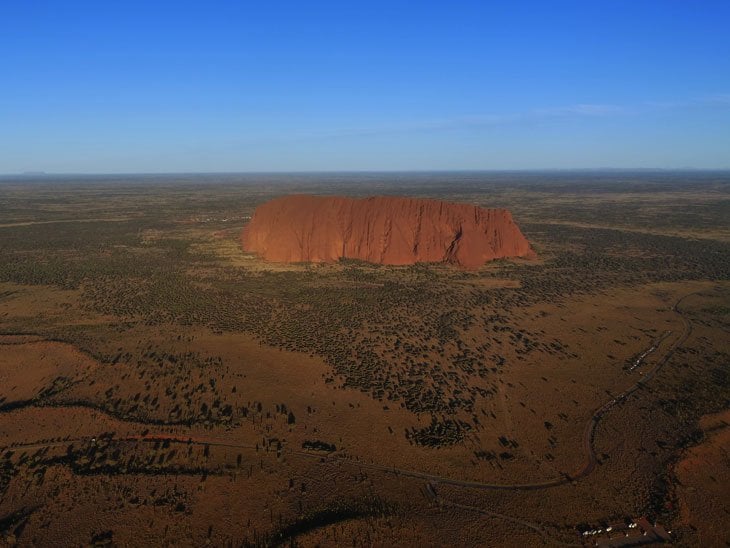
Our pilot, providing a running commentary, pointed out the distant ranges and explained the geology that shaped this incredible land.
As we approached Uluru for the final pass, the setting sun hit the rock, and the colours began their famous dance. It was a moment of pure, unadulterated awe.
To see both Uluru and Kata Tjuta bathed in the golden hour light, to appreciate their relationship to each other and the vast plain they inhabit, is an experience that justifies the splurge. It provides a context for everything you will later see on the ground.
A Guide to Scenic Flights:
Flights do not pass directly over the top of either Uluru or Kata Tjuta, a protocol established out of deep respect for their cultural sensitivity.
| Tour / Duration | Key Sights | Approx. Cost (AUD) | Best For |
| 15-Minute Uluru Helicopter | Uluru only | $135+ | A quick, budget-friendly aerial overview. |
| 25-36 Minute Uluru & Kata Tjuta | Uluru & Kata Tjuta | $240 – $292+ | The most popular option, offering a comprehensive view of both formations. |
| 36-Minute Sunset Helicopter | Uluru & Kata Tjuta at sunset | $450+ | The ultimate photographic opportunity and a truly spectacular experience. |
Art as Living Culture: My Encounter with Aṉangu Artists
One of the most profound moments of my visit was stepping into the calm, focused atmosphere of an art gallery and watching an Aṉangu artist at work.
With quiet deliberation, she applied dots of paint to a canvas, her hands moving with an inherited certainty. This was not merely art for decoration; this was storytelling, law, and lineage made visible. It was a direct connection to Tjukurpa.
A Guide to Cultural Art Experiences:
Your first stop in the park should be the Uluru-Kata Tjuta Cultural Centre. Here, you will find two remarkable, Aṉangu-owned art centres:
Maruku Arts: A collective representing around 900 artists from over 20 remote communities across the NPY lands. It is renowned for its puṉu (traditional wood carvings), tools, and weapons, alongside a stunning collection of paintings. Maruku Arts is a vibrant hub dedicated to keeping culture strong and providing economic opportunities for remote artists.
Walkatjara Art: This is the art centre for the local Mutitjulu community, located at the base of Uluru. The art here is rich with local Tjukurpa stories, and purchasing a piece directly supports the families who call Uluru home. The studio is open to the public, offering a chance to see artists at work.
For a truly immersive experience, participate in a Dot Painting Workshop. Led by an Aṉangu artist and an interpreter, these hands-on sessions (often run by Maruku Arts or in partnership with tour operators like SEIT) invite you to sit down and learn.
You will be taught the meaning of ancient symbols—concentric circles representing a campsite or waterhole, U-shapes for people, tracks for animals.
You will hear the stories behind the art and then, guided by the artist, create your own small painting to take home—a meaningful souvenir imbued with personal story and cultural learning.
On the Ground: Following Ancestral Tracks
To walk at the base of Uluru is to walk along the iwara (paths) of the ancestral beings. The monolith is not meant to be conquered; it is meant to be contemplated from below, where its stories reside.

Uluru Base Walk (10.6 km loop): This is the quintessential Uluru experience. The flat, well-marked trail takes about 3.5 hours and allows you to circumnavigate the entire rock. The journey reveals an ever-changing landscape: from sun-scorched plains and acacia woodlands to lush, shaded waterholes and caves adorned with ancient rock art.
Mala Walk (2 km return): If you only have time for one short walk, make it this one. Often led by park rangers, this trail along the north-west face brings the Mala Tjukurpa to life. You will enter the caves where the Mala people camped and stand at the base of Kantju Gorge, a sheer cliff face that becomes a dramatic waterfall after rain.
Kuniya Walk to Mutitjulu Waterhole (1 km return): An easy, shaded walk that leads to a serene and permanent waterhole, one of the most sacred sites at Uluru. This is a place of great power, the site of the battle between Kuniya and Liru, and a refuge for wildlife. It is a perfect spot for quiet reflection.
Beyond Uluru: The Whispering Domes of Kata Tjuta
Just 50 km west of Uluru lies Kata Tjuta, a formation of 36 domes that is, for many, even more spectacular. Meaning “many heads” in Pitjantjatjara, Kata Tjuta is a sacred Aṉangu men’s site.
Its central stories are not shared publicly, which lends the area an atmosphere of profound reverence and mystery.
Valley of the Winds Walk (7.4 km full circuit): A challenging but deeply rewarding hike that takes you into the heart of the domes. The trail is steep and rocky in sections, leading to two stunning lookouts, Karu and Karingana.
The views are otherworldly, and the feeling of solitude as the wind whispers through the gorges is unforgettable. This walk requires a good level of fitness and takes around 4 hours.
Walpa Gorge Walk (2.6 km return): An easier alternative that offers a beautiful taste of Kata Tjuta’s majesty. The trail leads into a narrow gorge between two of the largest domes, a natural sanctuary for rare plants and wildlife that thrive in its sheltered microclimate.
From Dusk to Dawn: Light and Stars in the Desert
Field of Light: As darkness falls, the desert floor near Uluru comes alive with Tili Wiru Tjuta Nyakutjaku—”looking at lots of beautiful lights.”
This critically acclaimed art installation by Bruce Munro features 50,000 solar-powered glass spheres that gently illuminate the landscape in a shifting palette of ochre, violet, and blue.
Covering an area larger than seven football fields, it is a breathtaking spectacle. You can experience it in several ways: a simple Field of Light Pass for a self-guided walk, a Star Pass with sunset drinks and canapés, or the premium A Night at Field of Light dinner under the stars.
A sunrise tour is also available, offering the magic of seeing the lights fade as the desert awakens.
Stargazing: Far from city lights, the outback sky is a dazzling canopy of stars. The clarity is astonishing, and joining an astronomy tour offers a chance to explore the southern constellations with expert guides and powerful telescopes.
Conclusion: Taking the Spirit of Uluru Home
I think back to that first view from the helicopter—the magnificent, silent rock seen from a distance. It was a vision of immense beauty, but it was a beauty I was observing, not participating in.
It was only after walking its paths, listening to its stories, and feeling the warmth of the artists sharing their culture that the true nature of Uluru revealed itself. The awe of the spectacle was slowly replaced by a deep and lasting reverence.
Uluru is not a destination to be conquered or consumed. It is a teacher. It teaches of deep time, written in its weathered rock face, and of a deeper connection, lived by the Aṉangu people for millennia.
The greatest souvenir you can take from this place is not a photograph, but a changed perspective. It is the understanding that some places are not just landmarks on a map, but living, cultural hearts that beat with the rhythm of ancient stories.
To visit Uluru is a privilege. Go not as a tourist, but as a guest. Walk softly, listen carefully, and be open to learning. If you do, you will leave the Red Centre carrying a small piece of its profound and enduring spirit with you, long after the red dust has settled.


Awesome…had the privilege to sleep on top of Uluru years ago when it was still allowed:) we had many trips to Australia and that was one of the highlights. Travelled from Darwin down to Sydney in a black London Cab…through the Northen territory and Red centre..an amazing experience
Sounds a great way to travel 😀
Ahhhhh! What an amazing place! I’m off to Australia in September and will be doing some travelling, this is definitely on my ‘places to see’ list! Simply beautiful.
Hi jenny, ty.. hope it is a great time for you 🙂
You are right I will never forget seeing sunset at Uluru. Sorry we missed going to the dinner under the stars. Maybe on our next trib to down under.
Totally agree Paul, one of the most magical places I’ve been to. Amazing to see it close up and the detail in it which you don’t appreciate from further away.
Would love to go back there one day.
These pictures are amazing! I’ve always wanted to see Uluru. Hopefully I’ll get there on day soon!
Uluru is an amazing place. I love your photos of the Anangu women creating their art. Wonderful.
As an aussie I thinks it great to see so many people enjoying one of the natural wonders of this country and also the countryside in that area. Its makes you think because I have not ever been there myself but I have been overseas many times. Perhaps it may be time to enjoy what I have in my backyard.
A different Natures Wonder………
Paul,
I’ll never forget my visit to Uluru. The “red rocks” are simply spectacular and you have captured their majesty so well. The helicopter vantage points are some that I’ve never seen before. They bring the breath-taking sites of Uluru to another level.
Thank you and many blessings,
Stan (aka @muz4now)
Great blog. Brought back memories of when I was there a couple of years ago. I couldn't get over the scale of it either and the sunsets where just amazing. A trully wonderful place.
i love photo sir and i love to join you thanks
The first time I saw Uluru was on a TV show. I knew at that time I must visit it one day soon. The view from your pictures is breathtaking. Thank you for sharing!
I've been living in Australia for almost five years now but haven't been to Uluru! And it's my first to see photos of this monolith in these perspectives! So unique! I LOVE IT!
Beautiful place, but seems hot. Though its really nice to watch these rocks, and having the feelings of hiking. Amazing
Hi Paul, I agree with you: words and photos do no do justice to Uluru! It's an amazing feeling being there to treasure in your memories! I was there end of March this year for the second time and could think of going back a third time! 🙂 Every time it's always a unique and timeless experience!
Paul I love the way you post such large sized pictures on your site! They're just incredible! I'm from Aus but am yet to venture into the red centre. After seeing these shots though….wow! I'll have to get there soon!
I love the views from the helicopter, and the color of the rock… looks really magical, and respectable… I can only imagine the emotions of being there!!!
Thank you, yes, It is hard to describe this experience. Photos do not do it justice and words neither. Being there is unbelievable.
Beautiful!
These are fantastic photos. Did you find it to be a spiritual moment when you were there? Many say it can be and I agree.
This is so amazing…. Stunning colors and such awesome views! Must be a wonderful experience and leave memories to never forget. Enjoy the rest of the trip 🙂
Wonderful, bringing back amazing memories. Thank you